Landscape & Leisure is reader-supported. When you buy through links on our site, including Botanical Interests seed links, we may earn a commission at no extra cost to you. Prices change, so click through to confirm current pricing.
You know the grocery-store herb packet: a few sprigs of basil, already bruising, for the price of a whole seed packet that would have kept you in pesto all summer. Growing culinary herbs from seed is the rare garden bargain that is also just plain better — fresher, picked minutes before dinner, and yours in the quantity a recipe actually calls for. The catch is that herbs are not one crop. Basil wants heat and sulks in cold soil. Lavender wants patience measured in months, not days. Mint wants a pot, or it will want your whole bed. The seven herbs below are the ones worth your windowsill, chosen for a kitchen job each one does well, with the trade-off stated plainly.
For the full method on the herb most people start with, see our guide to growing basil from seed. If you want herbs that come back without replanting — and the discipline that keeps them polite — see our guide to herbs that reseed themselves.
Best Overall: Italian Genovese Basil
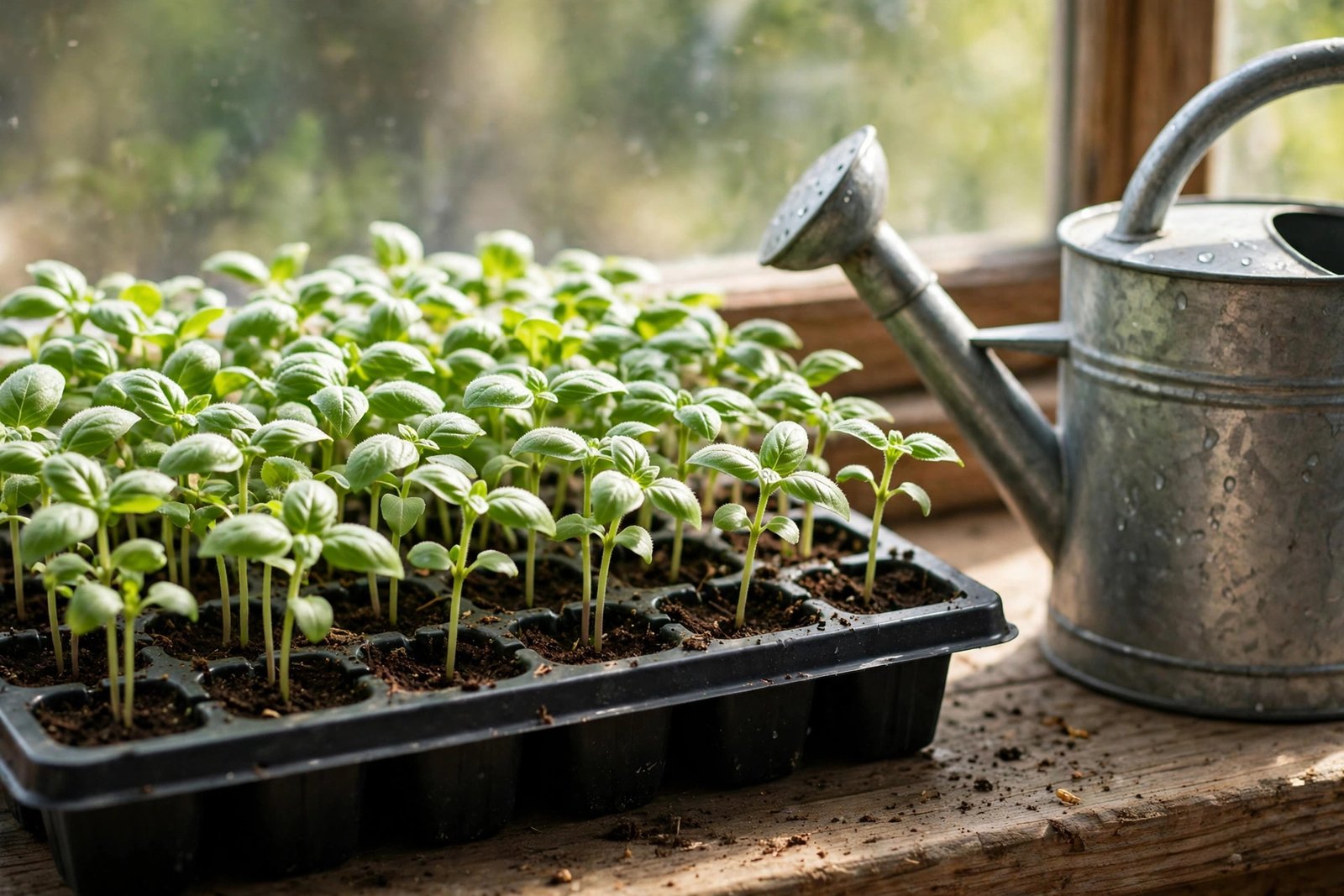
This is the basil the word pesto means. Genovese is the true Italian pesto basil from the Genoa area, with large, dark green, almond-shaped leaves and the traditional fragrance that makes a summer kitchen smell like itself. It grows 12 to 24 inches tall, germinates in 5 to 10 days, and rewards the gardener who treats it like the heat-lover it is: start it indoors 4 to 6 weeks before transplanting, move it out only when nighttime temperatures stay above 50°F, and sow into soil of at least 60°F, ideally 65° to 85°F. Harvest up to a third of the plant at a time, and pick while the flavor is at its best — before the plant flowers. Sow every three weeks and you will have fresh basil long after a single planting has gone woody. Botanical Interests gardeners rate it 4.5 from 72 reviews, the deepest rating record in this roundup. The trade-off is the one basil always carries: it is very frost sensitive, so the first cold night ends it, no matter how good the summer was.
Pros: the true pesto flavor; large leaves; fast 5- to 10-day germination; successive sowings stretch the harvest.
Cons: very frost sensitive; needs warm soil and warm nights to thrive.
Italian Genovese Basil Seeds
The true Genoa pesto basil — large, fragrant leaves, best picked before flowering.
Best Basil for Disease Pressure: Noga Basil
Noga is Genovese-type basil with a plan B built in. It carries the same classic Genovese flavor in large, glossy, dark green, cupped leaves 3 to 4 inches long, on tall, uniform plants — with intermediate resistance to downy mildew and Fusarium wilt, the two diseases that end basil seasons early in humid summers. It is also exceptionally slow to bolt, which buys you a longer harvest window before the plant turns its attention to flowers and the leaves lose their sweetness. The growing instructions match Genovese almost exactly: sow a group of 2 seeds every 12 inches, thin to one plant when seedlings reach 2 inches, start indoors 4 to 6 weeks ahead, and once the plant has 3 to 4 sets of leaves, pinch the top to encourage branching and pinch off flower buds as they appear. If mildew has ever taken your basil in August, plant Noga. If it has not, Genovese above is the classic — and cheaper to love.
Pros: Genovese flavor with mildew and wilt resistance; slow to bolt; uniform, productive plants.
Cons: a hybrid, so saved seed will not come true; same frost sensitivity as any basil.
Noga Basil Seeds
Genovese flavor, slow to bolt, with resistance to downy mildew and Fusarium wilt.
Best Tea Herb: German Chamomile
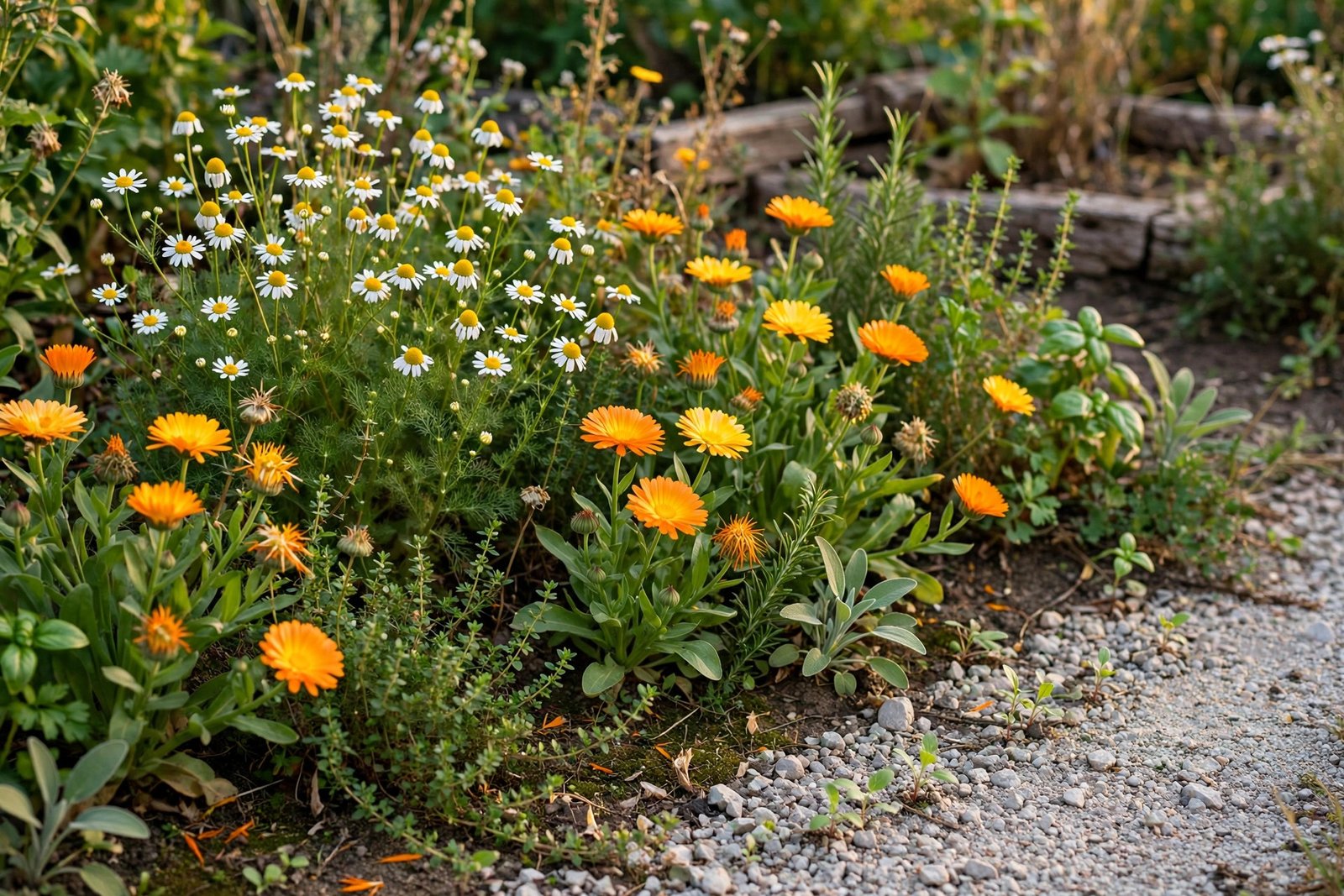
German chamomile is the easiest good decision in this roundup, and the prettiest. An annual that grows taller than 24 inches, it carries fern-like foliage and 3/4-inch apple-scented white flowers with yellow centers from late spring into summer — flowers you pick in the morning, just before they fully open, and dry for tea. It asks almost nothing: press the seed into the surface (it needs light), thin to one plant every 8 inches, and direct-sow 4 to 6 weeks before your average last frost, as soon as the soil can be worked. Germination takes 10 to 15 days. It is drought tolerant, deer resistant, and it attracts beneficial insects and pollinators while it is at it. Gardeners rate it 4.5 from 60 reviews. The honest trade-off is tidiness: chamomile self-sows freely, so a plant left to set seed will return next year in places you did not plan — charming in a cottage bed, a weed in a tidy one. Our reseeding guide shows how to enjoy that habit without letting it run the garden.
Pros: fragrant tea flowers; direct-sow simple; drought and deer tolerant; pollinator friendly.
Cons: self-sows freely; tall, airy plants can flop without neighbors for support.
German Chamomile Seeds
Apple-scented white flowers for tea, direct-sown in early spring — pick in the morning.
Best Perennial Lemon Herb: Lemon Balm
Lemon balm is the herb you plant once and then negotiate with for years — in the best way, if you know the terms. A perennial hardy in zones 3 to 7, it grows 12 to 24 inches tall with crinkled, oval leaves that carry a lemony mint flavor and fragrance, and small white flowers from mid- to late summer. Start it indoors 6 to 8 weeks before your average last frost, press the seed into the surface, and thin to one plant every 18 inches; germination takes 10 to 15 days. It is drought tolerant and deer resistant, it attracts pollinators, and it is a good container variety — which is worth considering, because lemon balm spreads by setting lots of seed and will overtake a bed if it is allowed to go unchecked. Prune the flowering stalks before they set seed and it stays a well-behaved perennial. Let it seed, and you will have lemon balm everywhere, which some gardeners count as a feature. Gardeners rate it 4.5 from 21 reviews. Use the leaves in tea, as a lemony cooking herb, or simply brush past it on a warm evening — the fragrance is the point as much as the flavor.
Pros: perennial in zones 3–7; lemon-mint flavor for tea and cooking; drought tolerant; container friendly.
Cons: spreads aggressively by seed if flower stalks are left to set seed.
Lemon Balm Seeds
A hardy perennial with lemony mint leaves — prune flower stalks to keep it in bounds.
Best Lavender: Munstead Lavender
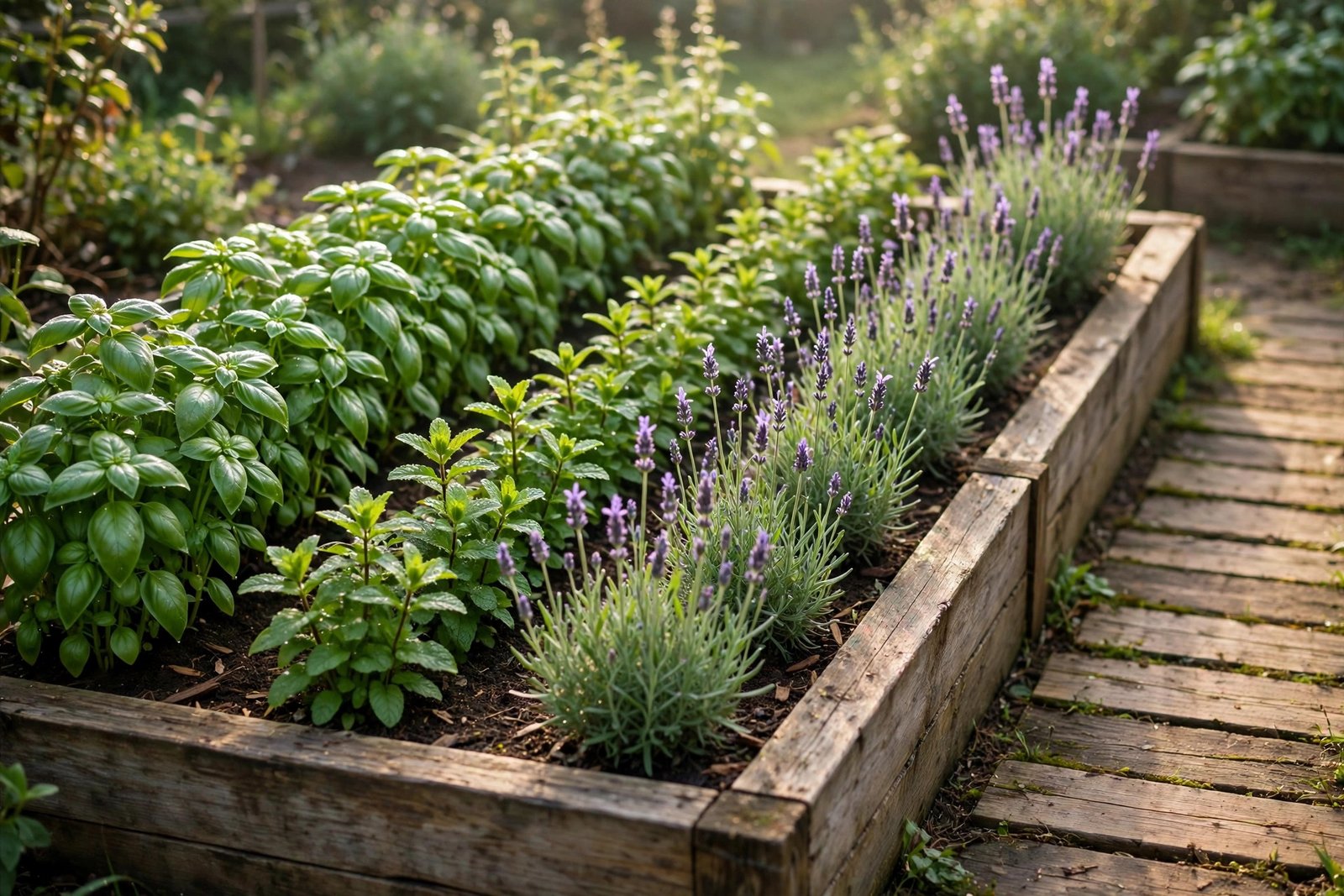
Munstead is the lavender for gardeners who want flowers they can actually use, sooner. Introduced in 1916 and named for Munstead Woods in England, where it was a favorite of garden designer Gertrude Jekyll, it flowers earlier than other lavenders and stays compact at 12 to 24 inches. It is a perennial in zones 5 to 9, heat and drought tolerant, deer resistant, and its flowers are edible — steep them into simple syrup for lemonade and cocktails, bake them into bread, cookies, and scones, or flavor jellies with them. The price of admission is patience: germination takes 15 to 90 days, and Botanical Interests recommends starting seed indoors 10 to 12 weeks before your average last frost, thinning to one plant every 18 to 24 inches. That is the longest lead time in this roundup, by a wide margin. If you want lavender this summer, start early, keep the seed warm and barely covered, and do not give up on a tray that looks empty in week three. Gardeners rate it 4.1 from 23 reviews. For a first lavender, Munstead’s earliness and compact habit make the wait easier to forgive.
Pros: early flowering, compact habit; culinary English lavender; heat and drought tolerant.
Cons: germination takes 15 to 90 days; needs a 10- to 12-week indoor head start.
Munstead Lavender Seeds
Early, compact English lavender for cooking and syrups — start it 10 to 12 weeks early.
Best Edible Flower: Resina Calendula
Calendula is the herb that earns its keep twice: bright yellow, daisy-like blooms for the eye, and exceptionally resin-rich petals for the kitchen and the medicine cabinet. The petals have been used for hundreds of years, and they are edible — mix them into egg dishes, casseroles, baked goods, salads, and sandwiches. Resina is very frost tolerant and may even be seen blooming in snow, which makes it one of the most forgiving herbs you can grow from seed: it keeps going when tender herbs have long since given up. Gardeners rate it 4.8 from 25 reviews, the highest rating in this roundup. The trade-off is a matter of taste and purpose: calendula is a flower herb, not a leafy cooking herb, so it will not replace basil or mint at dinner. Grow it at the edge of the herb bed, let some flowers set seed so it returns on its own, and harvest petals often — the more you pick, the more it blooms.
Pros: edible, resin-rich petals; very frost tolerant; highest gardener rating here.
Cons: a flower herb, not a leafy staple; self-sows, so deadhead some flowers to limit volunteers.
Resina Calendula (Pot Marigold) Seeds
Resin-rich edible petals on a frost-tough plant that may bloom in snow.
Best Pollinator Herb: Lambada Bee Balm
Bee balm is the herb you grow for the garden as much as for the kitchen, and Lambada is the variety chosen for dry-soil tolerance — more tolerant of dry conditions than other bee balm varieties, which matters in a hot, sunny bed. Its lavender-pink flower clusters attract butterflies, hummingbirds, and bees, and the edible petals carry a lemon-mint flavor that can stand in for oregano in savory dishes, steep into tea, bake into breads, or float in punch. Plants bloom quickly for a splash of summer and fall color. The trade-off is that bee balm is a looker first and a kitchen staple second: you will reach for basil and mint daily and for bee balm petals on the days you want a dish — or a garden — to feel like an occasion. Plant it where you can watch it from the kitchen window. Gardeners rate it 4.3 from 23 reviews.
Pros: pollinator magnet; edible lemon-mint petals; more dry-soil tolerant than other bee balms; fast to bloom.
Cons: an accent herb, not a daily cooking staple; needs sun and room to show off.
Lambada Bee Balm Seeds
Lavender-pink clusters for bees and hummingbirds, with edible lemon-mint petals.
The One to Grow Only in a Pot: Common Mint
Mint is the herb everyone warns you about, and the warning is earned twice over. First, it spreads rapidly by underground stems, so a plant tucked into a bed will colonize the bed and then the bed next to it. Second, grown from seed it is the fussiest starter in this roundup: gardeners consistently report slow, finicky germination, followed by easy, vigorous growth once plants are established. The flavor is worth it — mint enhances iced tea and mixed drinks, surprises in savory dishes, and its tiny flowers are loved by bees — but the honest advice is to sow it thickly, expect a slow start, and keep it in a pot from day one. It earns no pick card here because, from seed, it is the least reliable start in the set and the most likely to escape its welcome. If mint is the herb you want most, give it its own container, full sun to part shade, and steady water, and it will repay you for years without eating the garden.
Side-by-Side Comparison
| Herb | Type | Key timing | Best for |
|---|---|---|---|
| Genovese Basil | Annual | Start indoors 4–6 wks; soil 60°F+ | Pesto, fresh cooking |
| Noga Basil | Annual (hybrid) | As Genovese; pinch at 3–4 leaf sets | Basil where mildew strikes |
| German Chamomile | Annual | Direct sow 4–6 wks before last frost | Tea, pollinators |
| Lemon Balm | Perennial, zones 3–7 | Start indoors 6–8 wks | Tea, lemon flavor |
| Munstead Lavender | Perennial, zones 5–9 | Start indoors 10–12 wks | Cooking, syrups, fragrance |
| Resina Calendula | Annual, self-sows | Very frost tolerant | Edible petals |
| Lambada Bee Balm | Flowering herb | Blooms quickly, summer to fall | Pollinators, edible petals |
Final Thoughts
Start with Genovese basil and one tea herb — chamomile if you want flowers by midsummer, lemon balm if you want a perennial that comes back. Add Noga if mildew has ever ended your basil season, Munstead lavender if you will start seed early and wait, calendula for the bed edge, and bee balm for the pollinators. Keep mint in a pot, always. For the timing and pinching that make basil produce instead of bolt, read our basil guide, and for the herbs that return on their own, read our reseeding guide. For the wider first-garden plan, see our beginner vegetable seed roundup and our guide to starting seeds indoors.