If you have ever stood in your garden in late October, trowel in one hand and a bag of tulip bulbs in the other, wondering if you have already missed your chance, you are not alone. I have stood right there, tired, a little muddy, and very tempted to put the whole bag back in the garage.
Here is the good news: October is not too late. In fact, for most of us, it is right on time. Planting bulbs now is one of the simplest weekend jobs in the garden, and spring-you will thank fall-you every single morning those first flowers open. Let’s dig into it!
Why October Is Still Bulb Season
Spring bulbs need a cold winter to bloom, and they need roots in the ground before the soil freezes. That is why fall planting works: the bulb settles in underground while everything above ground goes quiet.
University of Minnesota Extension puts the ideal bulb-planting window at mid-September to mid-October, when average soil temperatures are around 50 degrees, and notes that tulips can still go in until the ground freezes. So if your soil can still be dug, you still have time. Work smarter, not harder: a little digging now saves a whole spring of wishing you had.
What to Plant First
If the garden center shelf looks picked over, grab what is left of these reliable favorites first:
- Daffodils: the most forgiving bulb for beginners, and the one squirrels usually leave alone.
- Tulips: the big spring show, best in groups of seven or more for real impact.
- Crocus: small, early, and cheerful, perfect tucked along a path or under a tree.
Choose firm bulbs with no soft spots or mold, and mix early-, mid-, and late-blooming kinds so the color lasts for weeks, not days.
How I Plant Bulbs in One Weekend Afternoon
- Pick a sunny, well-drained spot. Bulbs hate sitting in puddles (hint: puddles linger after rain). Full sun is best, though they will tolerate a little shade.
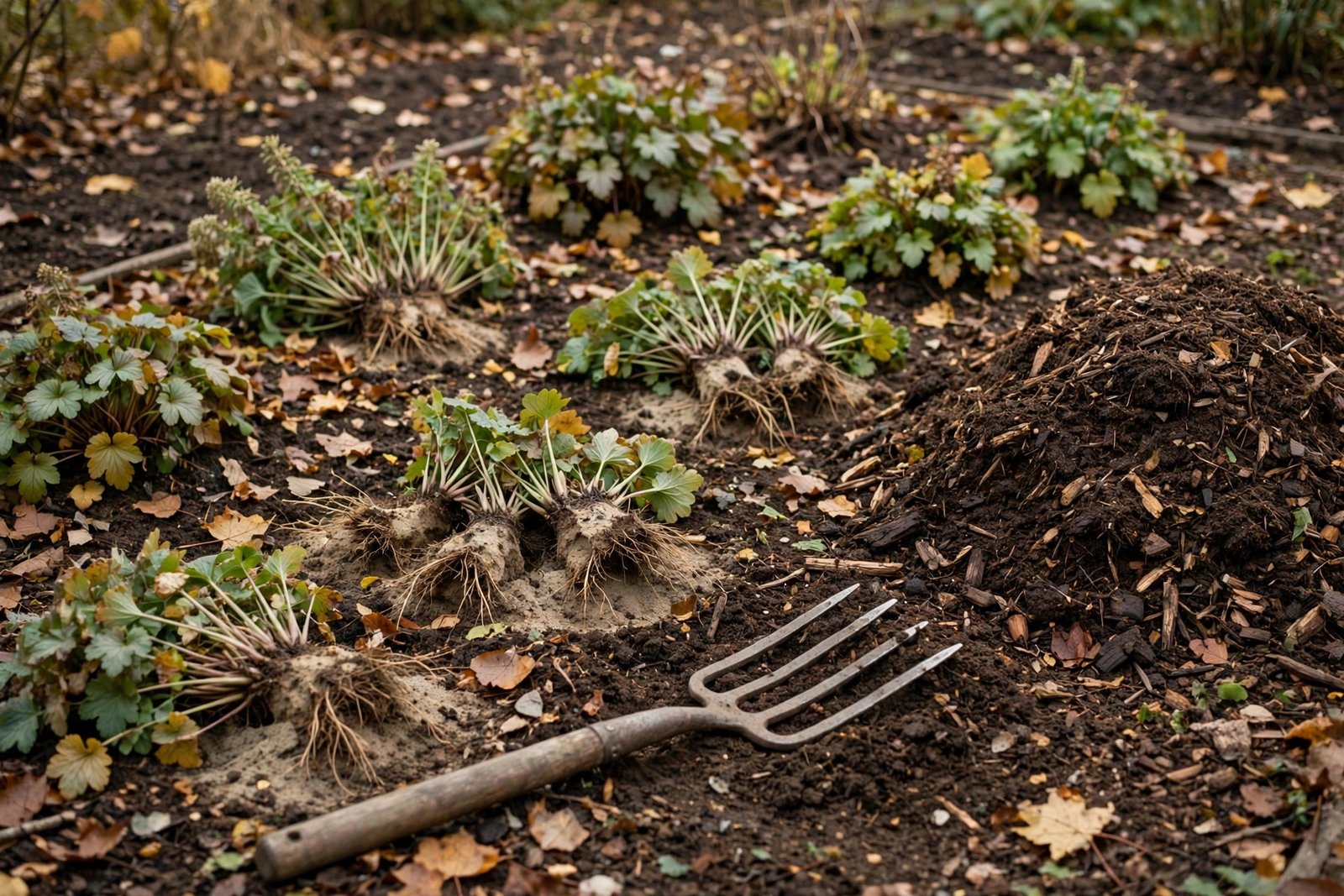
- Loosen the bed. Dig and crumble the soil so roots can spread easily. If an ornamental grass has crowded the bed, fall is a good moment for dividing ornamental grasses while you already have the shovel out.
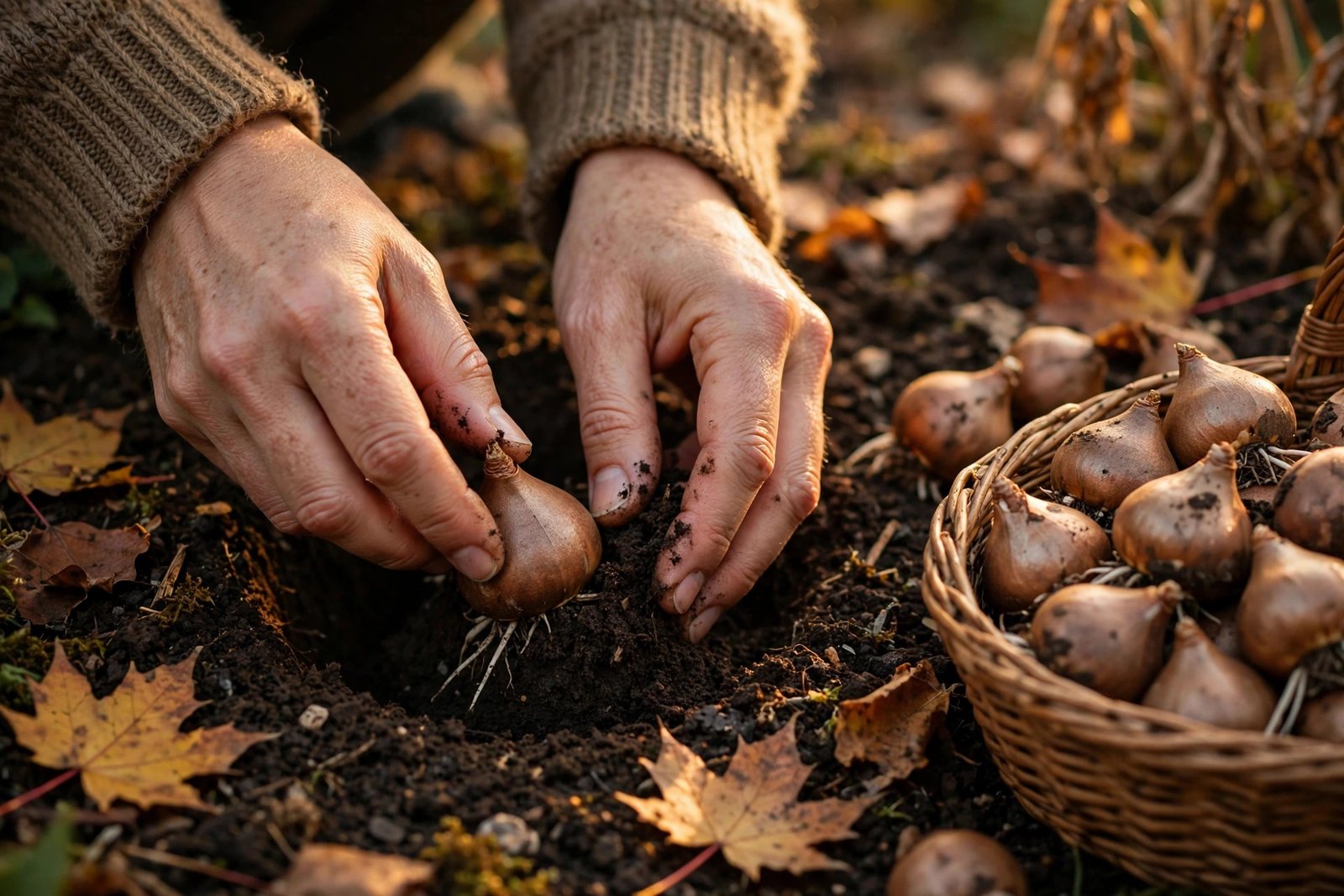
- Dig to the right depth. Plant each bulb two to three times deeper than its own diameter, pointy end up. Tulips and daffodils generally go 6 to 8 inches deep. In light, sandy soil, plant an inch or two deeper; in heavy clay, an inch or two shallower.
- Space, cover, and water. Space large bulbs 4 to 6 inches apart, cover with soil, and water thoroughly so the soil settles around each bulb. Then add 2 to 3 inches of leaf mulch or clean straw to hold moisture and steady the soil temperature.
Along the lawn edge, bulbs struggle most where foot traffic has packed the soil. If that strip stays soggy or brick-hard, read up on aerators before you dig, because loosening compacted ground helps bulbs and grass alike.
Pro Tips
- Label everything. I kept a notebook handy my first fall, and I still do. You will not remember in April where the white tulips went.
- Outsmart the squirrels. Lay a piece of chicken wire flat over a new bulb bed and cover it lightly with mulch. It stops most digging without hurting anything.
- Skip the warm wall. Avoid planting right against the southwest side of the house, where winter sun thaws the soil early and tender shoots can freeze.
- Plant in drifts, not rows. A loose cluster looks natural and gives a much fuller show than a single straight line.
Wrap-Up Tips
You do not need a perfect fall weekend, a perfect bed, or perfect energy. You need a bag of firm bulbs, soil you can still dig, and about an hour. Plant them now, mulch them well, and let winter do the quiet work. Your lawn will thank you, and so will you, come spring.
Happy gardening!