Bermuda is a warm-season grass that loves heat and sun, and it fills in fast once it gets going. The tricky part is knowing how much to start with — seed, sprigs, or plugs all work, but they take very different amounts and very different amounts of time. This calculator gives you the number for your lawn, in plain terms, so you can pick the method that fits your patience and your budget of weekends.
Seed, sprigs, or plugs — how much bermuda you need to cover your lawn, and which method fits your timeline.
Use the calculator
What to type in
Measure your lawn in square feet and type that number in first. If you are only fixing a bare patch, type in the patch size instead — the sprig and plug math covers the area you type in, grid-style, from edge to edge.
Then pick your method. For seed, pick hulled or unhulled. Hulled seed has its hard outer coat removed, so it sprouts faster and you need far less of it. Unhulled seed still wears that coat, so it needs a much heavier rate.
For sprigs, pick a guide’s range from the list. For plugs, pick your spacing. Closer plugs cost you more plugs up front and fill in sooner; wider plugs cost fewer plugs and take longer.
What your number means
You will always get a range, not a single magic number — for example, 5 to 10 pounds, not 7.5 pounds. That is honest: the guides themselves give ranges, and where you land in the range depends on your soil, your watering, and how much of a hurry you are in. Use the low end when conditions are good and you are patient; lean toward the high end for a thin lawn, a late start, or a quicker fill-in.
If you entered purity and germination from your seed label, you will also see an adjusted amount. That adjustment accounts for the share of live seed in the bag — a bag that is not all live seed needs a little more seed to deliver the same number of living plants.
Plug counts are always rounded up to a whole plug. You cannot plant part of a plug, and rounding down would leave a hole in the grid.
Which method fits your timeline?
Seed is the cheapest way in and the slowest to look like a lawn. It only works for common, seeded bermuda types — not hybrids. Keep the seedbed damp with light, frequent watering until the seed sprouts.
Sprigs sit in the middle. They are pieces of stem that root and spread, and they fill in faster than seed. They need steady watering while they take hold.
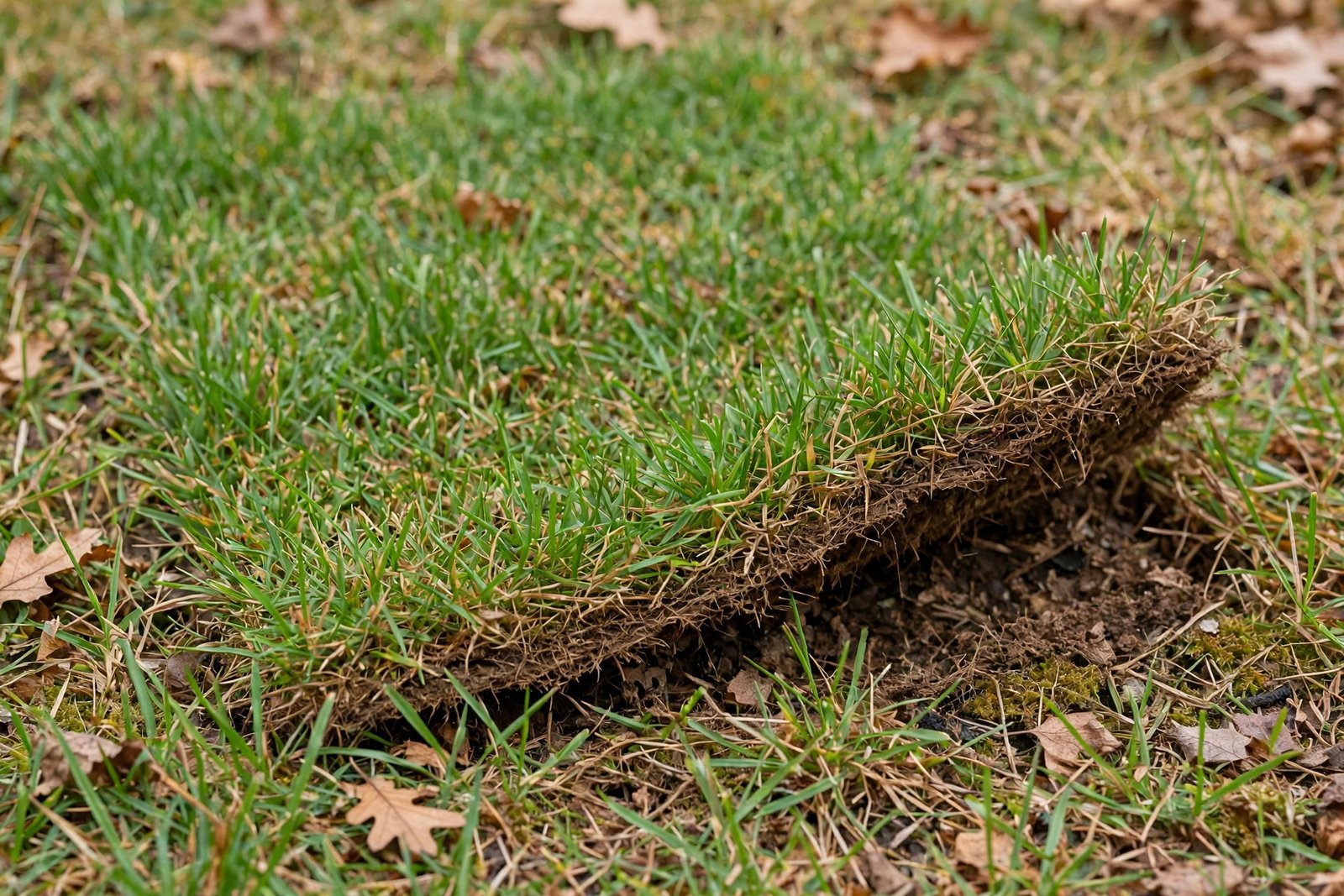
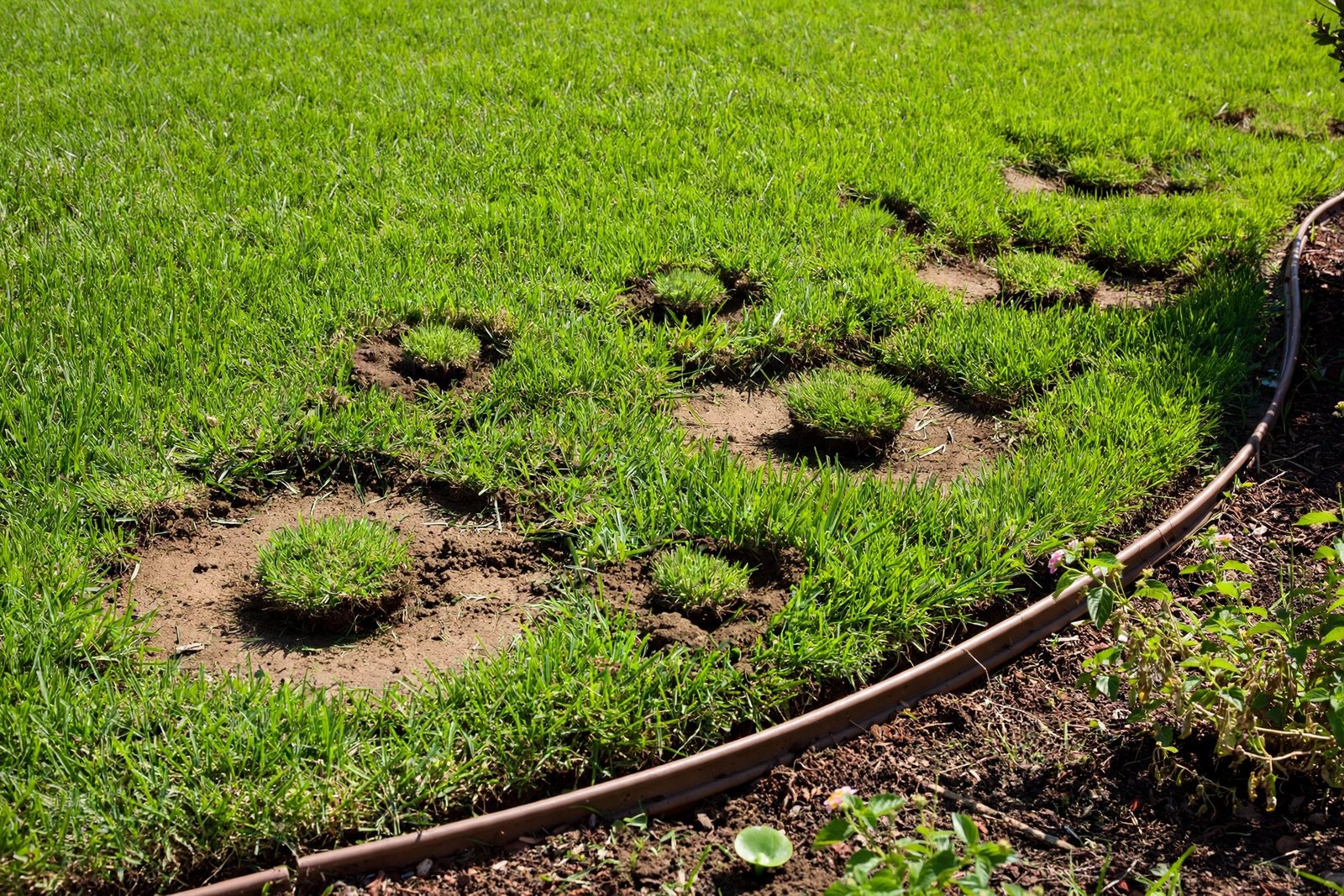
Plugs are the fastest of the three to look planted, because you are starting with real pieces of turf. They are also the most work per square foot, since every plug goes in by hand. Wider spacing saves plugs and stretches the wait; closer spacing fills in sooner.
Bermuda needs full sun. A shady spot will stay thin no matter how much seed, sprigs, or plugs you put down, and dry spells or missed watering will stretch every timeline below.
One more option, for completeness: sod covers the area you buy, square foot for square foot — there is no calculation to do, so it is not a mode in this calculator.
How much seed, sprigs, and plugs the guides call for
Florida’s guide, Texas’s guide, North Carolina’s guide, and Virginia’s guides do not all give the same number. That is normal — they were written for different states and, in one case, for patch repair rather than a whole new lawn. The table below keeps each number with the guide it came from, so you can see the spread instead of a single averaged answer.
| Method | Rate per 1,000 sq ft | Guide |
|---|---|---|
| Seed, hulled | 1 to 2 pounds | Florida guide; North Carolina guide; Virginia handbook (in live-seed terms) |
| Seed, unhulled | 5 to 10 pounds | Virginia handbook (in live-seed terms) |
| Seed, low rate | 0.5 to 1 pound | Virginia spring-planting tips page (undated, no live-seed label); Texas guide, Table 2 |
| Sprigs, full lawn | 5 to 10 bushels | Florida guide; Texas guide |
| Sprigs, patch repair only | 3 to 5 bushels | North Carolina guide (bare or worn areas, not a whole new lawn) |
| Sprigs, handbook rate | 7 to 10 bushels | Virginia handbook |
| Sprigs, full spread across guides | 3 to 10 bushels | All sprig guides above, lowest to highest |
| Plugs | By spacing — see the plug table below | Florida guide (12 to 24 inches apart); Virginia handbook (6 to 12 inch centers) |
Notice the seed gap: unhulled seed needs roughly five times as much as hulled seed for the same lawn. If a bag does not say hulled, check before you buy — that one word changes the amount by a lot.
How many plugs at each spacing
Plug math is a simple grid. Take your area, and divide it by your spacing in feet, squared. A 12-inch spacing is 1 foot, so each plug covers 1 square foot. A 6-inch spacing is half a foot, so each plug covers a quarter of a square foot — four times as many plugs.
| Plug spacing | Plugs per 1,000 sq ft | How the math works |
|---|---|---|
| 6 inches apart | 4,000 | 1,000 ÷ (0.5 × 0.5) = 4,000 |
| 12 inches apart | 1,000 | 1,000 ÷ (1 × 1) = 1,000 |
| 18 inches apart | 445 | 1,000 ÷ (1.5 × 1.5) = 444.44, rounded up to 445 |
| 24 inches apart | 250 | 1,000 ÷ (2 × 2) = 250 |
How long until it fills in
These timelines come with their conditions attached. Good watering and a sunny spot are part of the deal — without them, everything takes longer.
| Method | Cover timeline | Condition |
|---|---|---|
| Sprigs at 5 bushels per 1,000 sq ft | About 2 months | Texas guide; with good growing conditions |
| Plugs, closer spacing (12 inches) | 3 to 6 months | Florida guide; closer spacing covers sooner |
| Plugs, farther spacing (24 inches) | 6 to 9 months | Florida guide; farther spacing takes longer |
| Plugs, 4-inch plugs on 12-inch centers | 100% cover in 6 to 8 weeks | Virginia spring-planting tips page; with a regular nitrogen and watering program |
The timelines above are the only plug cover timelines used on this page. Plug size matters: the 6-to-8-week timeline is for 4-inch plugs, while the Florida timelines do not name a plug size.
Worked examples
Example 1 — Sprigs for a 5,000 sq ft lawn. A 5,000 sq ft lawn is 5 units of 1,000 sq ft. At the Florida and Texas rate of 5 to 10 bushels per 1,000 sq ft: 5 × 5 = 25 bushels at the low end, and 10 × 5 = 50 bushels at the high end. Answer: 25 to 50 bushels.
Example 2 — Hulled seed for a 5,000 sq ft lawn. Again, 5 units of 1,000 sq ft. At 1 to 2 pounds per 1,000 sq ft: 1 × 5 = 5 pounds at the low end, and 2 × 5 = 10 pounds at the high end. Answer: 5 to 10 pounds.
Example 3 — Plugs on 12-inch centers for a 1,000 sq ft lawn. 12 inches is 1 foot. 1,000 ÷ (1 × 1) = 1,000 plugs. Answer: 1,000 plugs.
Example 4 — Adjusting for live seed. A bag labeled 85% germination and 98% purity holds 85 × 98 ÷ 100 = 83% live seed. If you need 10 pounds of live seed, the bag amount is 10 × (100 ÷ 83) = 12.05 pounds, or about 12.0 pounds. Answer: 83% live seed; about 12.0 pounds from the bag.
When to plant
Planting windows differ by state, so use the one that matches where you live — there is no single nationwide window for bermuda.
| Where | Window | Guide |
|---|---|---|
| Florida | April through September, while plants are actively growing | Florida guide |
| Texas | Spring and early summer for seed and sprigs; warm-season seed sprouts best at 70 to 95 degrees | Texas guide |
| North Carolina | Start patch repair in late May and continue through summer | North Carolina guide |
| Virginia, southern and eastern areas | Seed May through July 15; sprigs and plugs late May through July 15 | Virginia handbook |
| Virginia, northern areas | June 1 through July 15 | Virginia handbook |
| Virginia, general warm-season planting | Mid-spring through mid-summer | Virginia spring-planting tips page |
What this calculator does not do
This tells you how much bermuda you need to cover one area, and roughly how long it takes to fill in — not how often to water each week, what fertilizer to use, or whether a shady or cool-season lawn is a better fit, and it does not know your weather or your soil.
More tools for the same lawn
If you are starting from scratch, the grass seed calculator works the same way for cool-season seed, and the fertilizer calculator covers how much fertilizer goes down per 1,000 square feet. Once the lawn is up, the sprinkler catch-can calculator checks how fast your sprinklers actually put water down.
Sources
- UF/IFAS Extension — “Bermudagrass for Florida Lawns,” ENH19 (Trenholm, Cisar, Unruh; original May 1991, revised April 2011; fetched in full Oct 31, 2026): https://extadmin.ifas.ufl.edu/nwdistrictmedia/ph-gardening/2014/04/Bermudagrass-for-Florida-Lawns.pdf
- Texas A&M AgriLife Extension — “Turfgrass Establishment for Texas: Ecological Turf Tips” (Chalmers & McAfee, B-6239; web version and June 2010 PDF, both fetched in full Oct 31, 2026): https://mytexas.ag.tamu.edu/publications/turfgrass-establishment-for-texas-ecological-turf-tips/ and https://galveston.agrilife.org/files/2011/05/B-6239-Turfgrass-Establishment-for-Texas-6-2010.pdf
- NC State Extension — “Bermudagrass Lawn Maintenance Calendar,” AG-431 (publication date July 30, 2021; fetched in full Oct 31, 2026): https://content.ces.ncsu.edu/bermudagrass-lawn-maintenance-calendar
- Virginia Cooperative Extension — Agronomy Handbook, Part III, Turfgrass, SPES-299-C (Goatley, Hardiman, Chalmers, Whitt; fetched in full Oct 31, 2026): https://www.pubs.ext.vt.edu/content/dam/pubs_ext_vt_edu/424/424-100/spes-299-C.pdf
- Virginia Cooperative Extension — “Spring Planting Considerations for Warm-season Turfgrasses in Virginia Lawns” (VCE Virginia Tech tips page; undated in the fetched text, references 2009–2010 variety recommendations; fetched in full Oct 31, 2026): https://ext.vt.edu/lawn-garden/turfandgardentips/tips/warm-season-planting.html