Landscape & Leisure is reader-supported. When you buy through links on our site, including Botanical Interests seed links, we may earn a commission at no extra cost to you. Prices change, so click through to confirm current pricing.
Here is the mistake that costs new garlic growers their best harvest: they buy whatever garlic looks good, plant it at the right time, do everything else right, and still end up with small bulbs. The variety was wrong for their winter, not their technique.
Garlic comes in two types, hardneck and softneck, and the difference is not subtle once you know it. One gives you scapes and big cloves and shrugs off real cold. The other gives you braids, a longer pantry life, and a lot more cloves per bulb. Picking the wrong one for your climate is the single easiest garlic mistake to avoid, because the choice takes about two minutes once you see the trade-offs.
| Trait | Hardneck | Softneck |
|---|---|---|
| Cold hardiness | Built for cold winters; the safer default in the coldest zones | Can perform in cold climates too, but the riskier pick where winters are harshest |
| Scapes | Produces a curly flower stalk in spring — snap it off for bigger bulbs | No scapes |
| Cloves per bulb | Fewer, larger, easier to peel (Chesnok Red: 9–10) | More, smaller (Silver White: 10–12; Sicilian Artichoke: 12–20) |
| Storage | Shorter (Chesnok Red: 4 to 6 months) | Longer (Silver White: up to 12 months; Sicilian Artichoke: up to 8 months) |
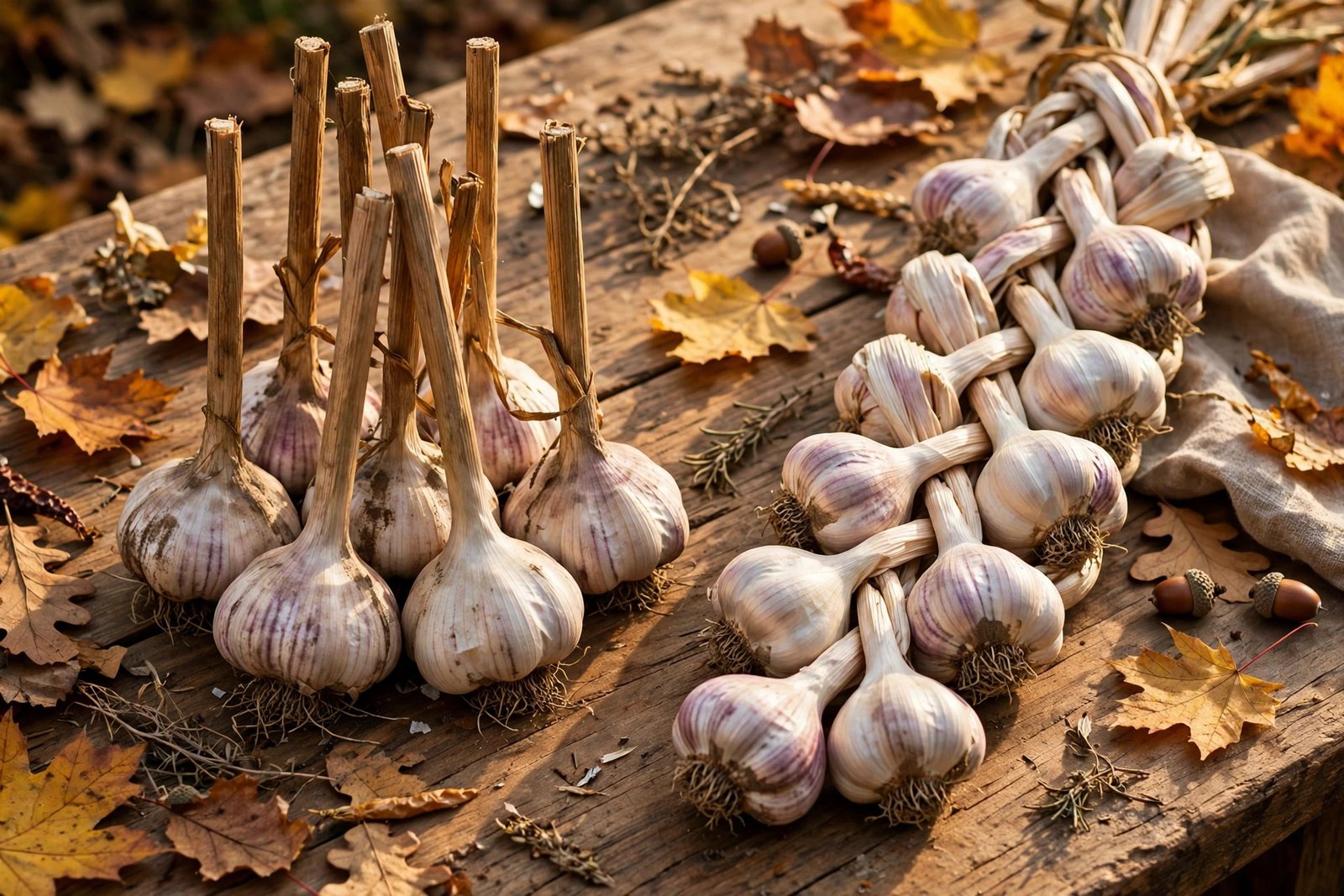
| Braiding | No — the stiff neck will not braid | Yes — the flexible neck braids beautifully |
| Flavor | Often more robust (Chesnok Red is a roasting favorite) | Ranges from mild (Silver White) to mild-to-spicy (Sicilian Artichoke) |
The hardneck case
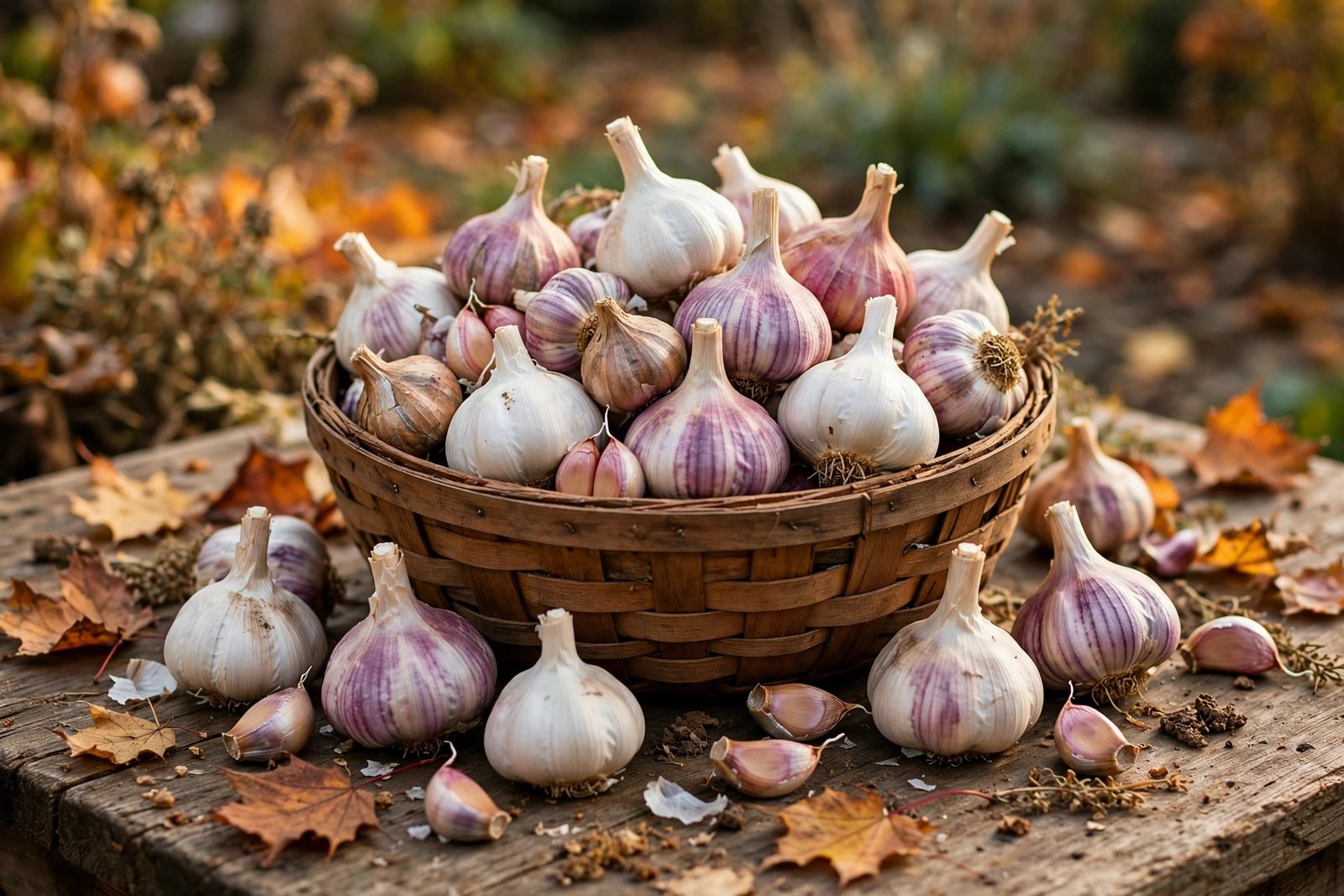
Hardneck garlic is the cold-climate default, and the reason is simple: it evolved for winters that stay frozen. Its cloves are fewer and larger, which makes peeling painless, and its flavor tends toward the robust end — the kind of garlic that stands up to roasting.
It also gives you scapes. In spring, a hardneck sends up a tall stem with a curl at the top and a swollen bud at the end. Snap it off and the plant puts its energy into the bulb instead of the flower, and you get a bonus ingredient with a mild garlic flavor. That is a real perk, not a consolation prize.
The honest cost is storage. A hardneck like Chesnok Red keeps four to six months. Eat it first, enjoy it most, and do not count on it the following spring.
Chesnok Red Hardneck Garlic
The hardneck to plant first in a cold climate: big cloves, robust flavor, scapes in spring.
The softneck case
Softneck garlic is the pantry garlic. Its necks stay flexible, so it braids into the classic hanging braid, and its storage life is the longest of any garlic — up to twelve months for a variety like Silver White when properly cured and kept cool and dry. One good harvest can genuinely carry you to the next one.
Softnecks also give you more cloves per bulb, which means more plants from fewer bulbs. Sicilian Artichoke packs twelve to twenty cloves into a single head, so one bulb plants a whole row.
The honest costs are twofold. The cloves are smaller, so peeling takes longer. And while softnecks like Silver White are proven to perform in cold climates, they are still the riskier choice where winters are harshest — no scapes, no hardneck cold pedigree, and a lower margin for error.
Silver White Softneck Garlic
Mild, braidable, and the longest keeper here at up to twelve months.
Sicilian Artichoke Softneck Garlic
Twelve to twenty cloves per bulb with a balanced mild-to-spicy flavor.
Which one to plant?
In the coldest gardens, plant hardneck first and treat softneck as the second row. That split gives you the cold safety of Chesnok Red plus the long storage of Silver White, and you are not betting the whole bed on one type.
In milder cold climates — where winters are cold but not brutal — the choice loosens up. A softneck-first garden works fine there, and the braiding and storage advantages start to outweigh the hardneck edge.
Do not plant softneck as your only garlic in a zone where January regularly stays below zero. That is the one version of this decision that reliably disappoints, and it is the mistake this whole comparison exists to prevent.
Once you have chosen your type, the planting steps are the same either way — timing, depth, spacing, and mulch are all covered in our fall garlic planting guide, and our cold-climate varieties roundup compares the three in-stock varieties head to head.