Here is the mistake: you buy the spreader that looks simplest, then learn its weakness from your lawn. A broadcast spreader fans granules into the neighbor’s flower bed. A drop spreader leaves stripes you can see from the street.
Both types work. They fail in opposite ways. This comparison settles which one fits your lawn, so you buy once.
What each spreader actually does
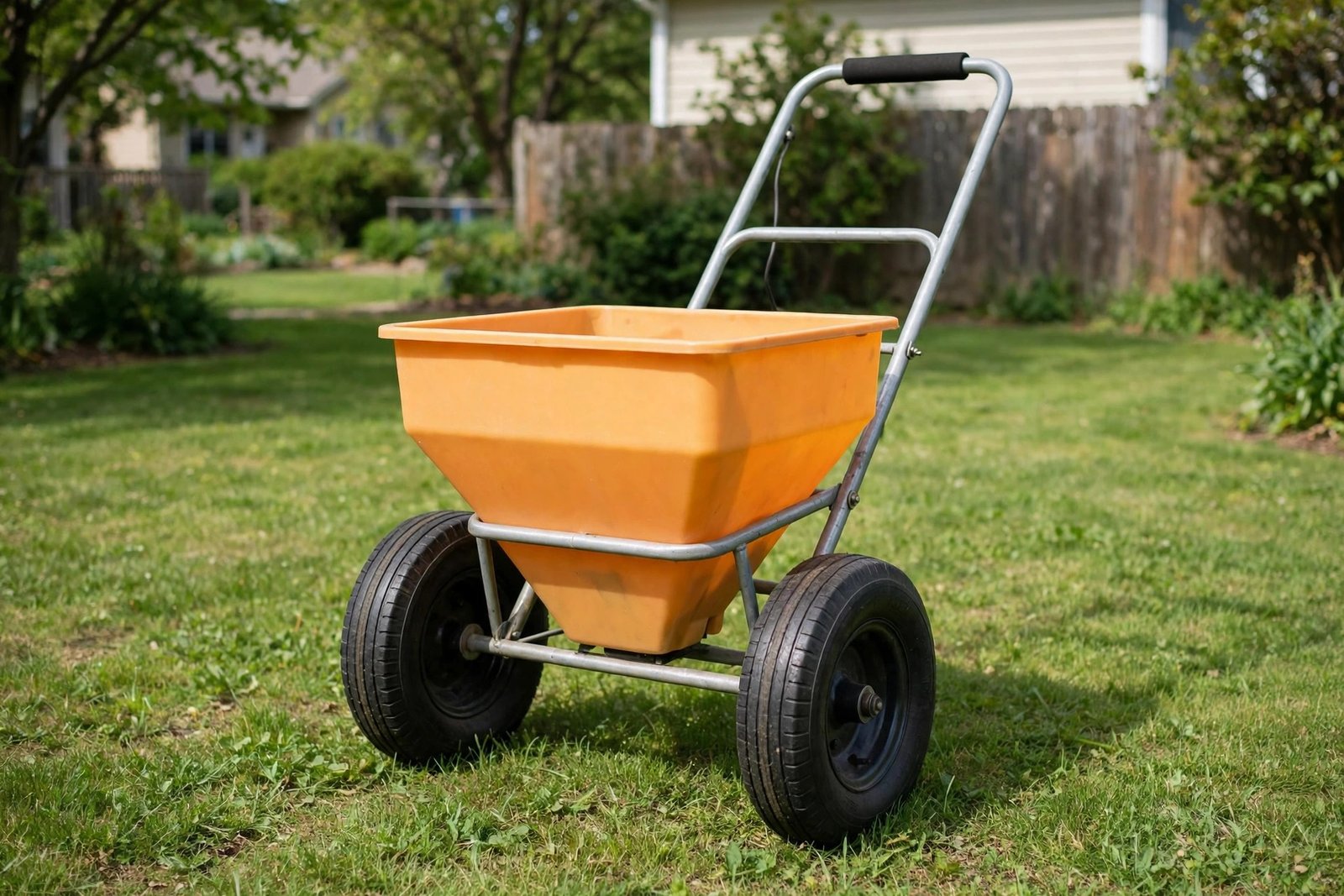
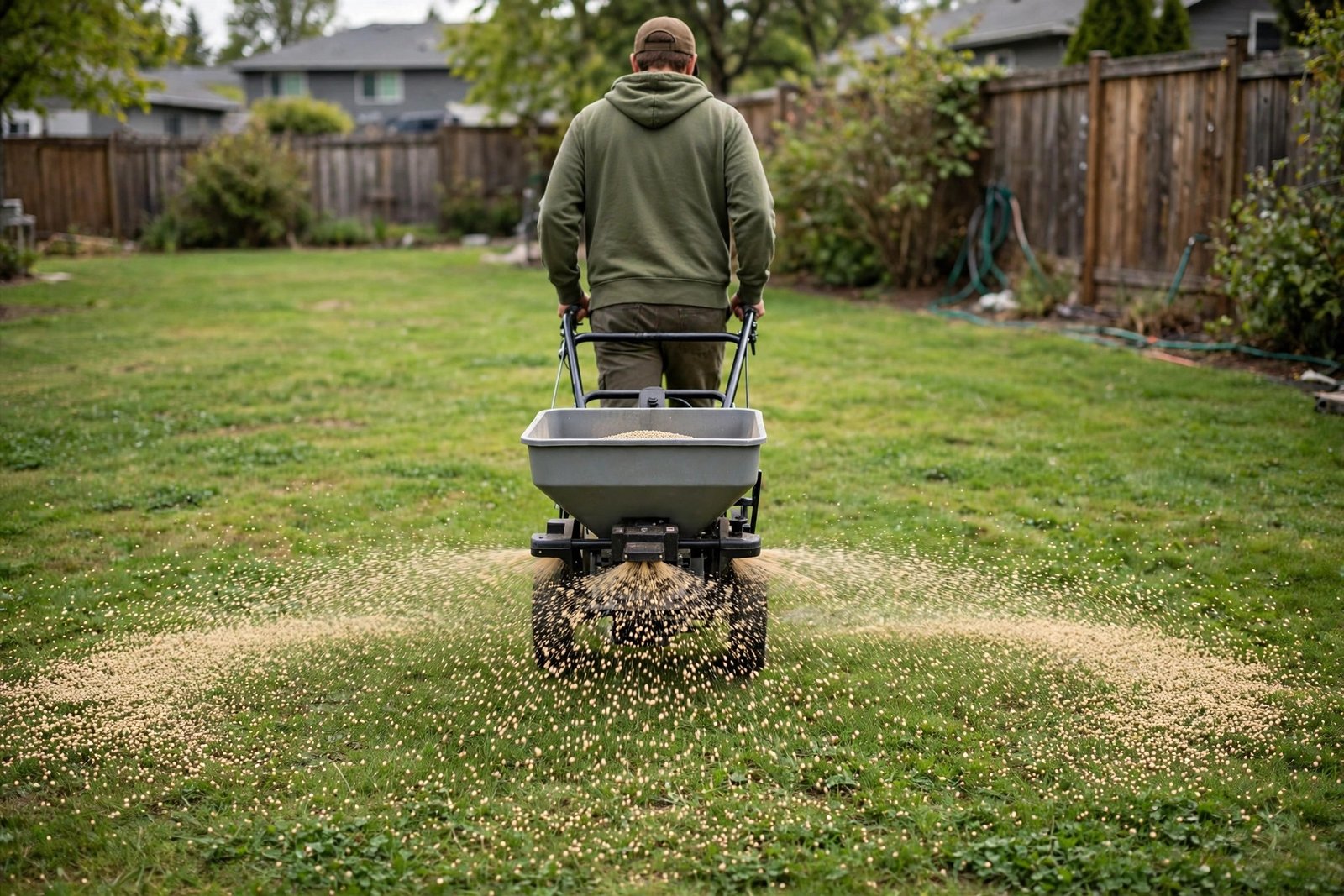
A broadcast spreader spins a plate under the hopper and throws granules outward in a wide arc, usually 8 to 12 feet across. You walk a normal pace, the arc overlaps on each pass, and a big lawn gets covered fast.
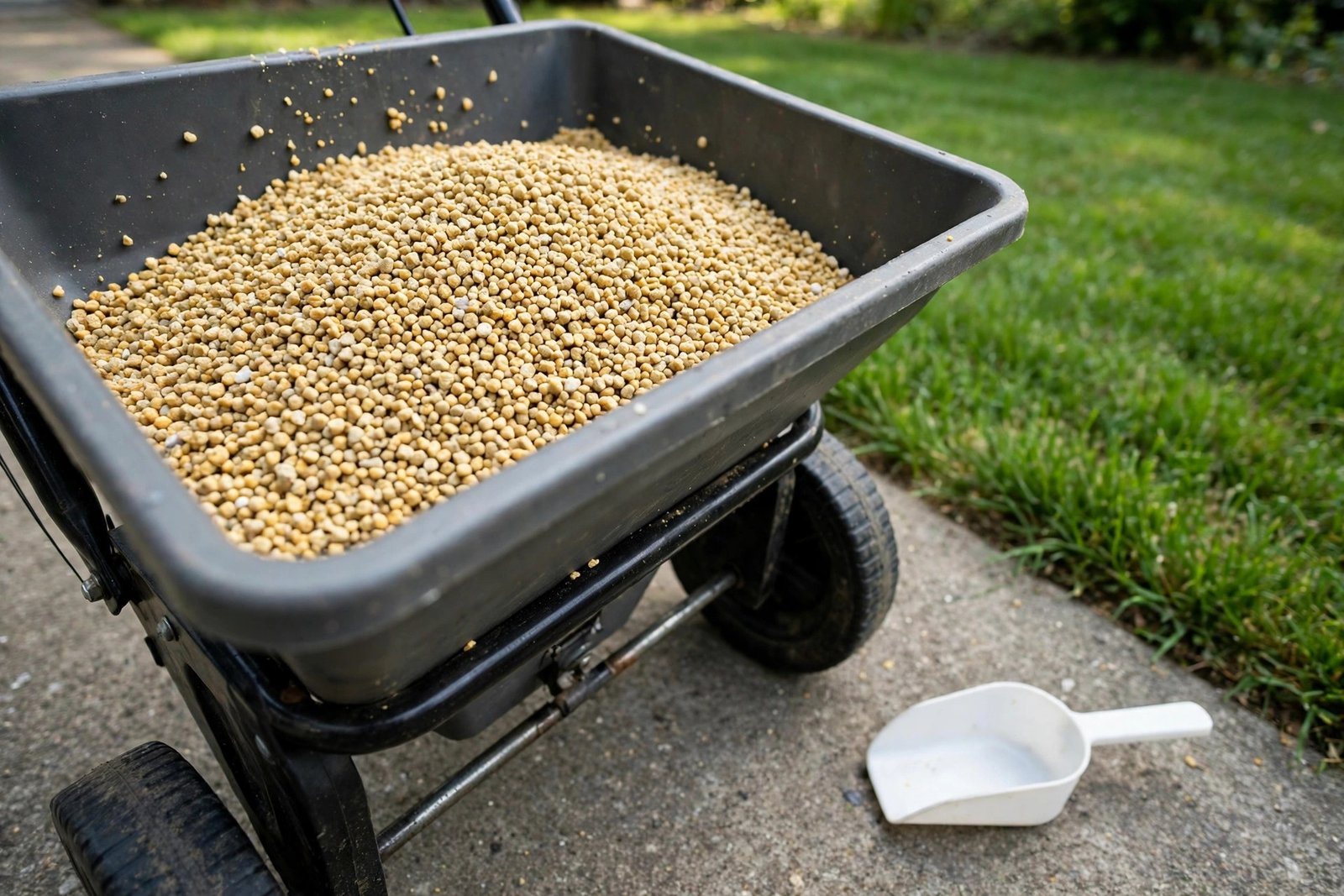
A drop spreader opens a slot in the bottom of the hopper and lets granules fall straight down, in a band exactly as wide as the machine, typically 18 to 24 inches. Nothing flies sideways. Where you walk is where the product lands.
That one difference drives everything else: speed, edge control, and striping risk all follow from whether the granules fly or fall.
Coverage width: broadcast wins, and it is not close
A broadcast pass covers four to six times the width of a drop pass. On a half-acre lawn, that is the difference between twenty minutes and over an hour of walking.
Drop spreaders make you pay for precision with time. Every pass is a narrow band, and a big lawn means dozens of passes. If your lawn is large and open, a drop spreader is a workout disguised as yard work.
Broadcast spreaders have the opposite problem on small or fussy lawns. A 10-foot arc is hard to aim inside a 6-foot side yard. The width that saves time on open ground wastes product in tight spaces.
Edge control: drop wins, broadcast compensates
A drop spreader cannot throw granules onto the driveway, because nothing leaves the machine sideways. Along sidewalks, beds, and property lines, that precision is genuine. You walk the edge and the product stops at the edge.
A broadcast spreader needs help at the edges. Models with an edge-guard or deflector shield block one side of the arc, so you can run along a hard surface without showering it. It works, but it is a feature you have to remember to engage, and cheap broadcast spreaders without it will scatter product wherever the arc reaches.
The honest read: drop spreaders control edges by design, broadcast spreaders control them by add-on. If your lawn is mostly edges — narrow strips, lots of beds, a small urban lot — the drop spreader’s built-in precision matters. If your lawn is mostly open grass, a broadcast spreader with edge control covers the few edges you have.
Striping risk: the mistake each type invites
Broadcast striping comes from overlap errors. Walk your passes too far apart and you leave light bands between arcs. Walk them too close and you double-dose the overlap. The fix is simple once you know it: space each pass by the effective spread width, and use a wheel-track or marker to keep the spacing honest.
Drop striping comes from the opposite error. Miss a few inches between bands and you leave a bare stripe of unfed grass. Overlap and you lay a dark double-fed line. There is no arc to blur the mistake, so a sloppy pass shows up as a perfect stripe.
Most homeowners stripe less with a broadcast spreader, because the overlapping arcs forgive small spacing errors. Drop spreaders punish small errors visibly. That is why a first-time spreader owner usually gets a better-looking result from a broadcast machine, even though the drop machine looks more precise on paper.
Best use cases, plainly stated
Buy a broadcast spreader if: your lawn is over 5,000 square feet, mostly open, and you want the job done fast. It is the right tool for routine fertilizing, overseeding a large area, and spreading on a schedule. See The Best Broadcast Spreaders for Lawns for the four picks that cover small lawns through tow-behind territory.
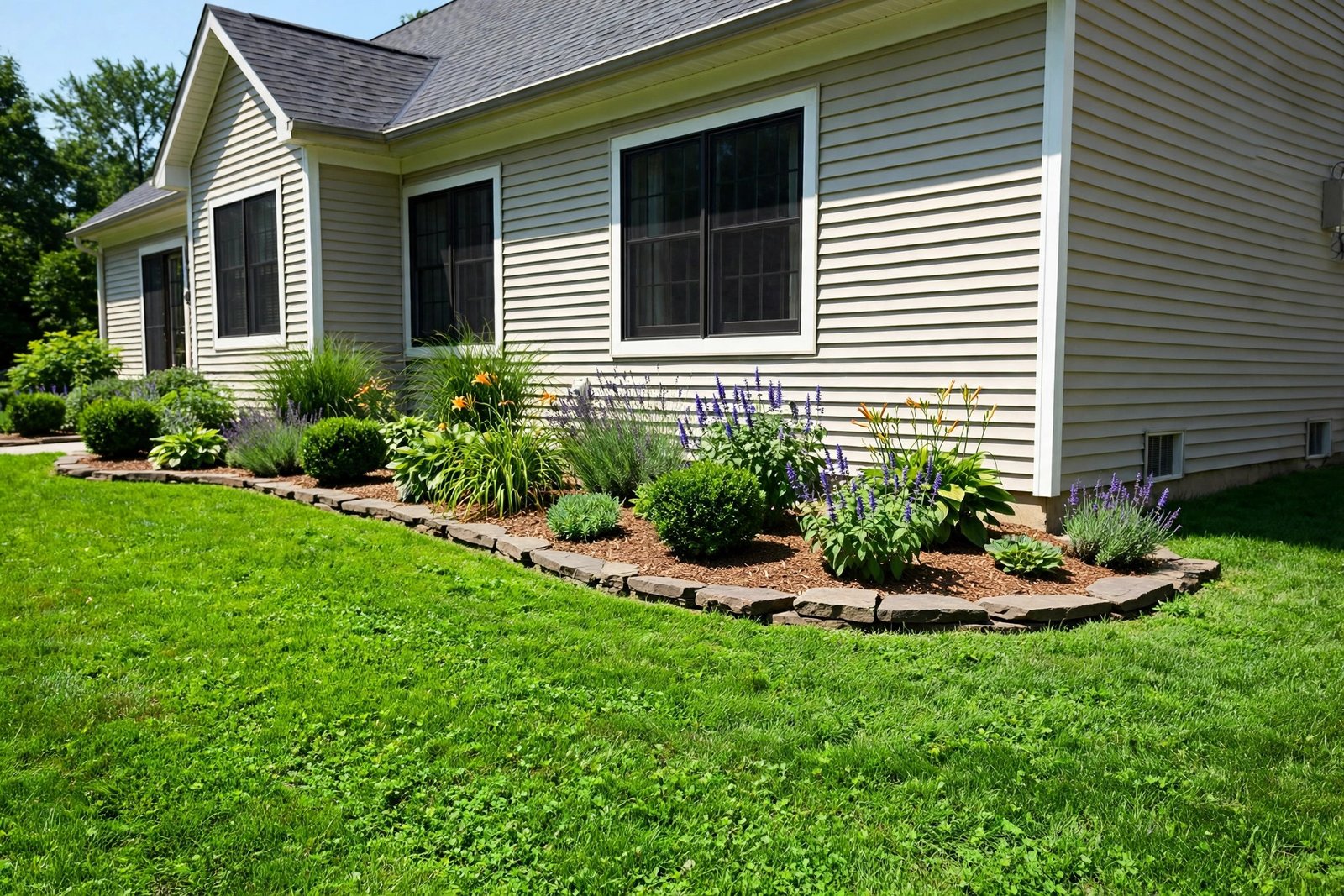
Buy a drop spreader if: your lawn is small, cut up by beds and paths, or bordered by surfaces you cannot afford to stain — a new concrete driveway, a vegetable garden, a neighbor’s prized flower border. It is also the right call for products where the label warns against drift onto non-target areas.
Own both if: you have a big lawn and fussy edges. Use the broadcast spreader for the open ground and the drop spreader for the borders. That sounds extravagant until you price one stained driveway or one burned flower bed.
What to do next
Measure your lawn and count your edges. Big and open means broadcast. Small and edgy means drop. Mixed means broadcast for the middle and a drop pass, or an edge guard, for the borders.
Whichever type you buy, calibrate it before the first real application. A spreader set to the wrong rate wastes product or starves the lawn, and no spreader type fixes that. How to Calibrate a Broadcast Spreader walks through the bag rate, the test area, and the adjustment in about twenty minutes.