Landscape & Leisure is reader-supported. When you buy through links on our site, including Botanical Interests seed links, we may earn a commission at no extra cost to you. Prices change, so click through to confirm current pricing.
You walk past the squash bin in November wondering which ones will still taste good in February, and which ones were a gamble from the day you planted them. Winter squash rewards a good variety choice twice: once at dinner, and again all winter, because the best keepers hold their flavor for months while the wrong pick softens by Christmas. These five are the ones worth the pantry space, each chosen for a different garden and a different table.
For when to pick and how to cure what you grew, see our guide to harvesting and curing winter squash. For what goes wrong in storage and how to stop it, see our storage-rots FAQ. If you are still deciding between squash types, our summer vs. winter squash comparison sorts out which kind fits your garden.

Best Overall: Waltham Butternut
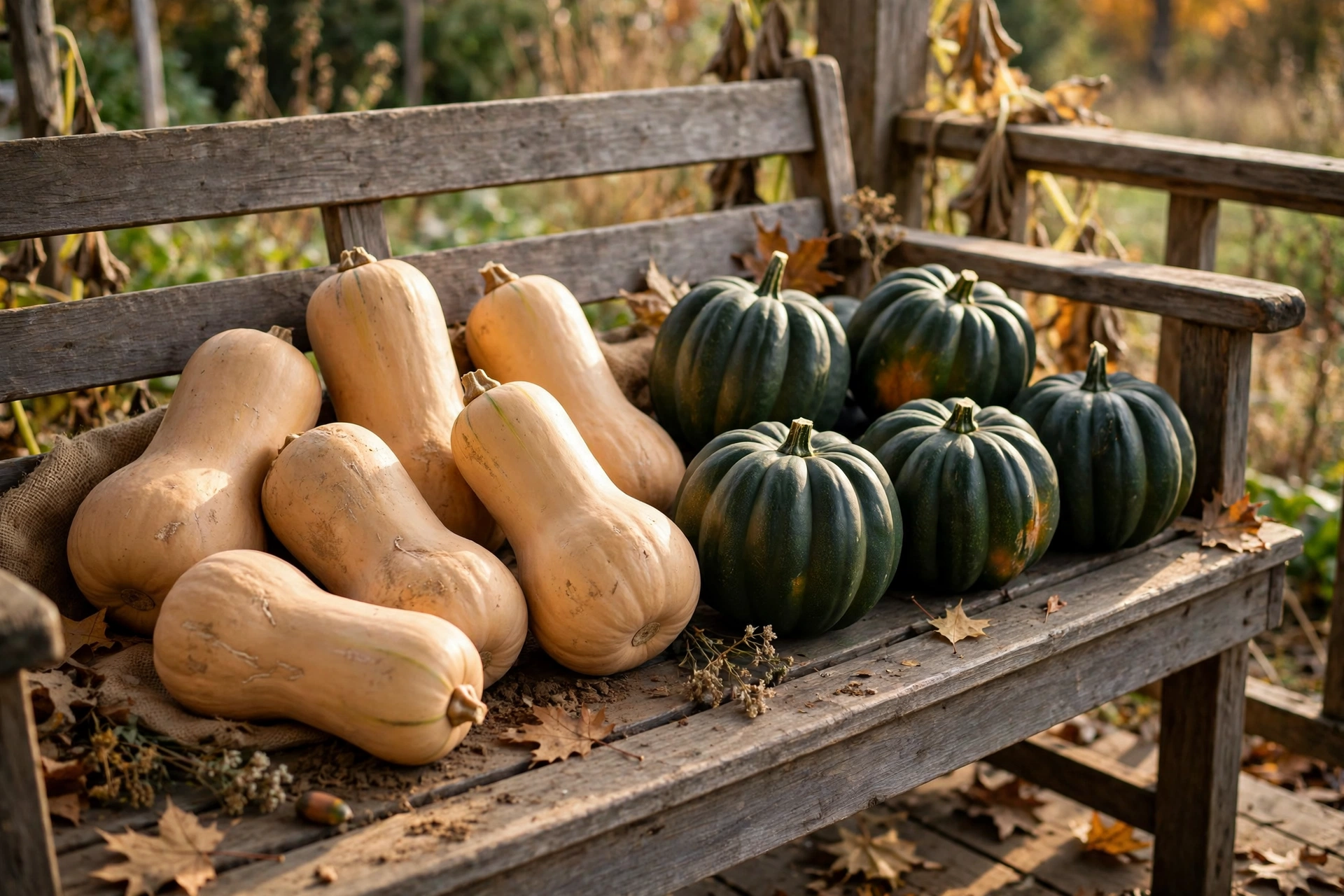
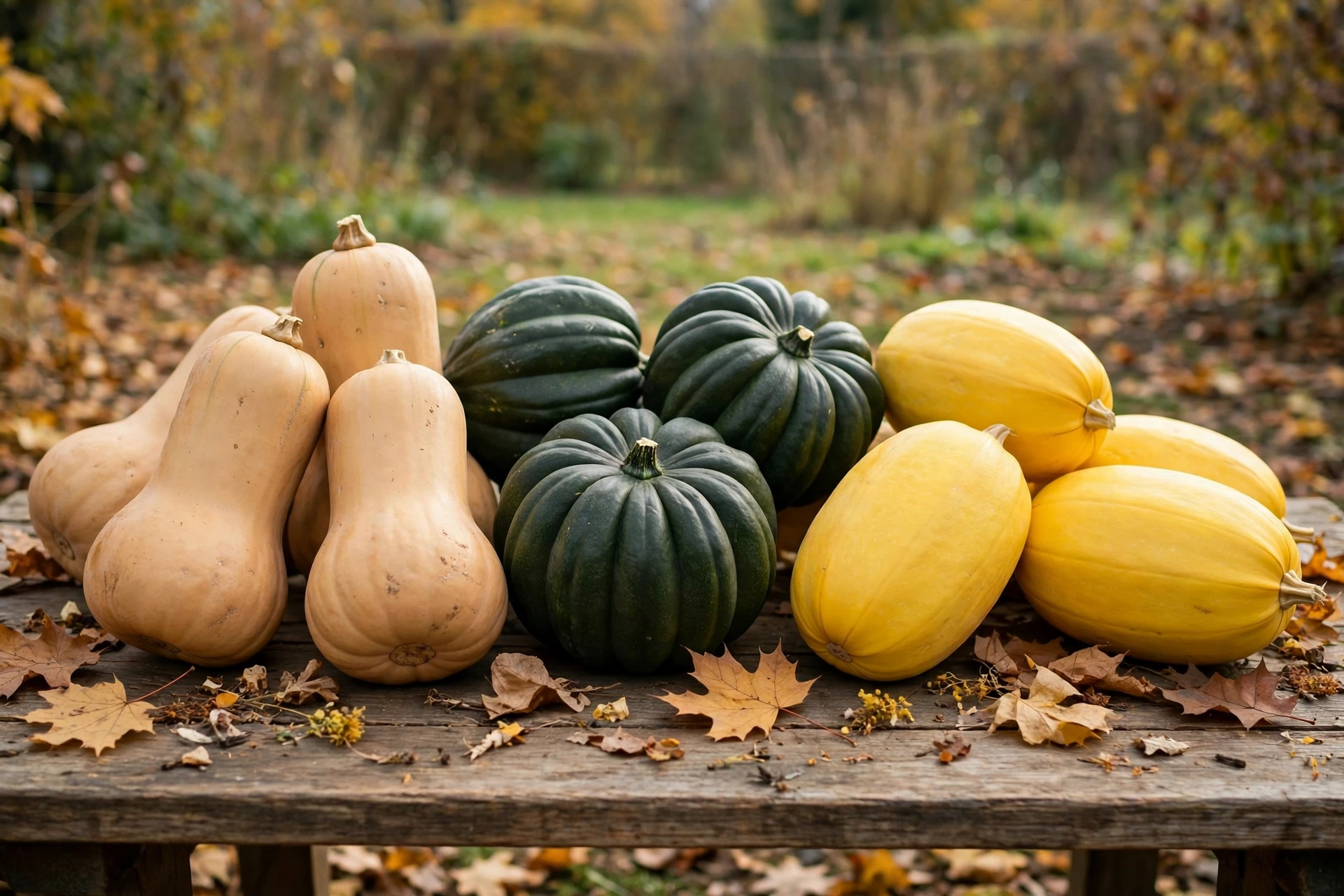
Butternut earned its classic status the hard way, by being the squash most gardeners actually finish eating. Waltham grows 8 to 12 inches long and 3 to 6 pounds, with light tan skin and yellowish-orange flesh that roasts, bakes, and purées into soup without a single fussy step. Expect 4 to 5 fruits per plant in about 100 days, and solid stems that resist squash vine borers, which is the pest most likely to end a squash season early. It is a 1970 All-America Selections winner, and gardeners rate it 4.8 from 11 reviews.
The trade-off is room. Waltham wants 6 to 8 feet between rows, so it is a poor fit for a tight raised bed. Give it the space and it pays you back with fruit that stores for months, which is exactly what a winter squash is for.
Pros: classic sweet flavor for roasting and soup; vine-borer-resistant stems; 4 to 5 fruits per plant; stores for months.
Cons: needs 6 to 8 feet of row spacing; 100 days is a full-season commitment in short-summer gardens.
Waltham Butternut Winter Squash Seeds
The classic keeper — sweet, reliable, and built to last through winter storage.
Runner-Up: Honeynut
Honeynut is what happens when a butternut and a buttercup are crossed on purpose, by a farm-to-table chef and a Cornell breeder working on it for six years. The result is a small squash, just 4 to 5 inches, with very sweet, very smooth flesh and a thin, edible skin that turns from green to pale terracotta as it ripens. It takes 110 days, which is the longest wait in this roundup, but the plant earns it: compact vines suit containers or a trellis, and it resists both powdery mildew and squash vine borers. Gardeners rate it 4.4 from 42 reviews, and it stores up to 6 months.
The trade-off is size. One honeynut feeds one or two people, not a crowd, so plant several mounds if squash is a weekly dinner in your house. For a small household, that small size is the whole point.
Pros: the sweetest flesh here; compact vines for containers and trellises; mildew and vine-borer resistant; stores up to 6 months.
Cons: 110 days to maturity; small fruits mean you need several plants for a family.
Honeynut Winter Squash Seeds
A small, very sweet butternut-type squash — one perfect dinner per fruit, and it keeps for months.
Best for Small Gardens: Table King Acorn
Table King is the answer when you want winter squash but your garden is not big. Its vines run a compact 4 feet, it grows well even in a large container, and it matures in just 80 days, the fastest in this roundup, which makes it a strong pick for short seasons or a late spring planting. The fruit is a classic acorn: about 2 pounds, glossy dark green with distinctive ridges, and sweet yellow-orange flesh that bakes beautifully halved and stuffed. It is a 1974 All-America Selections winner, and gardeners rate it 4.5 from 13 reviews.
The trade-off is storage. Acorn squash keeps weeks, not months, so plan to eat Table King first and save the butternuts for deep winter. That is a menu plan, not a flaw, as long as you know it going in.
Pros: fastest to mature at 80 days; compact 4-foot vines; container friendly; classic stuffed-acorn flavor.
Cons: shorter storage life than butternut types — eat it first.
Table King Acorn Winter Squash Seeds
Fast, compact, and made for stuffing — winter squash that fits a small garden.
Best Pasta Swap: Vegetable Spaghetti
Spaghetti squash is the only winter squash that changes shape at the table. Cook it and the pale yellow flesh falls away from the shell in strands, tender with a little bite, ready for butter and salt or a sauce. The fruit runs 8 to 12 inches long, matures in 90 to 100 days, and each plant yields 5 to 7 squash, which is a generous return for one vine. Gardeners rate it 4.8 from 9 reviews.
The trade-off is flavor range. Spaghetti squash is savory and mild, not sweet, so it will not carry a dessert or a sweet soup the way butternut does. Buy it for the pasta nights, and let the butternuts handle the rest.
Pros: flesh shreds into pasta-like strands; 5 to 7 squash per plant; low-calorie pasta swap.
Cons: mild, savory flavor — not a sweet squash for soups and baking.
Vegetable Spaghetti Winter Squash Seeds
Cooks into tender strands like pasta — 5 to 7 squash per plant for weeknight dinners.
Best Baker: Lakota
Lakota is the showpiece of the patch, and the baking squash to reach for when a plain butternut feels too ordinary. It has fine-grained flesh with a sweet, nutty flavor, it bakes beautifully, and it stores well. Gardeners rate it 4.7 from 23 reviews, a strong rating for a squash this distinctive.
Here is the honest catch, and it matters more than the flavor: Lakota vines run 10 to 20 feet. In a big garden that is a feature, a vine that covers ground and keeps producing. In a small garden it is a takeover, and you will regret it by August. Skip Lakota if your space is tight and plant Table King instead. If you have the room, Lakota is the squash your winter baking will be built around.
Pros: sweet, nutty baking flavor; fine-grained flesh; stores well; strong gardener rating.
Cons: 10- to 20-foot vines — too much plant for a small garden.
Lakota Winter Squash Seeds
Sweet, nutty, and made for baking — if you have the garden room for its long vines.
Side-by-Side Comparison
| Variety | Fruit | Best for |
|---|---|---|
| Waltham Butternut | 8–12 in, 3–6 lb | Roasting, soup, long storage |
| Honeynut | 4–5 in, small | Small households, containers, trellises |
| Table King Acorn | About 2 lb, ridged | Small gardens, stuffing, short seasons |
| Vegetable Spaghetti | 8–12 in, cylindrical | Pasta-style dinners |
| Lakota | Baking squash, 10–20 ft vines | Baking, big gardens |
Final Thoughts
Plant Waltham first. It is the squash most likely to still be good in February, and the one your winter cooking will lean on hardest. Add Table King if your garden is small, Honeynut if you cook for one or two, spaghetti squash for pasta nights, and Lakota only if you have the ground for it. Then read our harvest and cure guide before the first frost, because a great variety stored badly still ends up in the compost.