Landscape & Leisure is reader-supported. When you buy through links on our site, including Botanical Interests seed links, we may earn a commission at no extra cost to you. Prices change, so click through to confirm current pricing.
Frost is coming and your squash vines are fading, and the fruit sitting out there right now is either next winter’s dinners or next week’s compost. The difference is rarely luck. It is whether the squash was fully ripe when you cut it, whether you left the stem on, and whether it got a proper cure before it went into storage. Get those three right and a butternut can still be dinner in February.
If you are still choosing varieties for next year, start with our winter squash variety roundup. If something has already gone soft in the bin, our storage-rots FAQ sorts out what went wrong and what to save. For the earlier part of the season, our direct-sow vs. transplant guide covers how these vines get started.
When Is It Ready?
Winter squash is ready when the rind is hard enough that your fingernail cannot dent it, and the fruit has reached its full color. That thumbnail test is the one Iowa State University Extension gives home gardeners, and it beats counting days on the calendar, because a cool summer can push maturity later than the packet suggests. Harvest before the first hard frost, and handle every fruit like it bruises easily, because it does: a bruise at harvest is a rot spot in January.
Acorn squash has one extra tell. Watch the spot where the fruit sat on the ground: when it changes from yellow to orange, the squash is ready. Leave squash on the vine until fully ripe when you can, but do not leave fruit out in a hard freeze hoping for one more week of ripening. A frozen squash does not recover in storage.
How to Cut It
1. Cut, do not break. Use pruners or a sharp knife and leave 2 inches of stem attached. A broken-off stem leaves an open doorway for infection, and a squash with no stem rarely keeps.
2. Lift, do not drop. Carry fruit in both hands and set it down gently. The rind may feel indestructible. It is not, and the bruise you cannot see today is the soft spot you will find in December.
3. Wipe, do not wash. Brush off loose soil with a dry cloth. Wet fruit going into storage stays wet in the wrong places, and dampness feeds rot.
4. Sort at the table. Fruit with cuts, soft spots, or missing stems goes to the kitchen this week, not the storage bin. Only sound, fully ripe fruit earns a place in long storage.
Curing: The Step Most Gardeners Skip
Curing hardens the rind and heals small cuts, and it also lets starches turn to sugars, which is why a cured squash tastes better than one eaten the day it was picked. Iowa State University Extension recommends curing winter squash, except acorn types, at 80 to 85 degrees with 80 to 85 percent humidity. In practice, a warm, airy spot out of direct sun for about 10 days does the job, or 7 to 10 warm, dry days curing in the field if the weather allows.
Acorn squash is the exception, and it matters: do not cure acorn squash at those warm temperatures. The heat and humidity shorten its storage life instead of lengthening it. Table King acorns go straight to cool storage after harvest.
After curing, move squash to a cool, dry, well-ventilated spot at 50 to 55 degrees, set in a single layer where fruits do not touch each other. Do not pile them. Piled squash traps damp air between fruits, and one rotting squash in a pile takes its neighbors with it.
How Long Each Type Keeps
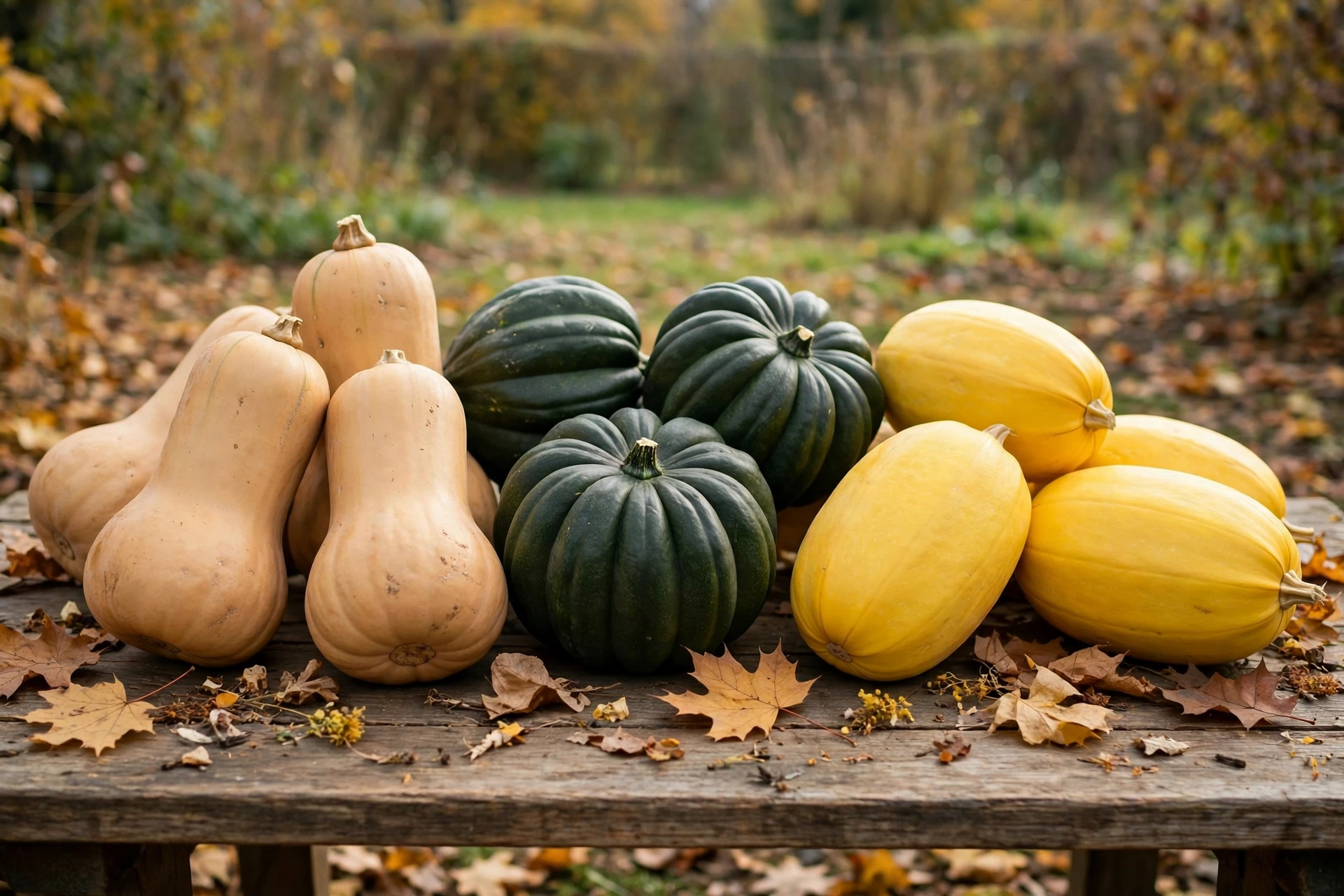
| Type | Cure? | Storage life, well stored |
|---|---|---|
| Butternut (Waltham) | Yes, 80–85°F | 2–3 months |
| Honeynut | Yes, 80–85°F | Up to 6 months |
| Acorn (Table King) | No — straight to storage | 5–8 weeks |
| Spaghetti squash | Yes, 80–85°F | Several months, cool and dry |
Those ranges assume the fruit was ripe, undamaged, and stored at a steady 50 to 55 degrees. A squash stored in a warm kitchen or a damp basement will fall short of them, and a squash stored below 50 degrees for long can suffer chilling injury that shows up as pitting and faster decay. The steadiest cool spot in most houses wins over the coldest one.
Three Picks for Next Year’s Patch
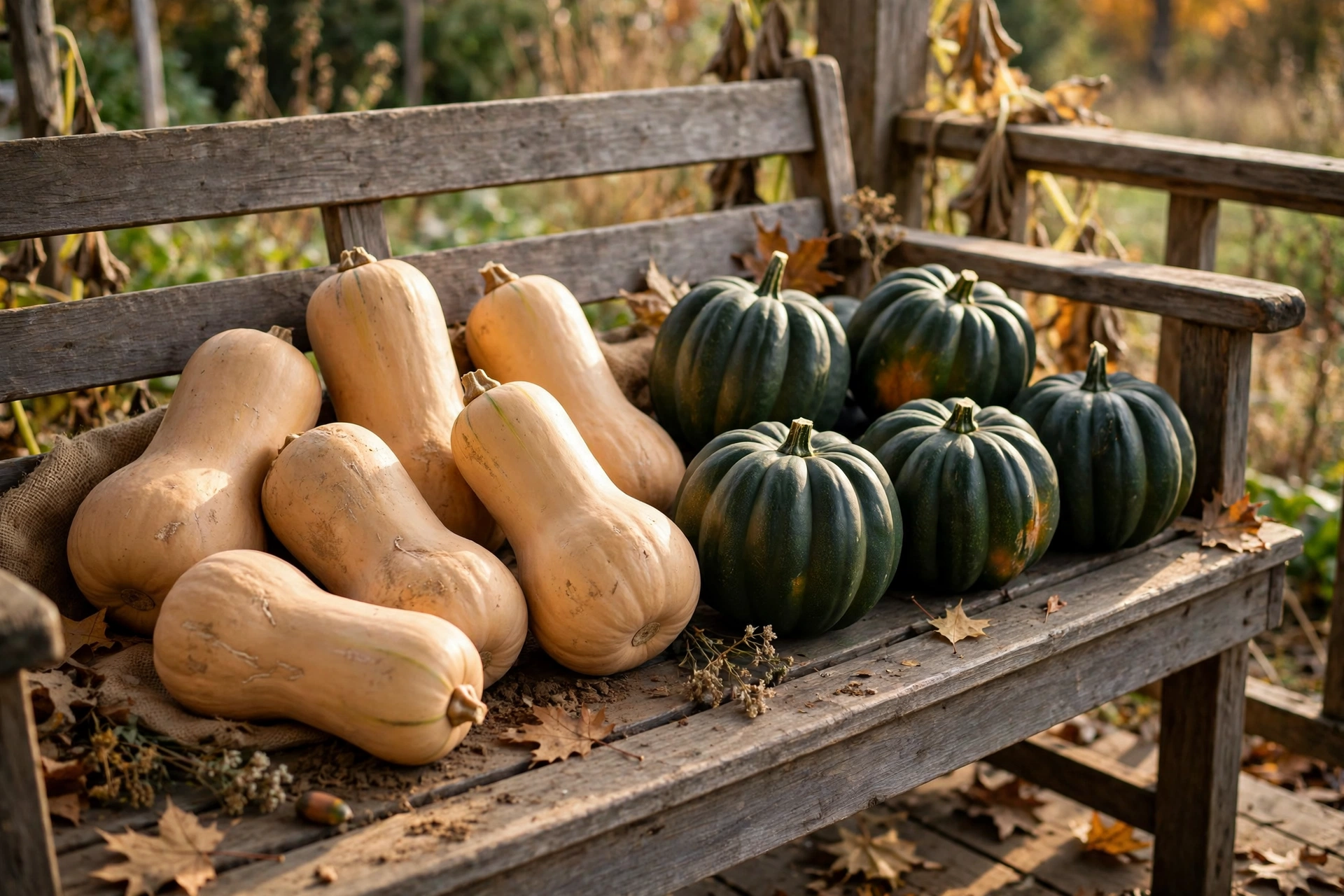
Waltham Butternut is the storage anchor: sweet, proven, and good for months when cured and stored right. Honeynut is the small-house pick, sweet and compact, with the longest storage claim in this cluster. Table King is the fast, small-garden acorn to eat first while the butternuts keep.
Waltham Butternut Winter Squash Seeds
The storage anchor — cure it well and it carries winter dinners for months.
Honeynut Winter Squash Seeds
Small, very sweet, and the longest keeper here — up to 6 months when stored right.
Table King Acorn Winter Squash Seeds
Fast and compact — and remember, acorns skip the cure and go straight to cool storage.
The Bottom Line
Harvest when the rind passes the thumbnail test and before hard frost, cut with 2 inches of stem, cure everything except acorns warm for about 10 days, and store single-layer at 50 to 55 degrees. Do that and your squash stops being a gamble. For variety picks, see our winter squash roundup, and for trouble in the bin, our storage-rots FAQ tells you which fruit to save and which to toss.