Landscape & Leisure is reader-supported. When you buy through links on our site, including Botanical Interests seed links, we may earn a commission at no extra cost to you. Prices change, so click through to confirm current pricing.
You open the storage bin to a soft spot and a smell you did not expect, on a squash that looked perfect when you put it away. Before you blame the variety, check the five usual suspects below, in order. Most squash rots start before harvest or in the first week of storage, not in the middle of winter, and most of them are fixable next year with one changed habit.
For the harvest and curing steps that prevent most of this, see our guide to harvesting and curing winter squash. For which varieties keep longest, see our winter squash variety roundup.
1. It Was Bruised at Harvest
What you see: a soft, sunken patch, often where the squash rested on the ground or where a hand gripped it, sometimes with mold starting in the middle of the patch.
Why it happens: winter squash rinds feel hard, but bruising damages the flesh underneath without breaking the skin. That damaged tissue is the first place rot takes hold, weeks after the bruise.
The fix: harvest with two hands, set fruit down gently, and never toss squash into a wheelbarrow or bin. Cut with 2 inches of stem attached, and send any bruised or cut fruit to the kitchen this week instead of storage. Next year, carry every squash like it bruises, because it does.
2. It Went Into Storage Immature
What you see: a squash that shrivels, softens early, or tastes bland and watery, even though the rind looked fine.
Why it happens: an immature squash never finished building the hard rind and dense flesh that storage depends on. The thumbnail test catches this: if your fingernail dents the rind, the squash is not ready, however big it looks.
The fix: harvest only when the rind resists your thumbnail and the fruit has full color, and before hard frost. For acorns, wait for the ground spot to turn from yellow to orange. A squash picked green to beat a frost is a squash to eat promptly, not to store.
3. The Stem Came Off
What you see: rot starting at the top of the squash, around a scar where the stem should be, spreading down into the flesh.
Why it happens: the stem seals the fruit. Break it off and you leave an open wound right where moisture and microbes collect.
The fix: always cut, never break, leaving 2 inches of stem. If a stem does come off at harvest, cook that squash within days. No stem means no long storage, however good the rest of the fruit looks.
4. It Got Too Cold
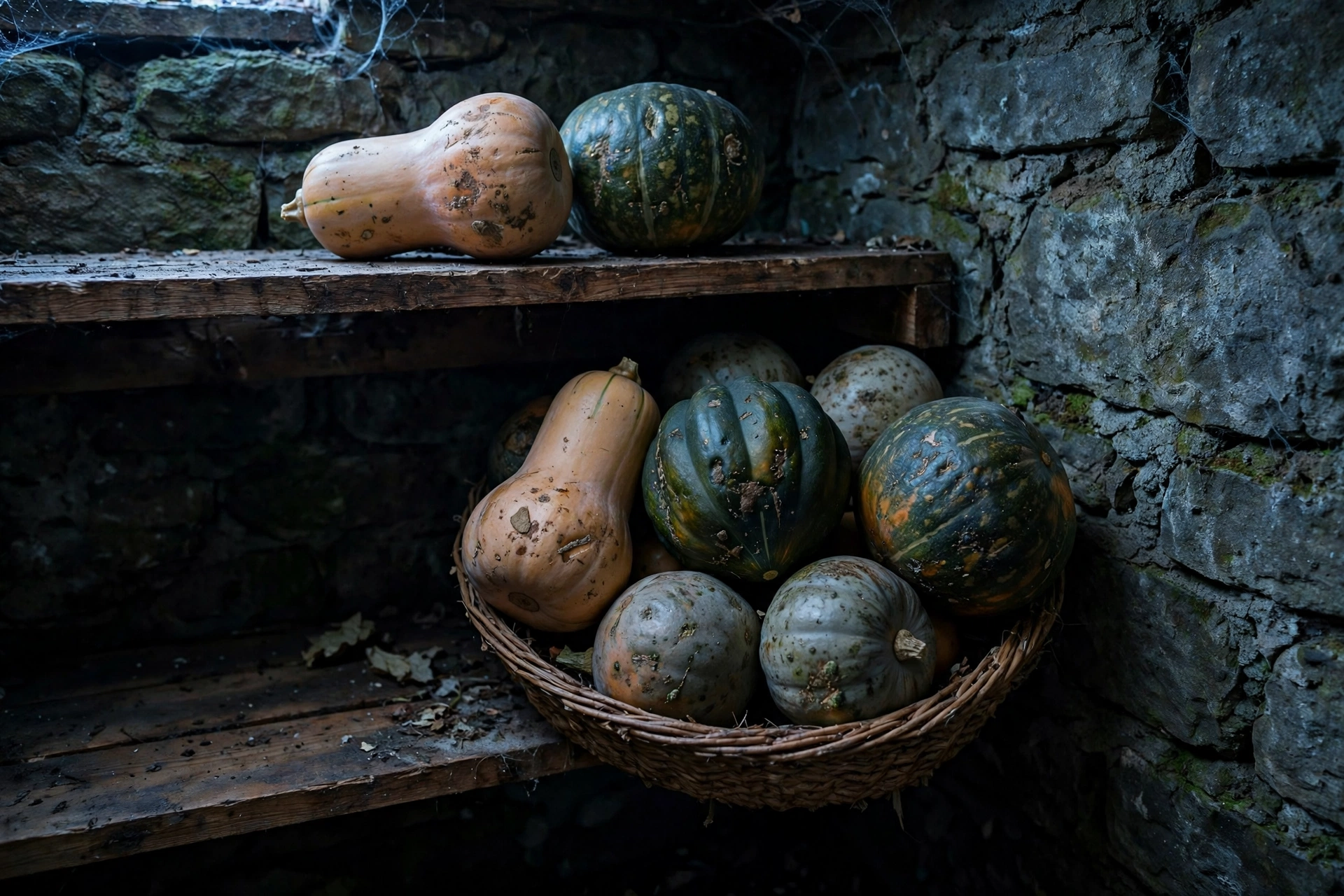
What you see: pitting, sunken spots, or decay that appears after a cold spell, even in fruit that was handled gently and stored dry.
Why it happens: winter squash are warm-season fruit, and storage below about 50 degrees causes chilling injury. The damage may not show for weeks, then the fruit decays faster than its neighbors.
The fix: store at a steady 50 to 55 degrees, not in an unheated garage that drops below 50 on cold nights. A cool basement corner beats a cold garage floor. Keep fruit off cold concrete, on a shelf or pallet where air can move underneath.
5. It Was Stored Damp and Crowded
What you see: mold spreading from one squash to the ones touching it, or rot in the spots where fruits pressed together.
Why it happens: damp, still air between touching fruits keeps rind surfaces wet, and rot travels by contact. A pile is the worst storage shape there is.
The fix: store squash in a single layer, not touching, in a dry, ventilated spot. Check the bin every couple of weeks and pull any fruit going soft before it spreads. One rotting squash left in place will cost you three good ones.
Diagnose It at a Glance
| Symptom | Most likely cause | Fix |
|---|---|---|
| Soft sunken patch, mold in the middle | Bruise at harvest | Handle gently; eat bruised fruit promptly |
| Shrivels or softens early, bland taste | Picked immature | Use the thumbnail test; harvest before hard frost |
| Rot starting at the top scar | Stem broken off | Cut with 2 in of stem; cook stemless fruit soon |
| Pitting after a cold spell | Chilling below 50°F | Store steady at 50–55°F, off cold floors |
| Mold spreading between fruits | Damp, crowded storage | Single layer, not touching, ventilated |
Can You Save a Squash That Has Started to Rot?
If the rot is a small surface spot and the rest of the fruit is firm, cut away a generous margin around the spot and cook the remainder promptly — but only if the flesh underneath is firm and smells normal. If the fruit is soft through, smells off, or mold runs deep, throw it out. Tasting your way past rot is not worth it, and a suspect squash in the bin is a risk to every squash touching it.
Check stored squash every couple of weeks through winter. Pulling one bad fruit early is the cheapest storage habit there is.
Three Keepers for Next Year
Honeynut stores longest in this cluster, up to 6 months when cured and stored right, which makes it the forgiving pick for a first storage attempt. Waltham Butternut is the reliable workhorse at 2 to 3 months. Table King acorn is the eat-first squash at 5 to 8 weeks, and the one that skips curing entirely.
Honeynut Winter Squash Seeds
The longest keeper here — up to 6 months when you cure and store it right.
Waltham Butternut Winter Squash Seeds
The reliable workhorse — sweet, proven, and good for 2 to 3 months in storage.
Table King Acorn Winter Squash Seeds
Eat it first at 5 to 8 weeks — and skip the cure, straight to cool storage.
The Bottom Line
Most storage rot is decided at harvest: a ripe fruit, cut with its stem, cured unless it is an acorn, and stored single-layer at 50 to 55 degrees will keep. A bruised, stemless, or immature squash will not, whatever variety it is. Start with our winter squash roundup for the keepers, follow our harvest and cure guide at picking time, and check the bin every couple of weeks — that one habit saves more squash than any variety choice.