You notice one brown arc in the lawn while the rest stays green — and the sprinkler head in the middle of it barely lifts when the zone runs. That head is done, and the fix is a twenty-minute job with a trowel, not a call to a contractor.
A sprinkler head is a wear item. Gears wear out, seals leak, and mower wheels crack the plastic. Replacing one means digging it up, unscrewing it, and screwing in a matching head at the right height. The job is simple enough that most homeowners do it themselves, and the only part that takes care is matching the new head to the old one.
What You Need
- A replacement sprinkler head that matches the old one — same type (spray or rotor), same pop-up height, same arc
- A hand trowel or small shovel
- A towel or small bucket for the muddy water
- Teflon tape, for threaded risers that drip
- Five minutes with the zone running, to test the fix
Match the New Head Before You Dig
Buy the replacement first and match it to the head in the ground. Spray heads throw a fixed fan of water over a short distance. Rotor heads turn a stream back and forth over a longer throw. Mixing the two on one zone leaves one part of the lawn soaked and another dry, so replace like with like.
Pop-up height matters too. Most lawn spray heads pop up 2 or 4 inches. Taller 6- and 12-inch heads exist for tall grass and groundcover. A 2-inch head in a lawn mowed at 4 inches will water the grass blades instead of the lawn. Bring the old head to the store if you are unsure — the model number is usually printed on the top.
| Head type | Pop-up height | Best for |
|---|---|---|
| Spray head | 2–4 in. | Small lawns, beds, tight corners |
| Rotor head | 4 in. and up | Larger lawns, longer throws |
| Tall pop-up spray | 6–12 in. | Tall grass, groundcover, slopes |
How to Replace a Sprinkler Head
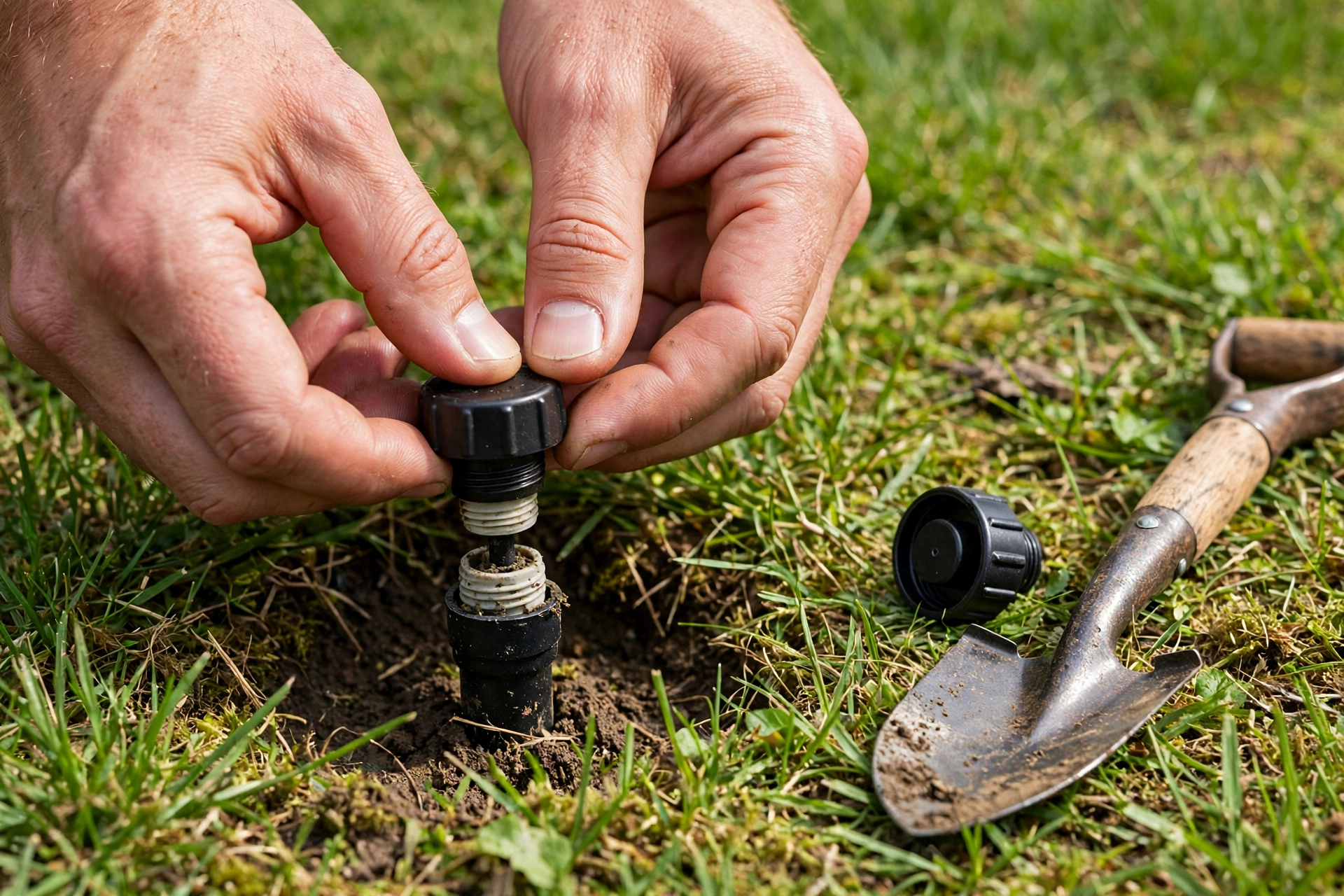
- Turn the zone off, then dig. Cut a circle about 8 inches wide around the head with the trowel and lift the sod plug out in one piece. Dig down until you can see the riser — the threaded pipe the head screws onto — and clear the dirt away from it.
- Unscrew the old head. Grip the head and turn it counterclockwise. If it is stuck, grip the riser with one hand so you do not twist the pipe below it. Lift the old head out and keep it for matching.
- Flush the line. Turn the zone on for a few seconds with the head off and let the water push dirt and grit out of the open riser. Turn it off again. Skipping this step is how grit ends up clogging the new head on its first run.
- Screw the new head on. Thread it onto the riser clockwise until it is snug. Do not force it — cross-threaded plastic strips easily. If the riser drips at the joint, a couple of wraps of Teflon tape on the threads will seal it.
- Set the height. The top of the head should sit flush with the soil surface, not buried and not sticking up. Add or remove a little soil under the head until it sits level, then pack the dirt back around it and replace the sod plug.
- Test the zone. Run the zone and watch the new head. It should pop up fully, throw its pattern evenly, and retract when the zone shuts off. Adjust the arc screw on top if the spray lands on the driveway instead of the lawn.
The Mistakes That Flood the Job
Digging too wide. A big hole means a big patch of dead sod to repair. Eight inches around the head is plenty.
Burying the new head. A head set below grade traps dirt in the seal and will not pop up. Flush with the soil, not under it.
Forgetting to flush. Dirt in the open riser goes straight into the new head’s filter. A few seconds of flushing saves a second dig.
Mixing spray and rotor heads on one zone. They put water down at different rates, so one part of the zone drowns while another dries out. Match the head you removed.
Cranking the head on. Plastic threads strip with very little force. Snug is enough. If it leaks, tape the threads instead of tightening harder.
When It Is Not the Head
If the new head still will not pop up, the problem is upstream. Low pressure across the whole zone points to a valve or supply issue, not the head. A head that sprays weakly while its neighbors run fine may have a clogged filter — unscrew the top, rinse the screen, and try again.
If several heads misbehave at once, check the timer before you dig anything up. Our guide to the best sprinkler timers covers the settings that cause the most confusion, and how to choose a sprinkler for your yard size and shape helps if the zone was never laid out right. If the whole system is aging, the best lawn sprinklers roundup is the place to start over.
One more thing to check while you are out there: dethatching and power raking can clip a shallow sprinkler head. If the broken head followed a round of lawn work, see our power rake vs dethatcher comparison before the next pass, so the next head survives it.
Frequently Asked Questions
Do I need to turn off the water to the whole house? No. Turn off the irrigation zone at the timer. The main supply can stay on.
How do I know if I need a spray head or a rotor? Look at the head you removed. Spray heads throw a fixed fan. Rotors turn a stream. Replace like with like, and match the arc printed on the top.
Why does my new head leak at the base? Usually the threads are not sealed or the head is cross-threaded. Unscrew it, wrap the riser threads with Teflon tape, and thread it back on straight.
How long should a sprinkler head last? Years, in most lawns. Mower strikes, freezing water left in the line, and grit in the filter are what cut that short. Winterize the system before the first hard freeze.
Bottom Line
Replace the head with a matching one, set it flush with the soil, flush the line before you screw it on, and test the zone before you walk away. Twenty minutes now saves a brown arc all summer — and while the shovel is out, walk the rest of the zone and check every head the same way.