You ask the rental counter for a dethatcher and come home with a power rake, or the other way around, and the lawn pays for the mix-up either way. Both machines pull dead thatch out of your lawn. They just do it with different teeth, different aggression, and a different pile of debris to clean up.
The mix-up is easy because the names overlap. The difference between a power rake and a dethatcher comes down to the teeth: a power rake cuts with steel flails or blades, while a spring-tine dethatcher combs with wire tines. Rental shops label them loosely, so ask what kind of tines or blades the machine has before you load it.
The Short Answer: Power Rake vs Dethatcher
If your thatch measures more than half an inch thick, rent the power rake. It has the steel flails to tear that layer out. If the thatch is light — under half an inch but building — a spring-tine dethatcher combs it out with less damage to the living grass. If the thatch is under half an inch and the lawn looks fine, rent neither. Mow, water, and check again next season.
| Machine | How it works | Best for | Stress on the lawn |
|---|---|---|---|
| Spring-tine dethatcher | Wire tines comb loose thatch to the surface | Light to moderate thatch | Low to moderate |
| Power rake | Spinning steel flails tear thatch out | Moderate to heavy thatch | Moderate to high |
| Verticutter | Fixed vertical blades slice through thatch into the soil | Severe thatch; seedbed prep | High |
| Hand thatch rake | Curved steel tines pulled by hand | Small patches, light thatch | Low |
What a Power Rake Actually Does
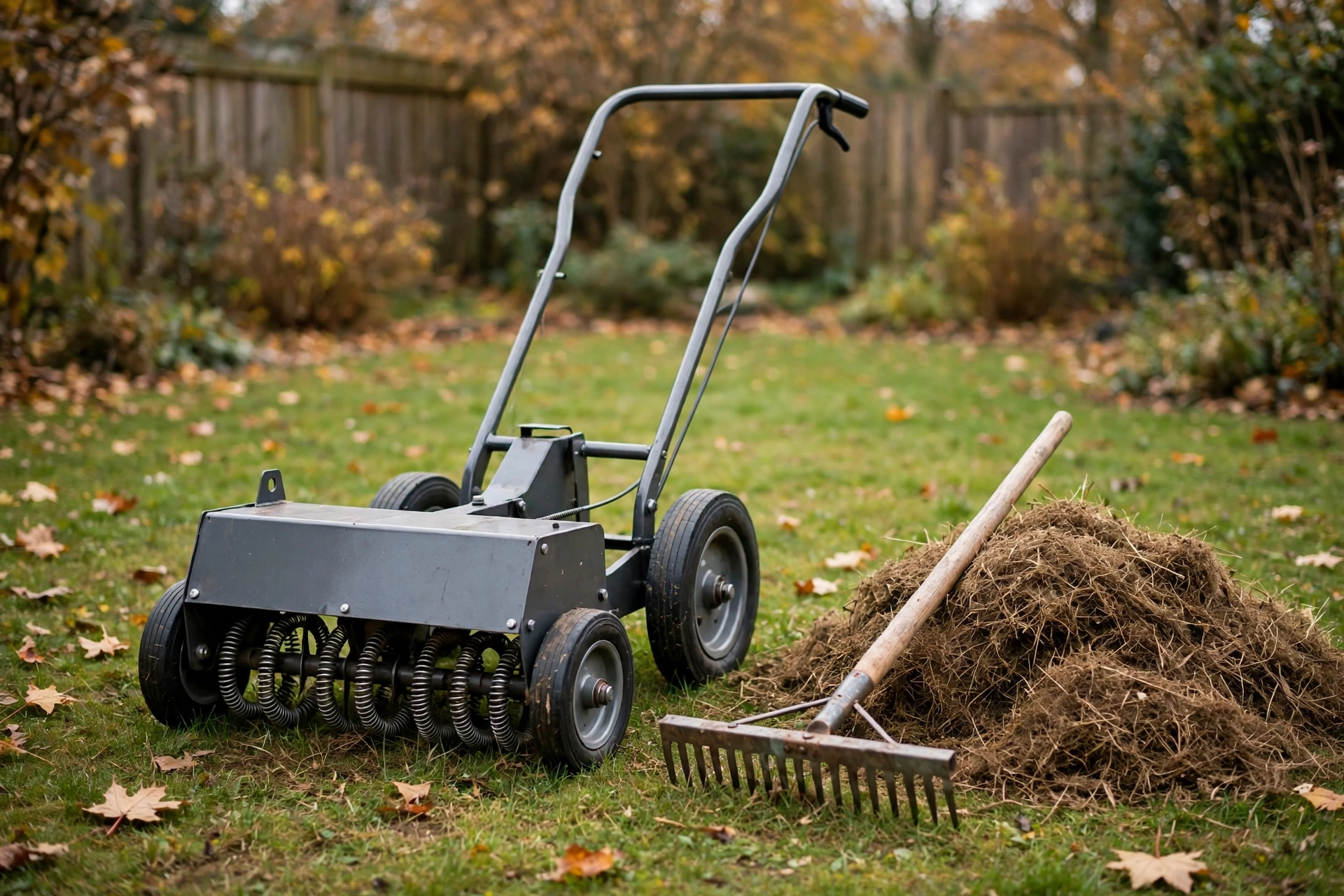
A power rake is a walk-behind machine with a spinning reel of steel flails or fixed vertical blades. The blades cut down through the thatch layer and throw the dead material to the surface. It is the most aggressive common option short of a verticutter, and it leaves the lawn looking rough for a week or two while it fills back in.
That aggression is the point when thatch is thick. A light combing will not move a layer an inch deep. The trade-off is debris: a power rake pulls up a surprising volume of dead grass, and all of it has to be raked up and hauled off before you can overseed or water properly.
Set the blades so they bite into the thatch and just touch the soil surface. Set them too deep and you scalp the lawn and tear out living crowns along with the dead stuff. One pass is usually enough. A second pass at an angle beats going deeper on the first.
What a Dethatcher Actually Does
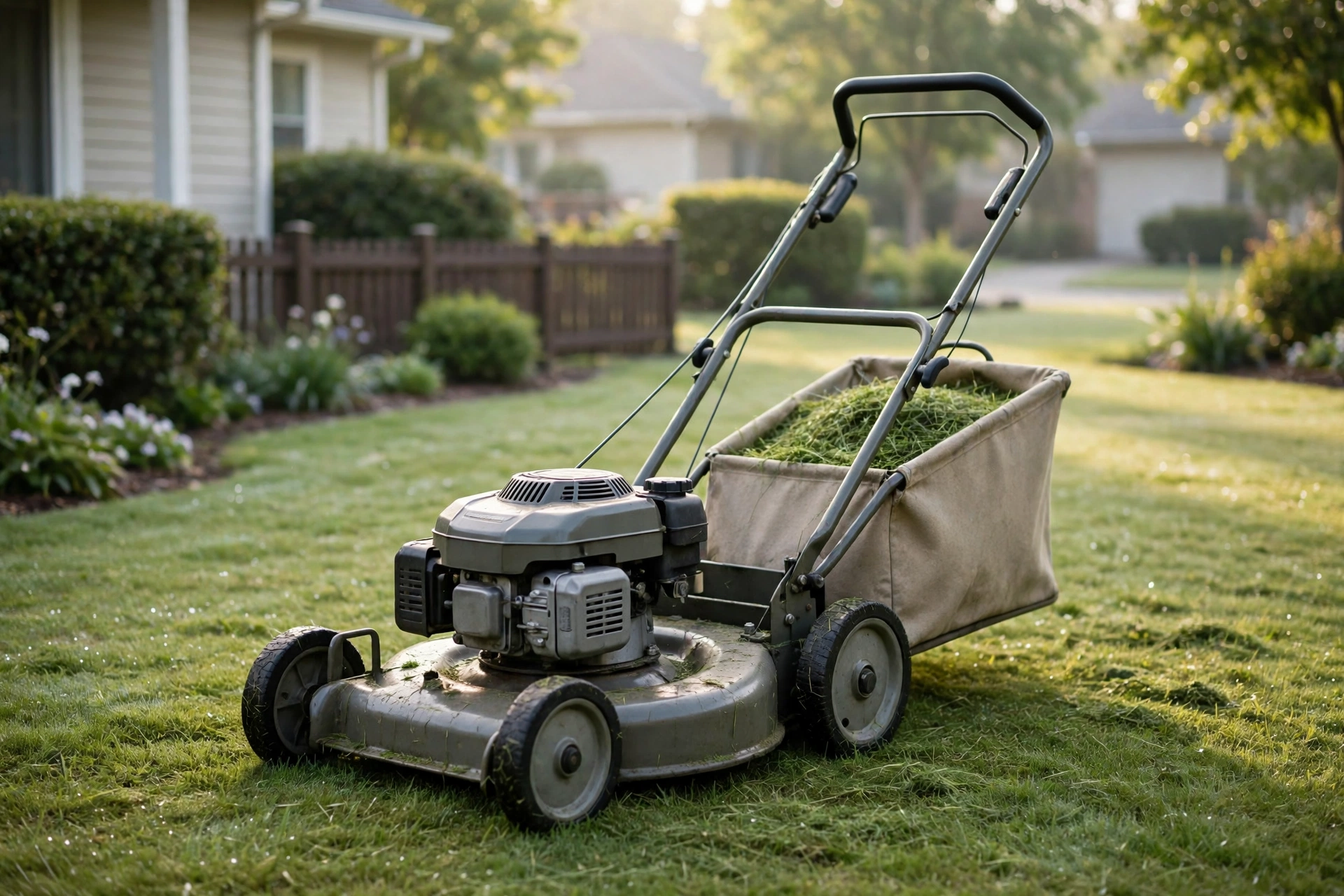
A spring-tine dethatcher — the machine most people picture when they say “dethatcher” — drags flexible wire tines through the turf and combs loose thatch to the surface. Some are walk-behind machines. Others are tow-behind attachments pulled by a riding mower. Either way, the action is a comb, not a cut.
That makes it the right call for light to moderate thatch and for lawns you do not want to beat up. It will not fix a thick, matted layer. Run it over an inch of thatch and you will mostly polish the top and tire yourself out.
The hand version, a thatch rake with curved steel tines, works the same way on a small patch. For anything over a few hundred square feet, the machine earns its rental fee in saved time alone.
Measure First: The Half-Inch Rule
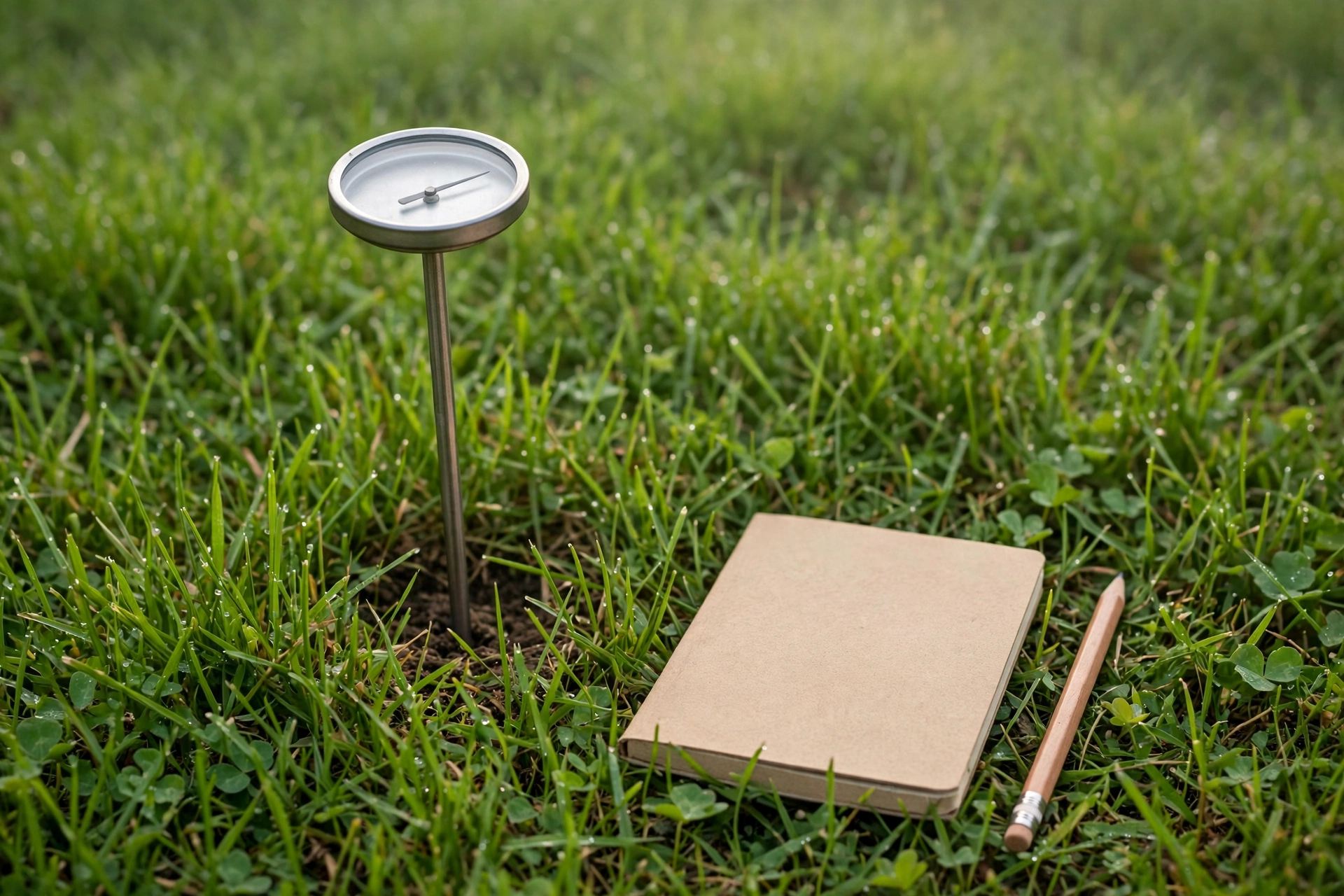
Do not guess at thatch. Cut a small wedge of turf with a trowel or a sturdy knife, two or three inches deep, and look at the brown spongy layer between the green blades and the soil. Measure it with a ruler. University of Missouri Extension’s guidance is to keep thatch below half an inch thick, and to remove it once it reaches about half an inch.
Below half an inch, thatch is harmless and even useful — it cushions the lawn and holds moisture. Above it, water and fertilizer sit in the thatch instead of reaching the soil, and roots grow up into the layer instead of down. Above an inch, the lawn is in real trouble, and removing it all in one pass can tear out most of the living grass with it. Heavy thatch is better handled in stages over two seasons.
Check in several spots. Thatch builds unevenly, and the shady corner by the fence may need work while the sunny middle does not.
Which One Should You Rent?
Start with the ruler, not the rental counter. Thatch over half an inch on a lawn big enough to justify a machine: power rake. Light thatch on a medium lawn: spring-tine dethatcher. A small lawn or a single bad patch: a thatch rake and an afternoon.
Time it for recovery. For cool-season lawns — bluegrass, fescue, ryegrass — early fall is the best window, when the grass is growing strongly and has weeks of good weather ahead. For warm-season lawns like zoysia and bermuda, early summer is the preferred window. Never dethatch a lawn going into heat, drought, or dormancy.
Ask the rental shop two questions before you pay: what kind of tines or blades does it have, and how do you set the depth. If the answer to the first is “fixed vertical blades,” you are renting a verticutter, which cuts deeper than a power rake and is the right tool only for severe thatch or seedbed prep.
What to Do After You Dethatch
Rake up every bit of debris first. Thatch left on the surface smothers the lawn you just opened up. Then water, and overseed the thin spots while the soil is exposed — seed-to-soil contact is the one good thing a rough lawn gives you.
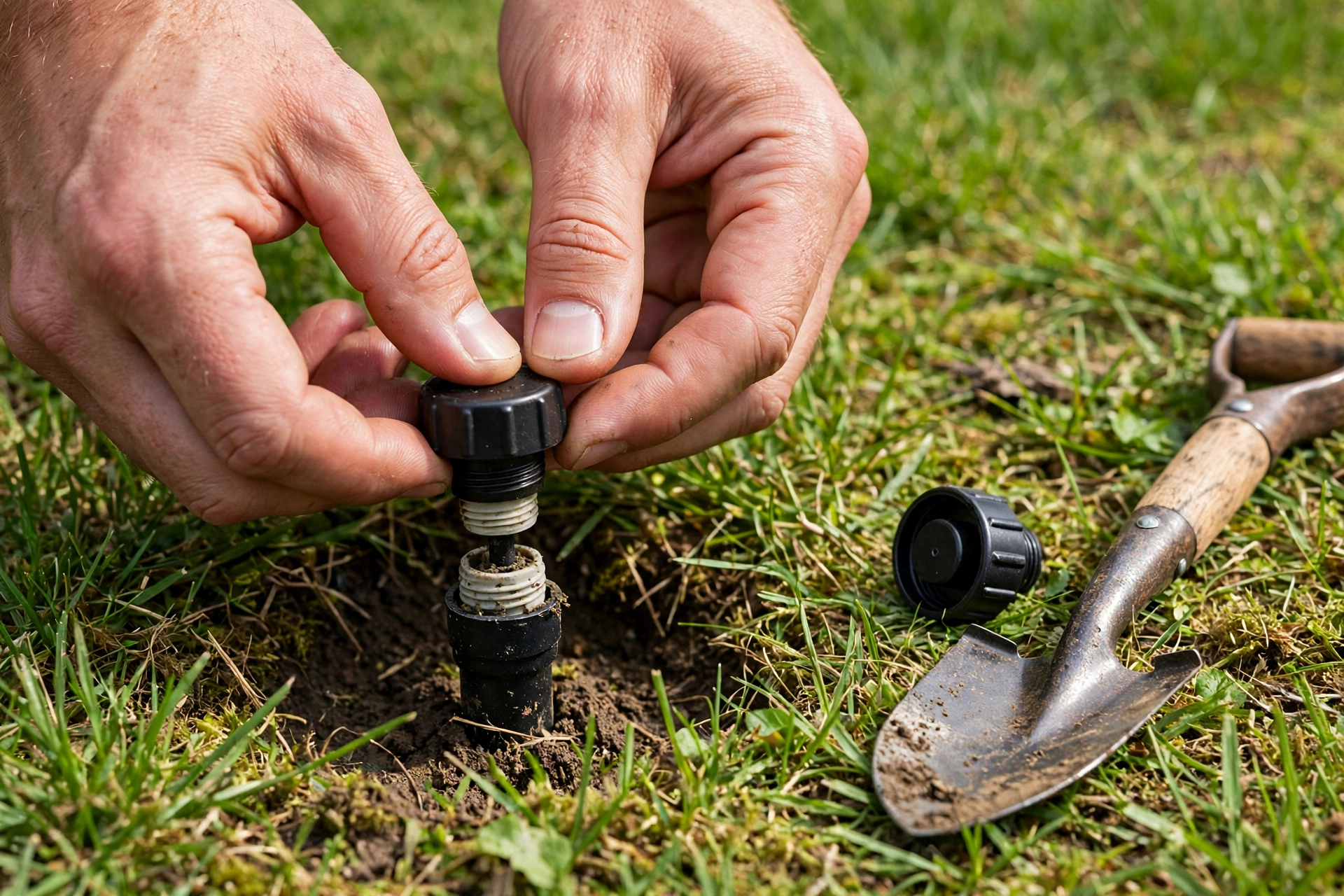
Watch your sprinkler heads while you work. A power rake can clip a shallow head, and a head buried under debris will not pop up. If one comes out cracked or sits too low after the job, replacing a sprinkler head takes about twenty minutes and a trowel.
If the soil is also compacted, core aeration is the next step — and it pairs well with dethatching. Our guide to whether you can dethatch and aerate on the same day covers the order and the recovery. For the full step-by-step on the power rake itself, see how to power rake a lawn.
Power Rake vs Dethatcher FAQ
Is a power rake the same as a dethatcher? Not quite. Dethatching is the job. A power rake is one machine that does it, with steel flails or blades. A spring-tine dethatcher is a lighter machine that combs thatch out instead of cutting it.
Can I dethatch with a regular rake? A leaf rake will not do it. A thatch rake with sharp, curved tines will, on small areas. On a full lawn, rent the machine.
Will dethatching kill my lawn? Done at the right depth and in the right season, it roughs the lawn up for a week or two and then it fills back in thicker. Done too deep, in heat, or on dormant grass, it can do real damage. Measure first, set the depth shallow, and water after.
Do I need to aerate too? Not always. Dethatching removes the layer on top of the soil. Aeration relieves compaction underneath. If a screwdriver is hard to push into the soil, aerate as well. See dethatcher vs aerator vs scarifier and how to tell whether your lawn needs dethatching, aerating, or both.
Bottom Line
Measure the thatch before you rent anything. Over half an inch, rent the power rake and accept a rough-looking lawn for two weeks. Under half an inch, the spring-tine dethatcher does the job with less damage. Under half an inch with no symptoms, keep the rental money and spend it on seed instead.