Landscape & Leisure is reader-supported. When you buy through links on our site, we may earn a commission at no extra cost to you. Prices change, so click through to confirm current pricing.
You sprayed the whole lawn on a Saturday, and by Tuesday half of it is greener than the other half. The fertilizer you grabbed was built for a different job than the one your lawn needed — and liquid fertilizer works fast, so the wrong pick shows up fast too.
Four bottles below cover the four jobs a liquid fertilizer actually does: balanced feeding, feeding plus weed control, organic soil support, and a hard nitrogen push for a pale lawn. One of them is also the bottle to keep away from a newly seeded lawn, and that warning is in here too. If you are still deciding between liquid and granular in the first place, start with our liquid vs. granular fertilizer comparison — then come back and pick a bottle.
The Short Version
Best overall: Simple Lawn Solutions Advanced 16-4-8 — a balanced feed with seaweed and fish, sized for a typical suburban lawn. Runner-up: Scotts Liquid Turf Builder with Plus 2 Weed Control — feed plus weed killer in one pass, for established lawns with dandelions and clover. Best organic: GS Plant Foods Liquid Kelp — an OMRI-listed seaweed extract that supports soil and roots. Best high-nitrogen: Simple Lawn Solutions Maximum Green & Growth 28-0-0 — straight nitrogen for a lawn that needs green in a hurry.
How We Picked These Four
Three tests, same as every roundup. First, the product has to be in stock and sold on Amazon now, with a verified listing. Second, it has to do one job clearly — no bottle that claims to do everything. Third, owners have to rate it well in aggregate. The checkable fact anchoring this roundup: a 32-ounce bottle of the best overall covers 3,200 square feet through a hose-end sprayer, which is roughly the front yard of a typical suburban lot. Coverage per bottle is the number that decides whether a “cheap” bottle is actually cheap.
Compare the Four at a Glance
| Product | Analysis | Coverage | Mix rate | Best for |
|---|---|---|---|---|
| Simple Lawn Solutions 16-4-8 | 16-4-8 + seaweed & fish | 3,200 sq ft (32 oz) | 3–5 fl oz per gallon | Balanced feeding |
| Scotts Liquid Turf Builder +2 | 25-0-2 + weed killer | 6,000 sq ft warm-season; 4,000 cool-season | Ready to spray | Feeding + weed control |
| GS Plant Foods Liquid Kelp | Seaweed extract, OMRI listed | Makes 800+ gallons (1 gal) | 2 oz per gallon | Soil & root support |
| Simple Lawn Solutions 28-0-0 | 28-0-0, 70% quick / 30% slow nitrogen | 1 gallon concentrate | Per label | Fast green-up |
Best Overall: Simple Lawn Solutions Advanced 16-4-8
A balanced 16-4-8 is the bottle to buy when you do not have a specific problem — just a lawn that should be greener and thicker than it is. Sixteen parts nitrogen for growth, four parts phosphorus for roots, eight parts potassium for stress tolerance, plus seaweed and fish in the mix. The 32-ounce bottle covers 3,200 square feet with a hose-end sprayer, and you mix 3 to 5 fluid ounces per gallon of water. That coverage is the reason it wins: one bottle handles a whole typical lawn in one pass, with no second trip to the store mid-job.
The trade-off is that a balanced feed is a generalist. It will not kill a dandelion, and it will not rescue a lawn that is starving for nitrogen specifically. If your lawn is pale yellow rather than just a little thin, the 28-0-0 below gets you green faster. For everything else, this is the bottle.
Pros: balanced NPK plus seaweed and fish; covers 3,200 sq ft per 32-oz bottle; works with a hose-end sprayer, no measuring jugs needed.
Cons: no weed control; a generalist, not a fix for a specific deficiency.
Simple Lawn Solutions Advanced 16-4-8 Balanced NPK Liquid Fertilizer, 32 oz
Balanced 16-4-8 with seaweed and fish that covers 3,200 sq ft in one pass.
Runner-Up: Scotts Liquid Turf Builder with Plus 2 Weed Control
This is the bottle for the lawn that has two problems at once: it needs feeding, and it has dandelions and clover. The 25-0-2 formula feeds the grass while the weed killer in it — including 2,4-D — takes out broadleaf weeds. One 32-ounce bottle covers 6,000 square feet of warm-season grass or 4,000 square feet of cool-season grass, and it attaches straight to the hose, so there is no mixing.
The trade-off is the weed killer itself. Do not water for 48 hours after you spray, or you wash the weed control off the leaves before it works. And this is the bottle with the seeding restriction below — if you have put seed down recently, this is the wrong purchase. For an established lawn with weeds, though, one pass doing two jobs is hard to beat.
Pros: feeds and kills weeds in one pass; biggest coverage in this roundup; no mixing, hose-end ready.
Cons: no watering for 48 hours after spraying; cannot be used where you have recently seeded.
Scotts Liquid Turf Builder with Plus 2 Weed Control, 32 oz
Feed plus weed killer in one hose-end pass, covering up to 6,000 sq ft.
Best Organic: GS Plant Foods Liquid Kelp Fertilizer
Kelp is a supplement, not a complete fertilizer. This is Ascophyllum nodosum seaweed extract, OMRI listed, mixed at 2 ounces per gallon of water. One gallon of concentrate makes more than 800 gallons of spray. It feeds soil biology and supports root growth rather than pushing top growth, which makes it the right add-on for a lawn you are trying to thicken up over a season rather than green up by Friday.
Be honest about what it does not do: it carries almost no nitrogen, so a hungry, pale lawn will not turn green on kelp alone. Pair it with a balanced feed like the 16-4-8 above, or use it on a lawn that is already fed and just needs better roots and stress tolerance. The gallon size is the value play here — at 2 ounces per gallon of spray, it lasts most homeowners a full season or more.
Pros: OMRI listed; a gallon makes 800+ gallons of spray; supports roots and soil instead of just pushing top growth.
Cons: not a complete fertilizer on its own; no quick visible green-up.
GS Plant Foods Liquid Kelp Fertilizer, 1 Gallon
OMRI-listed seaweed extract that makes 800+ gallons of root-and-soil support.
Best High-Nitrogen: Simple Lawn Solutions Maximum Green & Growth 28-0-0
When the lawn is pale yellow and you want green, nitrogen is the answer, and this bottle is almost nothing but nitrogen: 28-0-0, with 70 percent quick-release nitrogen for fast green-up and 30 percent slow-release to keep feeding between applications. It is the right bottle for a lawn that is fed and watered but still looks starved, or for a spring wake-up pass before the regular feeding schedule starts.
The trade-off is that nitrogen-only feeding is a one-note diet. No phosphorus for roots, no potassium for stress tolerance, and a heavy hand with a 28-0-0 can scorch grass, especially in heat. Use the label rate, spray when the lawn is not drought-stressed, and do not make this your only fertilizer all season. For the schedule that keeps a nitrogen push from turning into a burn, see how often to apply liquid lawn fertilizer.
Pros: 70% quick-release nitrogen for fast green-up; 30% slow-release to stretch the feeding; one gallon of concentrate goes a long way.
Cons: nitrogen only — no phosphorus or potassium; easy to overapply and scorch in hot weather.
Simple Lawn Solutions Maximum Green & Growth 28-0-0 Lawn Fertilizer, 1 Gallon
70% quick-release and 30% slow-release nitrogen for the fastest visible green-up.
Do Not Buy the Weed-and-Feed If You Just Seeded
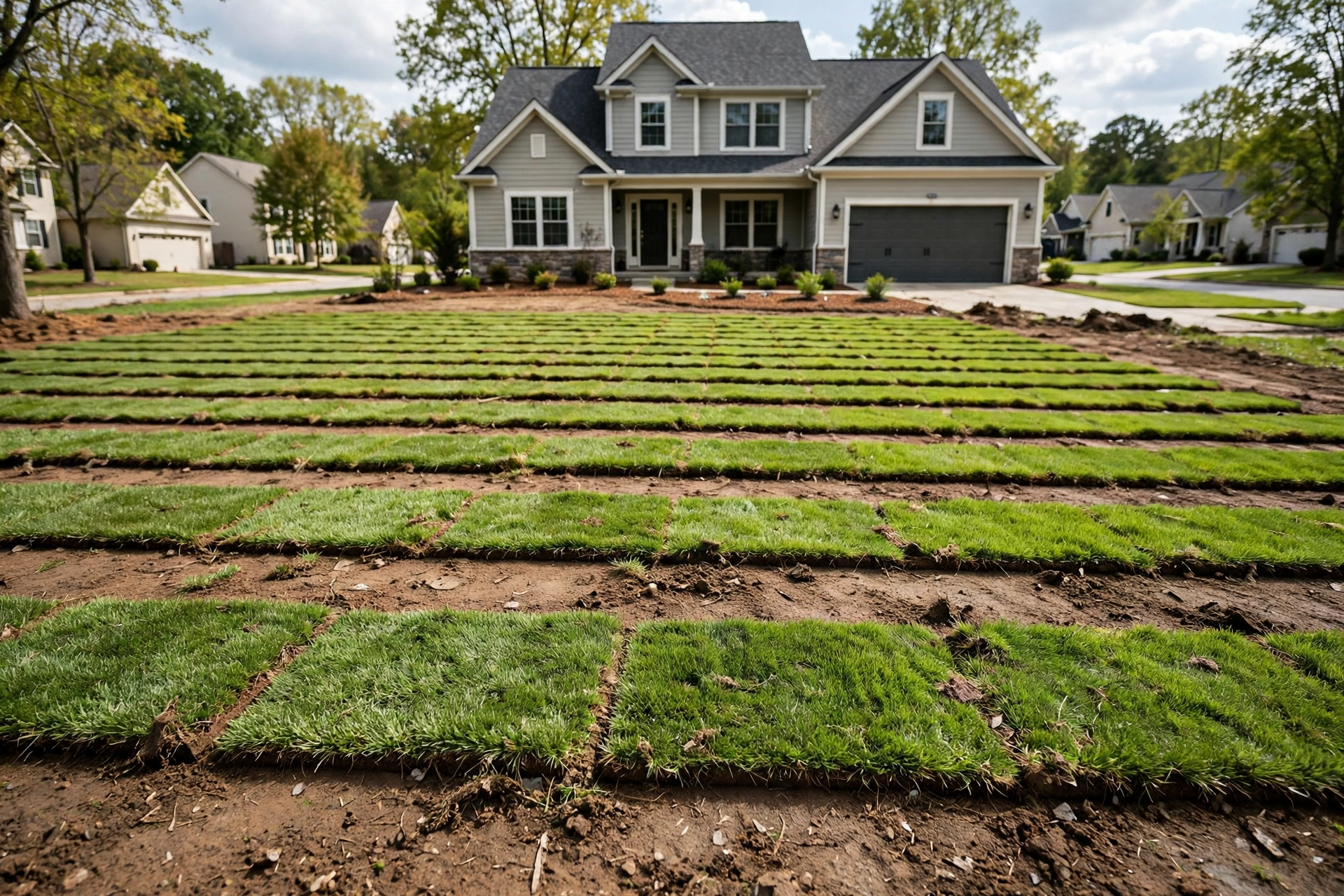
Here is the honest not-recommended pick in this roundup: the Scotts Liquid Turf Builder with Plus 2 Weed Control, used on a newly seeded lawn. The same weed killer that takes out dandelions also stops grass seed from germinating. Spray it over fresh seed and you have paid to undo your own overseeding. Wait until the new grass is established and has been mowed several times before any weed-and-feed goes down. The bottle is a fine runner-up for an established lawn with weeds — it is the wrong bottle for a lawn you seeded this season.
How to Apply It Without Wasting Half the Bottle
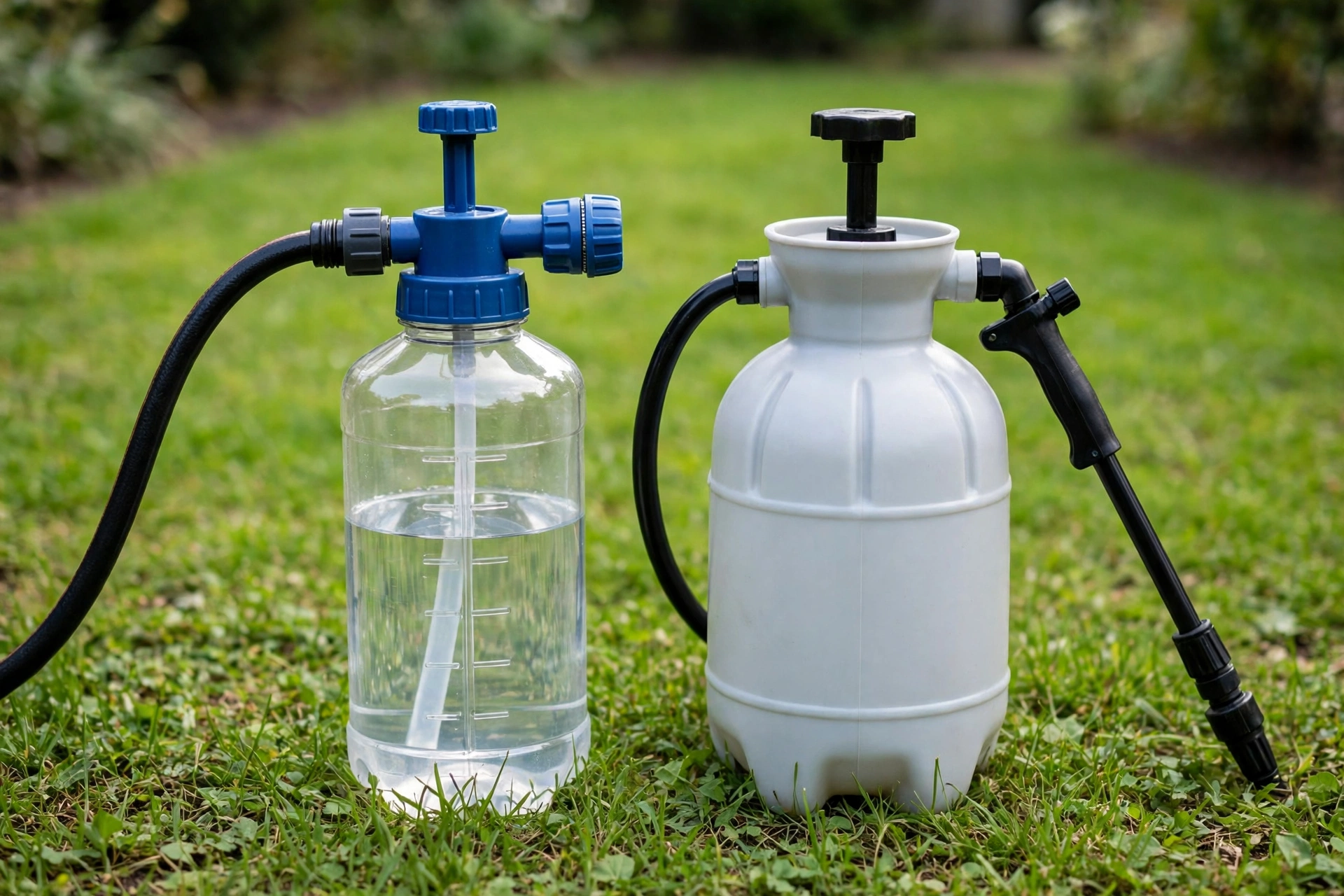
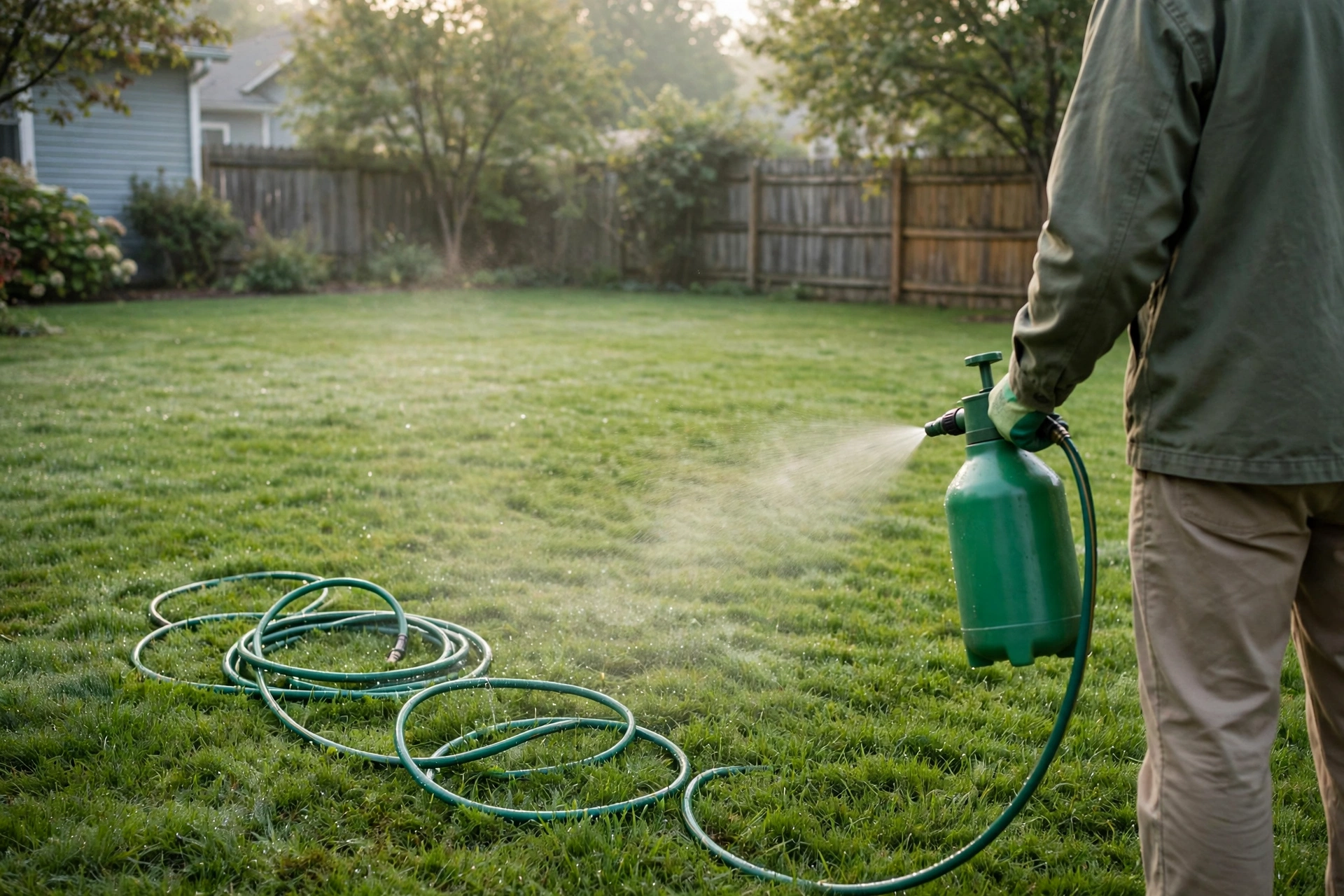
Liquid fertilizer is only as good as the sprayer putting it down. A hose-end sprayer covers a big lawn fast and mixes as you spray; a pump sprayer gives you control on a small lawn or a spot treatment, and you measure every ounce yourself. The full comparison — coverage, control, and which yard size fits which sprayer — is in our hose-end vs. pump sprayer guide. Whichever you use, spray in the cooler part of the day, keep the passes overlapping slightly, and water the lawn lightly afterward unless the label says not to — the weed-and-feed above is the exception.
When Liquid Is Not the Answer
Liquid feeds fast and fades fast, which is why it suits a lawn that needs a quick correction. If your soil test shows a phosphorus problem, a single-nutrient product may be the better buy — our guide to diammonium phosphate (DAP) fertilizer covers when a 18-46-0 makes sense and when it does not. And if you are comparing NPK ratios in general, our 28-0-3 vs. 10-10-10 comparison breaks down what those three numbers actually buy you.
Bottom Line
Buy the Simple Lawn Solutions 16-4-8 if you want one bottle that feeds a typical lawn well. Buy the Scotts weed-and-feed if your established lawn has weeds worth killing in the same pass. Add the GS Plant Foods kelp if you are building soil and roots for the long term. Reach for the 28-0-0 only when the lawn is pale and needs nitrogen now — and keep it away from new seed, heat-stressed grass, and a heavy hand.