You feed the lawn on Saturday, it greens up by Tuesday, and by the third week it looks exactly like it did before you spread anything. That pattern is a diagnosis, not a mystery: the fertilizer you used was spent, and the grass is telling you so.
The form matters as much as the bag. Liquid and granular fertilizers carry the same three numbers, but they reach the roots on different schedules, and that schedule decides whether the green lasts or fades.
What each form actually does
Liquid fertilizer is already dissolved. Sprayed on, it is available to the roots almost immediately, and some of it is taken up through the leaves. That is why the green shows up in days. It is also why it does not last: a liquid feeding is mostly spent within a couple of weeks, and the lawn needs another round to stay fed.
Granular fertilizer has to dissolve first. Dry pellets sit on the soil until water breaks them down, and the nutrients move into the root zone over days to weeks. Quick-release granules act faster than slow-release ones, but even a quick granule outlasts a liquid spray. A slow-release granular feeding, with coated or water-insoluble nitrogen, can carry a lawn for weeks at a stretch.
Neither form is a trick. Liquid is speed. Granular is staying power. The mistake is buying one and expecting the other.
Liquid vs granular at a glance
| Form | How fast it greens | How long it lasts | Best for |
|---|---|---|---|
| Liquid | Days | About two weeks | Quick correction, small areas, a lawn that needs color fast |
| Granular, quick-release | A week or two | Several weeks | Routine feeding where a spreader is easy to run |
| Granular, slow-release | Gradual | Weeks at a stretch | The base feeding most lawns should run on |
When liquid wins
Liquid earns its keep in three situations. The lawn has a visible deficiency and you want color back before the weekend. The area is small, a strip or a patch, where dragging a spreader out is more work than the job. Or you are supplementing a granular base between feedings, a light dose to carry color through a hot stretch.
Spray in the cool part of the day, and follow the label dilution exactly. Concentrated liquid nitrogen on hot, dry leaves draws moisture out of the leaf itself, which is how a well-meant spray leaves brown tips behind. If the label rate looks weak, the answer is a second light pass later, not a stronger mix now.
When granular wins
Granular wins the ordinary job: feeding a whole lawn on a schedule you can actually keep. A calibrated spreader puts the same amount down on every pass, and a slow-release formula forgives the small errors every homeowner makes. Sweep or blow any granules off driveways and sidewalks back onto the grass, or the next rain carries them to the storm drain instead of the roots.
Granules need water to start working. If no rain is coming, water them in lightly after spreading. A dry spell leaves the pellets sitting on the surface, doing nothing, while the lawn waits.
The dose rule that applies to both
Most extension guidance keeps a single application at or below about 1 pound of nitrogen per 1,000 square feet, and less when the product is mostly quick-release or the weather is hot. That cap is the difference between feeding and burning. Read the bag’s nitrogen number, do the bag math for your lawn size, and spread for the dose, not for the look of the bag emptying.
If you are unsure how much nitrogen your lawn actually needs this season, start with the site’s guide to the best fertilizer for your lawn after aerating and the 28-0-3 vs 10-10-10 comparison, which walk through the same bag math on real products.
Bottom line
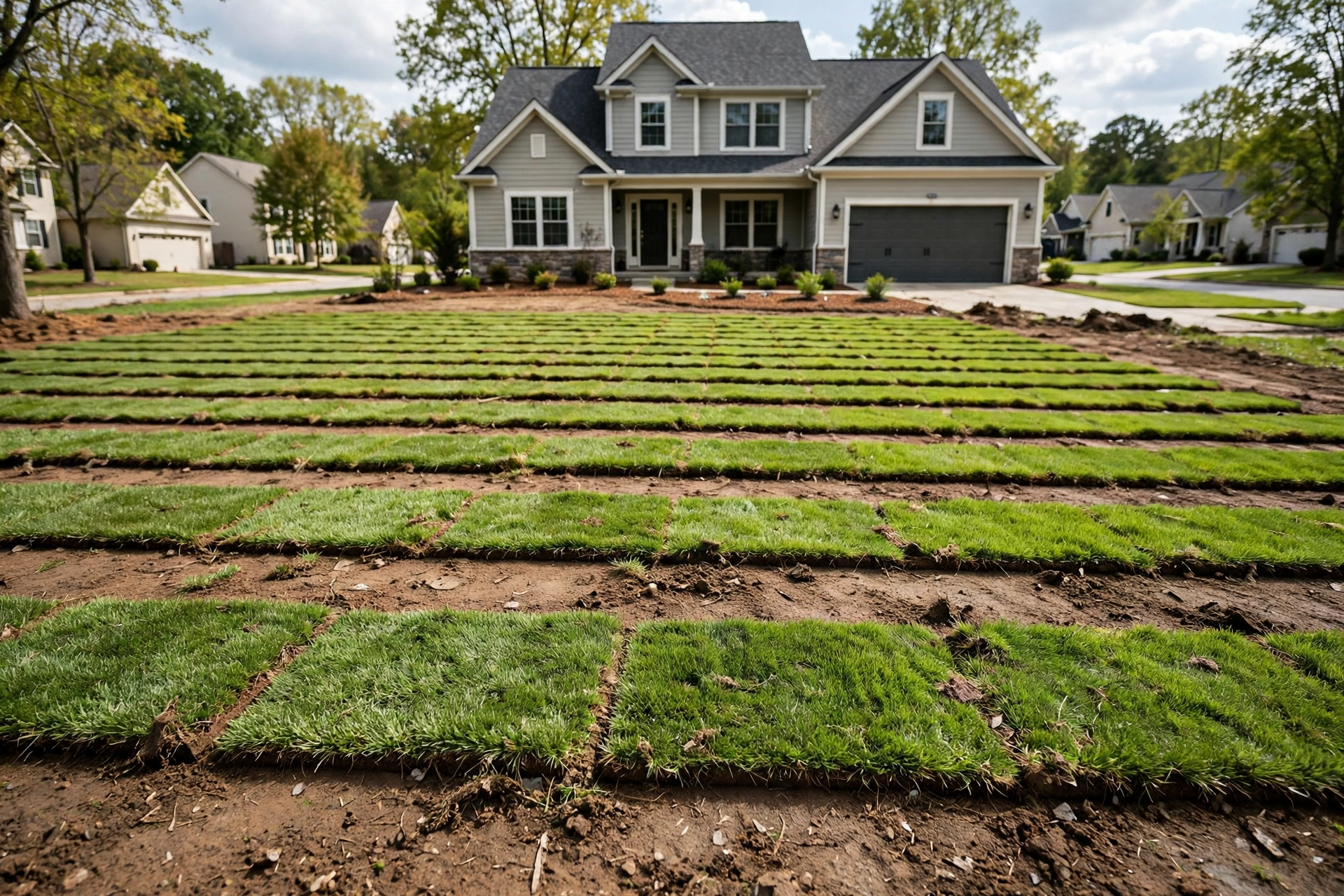
For most lawns, the base feeding should be a slow-release granular fertilizer, applied with a calibrated spreader and watered in. Keep liquid in the shed for the jobs it does best: a fast correction, a small area, or a light touch-up between granular feedings. And if the lawn in question is brand-new, read the best fertilizer for new sod before you spread anything — new roots play by different rules, and the wrong first bag costs more than the right one.