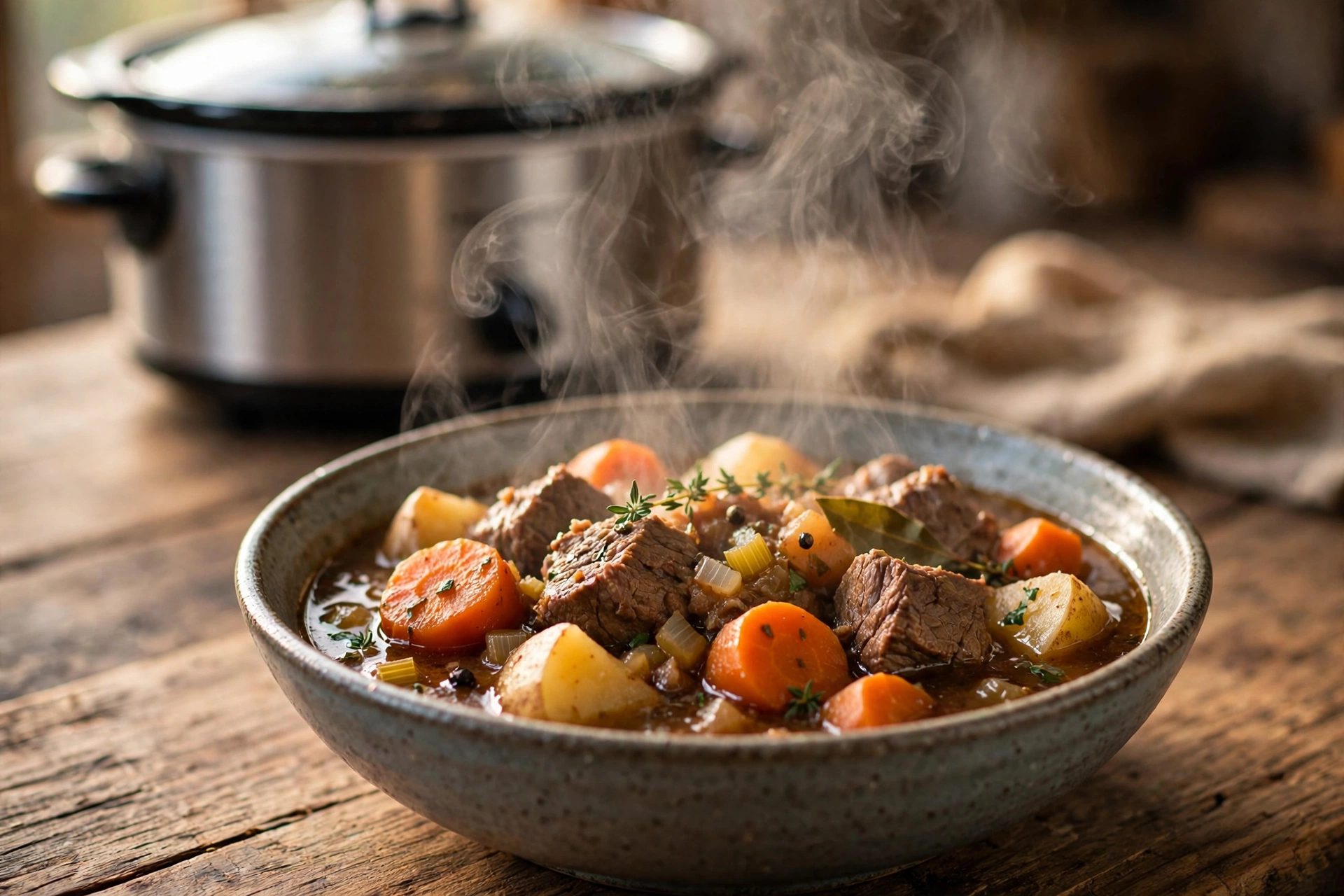
You open the front door after a long day and the house already smells like supper. That is the whole promise of this stew. The beef is tender, the potatoes hold their shape, the carrots have gone sweet, and dinner is waiting in the pot instead of waiting on you.
Slow Cooker Beef and Vegetable Stew is the dinner for the nights when cooking from scratch is not going to happen, but takeout is not what you want either. Twenty minutes in the morning — chop, brown, load the pot — and the slow cooker carries the rest of the day.
Why This One Works
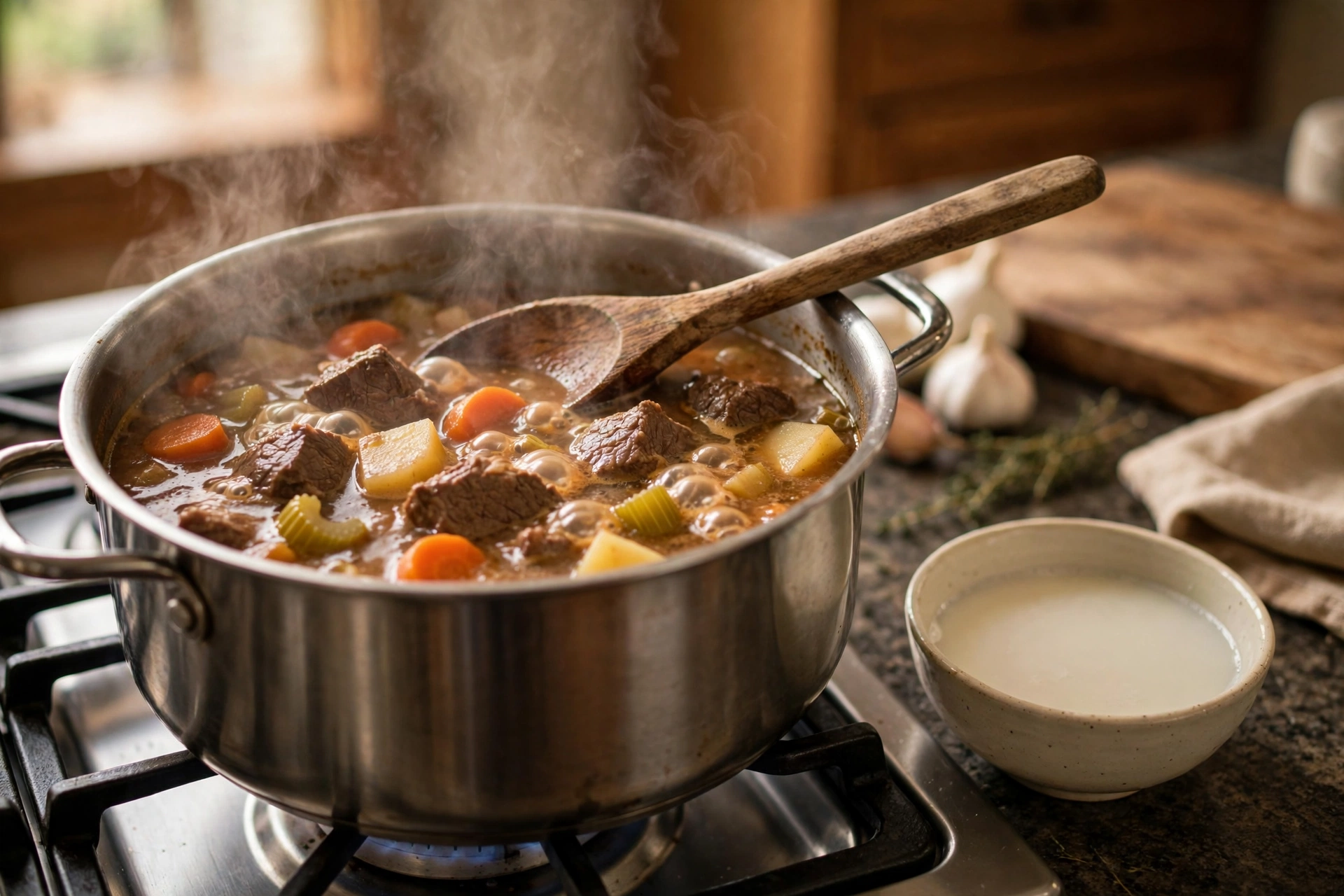
The move that makes this stew is browning the beef first. Eight to ten minutes in a hot skillet gives the cubes a browned crust, and that crust is where the flavor lives. Skip it and the stew tastes flat, no matter how long it cooks. (Do not crowd the pan — brown the beef in two batches so it sears instead of steaming.)
The second move is the order in the pot. Potatoes, carrots, and onion go in first, on the bottom, where the heat is steadiest, and the browned beef sits on top. Vegetables cook more slowly than meat in a slow cooker, so the ones underneath get the heat they need while the beef braises above them.
The slow cooker itself is built for exactly this job. The USDA describes slow cookers as cooking generally between 170°F and 280°F — low, steady heat over hours, which is what turns tough stew meat tender. Before serving, check the stew with a food thermometer: a stew should reach 165°F, the safe temperature for soups and stews in USDA slow-cooker guidance. Use a food thermometer before serving — tenderness alone cannot confirm the stew is hot enough to be safe.
Use beef stew meat, cut into 1-inch cubes, and do not swap in a lean steak. Stew meat is cut from the chuck, and its connective tissue melts into the broth over a long cook. That is what makes the broth rich instead of thin.

Slow Cooker Beef and Vegetable Stew
Ingredients
Method
- Season and brown the beef. Allow about 20 minutes for chopping the vegetables and browning the beef. Pat the beef dry, season it with the salt and pepper, and toss it with the flour. Heat the olive oil in a large skillet over medium-high heat and brown the beef in two batches, 8 to 10 minutes total, until browned on all sides.
- Layer the vegetables. Put the potatoes, carrots, celery, onion, and garlic in the bottom of a 6-quart slow cooker.
- Add the beef and broth. Set the browned beef on top of the vegetables. Stir the beef broth, tomato paste, Worcestershire sauce, and thyme together and pour the mixture over the beef. Tuck the bay leaves into the pot.
- Cook low and slow. Cover and cook on LOW for 8 hours, until the beef is fork-tender and the potatoes are soft when pierced with a knife. Do not lift the lid during cooking.
- Finish and serve. Remove and discard the bay leaves. Check the stew with a food thermometer — it should reach 165°F. Taste and add salt if needed, then ladle into bowls and serve hot.
Variations Worth Trying
Add a cup of frozen peas in the last 30 minutes if you want a pop of green — they need only long enough to heat through. A splash of red wine in place of half a cup of the broth deepens the flavor, and a parsnip or two, cut like the carrots, fits right in with the root vegetables.
If the stew comes out thinner than you like, lift out a cup of the hot broth, whisk in a tablespoon of cornstarch, and stir it back in for the last 15 minutes on high. The potatoes will have thickened it some already, so taste before you add more.
Serving and Storing
Fish out the bay leaves, taste for salt, and ladle the stew into wide bowls. Crusty bread is the right companion — something to mop up the broth — and a simple green salad on the side keeps the plate from feeling heavy. For another one-pan supper on a different night, Creamy Chicken and Mushroom Skillet cooks in the time this stew spends in the pot.
Leftovers keep in the refrigerator for up to four days, and the flavor improves overnight. Reheat gently on the stove or in the microwave until steaming hot, and add a splash of broth if it has thickened in the fridge. Freeze cooled stew in portions for up to three months; thaw overnight in the refrigerator before reheating.
This is the stew to make on the morning of a busy day. The pot does the cooking, the house smells like supper by afternoon, and dinner is done before you sit down.