This post contains affiliate links. We may receive a commission if you make a purchase after clicking on one of these links.
The stew is on the stove, the table is set, and the broth is still running thin across the bowl. You are not starting over — the flavor is there, the vegetables are tender, and dinner is ten minutes away. What the pot needs is body, and flour is not the only way to give it some.
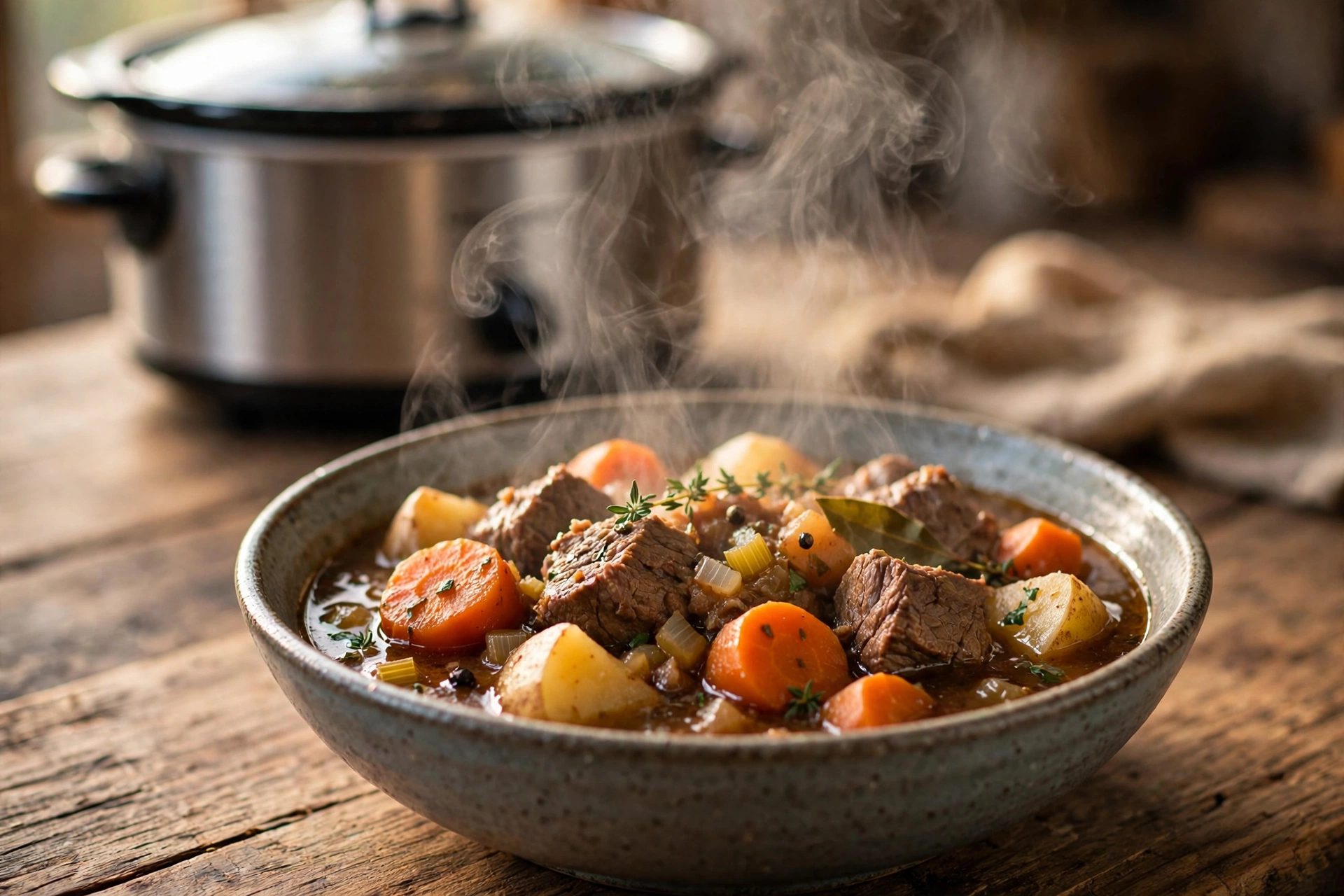
There are four honest ways to thicken a stew, and they do not all behave the same. If you need the pot itself, start with our Slow Cooker Beef and Vegetable Stew — then come back here when the broth needs a little help.
The cornstarch slurry: the fastest fix
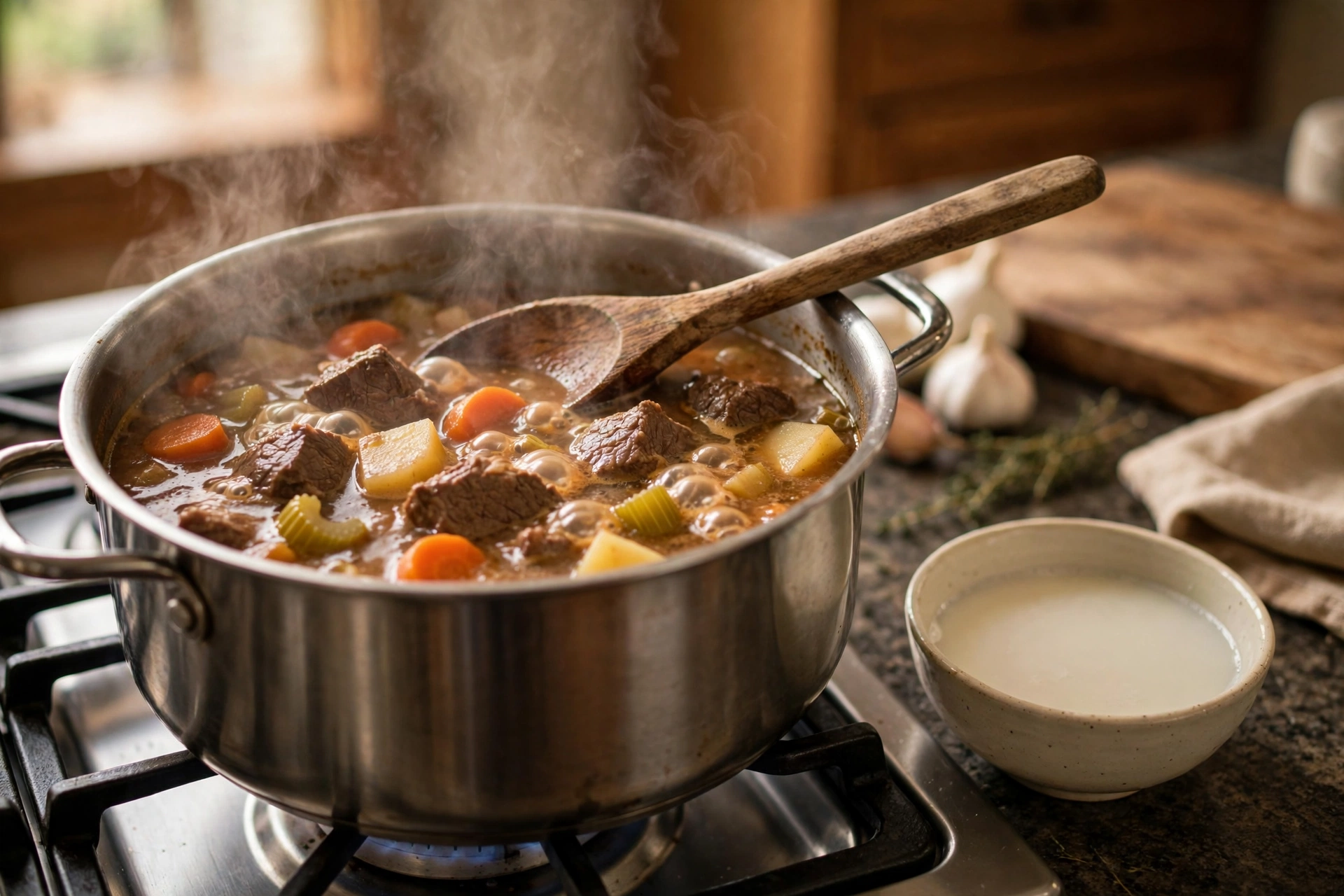
A slurry is cornstarch whisked into cold water before it ever meets the pot, and it is the quickest fix on this list. Mix one tablespoon of cornstarch with one tablespoon of cold water for every cup of liquid you want to thicken — for a full pot of stew, start with two tablespoons of each.
The cold water matters. Cornstarch stirred straight into hot liquid clumps before it can spread, which is how lumps happen. Mixed cold first, it disperses evenly, and then the heat does the work.
Heat is the whole trick here. Cornstarch begins to gelatinize around 144–162°F and reaches full thickness near 203°F (95°C), so the stew has to come to a proper boil — a simmer that never quite gets there will leave the broth thin no matter how much slurry you add. Stir the slurry in, bring the pot to a boil, and give it one to two minutes.
Stop there. A hard boil kept going breaks the starch back down, and a stew that thickened nicely at minute two can turn thin again by minute ten. The finish is glossy and clear, and the flavor stays neutral — the stew tastes like itself, only thicker.
Just let it reduce
Take the lid off and let the stew simmer, uncovered, for twenty to thirty minutes. Water leaves as steam, everything left behind gets more concentrated, and the broth thickens on its own.
This is the slow fix, and it is the right one when the stew tastes a little flat as well as thin — reducing fixes both problems at once. Keep an eye on the vegetables, though. Potatoes that were perfect at the start can turn to mush by the end of a long reduction, so pull the pot when the broth coats the back of a spoon.
Mash some of what is already in the pot
The thickener is already in the stew: the potatoes and carrots. Scoop out a cup of the softest vegetables, mash them with a fork, and stir them back in. The starch already in the potatoes does the thickening, and nothing new enters the pot.
An immersion blender does the same job faster — a few short pulses right in the pot, keeping the blade down in the broth. Do not hold the button down. A few pulses thickens the stew; a long blend turns it into soup, and the chunks that made it a stew are gone.
Mueller Ultra-Stick Immersion Blender
A 500-watt stick blender that purees a scoop of stew right in the pot — no ladling into a blender, no extra dishes.
Beurre manié: the French finish, with one honest note
Beurre manié is equal parts softened butter and flour, kneaded together into a paste, then whisked into the simmering stew a little at a time. It thickens without a roux and without cooking the flour first, and the butter leaves the broth rich and glossy.
One honest note: this is the one method here that does use flour — a spoonful or two, not a roux. It suits a cook who wants to skip the roux, not a cook who needs to skip flour entirely. If flour is off the table, the slurry above is the better pick.
Which one to reach for
- Ten minutes to dinner: the cornstarch slurry. Fast, predictable, neutral.
- Half an hour and a flat-tasting stew: reduce it. The flavor improves along with the body.
- Soft potatoes already in the pot: mash a cup back in. Nothing to buy, nothing to measure.
- A stew that wants richness too: beurre manié, if flour is fine for your table.
Use one fix at a time. Stir it in, give it a minute, taste, and then decide whether the pot needs more. Two thickeners at once is how a stew overshoots from thin straight past thick into gluey.
What not to do
Do not sprinkle dry cornstarch or flour straight into the pot. It clumps on contact for the same reason the slurry starts cold — the starch gelatinizes in place before it can spread.
Do not boil a cornstarch-thickened stew hard for ten minutes, and do not reach for the blender and hold the button down. Both mistakes are easy to make in a hurry, and both are hard to undo.
The same slurry trick works beyond stew. It is the move behind the glossy sauce on our Creamy Chicken and Mushroom Skillet, and if you want one more kitchen skill for the week, How to Sear Chicken Thighs Without Sticking covers the heat control that makes the difference.
For a weeknight pot, the slurry is the one I would reach for first. It is fast, it is predictable, and it leaves the stew tasting like itself. Reducing is the better move when you have the time and the flavor needs help too — but if the table is already set, mix the slurry, bring the pot to a boil, and serve.