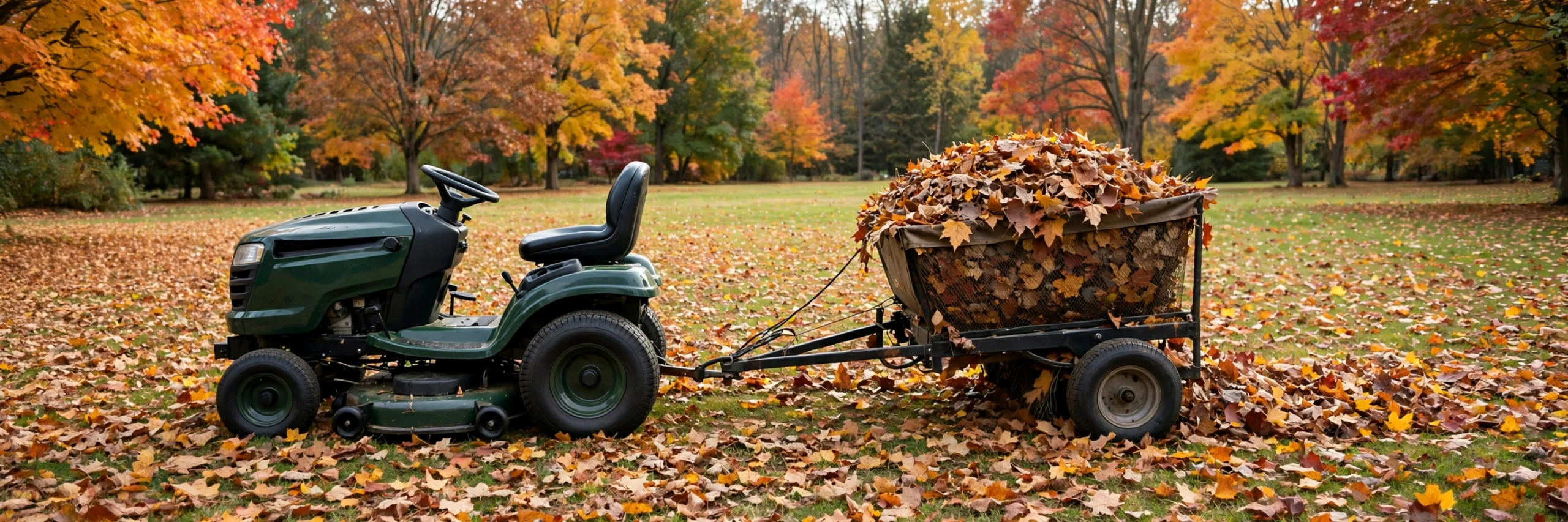
Your sweeper leaves a trail of leaves behind it, and the bag is either jammed at the mouth or dragging half-empty on the ground. That trail is not a broken sweeper — it is a setup problem, and it usually comes from one of three causes: the brushes are set wrong, the bag is too full, or the leaves are too wet to move. Sort out which one you are looking at, fix that one thing, and the sweeper usually starts working the way the box promised.
This guide runs the diagnosis in the order to check it: brush height first, then the bag, then the leaves themselves. For which sweeper to buy in the first place, see our Agri-Fab vs. Ohio Steel vs. Brinly head-to-head, and our Agri-Fab 45-0492 review covers the dump-from-seat handle that makes the emptying steps below fast.
What You Are Seeing, and What It Means
Three symptoms point to three different causes. Learn to tell them apart before you change anything, because adjusting the wrong one wastes a pass.
Leaves left in a neat trail behind the sweeper. The brushes are not reaching the debris. This is the most common cause, and the most common fix: the brush height is set too high, so the brushes skim over the leaves instead of flicking them into the bag.
Leaves piling at the mouth of the bag, with the back of the bag still empty. The bag is full at the front and blocked at the opening — or the leaves are wet and matted, so they clump at the mouth instead of flowing to the back. A flow-through bag is built to fill back to front; when it stops doing that, something is blocking the flow.
The sweeper drags, bounces, or stops picking up halfway through a pass. Either the bag is genuinely full and heavy, or you are towing too fast. Both look the same from the tractor seat: the sweeper stops working mid-pass for no obvious reason.
Fix One: Set the Brushes Half an Inch Into the Grass
Brush height is the first check because it causes the most skipped leaves and takes a minute to fix. Ohio Steel’s manual states the setting plainly: adjust the brushes so they extend roughly half an inch below the tips of the grass. That half-inch is the working depth — deep enough for the brush tips to get under the leaves, shallow enough that they do not drag and push debris into a ridge.
How to set it: park the tractor and sweeper on the lawn, not the driveway. Lower the brushes until the tips just disappear into the grass by about half an inch — you should see the brush tips bending slightly against the grass, not standing clear of it and not buried. Most sweepers adjust from a lever with a position indicator; set it, then run a short test pass and look behind you. If leaves still trail, drop the brushes one notch and test again. If the sweeper drags or the brushes look bent flat, you have gone too low — raise it a notch.
When to re-check: brush height changes with grass length, so a setting that worked on a freshly mowed lawn will sit too high on longer grass. Mow first, then set the height on the mowed lawn. If the lawn has thick thatch or a heavy mat of leaves, expect to adjust after the first pass anyway.
Fix Two: Empty the Bag Before It Blocks
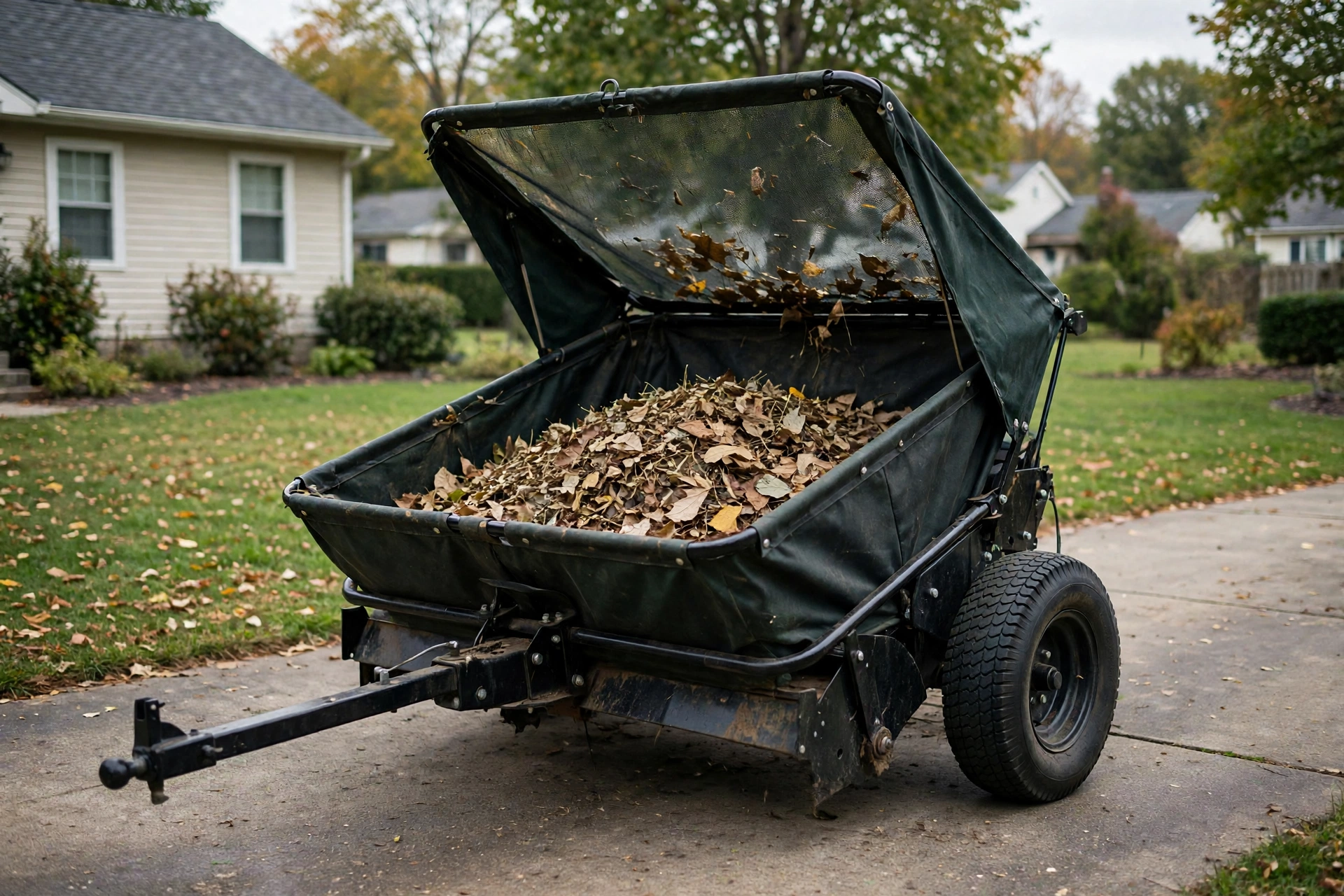
A full bag does not just stop collecting — it clogs the mouth of the sweeper, so leaves pile at the opening and fall back onto the lawn. The fix is timing: dump before the bag is full, not after it stops working.
How to tell it is time: watch the front of the bag. When leaves start piling at the mouth instead of flowing to the back, the bag is effectively full even if the back still has room. On a heavy leaf day, that can happen sooner than you expect — a 28-cubic-foot bag still fills fast under mature oaks. Dump at the first sign of piling, and the next pass stays clean.
How to dump without a mess: drive to the compost pile or the curb pile, pull the dump handle or rope from the tractor seat, and let the bag swing open. If your sweeper empties from the seat, use that handle every time — climbing off and wrestling a full bag is how bags tear. If leaves are stuck at the mouth, clear them by hand before the next pass; a blocked mouth on an empty bag clogs just as fast as a full one.
Fix Three: Sweep Dry Leaves, and Mow First
Wet leaves are the hardest thing a sweeper is asked to do. They mat together, cling to the grass, and clump at the bag mouth instead of flowing through. No brush setting fixes wet leaves well. The real fix is timing: sweep on a dry day, after the morning dew has lifted, and sweep leaves that have had a day to dry after rain.
Mow first. Short grass gives the brushes a clean surface to work on. Long grass hides leaves below the brush tips, and the sweeper passes over them without touching them. A quick mow before sweeping also chops the leaves slightly, which helps them flow into the bag instead of bridging across the mouth.
Clear the big stuff by hand first. Sticks, pine cones larger than the brush gap, and rocks do not belong in a sweeper. They jam the brushes and tear bags. A five-minute walk to pick up the worst of it saves a clogged pass and a torn bag. Pine cones are the usual culprit — the Agri-Fab’s fast brushes handle small ones, but a lawn full of large cones still wants a quick hand pass first.
Speed, Overlap, and the Pass Itself
Once the three fixes are in place, the pass itself is simple — but two habits undo good setup. The first is speed. Ohio Steel’s manual caps towing at 6 miles per hour, and that limit is real: faster than that, the brushes skip, the bag bounces, and leaves blow out before they reach the hopper. Use the tractor’s lowest gear and let the sweeper work at its own pace.
The second is overlap. Run each pass with a few inches of overlap onto the previous one, the same way you overlap mower passes. A sweeper’s brushes are weakest at the outer edge, so a pass with no overlap leaves a thin stripe of leaves along every seam. Overlap a little, and the stripes disappear.
Work in a pattern that keeps the dump trips short: sweep toward the compost pile or the curb pile, so the bag is nearest to emptying when it fills. On a big lawn, that one habit saves more time than any speed increase.
After the Sweep: Two Minutes That Keep It Working
When the lawn is clear, the sweeper still needs two minutes. Empty the bag completely, including the leaves packed at the mouth, and brush off the brush housing so dried leaves do not harden onto the brushes. Park it under cover: a fabric bag left in the rain mildews, and wet storage is what kills bags between seasons.
Check the brushes once a season for bent or broken bristles, and check the bag for small tears before they spread. A torn bag dumps leaves back onto a clean lawn, which is the most frustrating way to discover a rip.
Bottom Line
Set the brushes half an inch into the grass, dump the bag at the first sign of piling at the mouth, and sweep dry leaves on a mowed lawn at under 6 miles per hour. Those four habits fix nearly every clog, trail, and skipped patch a tow-behind sweeper produces. If the sweeper still leaves a trail after all four, the brushes are likely worn past their working length — and that is a replacement-brush problem, not a technique problem.