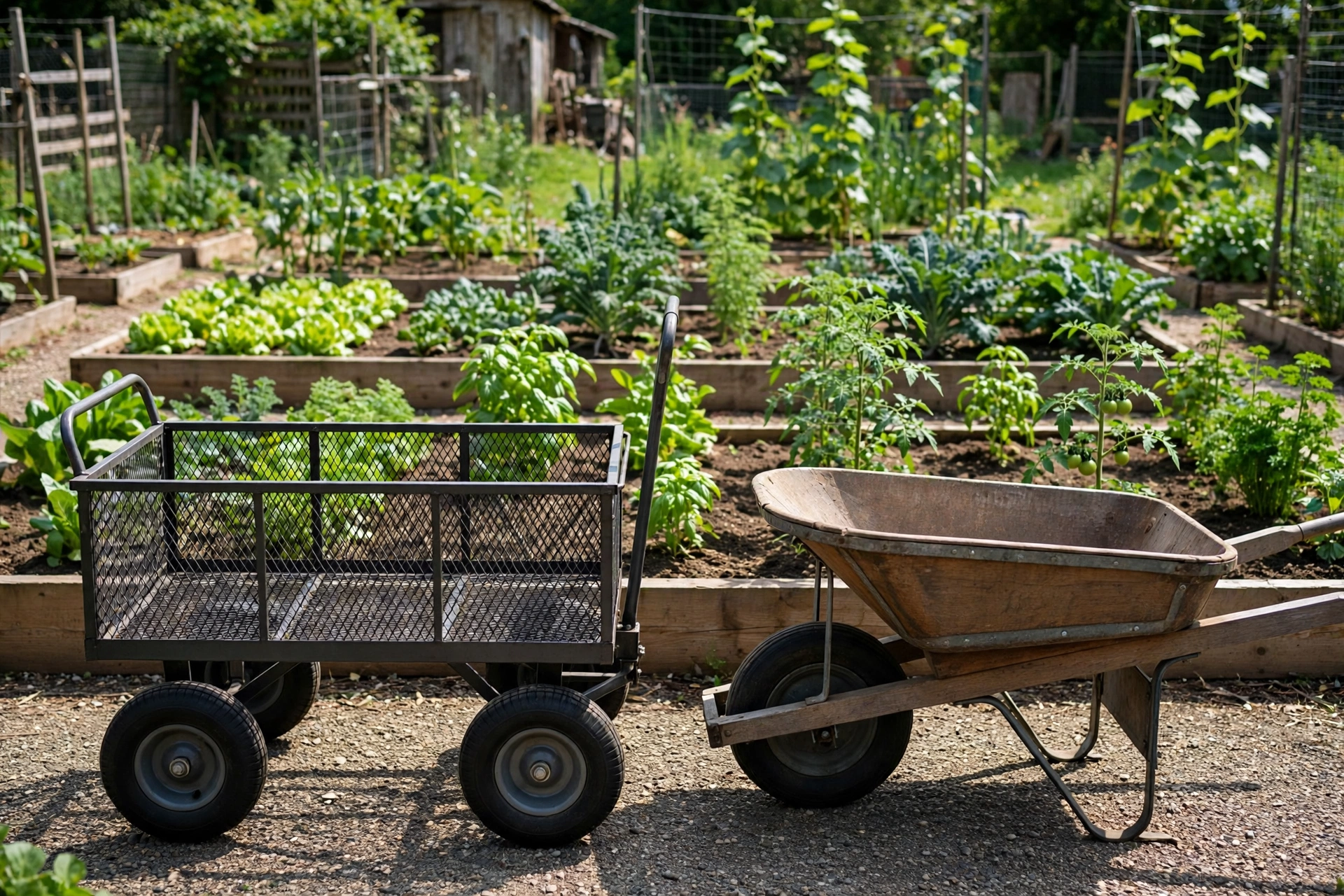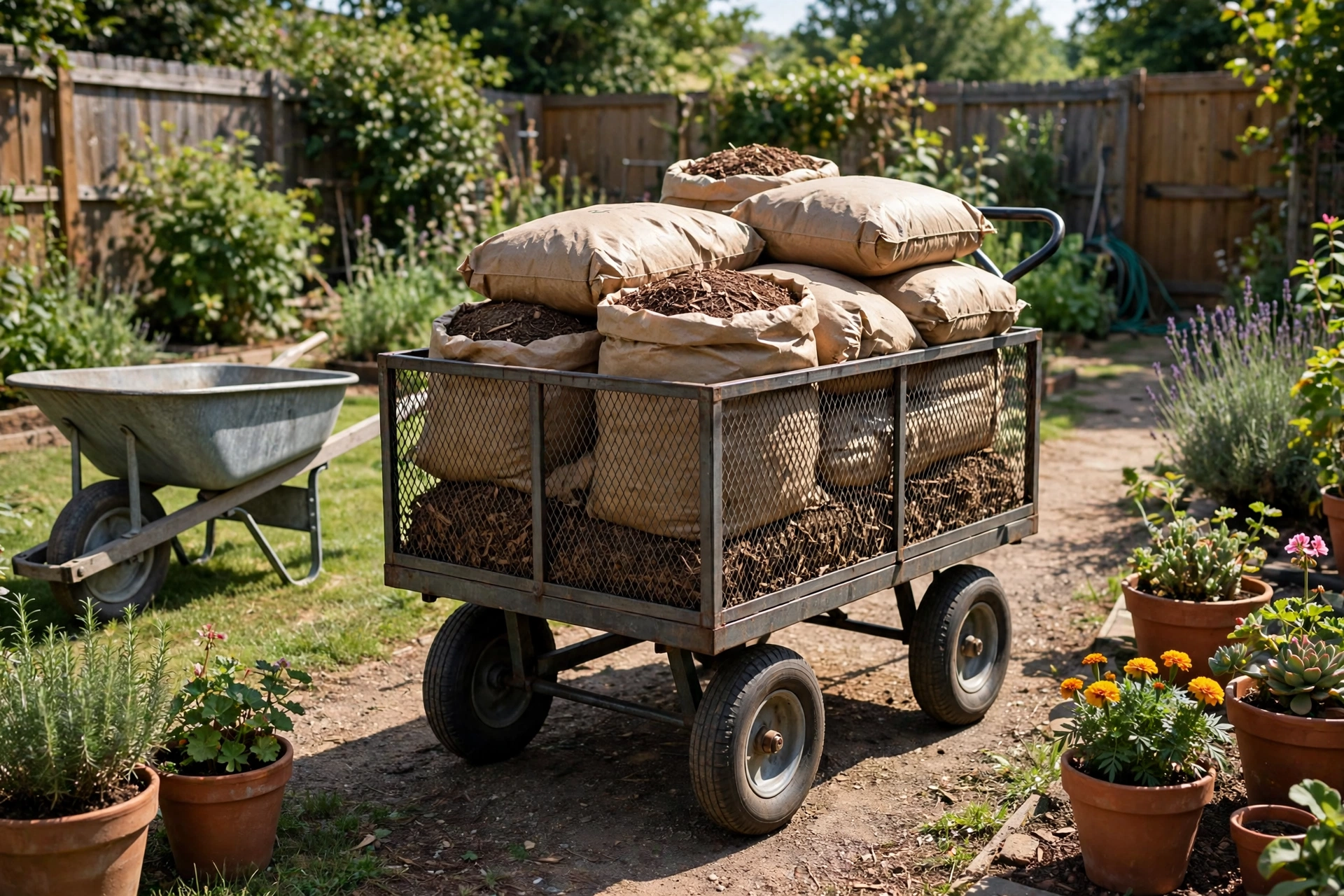
How many trips will that mulch pile take? The answer is written on the cart’s label — if you know how to read it.
Every garden cart carries two numbers: how much it holds, and how much it can carry. They sound like the same thing. They are not, and the gap between them is where overloaded carts, bent axles, and spilled loads come from.
Two numbers that matter
Bed volume, in cubic feet, is how much the cart holds. A 4-cubic-foot cart holds 4 cubic feet of material — about two 2-cubic-foot bags of mulch.
Weight rating, in pounds, is how heavy that load can be. A 600-pound cart can carry 600 pounds of anything, in a bed that holds 4 cubic feet.
Whichever limit you hit first is the real limit. For mulch, the bed fills up first. For soil and stone, the weight rating does. That is the whole trick to loading a cart right.
What a cubic foot actually weighs
A cubic yard is 27 cubic feet, and bulk materials are sold by the yard — so the weight of a yard tells you the weight of a load. These are the standard figures landscape suppliers use, and they are worth knowing before you load a cart.
| Material | Per cubic yard | Per cubic foot | What it means for a cart |
|---|---|---|---|
| Shredded mulch | 400–800 lb | 15–30 lb | Bed fills first |
| Compost | 1,000–1,400 lb | 37–52 lb | Bed fills first |
| Topsoil | About 2,200 lb | About 80 lb | Weight limit comes first |
| Gravel and stone | About 2,700 lb | About 100 lb | Weight limit comes first |
Wet material weighs more — sometimes much more. A cubic yard of topsoil that weighs 2,200 pounds dry can pass 3,000 after a heavy rain, so a load that was fine on Tuesday can overload the same cart on Saturday. Ask your supplier for the actual load weight if the pile has been sitting in the rain.
Real loads in a 4-cubic-foot cart
Take the most common garden cart — a 4-cubic-foot bed rated for 600 pounds — and fill it with each material.
Mulch: a full bed weighs roughly 60 to 120 pounds. You will never come close to the weight rating. The bed is the limit, and every trip carries a full load.
Compost: a full bed weighs roughly 150 to 210 pounds. Still well inside the rating. Compost is one of the easiest loads a cart ever carries.
Topsoil: a full bed weighs about 320 pounds — more than half the cart’s rating in a single load. Two heaped beds of topsoil would pass 600 pounds, so load the second one level, not heaped.
Gravel: a full bed weighs about 400 pounds — two-thirds of the cart’s rating in a single load. It is the heaviest load per trip here, so load it level with the bed rails, not heaped.
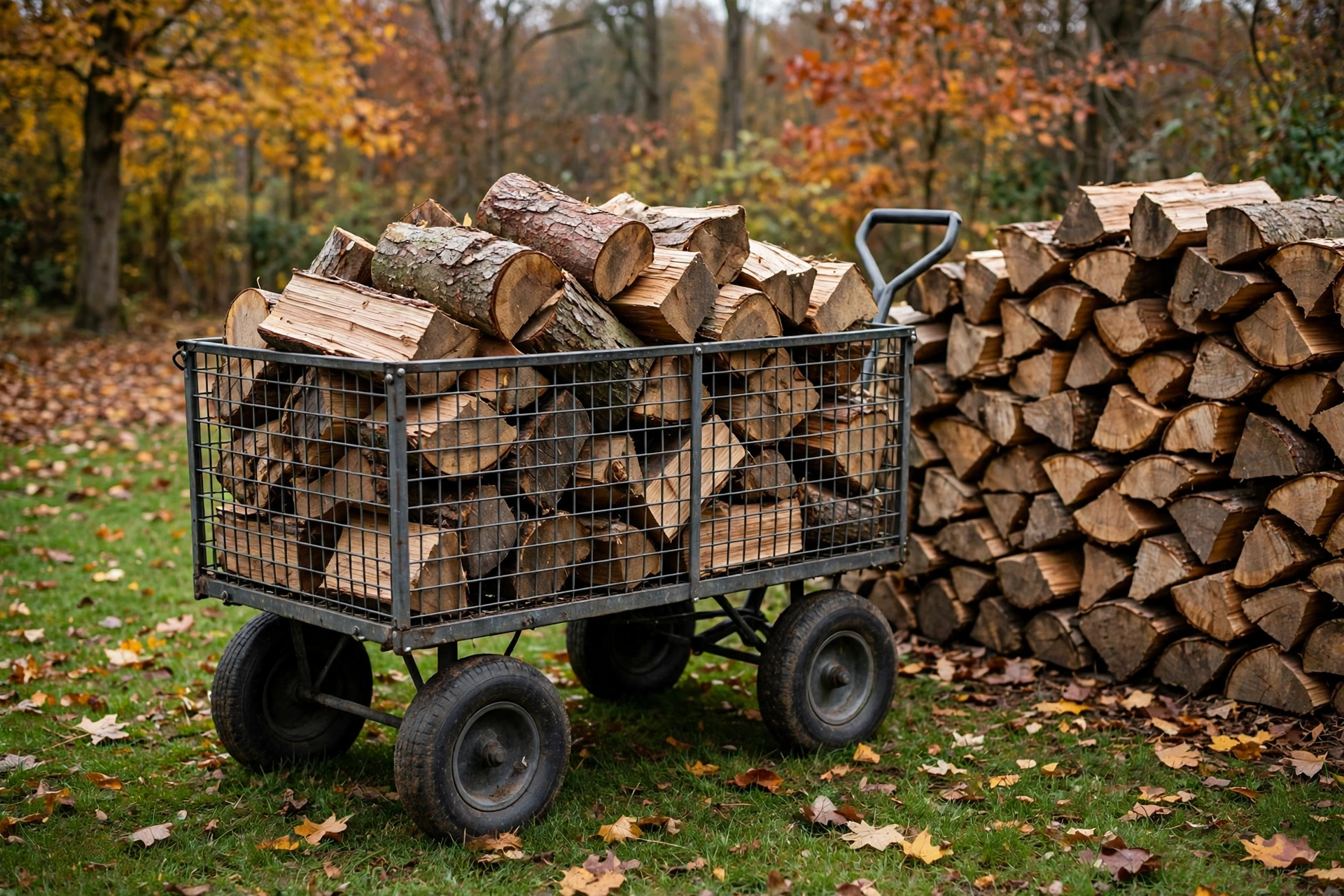
Firewood: split hardwood stacked loosely in a 4-cubic-foot bed weighs roughly 80 to 100 pounds — the air between the splits keeps it light. Firewood is a volume job, not a weight job, and a cart handles it easily.
The mistake that overloads carts
The classic overload is not a heavy load. It is a full-looking load of the wrong material.
A bed heaped with wet topsoil can weigh twice what the same bed of mulch weighs, and the cart does not warn you — it just gets harder to pull, then harder to steer, then the tires flatten and the axle complains. The fix is simple: load soil and stone level with the bed rails, never heaped, and stop when the cart feels heavy to pull, not when the bed looks full.
Overloading also voids the point of the cart. A cart rated for 600 pounds that is carrying 700 is not hauling more — it is hauling slower, tipping easier, and wearing out faster.
How to load for the rated weight
Load low and centered. Heavy material goes in first, spread flat across the bed, not piled at one end. A load that sits high and off-center is the one that tips on a slope.
Let the cart tell you. If the handle pulls hard on flat ground, the load is too heavy, whatever the bed looks like. Take a shovelful off and try again.
Match the cart to the material. If your regular job is soil and stone, buy the cart with the higher weight rating, not the bigger bed. Our best garden carts roundup names a 900-pound steel cart for exactly that job, alongside the 600-pound dump cart that suits most yards.
The short version
Buy capacity for the heaviest material you haul, not the bulkiest. A 600-pound cart with a 4-cubic-foot bed handles mulch, compost, and firewood without ever noticing the weight, and it takes a full bed of topsoil without breaking a sweat — as long as you load that topsoil level, not heaped.
And if you are still choosing between a cart and the wheelbarrow in the garage, our garden cart vs. wheelbarrow comparison settles it by job.