Landscape & Leisure is reader-supported. When you buy through links on our site, including Botanical Interests seed links, we may earn a commission at no extra cost to you. Prices change, so click through to confirm current pricing.
A wall of green vines and not a single flower is the classic sweet pea complaint. The plants look healthy — tall, leafy, climbing exactly as they should — and yet the trellis stays bare while the calendar slides toward July. The good news is that a flowerless sweet pea is almost never a sick plant. It is a plant telling you, precisely, which of six things went wrong.
Work through the causes below in order. The first two explain most bare trellises, and each one has a fix you can apply this season or a change to make next spring. For the sowing and care that prevents all of this, see our guide to growing sweet peas, and for the varieties that hold up best in heat, see our best sweet pea varieties.
1. The Heat Arrived Before the Blooms Did
How to tell: the vines grew fast and looked strong in spring, then stalled as the weather turned hot — buds, if any formed, dropped before opening, and the plants look tired rather than diseased.
Sweet peas are cool-season flowers. They germinate best in soil between 55 and 65 degrees and bloom best while the air stays in that same cool range. Sustained heat stops flowering, and no amount of watering brings it back once the plant has decided summer has arrived. This is the most common cause of a bare trellis, and it is almost always a timing problem: the seed went in too late.
The fix: there is no rescue for a heat-stopped plant this season — pull it when it is done and start earlier next year. Sow 4 to 6 weeks before your average last frost in a cold climate, or in late fall to early winter in a mild one. In a hot garden, give the plants afternoon shade and mulch the roots to keep them cool. And choose a heat-tolerant variety next time: Mammoth Blend was developed for heat and drought resistance and keeps blooming longer into summer than the varieties that quit at the first hot week.
Mammoth Blend Sweet Pea Seeds
Extra-large flowers on long stems, with the heat tolerance to keep blooming when other sweet peas quit.
2. Seed Pods Are Still on the Plant
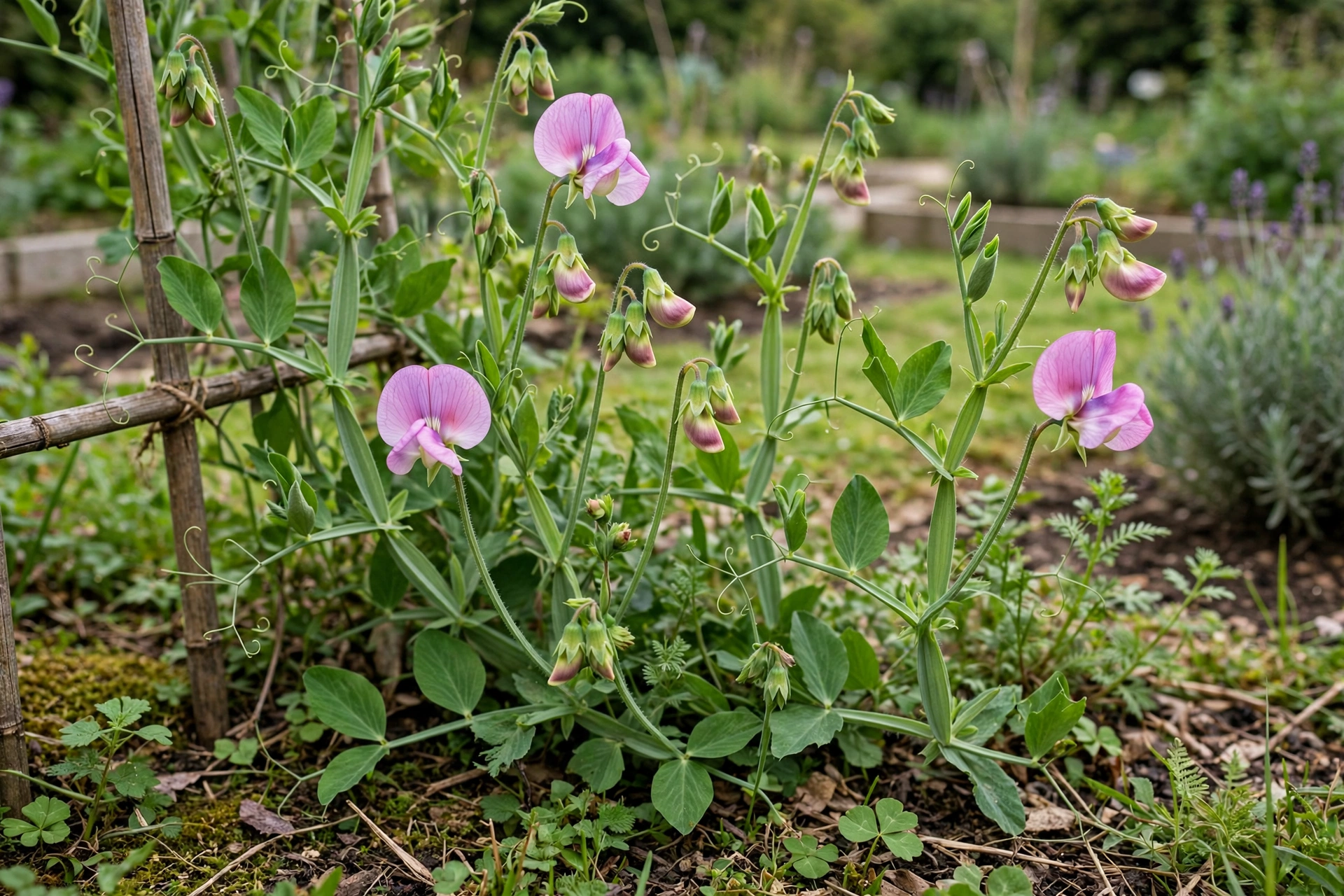
How to tell: the plant flowered — a few blooms, maybe a good flush — and then stopped, and you can see plump green pods hanging where the flowers were.
A sweet pea that sets seed stops flowering. The moment a flower is allowed to form a pod, the plant shifts its energy from making new flowers to ripening seed, and blooming slows to a stop. This is the easiest cause to fix and the easiest to miss, because the pods form quietly while you are admiring the first flowers.
The fix: cut, and keep cutting. Pick stems every few days when two or three flowers are open, and deadhead any faded flower you don’t pick. If pods have already formed, strip them off now — the plant will usually push a fresh flush of buds if the weather is still cool. Cutting is the care the plant needs, not a bonus.
Bouquet Blend Sweet Pea Seeds
A Spencer mix bred for the vase — big flowers, sturdy stems, and more blooms per stem.
3. Too Much Nitrogen
How to tell: the vines are lush, dark green, and vigorous — the healthiest-looking plants in the garden — and they carry almost no buds at all.
Sweet peas are legumes, and heavy nitrogen feeding grows leaves at the expense of flowers. Rich soil plus a high-nitrogen fertilizer is the usual culprit, especially if the bed was fed for vegetables or lawn nearby. The plant is not sick; it is overfed, and it is spending everything on foliage.
The fix: stop feeding now. Don’t add fertilizer for the rest of the season, and next year skip the nitrogen — the compost worked in at sowing is usually all a sweet pea bed needs. A light feeding is fine if the soil is genuinely poor, but stop once flowering starts.
4. Not Enough Sun
How to tell: the vines are leggy and pale, stretching toward the light, with long gaps between leaf pairs and few buds.
Sweet peas need at least 6 hours of direct sun a day to bloom well, and they do their best work in morning sun. In shade they grow — the vines will climb gamely toward whatever light exists — but they won’t flower like a plant in full sun. In hot climates a little afternoon shade is a help, not a problem; the issue is a spot that never gets real sun at all.
The fix: there is no fix for a shaded plant this season beyond moving a container into the sun. Next year, put the trellis where it gets morning sun and at least 6 hours total, with good airflow around the vines. If the only sunny spot is a pot on the patio, Little Sweetheart — the dwarf bush type — blooms happily in a container with no trellis at all.
Little Sweetheart Sweet Pea Seeds
A dwarf bush sweet pea that needs no trellis — made for baskets, pots, and window boxes.
5. Sown Too Late, or Never Pinched
How to tell: a single thin stem per plant, climbing straight up with few side shoots, and buds that appear late or not at all.
These two mistakes look the same on the trellis: a plant that never got the strong, branching start it needed. Late sowing means the plant hits hot weather before it has built the growth that carries flowers. Skipping the pinch means one stem instead of many — and one stem carries a fraction of the blooms.
The fix: next spring, sow while the soil is still cool, 4 to 6 weeks before last frost, and pinch the growing tip out when each seedling has three or four pairs of leaves, at about 4 to 6 inches tall. Pinching forces side shoots, and side shoots are where most of the flowers come from. If the plants are already up and unpinched this year, pinch now — late pinching still helps, though the plant will be a few weeks behind one pinched on time.
6. The Seed Never Really Got Going
How to tell: patchy germination, thin stands, or plants that came up weak and never caught up — sometimes only a few seedlings from a whole packet.
Sweet pea seed has a hard coat, and it germinates slowly — 10 to 21 days even in good conditions. Old seed, seed sown into warm or dry soil, or seed planted too deep all germinate worse, and a thin stand of weak plants rarely blooms well. A recurring theme in gardener reviews is spotty germination even after soaking, so this is not a rare failure.
The fix: use fresh seed, soak it overnight before sowing, and sow 1 inch deep into moist soil while it is still 55 to 65 degrees. Sow three seeds every 6 inches and thin to the strongest at 3 inches tall — sowing thick is the insurance against a thin stand. If this year’s stand is already patchy, it is better to re-sow early next season than to nurse weak plants through summer heat.
What Success Looks Like
A sweet pea that is about to bloom shows it first: buds forming along the upper stems, side shoots filling out after pinching, and a plant that keeps climbing while the weather stays cool. Once the first flowers open, cut them — every stem you take is a signal to make more, and a plant cut every few days can bloom for 8 to 12 weeks. If your trellis is still bare after working through these six causes, the likeliest answer is the first one: the heat arrived before the plant was ready, and the real fix is a packet sown earlier next spring. Our growing guide has the full timing, and our annual vs. perennial flowers comparison is worth a read if you want flowers that come back on their own next year.