Landscape & Leisure is reader-supported. When you buy through links on our site, including Botanical Interests seed links, we may earn a commission at no extra cost to you. Prices change, so click through to confirm current pricing.
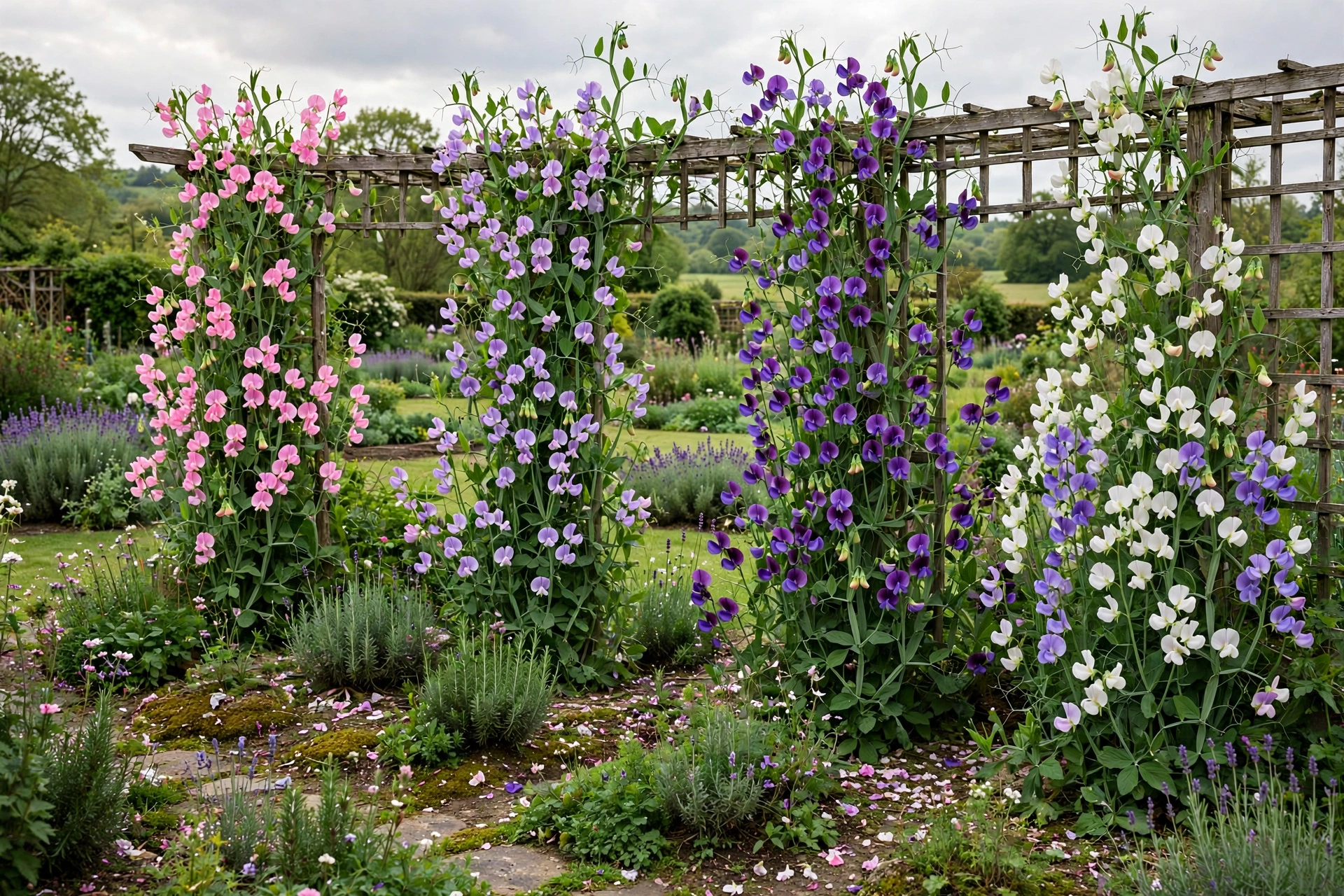
By the time the soil feels warm under your hand, sweet pea season is already slipping away. These are cool-season flowers — they want to be sown while the ground is still cold, to grow while the air is mild, and to bloom before summer heat arrives. Get the timing right and a fence disappears under flowers. Get it wrong and you get a wall of green vines and a short, sulky bloom.
One thing to settle before you sow: sweet peas are not garden peas. Every variety here is Lathyrus odoratus, an ornamental annual, and every part of the plant is toxic if eaten. The pods look like pea pods. They are not food, and the plants should go where nobody mistakes them for the vegetable patch.
Why Sweet Peas Want Cool Weather
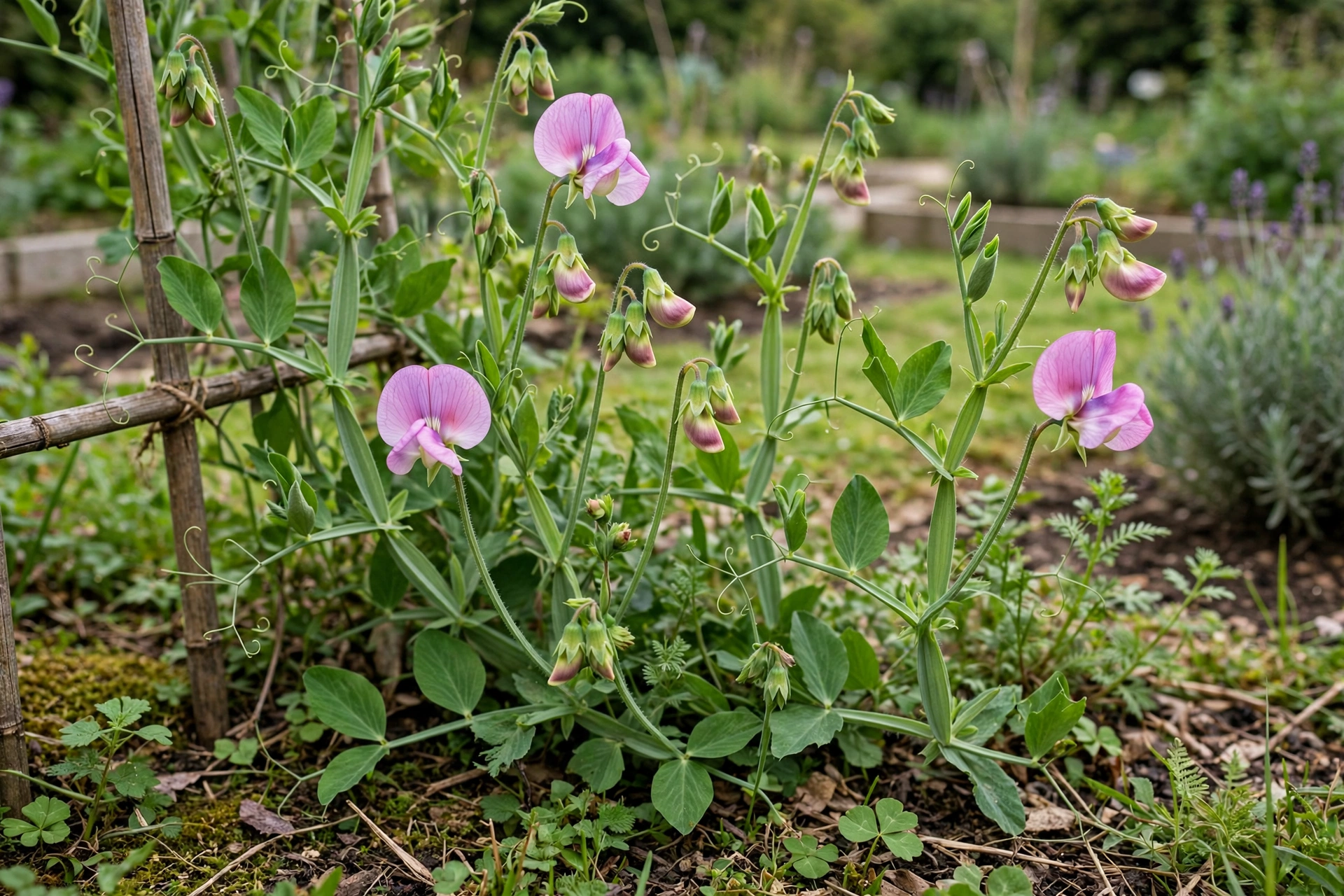
Sweet peas germinate best in soil between 55 and 65 degrees, and they bloom best while the air stays in that same cool range. The plants are frost tolerant — a light frost on young seedlings is not the disaster it would be for a tomato — but sustained heat is. Once hot weather settles in, flowering slows and then stops, which is why a sweet pea sown in May in a warm climate often looks like a vine that forgot its job.
The fix is to sow early and let the plant do its growing while it is still cool. In a cold climate that means direct sowing 4 to 6 weeks before your average last frost date. In a mild climate it means sowing in late fall to early winter, so the plants are already established when spring arrives. Start indoors only if you must — 4 to 6 weeks before last frost — and harden the seedlings off before they go out, because sweet peas would rather be sown where they will grow.
When to Sow
| Climate | When to sow | How |
|---|---|---|
| Cold climates | 4 to 6 weeks before average last frost | Direct sow recommended; start indoors 4 to 6 weeks before last frost if you prefer |
| Mild climates | Late fall to early winter | Direct sow for spring bloom; fall sowing also suits Elegance Blend |
| Any climate | Soil 55 to 65 degrees | Germination takes 10 to 21 days; seed 1 inch deep |
Sowing, Step by Step
1. Soak the seed overnight. Sweet pea seed has a hard coat, and an overnight soak softens it so germination is faster and more even. Drain the seed before sowing.
2. Sow 1 inch deep, three seeds every 6 inches. Work the soil loose and rich — compost worked in before sowing is usually enough feeding for the season. Space the groups 6 inches apart along the base of the support.
3. Keep the soil moist, not wet. Water gently and keep the row damp until the seedlings are up. Germination takes 10 to 21 days, and cool, damp soil is what the seed wants — warm, dry soil stalls it.
4. Thin to one plant every 6 inches. When the seedlings are 3 inches tall, keep the strongest in each group and snip the rest at soil level. Crowded sweet peas grow leggy and bloom poorly, and pulling the extras disturbs the roots of the ones you keep.
Give Them Something Tall to Climb
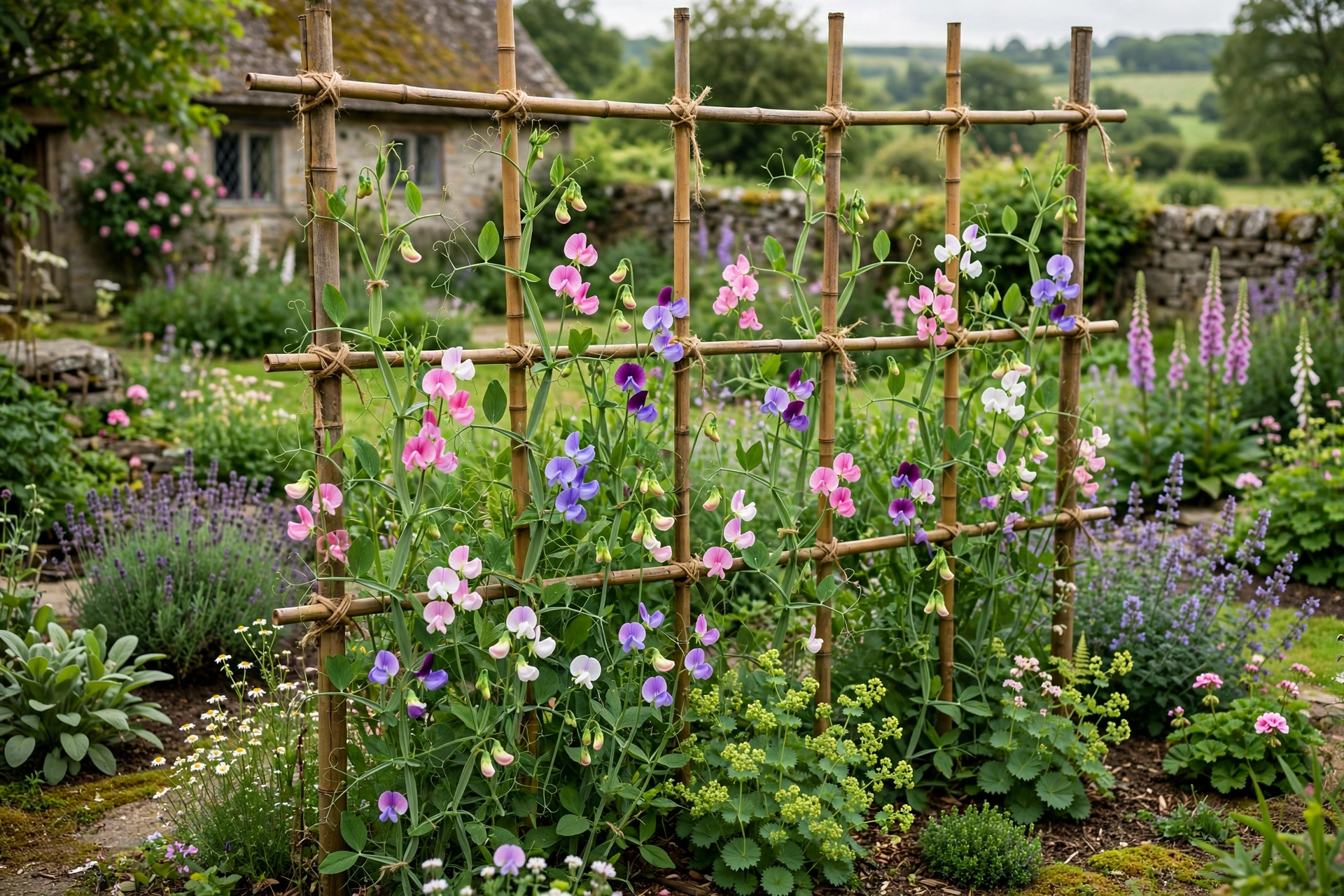
Climbing sweet peas reach 6 to 8 feet, and they need a support that tall — a trellis, a fence, netting, or a cane wigwam. Put the support in place before you sow, not after the vines are already reaching, because sweet peas grip with tendrils and resent being moved once they have taken hold. Guide the young tendrils toward the support and tie the vines loosely with soft twine as they grow, checking once a week while they are climbing fast.
The one exception is Little Sweetheart, the dwarf bush type, which needs no support at all. It belongs in hanging baskets, patio containers, and window boxes, where its small flowers spill over the edge instead of climbing.
Little Sweetheart Sweet Pea Seeds
A dwarf bush sweet pea that needs no trellis — made for baskets, pots, and window boxes.
Pinch the Tips When the Plants Are 4 to 6 Inches Tall
When each seedling has three or four pairs of leaves — usually when it is about 4 to 6 inches tall — pinch out the growing tip just above a leaf node. It feels wrong the first time, taking the top off a plant you just coaxed out of the ground. It is the single best thing you can do for it: pinching forces side shoots, and side shoots mean a bushier plant with far more flowers than a single stem would ever give you.
Water and Feed Lightly
Sweet peas like soil that stays evenly moist, like a wrung-out sponge — never soggy, never dried out. Water at the base, deeply, rather than overhead, especially once buds begin to form. A mulch of compost around the base helps keep the roots cool, which is half the battle once the weather warms.
Go easy on fertilizer. Sweet peas are legumes, and too much nitrogen grows a wall of leaves at the expense of flowers — the classic sweet pea disappointment. The compost you worked in at sowing is usually enough. If you feed at all, keep it light and stop once flowering starts.
Cut Often — It Is the Deadheading
Here is the part most gardeners get backwards: cutting sweet peas for the house is not taking flowers away from the plant, it is the care the plant needs. Pick every few days, cutting stems when two or three flowers are open, and deadhead any faded flowers you don’t pick. The moment a flower is allowed to set a seed pod, the plant decides its job is done and stops flowering.
Keep cutting and the plant keeps blooming, often for 8 to 12 weeks while the weather stays cool. Stop cutting, let the pods form, and the show ends weeks early. The vase on the kitchen table is not a side benefit of growing sweet peas — it is the maintenance schedule.
Mammoth Blend Sweet Pea Seeds
Extra-large flowers on long stems, with the heat tolerance to keep blooming when other sweet peas quit.
High Scent Sweet Pea Seeds
Cream-and-lavender flowers bred for fragrance — the sweet pea to plant where you will actually smell it.
What to Watch Next
If the vines are climbing and the buds are forming, you are on track — keep cutting once the first flowers open, and the plant will keep making more while the weather stays cool. If the vines are all leaves and no buds, check the two usual suspects first: too much nitrogen, or sowing so late that heat arrived before the plant was ready. Both are fixable next season, and neither means the plant is broken. For the full diagnosis, see why sweet peas won’t bloom, and for the varieties to choose from, see our best sweet pea varieties. If cut flowers are the goal, our best cut flowers to grow from seed and our growing zinnias from seed guides carry the same cut-often habit into the rest of the cutting garden.