The mistake costs about ten minutes in October and a Saturday in April. You roll the mower into the garage after the last mow, shut the door, and forget it until spring — then the engine coughs, the battery is dead, and the deck has spent five months rusting under a mat of wet clippings. Winterizing is not a chore for people who love maintenance. It is the ten minutes that keeps a mower you already own from becoming a repair bill.
Every mower type has the same enemy in winter: sitting still. Fuel goes stale, batteries drain themselves flat, tires lose air, and moisture works on bare metal. The fix is different for a gas walk-behind, a battery mower, and a riding mower, but the order is the same — fuel first, then the battery, then the deck and the tires. Work through the section that matches your mower and skip the rest.
What winter does to a mower that is just parked
Gasoline does not age gracefully. Left untreated in a tank for months, it breaks down and leaves gummy deposits in the carburetor, and the ethanol in most pump gas pulls in moisture while it sits. That is why a mower that ran fine in October can refuse to start in April even though nothing visibly changed.
Batteries have their own slow decline. A battery loses charge on its own over weeks, and cold makes a weak battery weaker — a battery that was half-flat in November is usually dead by March. Steel decks rust where wet clippings sit against them, and tires left soft in one spot for months can develop a flat spot that thumps all spring. None of this is a defect. It is what happens when a machine sits for five months without a little preparation.
Gas walk-behind mowers: deal with the fuel first
Fuel is the step that matters most on a gas mower, because stale fuel is the most common reason a mower will not start in spring. You have two honest options: stabilize the fuel or drain it. For a normal winter of three to five months, stabilizing is the easier call — and it is the one most owners should make.
Stabilize the fuel. Add fuel stabilizer to a tank of fresh gas, using the dose on the bottle. STA-BIL Storage, for example, is dosed at 1 oz per 2.5 gallons and keeps fuel fresh for up to 24 months. Treat fuel any time the mower will sit for 30 days or more. Then run the engine for a few minutes so the treated fuel reaches the carburetor — stabilizer sitting in the tank does nothing for the fuel already sitting in the carburetor bowl.
Or drain the tank. If the fuel in the tank is already old, or the mower will sit for a year rather than a season, draining is the better move. Run the engine until it stops, then drain the remaining fuel into an approved container and take it to a local household hazardous waste drop-off. A full comparison of the two approaches, including which stabilizer to buy, is in our guide to fuel stabilizer vs. draining the tank.
Change the oil while the engine is warm. Old oil holds acids and moisture from a season of use, and those sit against engine parts all winter. Drain it, refill with the grade your manual calls for, and run the engine briefly to circulate the fresh oil. Do this after the last mow of the year, not in April — fresh oil protects the engine while it sits.
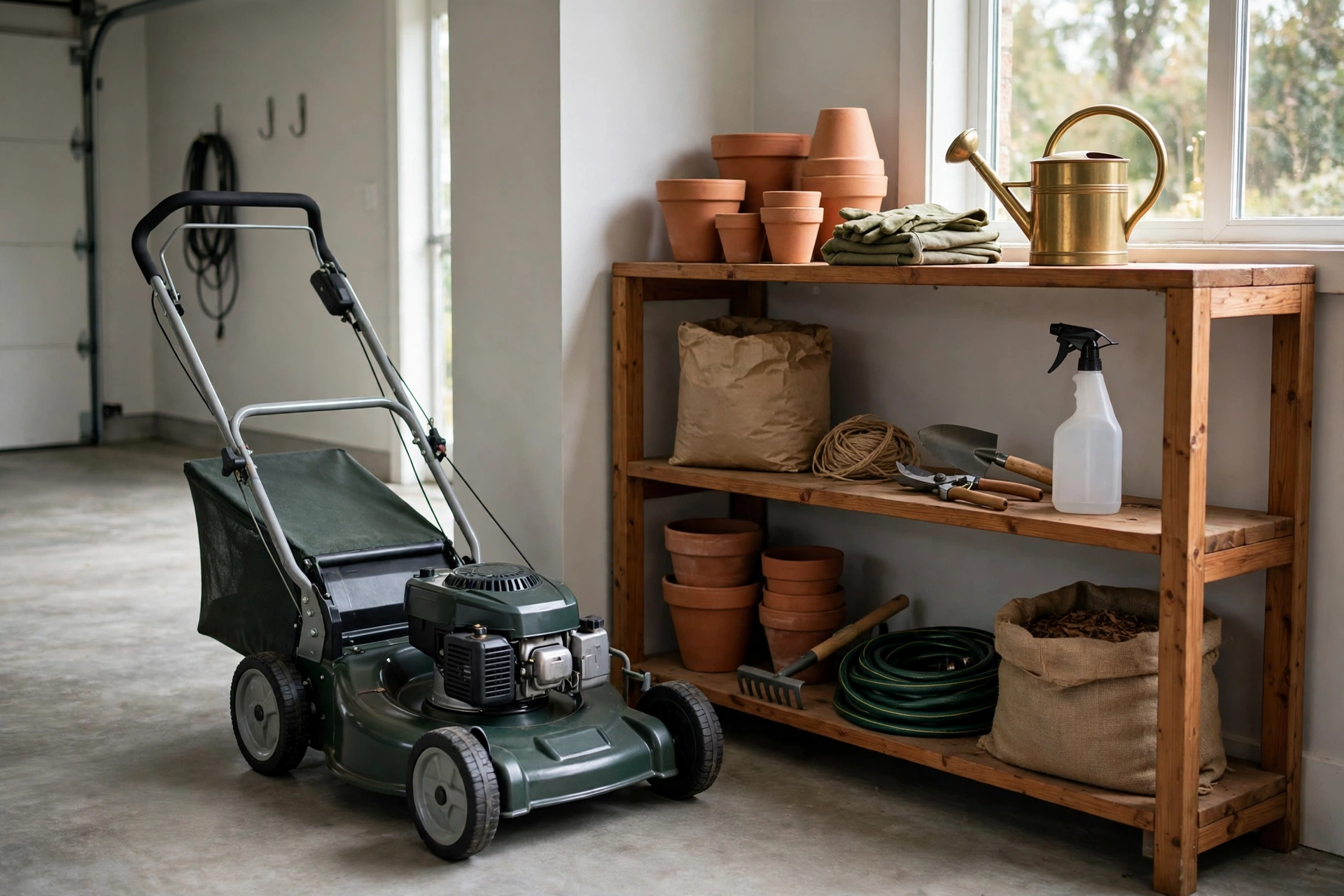
Clean the deck and the air filter. Tip the mower on its side with the air filter and carburetor up, scrape the clippings off the underside of the deck, and hose it down. Check the air filter: tap out the dust, and replace it if it is torn or soaked with oil. A clean deck does not rust under a mat of wet grass, and a clean filter means one less thing to fix in spring.
Pull the spark plug and fog the cylinder. Remove the plug, add a spoonful of oil or a short spray of fogging oil into the cylinder, pull the starter cord slowly a few times to spread it, and put the plug back. This keeps the cylinder wall from rusting over the winter. Replace the plug itself in spring if it is worn — plugs are cheap, and a fresh one is the easiest spring start you can buy.
Battery mowers: take the battery inside
The mower itself barely needs anything. Clean the deck, wipe the housing down, and fold the handle for storage. The battery is the whole job.
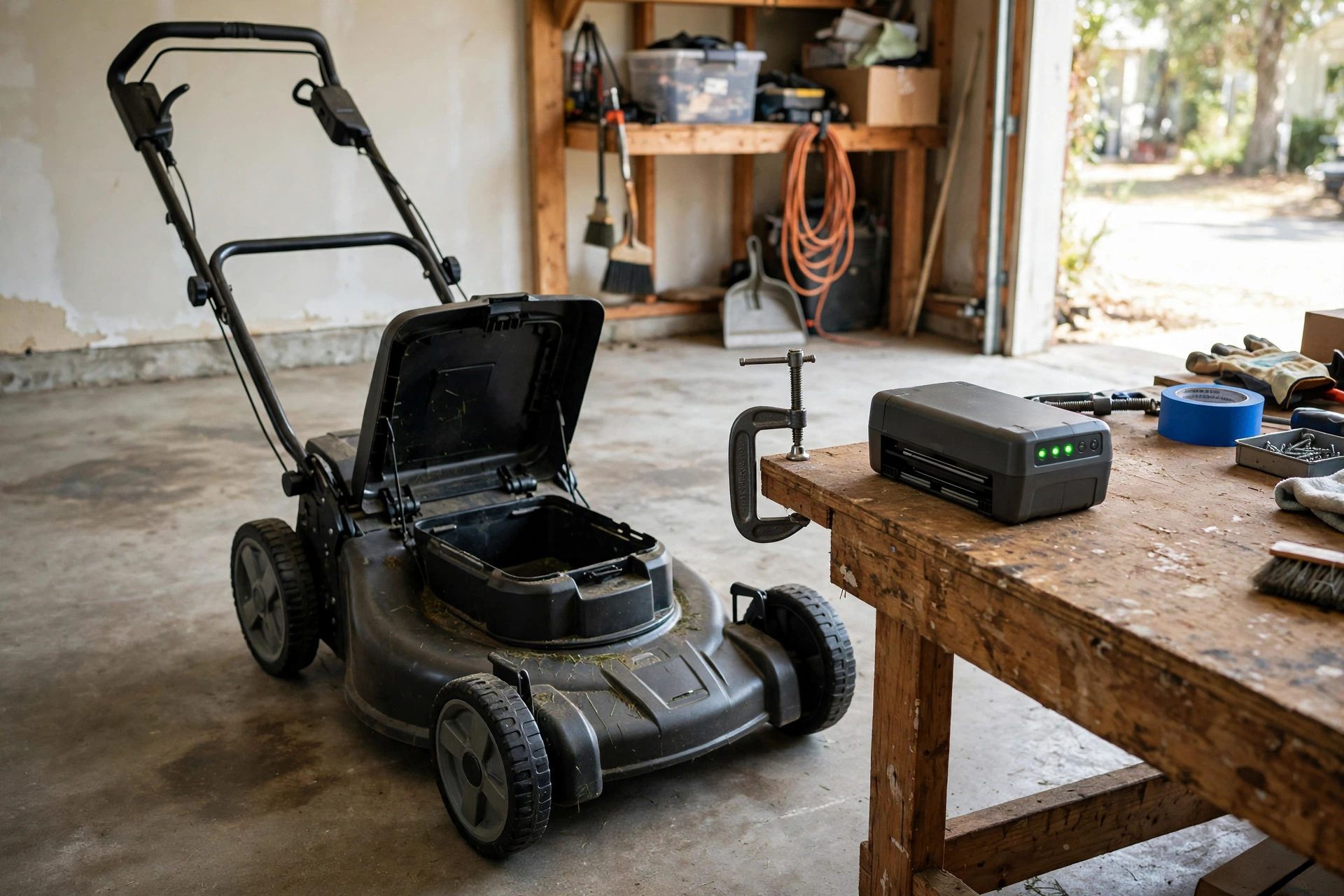
Remove the battery from the mower and store it indoors, somewhere cool and dry — a shelf in the basement beats a freezing garage floor. Charge it fully before you put it away, and top the charge up once a month through the winter. A battery left flat in the cold loses capacity, and in the worst case it will not hold a charge at all come spring. The full step-by-step is in our guide to how to store a lawn mower battery for winter.
One more thing: do not leave the battery on the charger all winter unless the charger is a maintainer designed for it. A standard charger left connected for months can overcharge a battery just as surely as neglect can drain one.
Riding mowers: the same job, bigger
A riding mower needs everything a walk-behind needs, plus a few things that only matter when the machine weighs several hundred pounds. Start with the fuel — stabilize it and run the engine for a few minutes, exactly as you would a walk-behind. Then work through the rest.
Clean the deck, top and bottom. Grass packed under a riding deck holds moisture against the steel all winter, and it is also where rust starts. Raise the deck, scrape it clean, and hose it off. While you are under there, check the blades: sharpen or replace them now so spring starts with a cut, not a chore.
Remove the battery and store it indoors. Riding mower batteries are lead-acid, and they self-discharge faster than the lithium packs in battery mowers. Disconnect the negative cable first, lift the battery out, clean the terminals, charge it fully, and store it somewhere cool and dry. Top the charge up monthly, or keep it on a maintainer. A dead riding battery in April is a common and entirely avoidable repair.
Deal with the tires. Inflate all four tires to the pressure on the sidewall, and if you can, park the mower on boards or cardboard rather than bare concrete. Tires left soft in one position for months can flat-spot, and a flat-spotted tire thumps every rotation until it rounds out again — if it does.
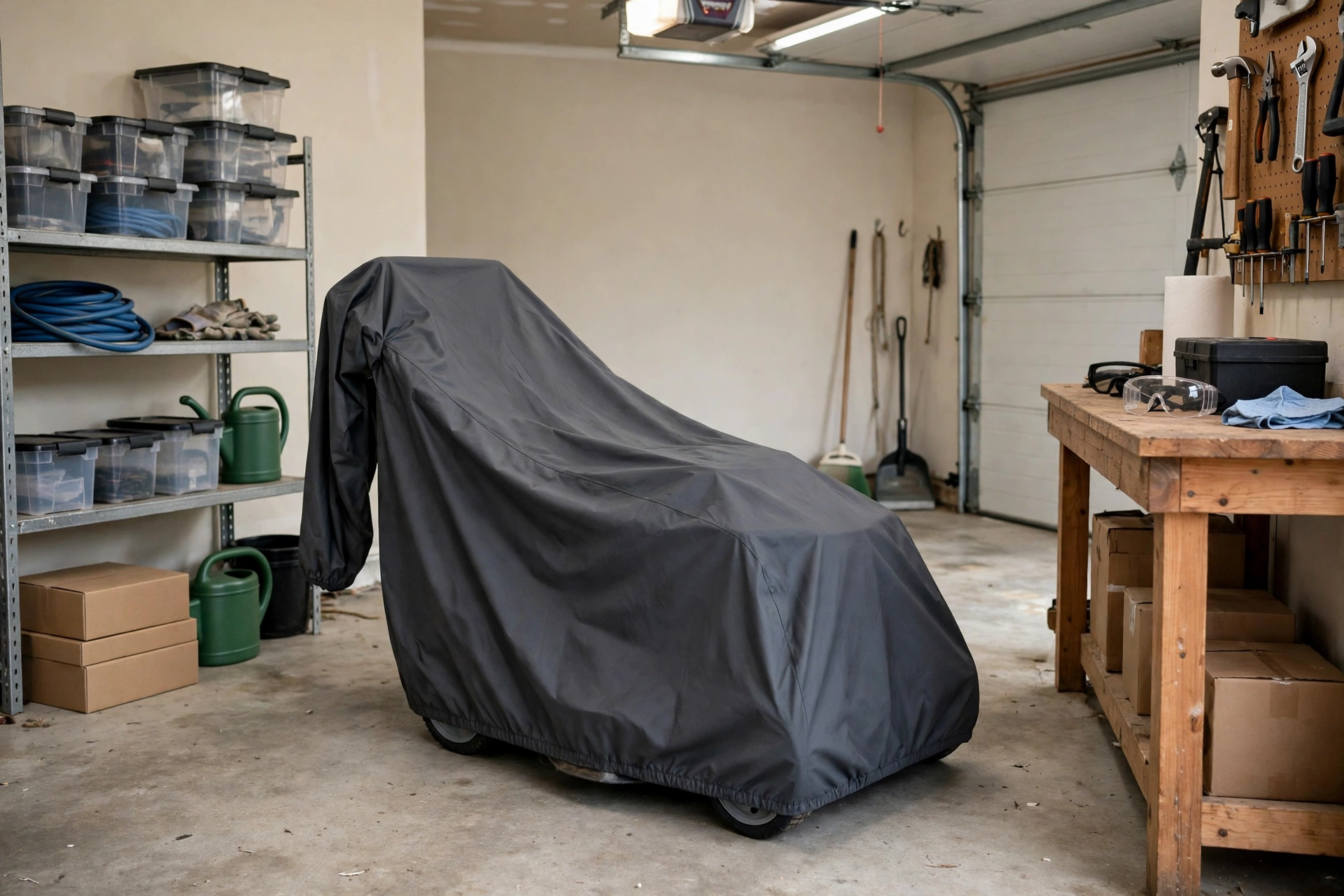
Cover it, but let it breathe. A breathable mower cover keeps dust and drips off without trapping moisture underneath. A plastic tarp does the opposite: it holds condensation against the metal. If you are shopping for one, our roundup of the best lawn mower covers for winter storage covers walk-behind, zero-turn, and riding sizes. If you are thinking about a new machine altogether, see our picks for the best premium lawn mowers under $500 and the best zero-turn mowers for homeowners.
Five mistakes that undo the whole job
Adding stabilizer and never starting the engine. Untreated fuel is still sitting in the carburetor. Run the engine for a few minutes after every dose.
Storing a battery flat. A battery at half charge in November is a dead battery in March. Charge it fully, then top it up monthly.
Leaving the deck caked in clippings. Wet grass against steel all winter is a rust invitation. Scrape it now, when it takes five minutes.
Parking on a soft tire. Check the pressure before you park it, not in spring when the flat spot is already set.
Covering a wet mower with a plastic tarp. Moisture trapped under plastic rusts faster than moisture left in the open. Use a breathable cover, or leave it uncovered in a dry garage.
Your spring first start
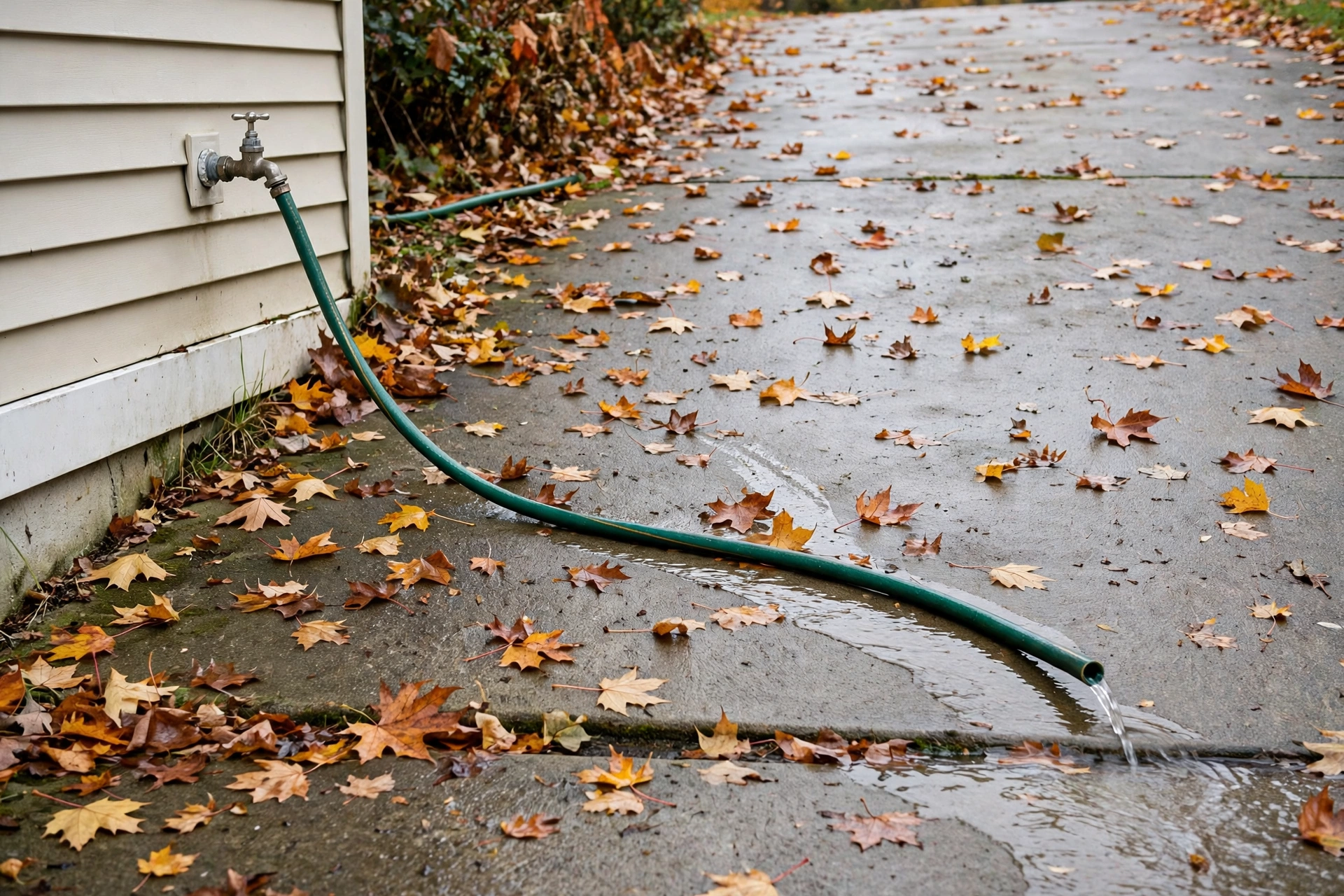
Do the fuel, the battery, and the deck now, in that order, and the first mow of spring is a ten-minute job: reinstall the battery, check the oil, fresh gas if you drained it, and pull the cord. That is the whole point of winterizing — not loving maintenance, but buying yourself a spring that starts on the first pull. While the mower is put away, the rest of the yard needs the same treatment: if you have not done it yet, winterize your sprinkler system and put outdoor faucet covers on before the first hard freeze.