Landscape & Leisure is reader-supported. When you buy through links on our site, we may earn a commission at no extra cost to you. Prices change, so click through to confirm current pricing.
Most people buy the sprayer that matches the job they did last weekend, then spend the whole season fighting it on every other job. A one-gallon handheld feels like a bargain until you are refilling it for the fifth time on a lawn that needed a backpack, and a four-gallon backpack feels like overkill until you carry it, full, up a slope to reach the far bed. The mistake is buying for the smallest job and hoping it stretches, or buying for the biggest job and carrying the weight every time.
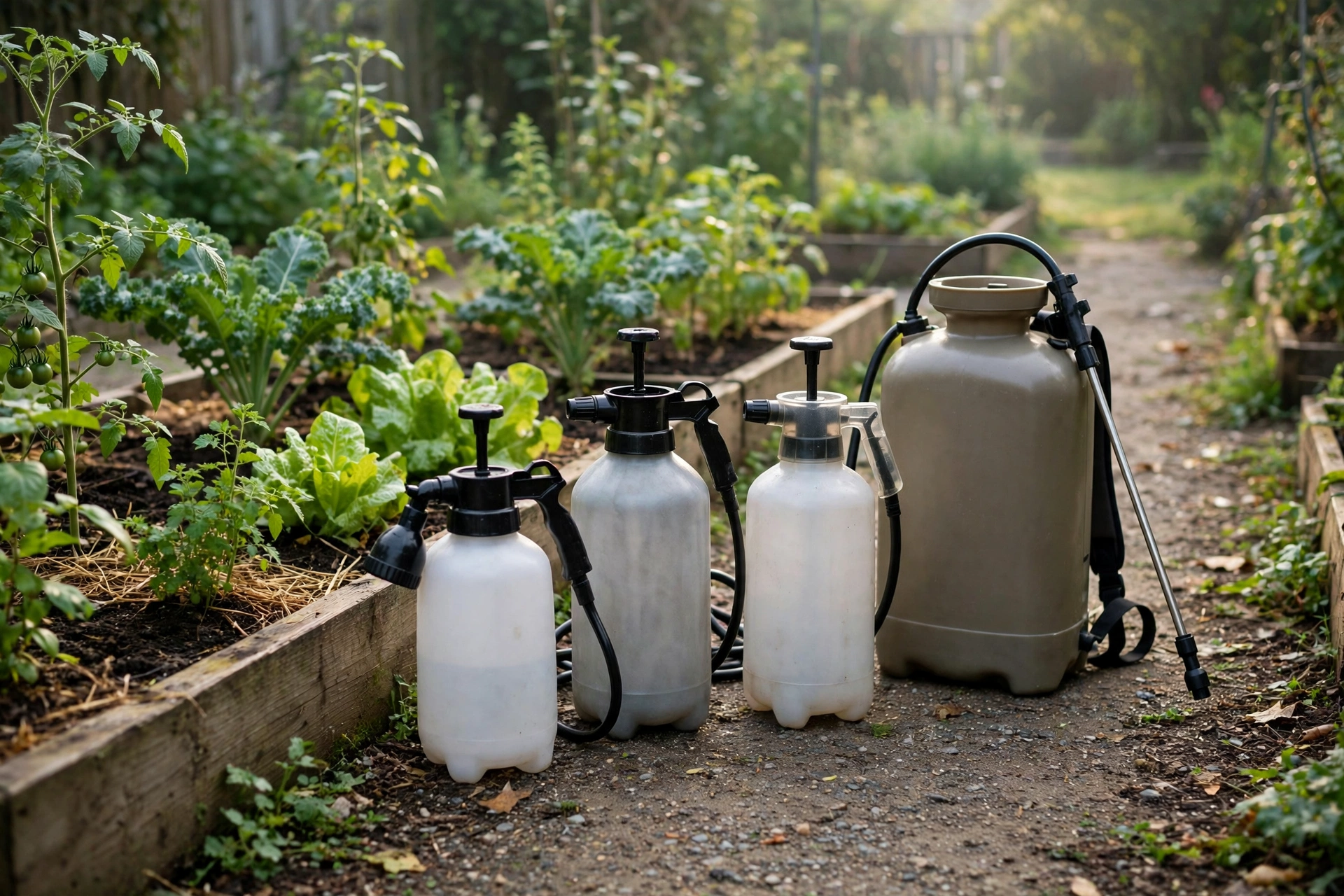
The fix is simple, and it starts before you look at a single model: measure the job, not the sprayer. This comparison settles which type fits which yard, with the numbers that decide it. Our best garden sprayers roundup names the specific models once you know your type.
The Mistake, Stated Plainly
The wrong size costs you twice. Buy too small and you pay in refills, re-pumping, and afternoons that run long, because a 1-gallon tank on a quarter-acre lawn means four or five trips back to the hose. Buy too big and you pay in weight, since a full 4-gallon tank carries about 33 pounds of liquid before you count the sprayer itself, and you carry that weight on every job, including the ten-minute ones.
Neither mistake is about quality. A good handheld is a good tool, and a good backpack is a good tool, and each one is the wrong tool for the other’s job. The rest of this article is about telling the two jobs apart.
Backpack vs Handheld at a Glance
| Type | Tank | Weight full | Pressure | Best for |
|---|---|---|---|---|
| Backpack (battery) | 4 gallons | 33 lb of liquid + unit | Steady, up to 90 PSI | Lawns over a quarter acre |
| Backpack (manual) | 4 gallons | 12.8 lb unit + 33 lb of liquid | Up to 150 PSI, hand pumped | High-pressure and herbicide work |
| Handheld pump | 1 gallon | 8 lb of liquid + unit | Fades as the tank empties | Beds, shrubs, spot treatments |
When a Backpack Earns Its Keep
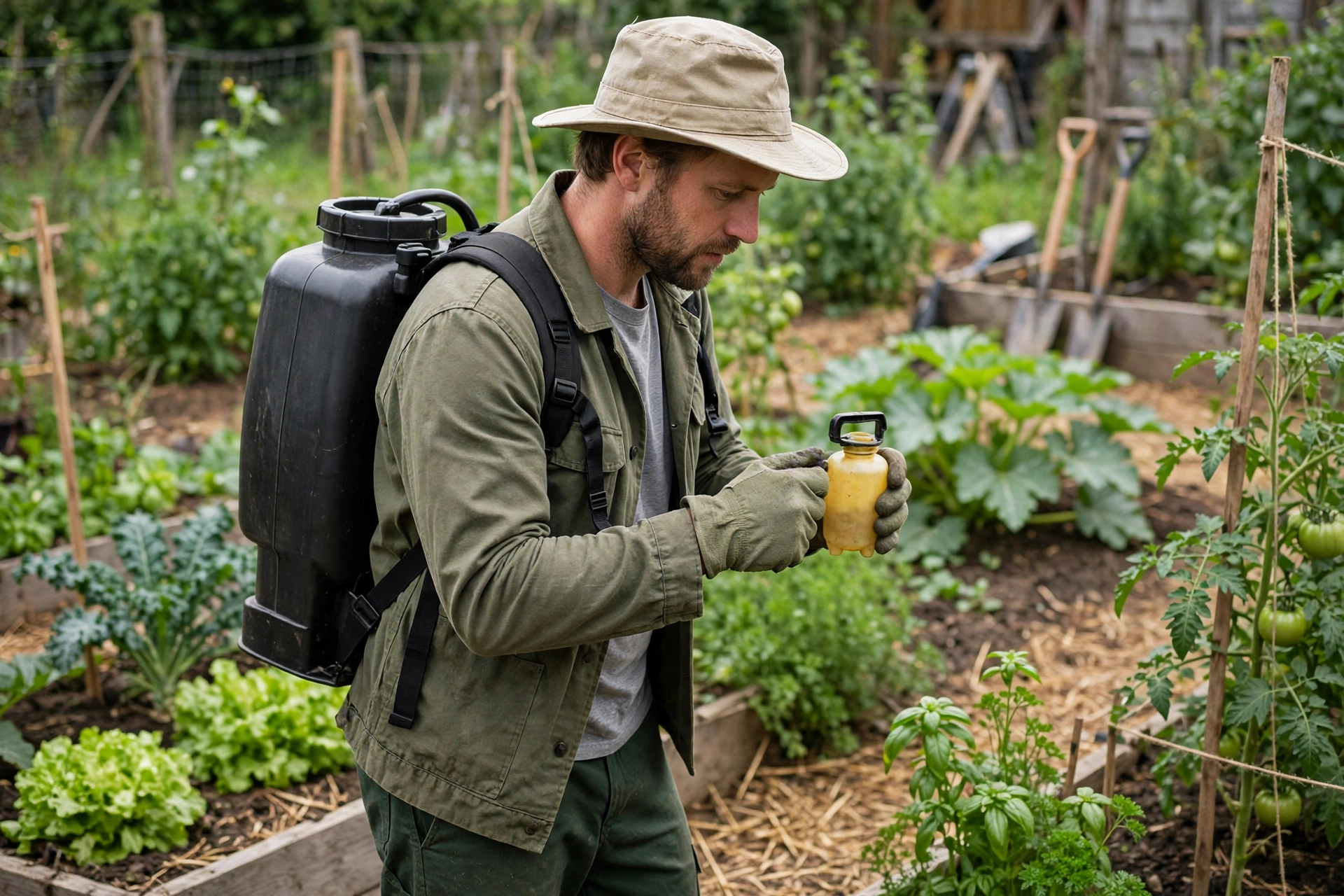
A backpack earns its keep the moment the job is bigger than a few beds. Four gallons does the work of four one-gallon fills, which means one walk across the yard instead of four trips to the hose, and the straps spread the weight across your shoulders instead of hanging it off one arm. Battery models like the PetraTools HD4000 hold steady pressure for 6 to 8 hours on a charge, so the spray at the far corner is the same as the spray at the start, while manual backpacks like the Field King 190328 reach 150 PSI for spraying up into shrubs or laying down herbicide at a controlled 25 PSI.
The honest cost is the carry. A full backpack is a real load, and on a slope or in summer heat it will remind you of that, so if your yard is flat and small, the backpack is solving a problem you do not have. But for a whole-lawn treatment, there is no handheld workaround that does not cost you the afternoon.
PetraTools HD4000
A 4-gallon battery backpack that sprays for 6 to 8 hours on a charge, with steady pressure and six nozzles.
When a Handheld Is Enough
A handheld is enough when the job is measured in plants, not square feet. A 1-gallon pump sprayer like the Chapin 20004 fits in one hand, since a gallon of liquid weighs just over 8 pounds, and it reaches under shrubs on a 34-inch hose without dragging a tank through the bed. Spot-treating a dozen dandelions, spraying a row of roses, or hitting the weeds along the driveway is exactly what it is built for, and it stores on a shelf instead of taking up a corner of the garage.
The limit is one gallon, and it is a hard limit. A whole lawn means refilling four or five times and pumping the tank back to pressure after every refill, which turns a twenty-minute job into an hour. If you find yourself refilling twice on the same job, the job has outgrown the sprayer.
Chapin 20004
A 1-gallon handheld pump sprayer with an anti-clog filter and a 34-inch hose for beds and spot treatments.
The Math That Decides It
Here is the decision in one test: walk your biggest regular spraying job and count the refills. If a 1-gallon sprayer does it in one fill, buy the handheld and keep the money. If it takes two fills, the handheld still works, but you are spending half the job at the hose. If it takes three or more, buy the backpack, because the refills are the job now.
Pressure decides the second half. Herbicides want low, steady pressure so the chemical lands on the weed and stays there, which is why a backpack with a regulator earns its keep on weed work, while a handheld’s fading pressure makes even coverage harder as the tank empties. And if your spraying is mostly liquid fertilizer rather than weed killer, read our hose-end vs pump sprayer guide first, since a hose-end sprayer may fit that job better than either type here.
What to Do Next
Buy the backpack if your lawn is a quarter acre or more, or if you spray herbicide across the whole yard more than twice a season. Buy the handheld if your spraying lives in beds, around shrubs, and on driveway weeds, and your lawn treatments are someone else’s job or a hose-end sprayer’s. And whichever you buy, learn to clean it properly, because a sprayer that clogs is a sprayer you will blame for the wrong thing, as our guide to cleaning a garden sprayer explains.
Bottom Line
Most homeowners with a real lawn should buy the backpack first, and add the handheld later as the second sprayer for beds and spot work. The backpack is the one that finishes a whole yard in one pass, and the handheld is the one you reach for when the job is small enough to carry in one hand.