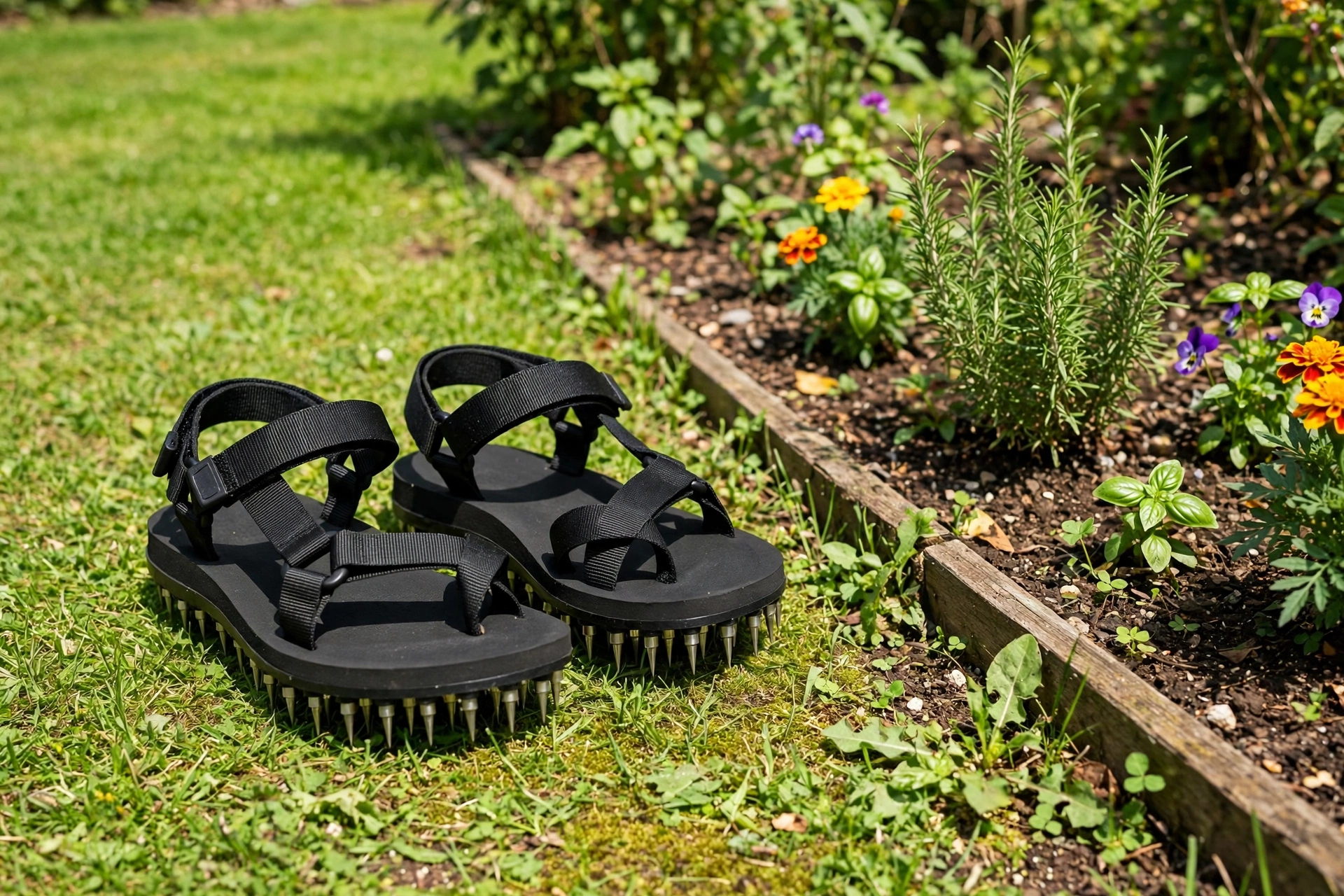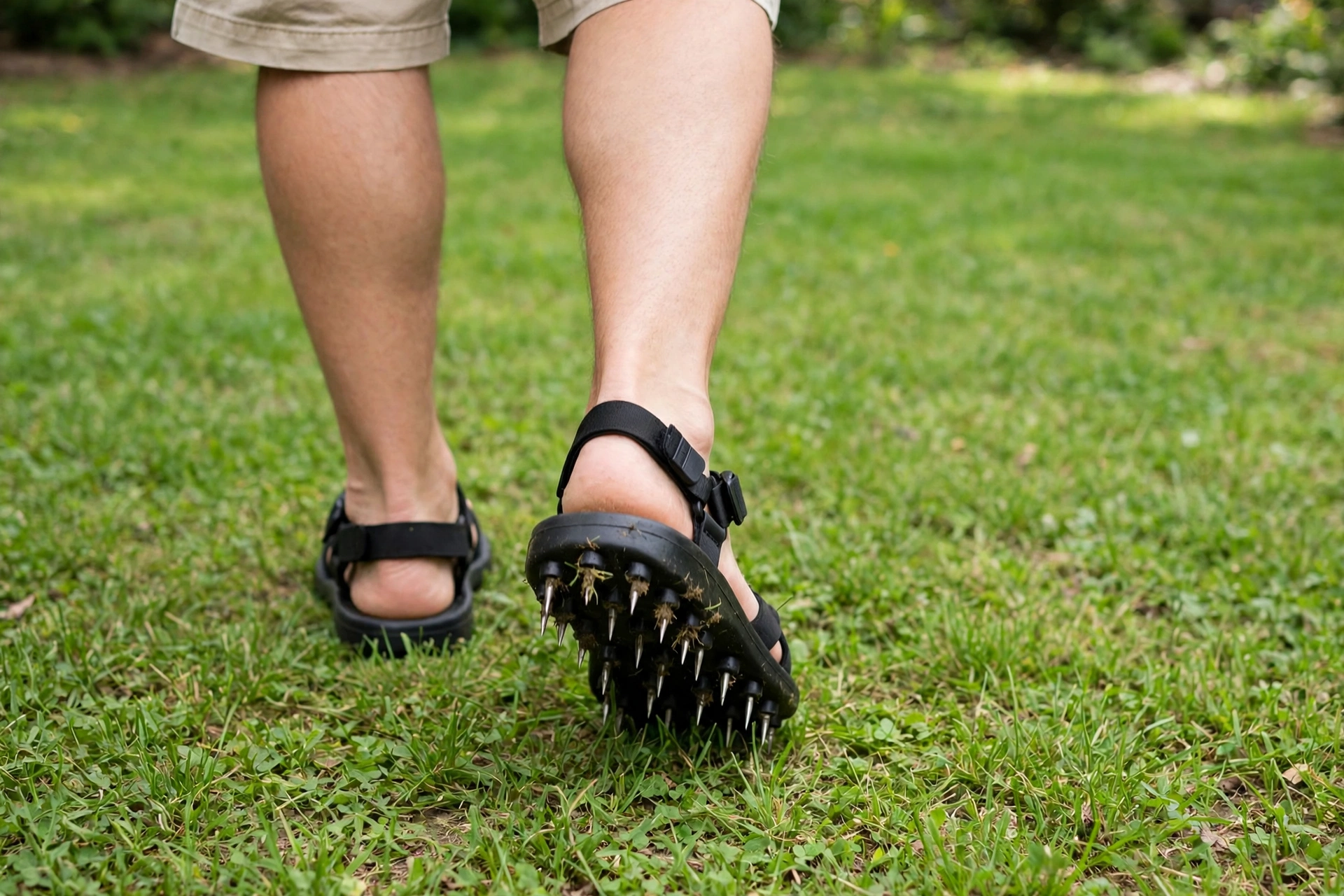
The spikes strap over your work boots, the straps pull snug, and the first step onto damp soil sinks the points in with a soft crunch. Used right, that walk opens the top inch of soil across a small patch and gives seed a place to catch. Used wrong, the same walk chews up turf, slips on slopes, and leaves a lawn that looks worse than it did before you started.
The difference is not effort — it is the soil you choose, the pace you keep, and the passes you overlap. Here is the walk that actually helps, and the mistakes that turn a light pass into damage.
Before you strap them on
Mow short first. Cut the lawn a notch lower than usual so the spikes reach soil instead of catching in long grass, and pick up the clippings so they do not mat over the holes. Short grass also lets you see where you have already walked, which matters when the whole job is coverage.
Soften the soil the day before. Spikes punch clean holes in damp soil and bounce off dry, hard ground, so water the patch the day before you walk it — or wait for the day after a good rain. Our guide to watering before or after aerating covers the timing in full. Do not walk on soaking-wet clay, though, because the spikes will plug with mud and the soil will smear instead of opening.
Pick the right ground. Aerator shoes belong on small, soft patches and overseeding beds — not on a steep slope, where the spikes slip and your ankles pay for it, and not on baked-hard clay, where they barely dent the surface. If the ground is hard underfoot across the whole lawn, the shoes are the wrong tool entirely, and our honest verdict on whether aerator shoes work explains why.
The walk
Strap them tight. Pull the straps snug over sturdy shoes or boots — loose straps let the plates shift underfoot, which is how ankles twist and spikes catch turf sideways. If your pair has three straps, fasten all three; the fitting takes an extra minute and saves a stumble.
Walk slow, with short steps. Short, deliberate steps put more holes in each square foot than a normal stride, and they keep your weight over the spikes long enough for the points to sink. Rushing turns the walk into a shuffle that barely breaks the surface.
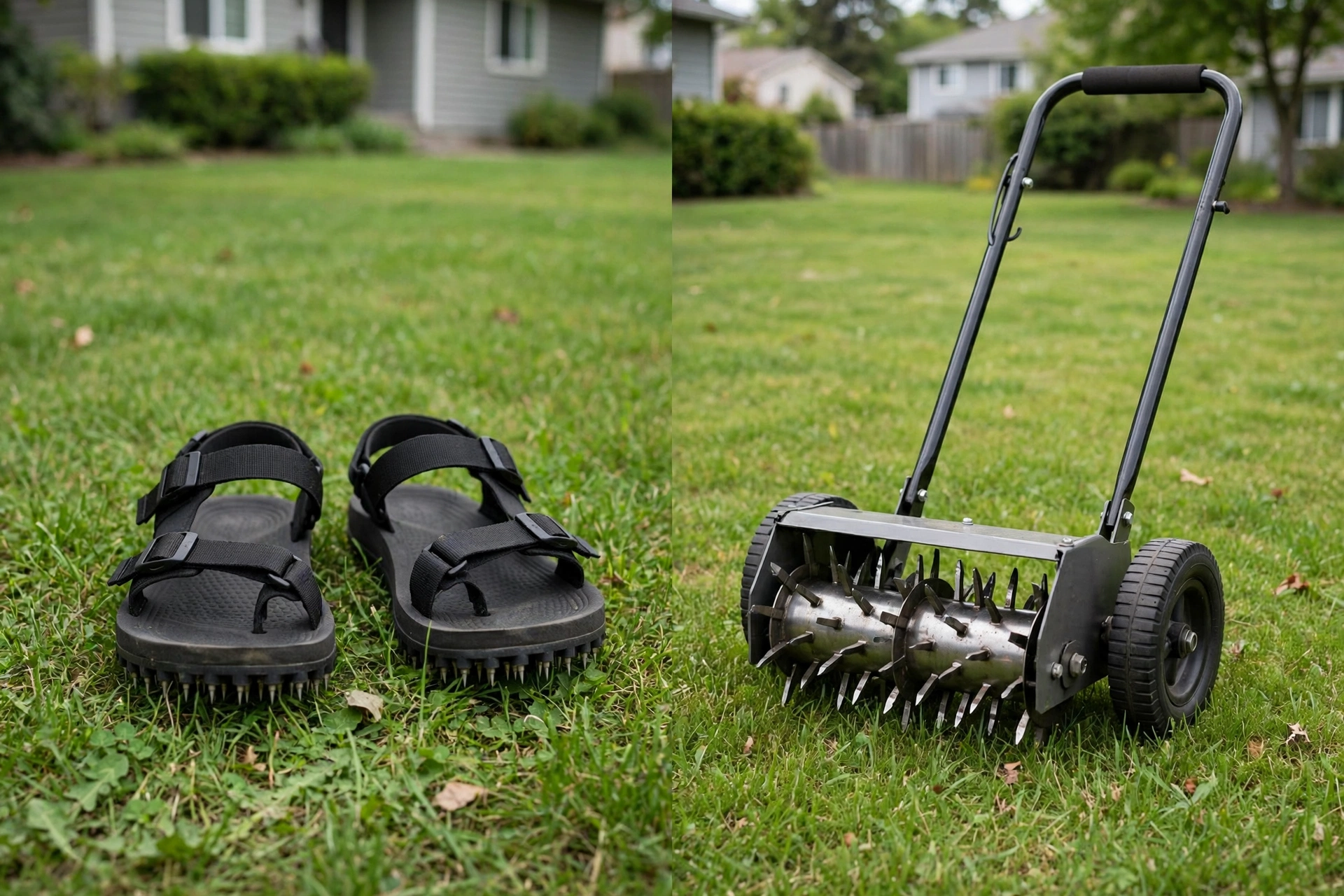
Overlap your passes. Walk the patch in one direction, then cross it again at a right angle, stepping into the gaps between your first tracks. A single pass in aerator shoes covers only a scattering of holes — a turf specialist’s calculation, reported by Family Handyman, puts one normal pass at about 0.04% of a 10-by-10-foot patch — so the second, crossing pass is what turns a token effort into a useful one. Even then, keep the job small: this is a patch tool, not a whole-lawn tool, as our aerator shoes vs. core aerator comparison shows.
Stay off the edges and the slopes. Keep the spikes away from sprinkler heads, shallow utility lines, and the soft edge where the lawn meets a bed. On any slope, walk across it rather than up and down it, and skip the slope entirely if the soil is wet enough to slip.
Mistakes that wreck the lawn
The most common mistake is wearing the shoes on hard, dry soil and forcing the spikes in by stomping. The points skid, tear turf, and barely penetrate — and the torn grass invites weeds into the gaps. The second is treating a whole lawn like a patch job: after an hour of walking, the coverage is still a fraction of what matters, and the lawn looks trampled rather than aerated. The third is walking on wet clay, where each spike pulls up a plug of mud and leaves a smeared hole that seals shut as it dries.
If the lawn is genuinely compacted — hard underfoot, water pooling after rain — the honest fix is not a better walk but a better tool. Our best lawn aerator shoes roundup names the pair worth buying for spot work, and the core-aerator route covers the rest.
After the walk
Clean the spikes before they dry. Knock the mud off with the shovel most pairs include, or rinse the plates with a hose — dried clay on the points makes the next pass slower and shallower. Store the shoes spike-side up or in a bucket so the points do not catch the next person to reach into the shed.
Overseed while the holes are open. If the point of the walk was seed-to-soil contact, spread seed over the patch right after you finish, then water lightly so the seed settles into the holes. Our guide to how often to aerate by lawn type sets the season for the work, so the seed lands when it can actually grow.
Bottom line
Mow short, soften the soil the day before, strap the shoes tight, and walk slow in overlapping passes across a small patch — then overseed while the holes are open. That is the whole job, and it is the only job aerator shoes do well. If the lawn needs more than a patch, put the shoes away and pull real cores instead.