Landscape & Leisure is reader-supported. When you buy through links on our site, including Botanical Interests seed links, we may earn a commission at no extra cost to you. Prices change, so click through to confirm current pricing.
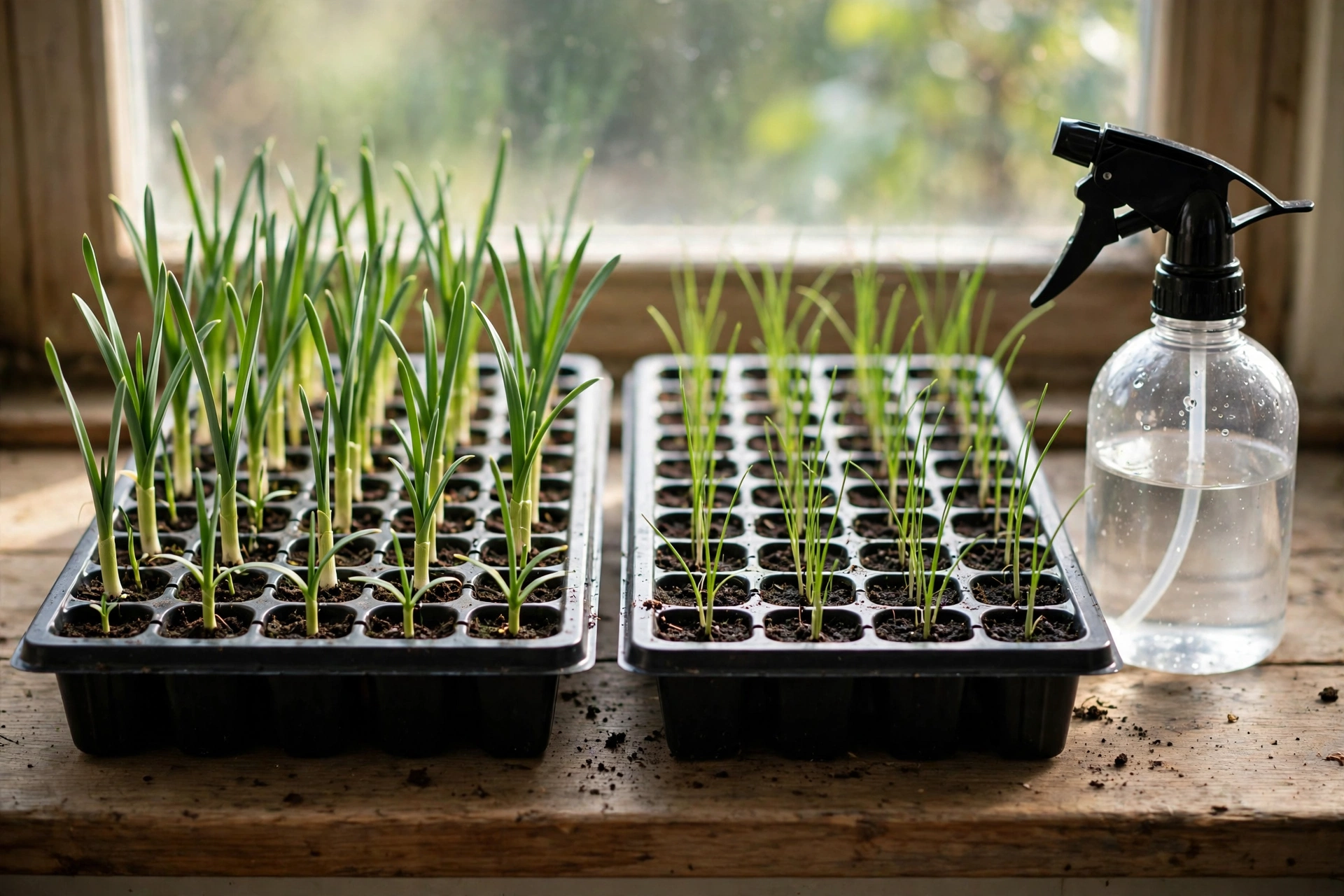
By late February the seed packets are out on the kitchen table and the windowsill starts earning its keep. Leeks go in first, because they are the slowest crop in the spring garden, and scallions can wait — they will be ready in two months whenever you sow them. The season turns on that difference: start the leeks late and you get thin stems and a short harvest; start them now and they are still standing in the frost when the tomatoes are long gone.
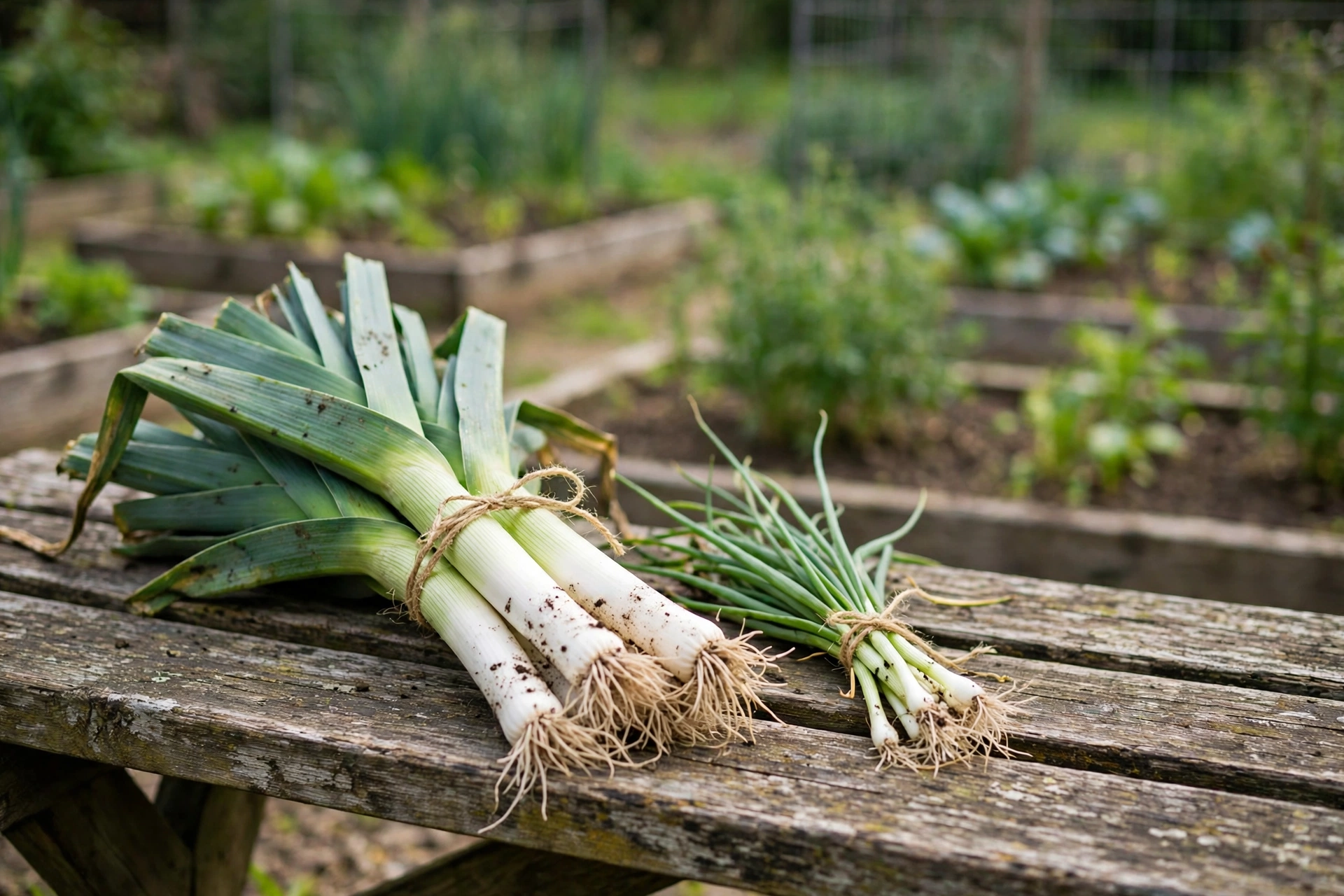
This guide covers both crops, because they share a windowsill but not a schedule. If you only want the shortlist of which varieties to buy, our leeks and scallions roundup has the five worth your money, and our START FIRST
King Richard Leek Seeds
The early leek — 75 days from transplant, cold tolerant to 20°F, and the only leek in the catalog.
Early spring, once daytime temperatures reach 45°F
75 days from transplant
Tokyo Long White scallion
8–10 weeks before last frost
Transplant 4–6 weeks before last frost
65 days
Italian Red of Florence
8–10 weeks before last frost
Transplant 4–6 weeks before last frost
60 days
Solbunch
8–10 weeks before last frost
Transplant 4–6 weeks before last frost
60 days
Scallions can also skip the windowsill entirely. Direct sow a quarter inch deep, half an inch apart, in rows a foot apart, as soon as the soil reaches 45 degrees — four to six weeks before your last frost — and sow again every two to four weeks for a steady supply.
Starting Leeks, Step by Step
1. Sow shallow, keep warm. Sow a quarter inch deep in a tray of seed-starting mix, and keep the soil warm — leeks and scallions germinate best when the soil sits between 60 and 85 degrees, which is why a heat mat earns its place on a cold windowsill. Germination takes 10 to 15 days, so do not dig around looking for sprouts in the first week.
2. Give them light and water. Leeks want at least eight hours of bright light a day, and their shallow roots dry out fast, so water little and often rather than soaking the tray once a week. A sunny windowsill works, and a grow light on a timer keeps the light steady through cloudy weeks.
3. Harden them off. Five to seven days before transplanting, set the plants outside for longer stretches each day and bring them back in at night, until they are used to wind and sun. Skipping this step is how strong indoor seedlings turn limp in their first week outside.
4. Plant them deep. This is the step that makes the white shank. Dibble holes 5 to 6 inches deep with a stick, drop one transplant into each hole, and water gently so the soil washes in around the roots — or set them at the bottom of a 6-inch furrow and fill it in gradually as they grow. Either way, the buried stem stays white and tender instead of turning green and tough.
5. Hill as they grow. As the stems thicken, pull soil up around them to lengthen the blanched white section. Stop once the shank is as long as you want it, and keep soil out of the leaf fan, where it gets trapped.
WORTH ADDING
Seed Starting Heat Mat
Lifts soil 10–20°F so leek and scallion seed germinates in the 60–85°F window on a cold windowsill.
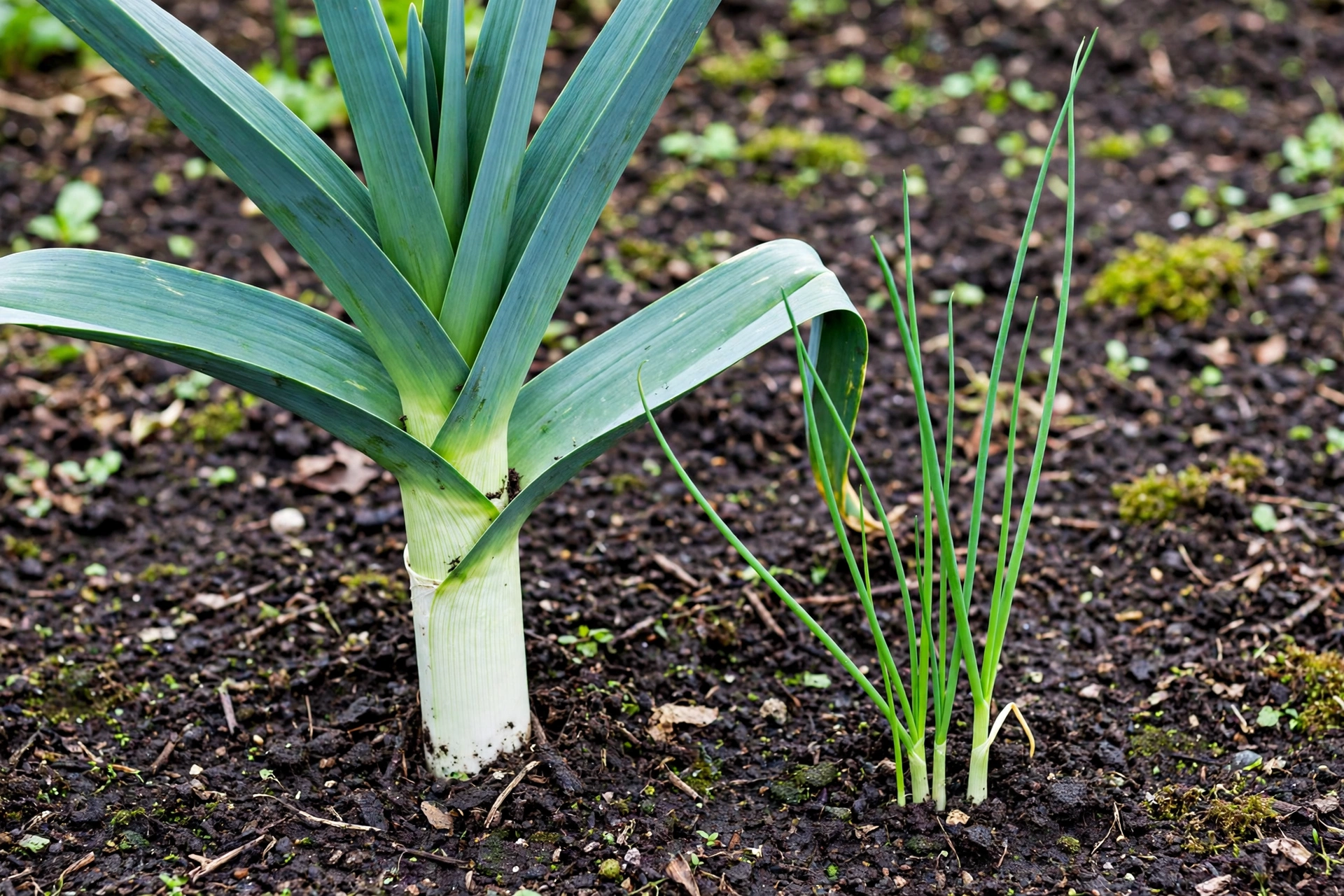
Scallions ask for almost nothing by comparison. Direct sow a quarter inch deep, half an inch apart, in rows a foot apart, as soon as the soil reaches 45 degrees, and sow again every two to four weeks for a steady supply. When you want a bunch, clip the plants about an inch above the soil and they will regrow, and a shot of nitrogen-rich fertilizer after cutting speeds the regrowth. Tokyo Long White is the one to grow this way, because it is a true bunching onion that never tries to bulb; Italian Red will do the same job young, and will go on to form a torpedo-shaped bulb if you leave it alone.
BEST FOR SUCCESSION SOWING
Tokyo Long White Bunching/Scallion Onion Seeds
The scallion that keeps coming back — clip it an inch above the soil and it regrows for another harvest.
A good leek tells you it is working: the flag — the top growth — stays dark blue-green, and the white shaft firms up to more than three inches long. The mistake that undoes it is letting the bed dry out in midsummer, because leeks root shallow and a dry spell stalls the shank, so water steadily and keep the bed weeded. Leave the leeks in the ground past the first frosts, when the cold sweetens them and the rest of the garden is done, and pull scallions as you need them, a bunch at a time, all season long.
Savannah writes about the simple joy of growing things and the rhythm of the seasons. She loves the planning, the planting, and the quiet magic of watching a garden come to life, and she writes the way a good neighbor gardens: generously, patiently, and with plenty of encouragement along the way.