Landscape & Leisure is reader-supported. When you buy through links on our site, including Botanical Interests seed links, we may earn a commission at no extra cost to you. Prices change, so click through to confirm current pricing.
By the time the first hard frost finishes the tomatoes, the leeks are still standing, blue-green and unbothered, with weeks of good eating left in them. That is the quiet payoff of the allium bed: while everything else is done for the year, leeks and scallions are still working, one holding the bed through the cold and the other coming back for one more snip.
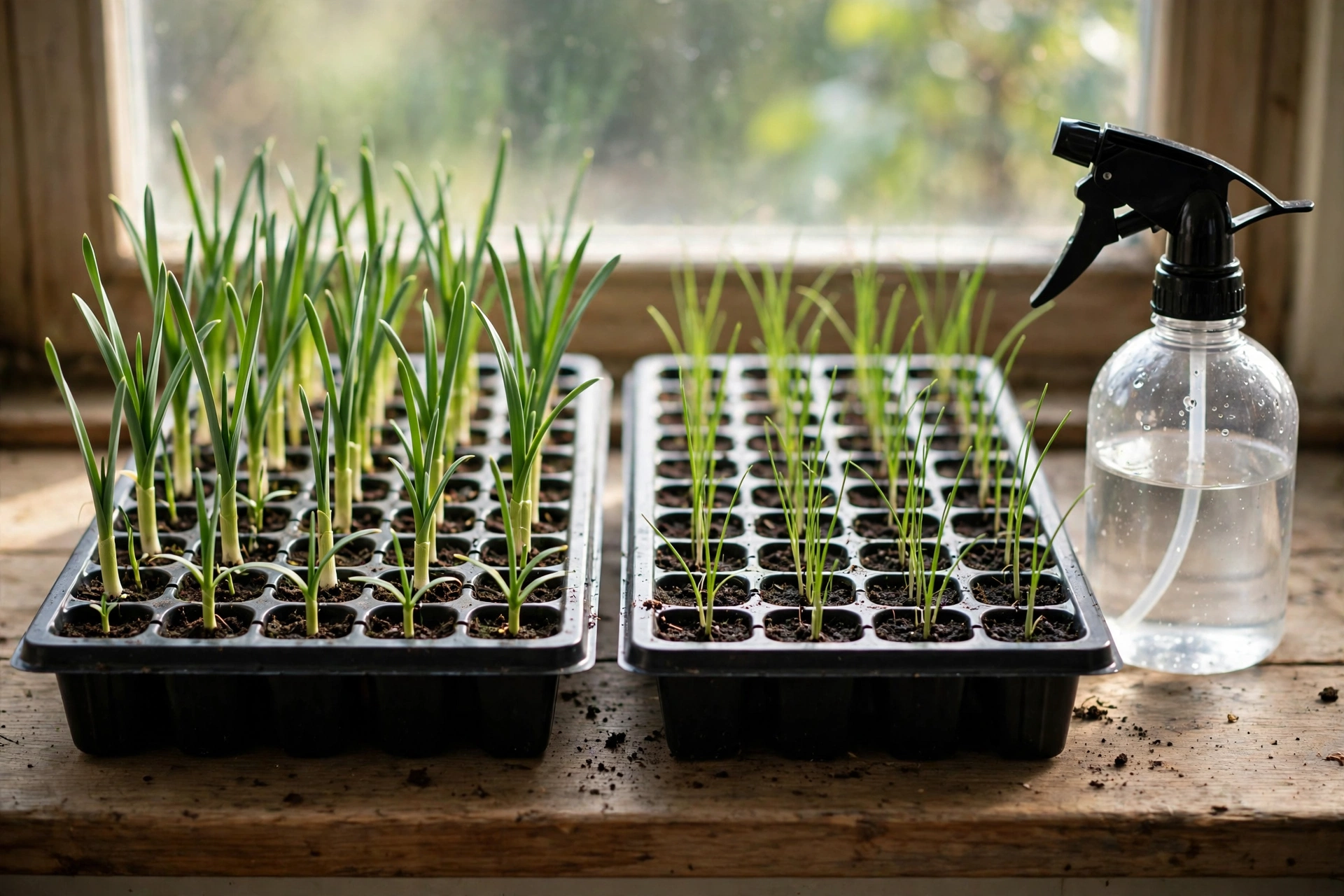
The catch is that the two crops ask for very different things from the same bed. A leek is a slow, patient plant that needs a long season and a deep hole, while a scallion is in and out in two months and grows back after you cut it. One bed planted with both feeds you from June to December, as long as each crop gets the start it actually needs. Our growing guide covers the timing and the transplanting in detail, and our leeks-versus-scallions comparison settles which one deserves the bed when you can only plant one. If you are building out the whole allium bed, our onion roundup covers the bulb onions that grow alongside them.
Leeks vs. Bunching Onions: The Difference That Matters

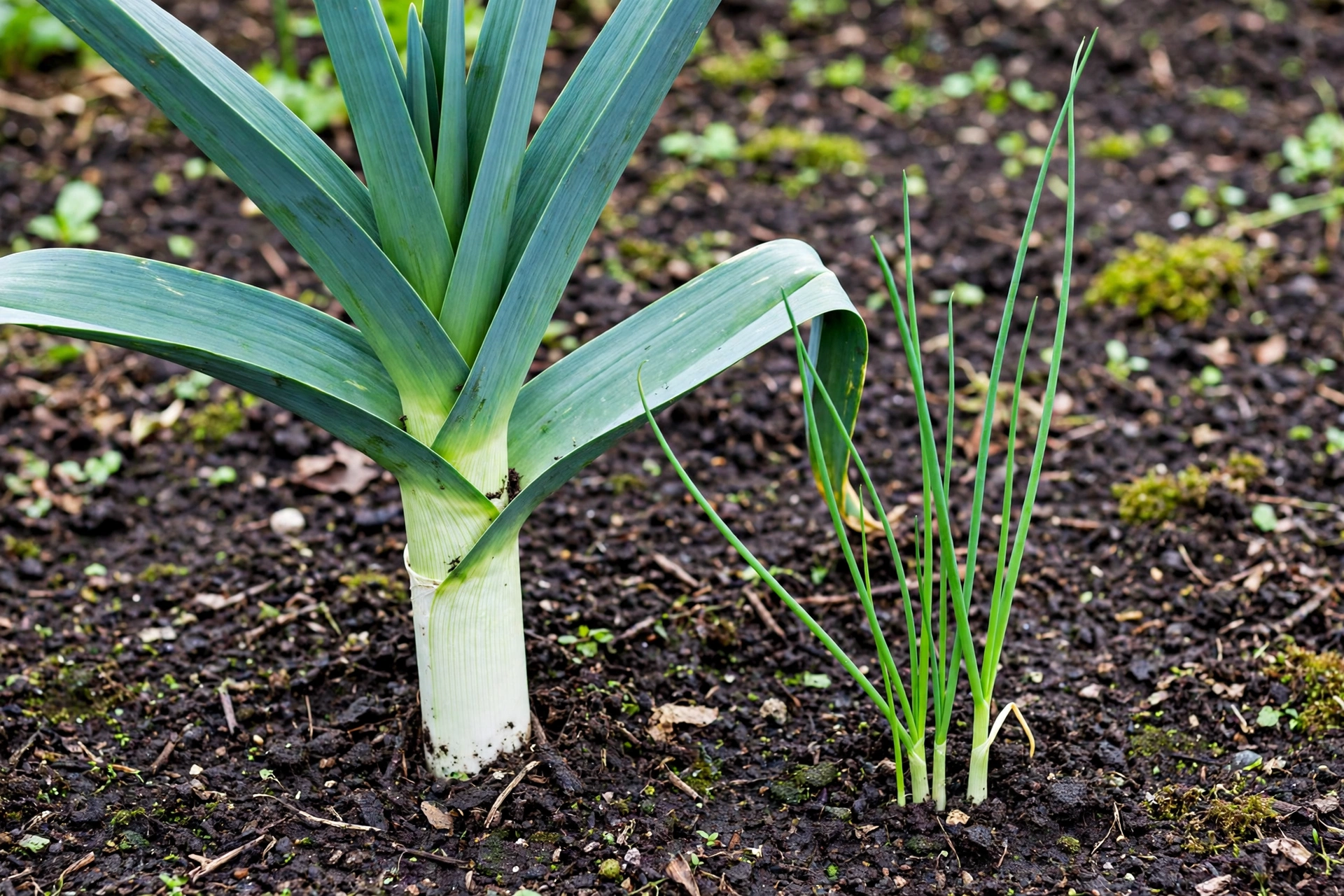
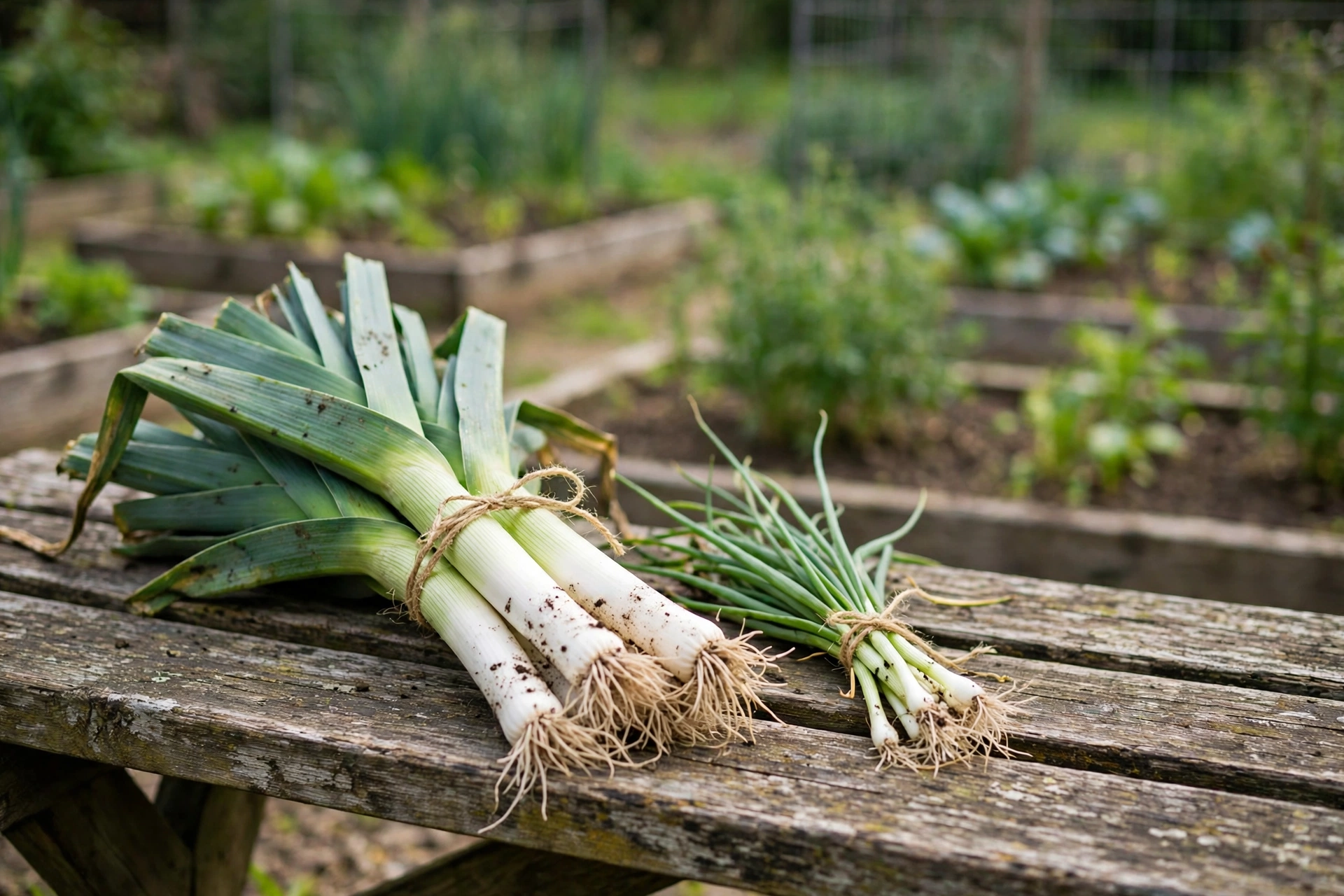
A leek is Allium porrum, a plant whose stem thickens as it grows and never forms a bulb. What you eat is the long white shank, and the white part only gets long when the stem is kept in the dark — planted deep, then hilled with soil as it grows. A scallion is a bunching onion, either Allium fistulosum, which never tries to bulb at all, or a young Allium cepa picked before it gets the chance. What you eat is the whole slender stalk, green tops and all, and when you clip it about an inch above the soil, it grows back.
That split explains everything else about them: the leek takes a season, the scallion takes two months; the leek wants a deep hole and steady water, the scallion wants a row and a pair of scissors. Botanical Interests sells one leek variety and four bunching onions, and the five together cover every way a home cook actually uses an allium.
Best Overall: King Richard Leek
King Richard is the only leek Botanical Interests sells, which makes the choice easy, and it happens to be a good one. It is an early variety, maturing in about 75 days from transplant, where most leeks ask for a season of 120 to 150 days from seed — so it fits northern gardens that run out of summer before most leeks run out of growing. The stems run extra long and white, the flavor is mild and rich without the sharp bite of a storage onion, and the plants stand down to 20°F, which means the harvest stretches past the first frosts instead of ending at them. Gardeners rate it 4.2 from 18 reviews, and the themes are consistent: started indoors, transplanted as directed, and still thriving when the rest of the garden had given up.
The honest trade-off is the rating itself. At 4.2 it is not the highest-rated seed in this roundup, and one reviewer found a nearly empty packet — a packaging slip Botanical Interests fixed with account credit and free shipping. The leeks themselves earned the praise; the packet is the only complaint in the pile.
Pros: earliest leek here at 75 days from transplant; extra-long white stems; cold tolerant to 20°F; the only leek in the catalog.
Cons: 4.2 rating trails the scallions; one packaging complaint in the reviews.
King Richard Leek Seeds
The only leek in the catalog, and an early one — long white stems that stand past the first frost.
Runner-Up: Tokyo Long White Bunching Onion
Tokyo Long White is the scallion to grow if you only grow one. It is a true bunching onion, Allium fistulosum, which means it never tries to form a bulb — it just keeps making slender, mild stalks, 16 to 18 inches of white with bluish-green tops, and it does it in 65 days. It resists pink root and smut, it takes summer heat without turning harsh, and when you clip it an inch above the soil it grows back, so one sowing keeps feeding you. Gardeners rate it 4.5 from 26 reviews, the best score in this roundup.
The trade-off is space. A packet sows 20 feet of row, and the plants want a half inch between them, so this is a crop that rewards a real row rather than a crowded corner. Give it the row and it pays you back all season.
Pros: best rating here at 4.5 from 26 reviews; regrows after clipping; resistant to pink root and smut; heat tolerant.
Cons: needs a proper row to earn its keep; slender stalks mean you snip a bunch, not one plant, for a dish.
Tokyo Long White Bunching/Scallion Onion Seeds
The best-rated scallion here — long, mild, heat-tolerant stalks that grow back after every cut.
Best for Color: Italian Red of Florence
Italian Red of Florence is the pretty one, and it earns its place on more than looks. It is a rare Italian heirloom, a torpedo-shaped red onion with a mild, sweet flavor, and eaten young it is a scallion with a color no other variety here can touch — dark red stalks that turn a plate of raw vegetables into pinzimonio, the Italian way of eating them with olive oil, vinegar, and salt. Left alone with space and time, it will go on to form a bulb, so it is the one scallion here that can change its mind. It matures in 60 days, and gardeners rate it 4.2 from 33 reviews.
The trade-off is the packet. It sows 8 feet of row, the shortest coverage in this roundup, so a big bed of red scallions takes more than one packet. The flavor and the color are worth the second packet.
Pros: striking dark-red color; mild, sweet flavor; can be eaten young or left to bulb; rare heirloom.
Cons: one packet sows only 8 feet; needs space and time if you want the bulb.
Italian Red of Florence Bunching/Scallion Onion Seeds
A rare red heirloom — a scallion young, a torpedo bulb if you let it grow, and the prettiest plate here.
Best for the Grill: Solbunch
Solbunch is a specialty onion with one job, and it does that job better than anything else here. It is a hybrid bunching onion bred for Cebollitas Asadas, the grilled onions served at Mexican taquerias — sweet, tender, 15-inch stalks with a small bulb at the root end that grill up whole in minutes. It matures in 60 days, it grows vigorously, and it can be harvested again and again through the season.
The trade-off is the price and the narrowness. At $4.49 it is the most expensive packet here, and if you never grill onions, its best trick goes unused. If you do, nothing else in this roundup comes close.
Pros: bred for grilling; sweet, tender stalks; vigorous, repeat harvests; 60 days.
Cons: $4.49, the highest price here; a one-trick onion if you never grill.
Solbunch Bunching/Scallion Onion Seeds
The taqueria onion — sweet, tender 15-inch stalks made to grill whole, harvested again and again.
The One We Skipped: White Lisbon
White Lisbon has been in gardens since the 1700s, and it is still a dependable spring onion — mild, juicy, and sweet, with thin whites and tender green tops, ready in 60 days. It is also the lowest-rated variety in this set at 4.0 from 20 reviews, and every scallion above it outranks it on the same shelf. If you already grow White Lisbon and love it, keep growing it. If you are buying fresh, Tokyo Long White gives you the same harvest with a better track record, and Italian Red gives you color White Lisbon never will.
How the Five Compare
| Variety | Type | Days to harvest | Best for | Price | Rating |
|---|---|---|---|---|---|
| King Richard Leek | Leek (Allium porrum) | 75 days from transplant | Long white stems, late-season harvest | $2.99 | 4.2 from 18 reviews |
| Tokyo Long White | Bunching onion (A. fistulosum) | 65 days | Cut-and-come-again scallions | $2.99 | 4.5 from 26 reviews |
| Italian Red of Florence | Bunching onion (A. cepa) | 60 days | Color, raw eating | $2.69 | 4.2 from 33 reviews |
| Solbunch | Bunching onion (A. fistulosum hybrid) | 60 days | Grilling whole | $4.49 | Not rated yet |
| White Lisbon | Bunching onion (A. cepa) | 60 days | Classic spring onion | $2.99 | 4.0 from 20 reviews |
Bottom Line
Start with King Richard and Tokyo Long White. The leek gives you the late-season payoff — soup onions standing in the frost when the rest of the garden is done — and the scallion gives you the fast return, snipped fresh from June onward and growing back after every cut. Add Italian Red if you want color on the plate, and Solbunch if you grill. All five packets together cost less than $17, and the two that matter most cost $2.99 each. For the timing and the transplanting, read our growing guide, and if you are still deciding between the two crops, our comparison lays out the trade.