Landscape & Leisure is reader-supported. When you buy through links on our site, including Botanical Interests seed links, we may earn a commission at no extra cost to you. Prices change, so click through to confirm current pricing.
Most people buy leeks and scallions the same way — a packet of each, sown the same week, expected on the table the same month — and then spend the summer wondering why one of them never shows up. The mistake is treating a scallion like a baby leek. They share a family and almost nothing else: one takes a season and a deep hole, the other takes two months and a pair of scissors.
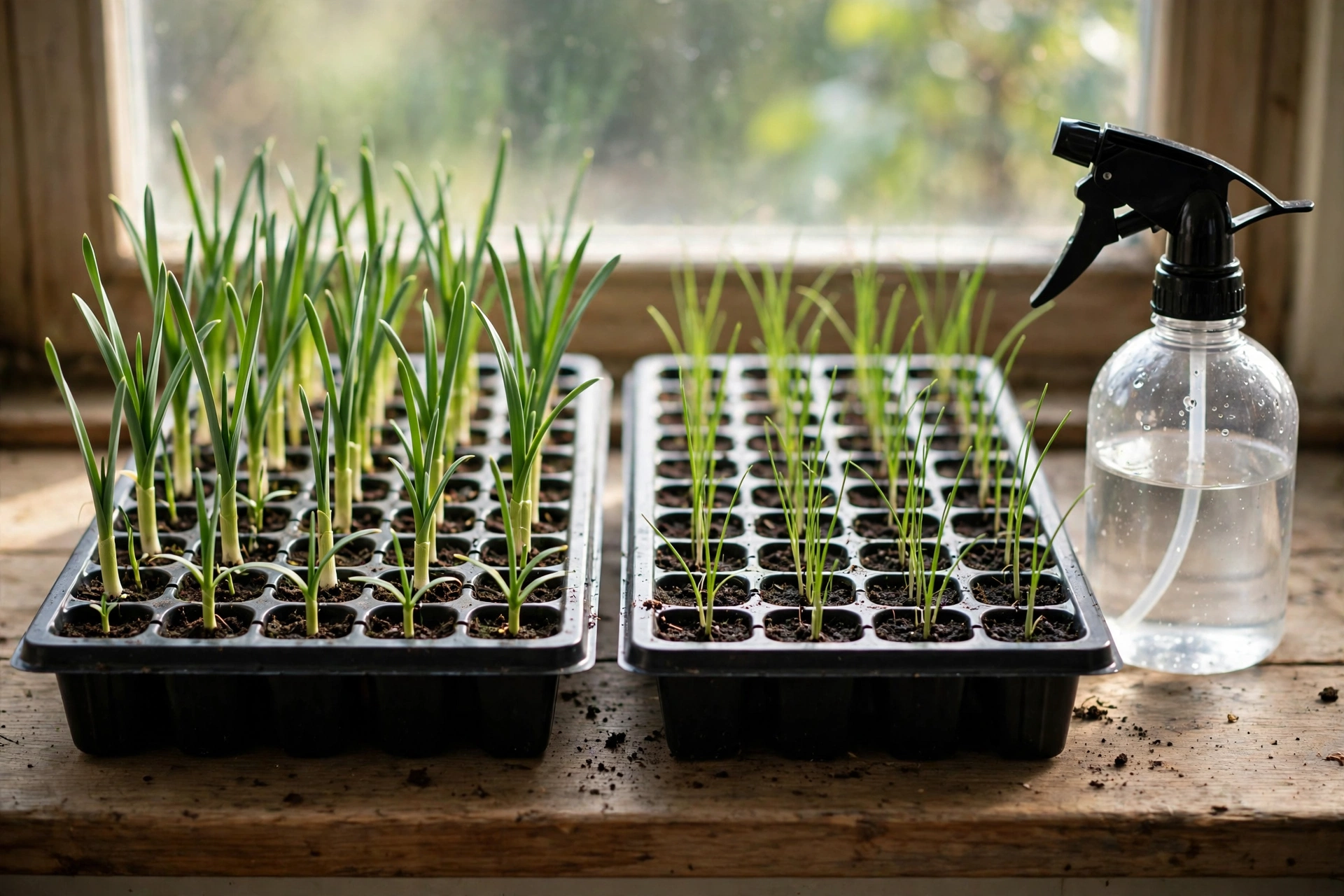
This comparison settles which one deserves your bed, and your patience. If you only want the shortlist, our leeks and scallions roundup has the five varieties worth your money, and our starting guide walks through the indoor timing and the transplanting for both.
The Difference in One Paragraph
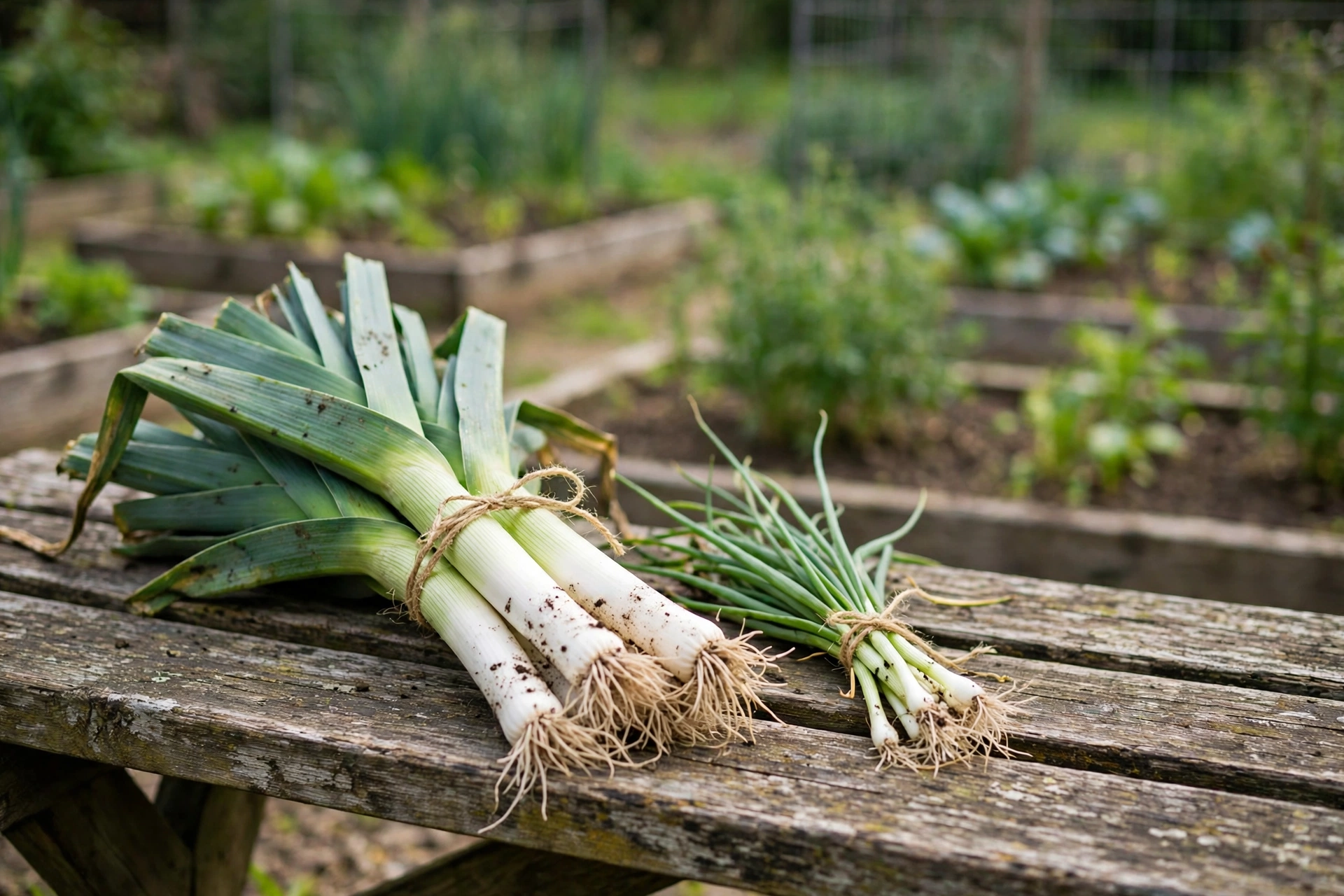
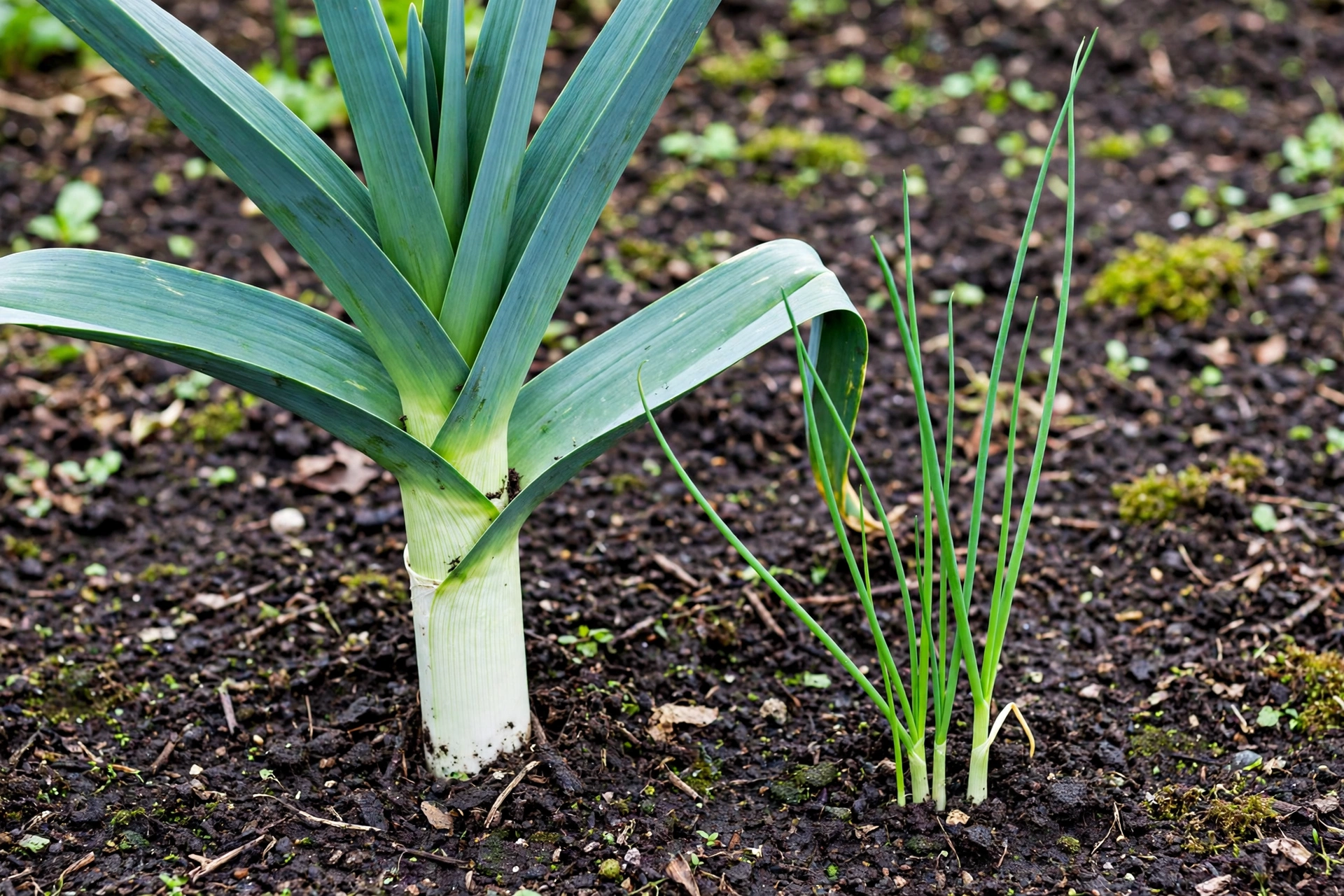
A leek is Allium porrum, a plant that thickens into a stem and never forms a bulb, and it needs a long season — most varieties take 120 to 150 days from seed — plus deep planting and hilling to build the white shank. A scallion is a bunching onion, Allium fistulosum or a young Allium cepa picked before it bulbs, ready in 60 to 65 days and happy to regrow when you clip it an inch above the soil. The leek is a crop you plan for in February and eat in November; the scallion is a crop you sow in April and eat in June.
Leeks: The Slow Payoff
Leeks pay you late and pay you well. One plant gives you a single thick white shank, 6 to 8 inches of it, mild and rich and built for soup, and the plants stand down to 20°F, so the harvest runs past the first frosts when the rest of the garden is done. The cost is the calendar: sow indoors in late February or March, harden the transplants off for five to seven days, set them out once daytime temperatures reach 45 degrees, and then hill soil around the stems all season to keep the shank white. King Richard shortens the bill — about 75 days from transplant instead of the usual 120 to 150 from seed — but it still wants the same indoor start, the same deep hole, and the same patience.
The trade-off is real: a leek bed ties up ground for most of the season for one harvest per plant, and a dry midsummer stalls the shank because leeks root shallow. If you want onions on the table in two months, leeks are the wrong crop. If you want soup onions standing in the frost in November, nothing else does the job.
Pros: harvest runs past the first frosts; one thick shank per plant, built for soup; mild, rich flavor.
Cons: ties up the bed for a season; needs deep planting and hilling; one harvest per plant.
King Richard Leek Seeds
The early leek — 75 days from transplant, long white stems, standing in the garden past the first frost.
Scallions: The Fast Return
Scallions pay you fast and keep paying. Sow direct a quarter inch deep, half an inch apart, as soon as the soil reaches 45 degrees, and you are snipping in 60 to 65 days; sow again every two to four weeks and the supply never runs out. Clip the plants about an inch above the soil and they grow back, so one sowing feeds you more than once, and a true bunching onion like Tokyo Long White never wastes your time trying to form a bulb. The stalks are slender and mild, made for garnish, salads, and stir-fries, and the plants take summer heat without turning harsh.
The trade-off is that a scallion is never a soup onion. The stalks stay thin, so a dish needs a bunch, not a plant, and the harvest is a steady trickle rather than a single big pull. If you want a pot of leek and potato soup in November, scallions will not get you there.
Pros: ready in 60–65 days; regrows after clipping; succession sow all season; heat tolerant.
Cons: slender stalks, so a dish needs a bunch; never a soup onion; a trickle, not a big harvest.
Tokyo Long White Bunching/Scallion Onion Seeds
The fastest allium here — 65 days, 16- to 18-inch stalks, and it grows back after every cut.
The Crossover: One Onion That Does Both
Italian Red of Florence is the one variety in this comparison that refuses to pick a side. It is an Allium cepa, a true onion, and eaten young it is a scallion — mild, sweet, and dark red, ready in 60 days. Leave it alone with space and time and it goes on to form a torpedo-shaped bulb, which no fistulosum scallion will ever do. Gardeners rate it 4.2 from 33 reviews, and the color alone earns it a row: dark red stalks turn a plate of raw vegetables into pinzimonio, the Italian way of eating them with olive oil, vinegar, and salt.
The trade-off is the packet, which sows only 8 feet of row, and the indecision — a plant left halfway between scallion and bulb gives you neither at its best. Pick one use when you sow it: snip it young, or give it room and let it bulb.
Pros: two crops in one packet; striking dark-red color; mild, sweet flavor; rare heirloom.
Cons: one packet sows only 8 feet; halfway between scallion and bulb is neither at its best.
Italian Red of Florence Bunching/Scallion Onion Seeds
A scallion young, a torpedo bulb if you let it grow — the one onion here that does both jobs.
Side by Side
| Aspect | Leeks | Scallions |
|---|---|---|
| Time to harvest | 75 days from transplant for King Richard; most leeks 120–150 days from seed | 60–65 days |
| How you plant it | Start indoors, transplant deep into 5- to 6-inch holes, hill soil up the stem | Direct sow or transplant; clip an inch above the soil and it regrows |
| What you eat | One thick white shank per plant, built for soup | Slender stalks and green tops, raw and stir-fried |
| Cold tolerance | Stands to 20°F; harvest runs past the first frosts | Frost tolerant; best in summer and fall |
| Space | 2 to 6 inches apart in the row | Half an inch apart, rows a foot apart |
Bottom Line
Grow both if you have the room — they use the bed at different times and never compete. If you have one bed and one packet, the answer turns on your patience: scallions if you want onions on the table in two months, leeks if you want them standing in the frost in November. The pair to buy is King Richard and Tokyo Long White, $2.99 each, and our roundup has the full five-variety comparison while our guide walks through the indoor start.