Landscape & Leisure is reader-supported. When you buy through links on our site, including Botanical Interests seed links, we may earn a commission at no extra cost to you. Prices change, so click through to confirm current pricing.
You are standing at the garden gate with a glass in one hand, deciding which herbs earn a pot by the back door this summer. That is the whole question, and it is a pleasant one: the right five packets turn an ordinary gin and tonic into something your guests ask about, while the wrong ones just take up sunny space.
Five herbs below earn their keep in a glass, each for a different job — a leaf to muddle, a flower to float, a sprig to stir into syrup. Our container guide for cocktail herbs covers the pots, timing, and harvest habits that keep them producing, and our basil vs. mint comparison settles the one argument every drink garden starts with. If your herbs lean toward the teapot instead, our roundup of the best herbs to grow for tea shares two of these same plants.
Best Overall: Italian Genovese Basil
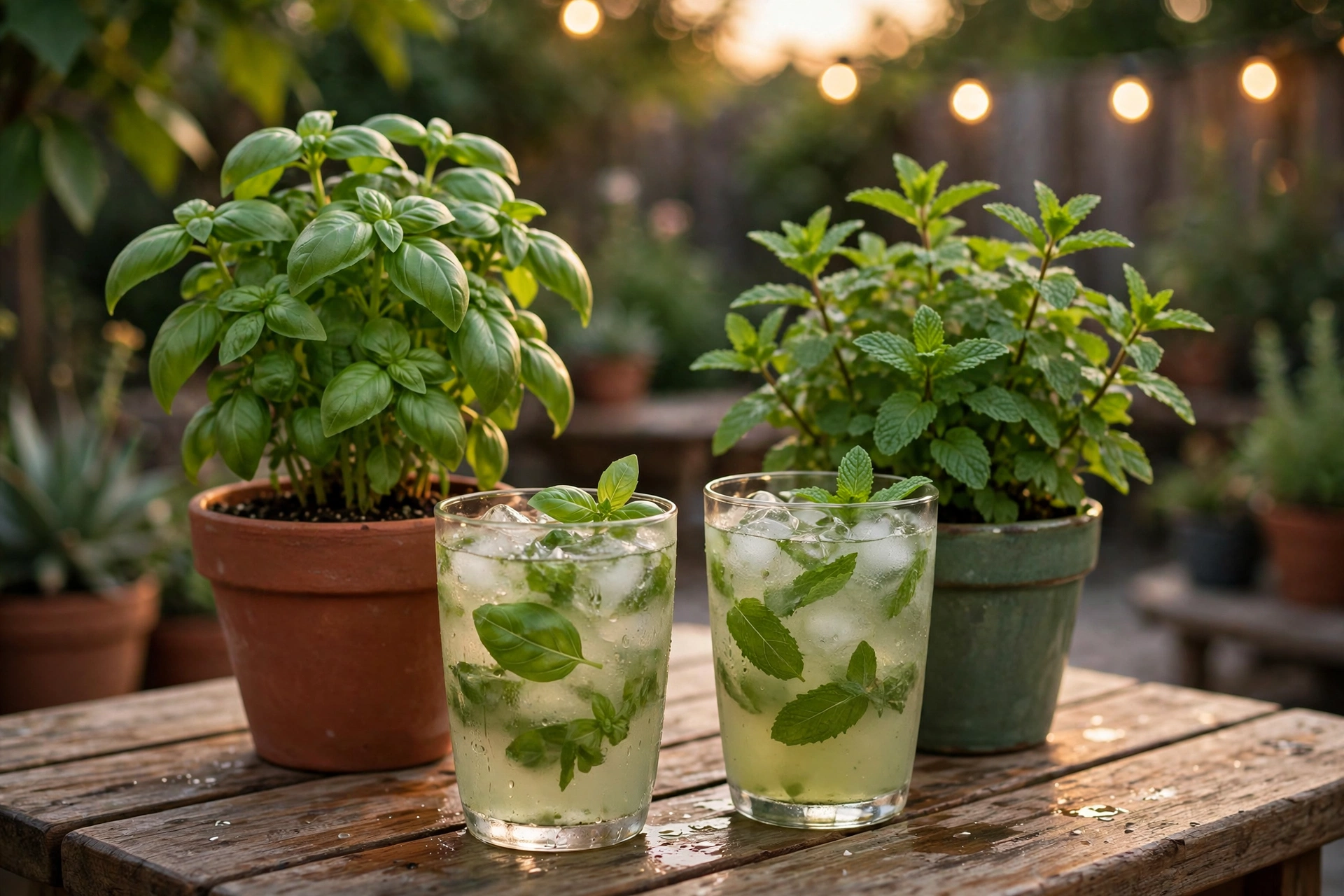
Start here, because basil does more work in a summer drink than any other herb on this page. Genovese is the true Italian pesto basil from the Genoa area, with large, dark green, almond-shaped leaves and the traditional fragrance that carries a basil smash, a gin basil cocktail, or a simple handful of leaves bruised into lemonade. Gardeners rate it 4.5 out of 5 from 72 reviews, and at $2.99 to $5.99 depending on packet size, it is an easy first packet.
The plant itself is cooperative as long as you respect its one firm rule: basil is very frost sensitive, and it wants warm nights. Start seed indoors 4 to 6 weeks before transplanting, set plants out only when nighttime temperatures stay above 50°F, and sow at just ¼ inch deep. Flavor is best before the plant flowers, so pinch the tips and harvest up to a third of the plant at a time — which, conveniently, is exactly the rhythm a drink garden wants anyway.
Pros: the most versatile drink herb here; large leaves made for muddling and garnishing; germinates in 5–10 days; 4.5 out of 5 from 72 reviews.
Cons: an annual, so you replant every year; flavor fades once flowering starts, which means pinching is not optional.
Italian Genovese Basil Seeds
The true Genoa pesto basil — big, fragrant leaves for smashes, garnishes, and the best summer lemonade you will make.
Best Garnish: Borage

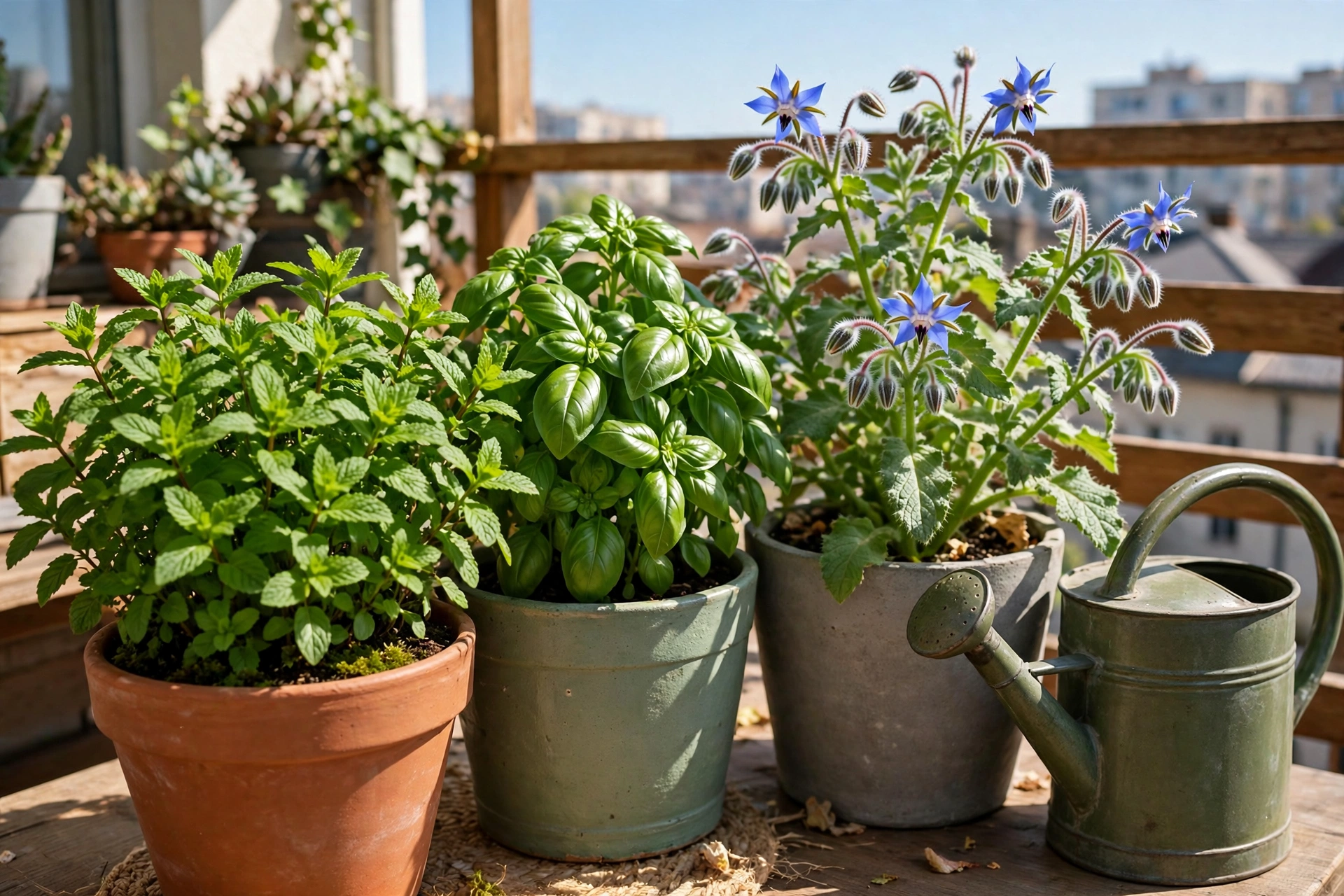
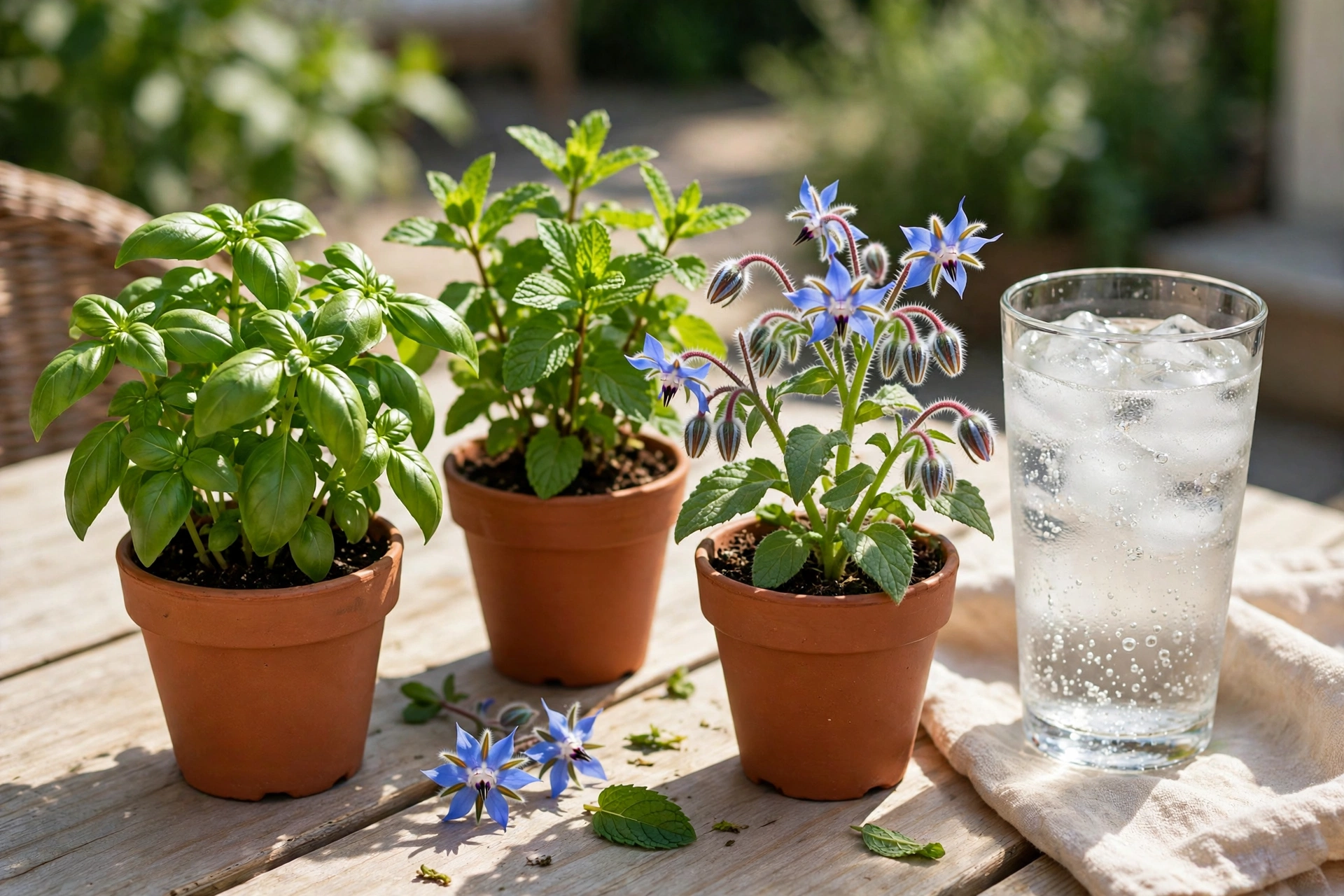
Borage is the garnish herb, and it has been one for a long time: its blue, star-shaped flowers are the classic finish on a Pimm’s cup. The flowers taste faintly of cucumber, which is why they sit so naturally in gin drinks and summer punches, and Botanical Interests notes they can be floated fresh on drinks or candied with sugar for later use. At 4.8 out of 5 from 76 reviews, it carries the strongest rating in this roundup, and the packet is $2.99.
One plain warning about the leaves, because the flowers get all the attention: borage leaves are hairy, and old leaves turn tough, so pick them young if you use them at all — most drink gardeners will happily stick to the flowers. The plant grows 2 to 3 feet tall, prefers direct sowing because its taproot dislikes disturbance, and once established it shrugs off dry spells that would sulk lesser herbs.
Pros: edible blue flowers with a light cucumber flavor; the strongest rating here at 4.8 out of 5 from 76 reviews; drought tolerant once established; bees love it too.
Cons: leaves are hairy and best only when young; a tall, sprawling plant that needs its own corner; direct sow rather than transplant.
Borage Seeds
Blue, cucumber-flavored flowers for Pimm’s cups and summer punches — the garnish that makes a plain drink look planned.
Best Perennial: Lemon Balm
Lemon balm is the quiet workhorse of the drink garden, a perennial in zones 3 through 7 that comes back year after year without being replanted. The leaves carry a lemony mint flavor that disappears gracefully into iced tea, lemonade, and any tall drink that wants brightness without a citrus bill, and a handful steeped in simple syrup gives you a mixer that keeps for weeks in the fridge. Gardeners rate it 4.5 out of 5 from 21 reviews, and the packet is $2.69.
It is also, honestly, a plant with ambitions. Lemon balm is a mint relative, and while it behaves better than true mint, a container is still the smart home for it near a patio — Botanical Interests lists it as a good container variety for a reason. Sow the seed pressed into the surface rather than buried, expect germination in 10 to 15 days, and start it indoors 6 to 8 weeks before your last frost if you want drinks by early summer.
Pros: a true perennial, so one packet serves for years; bright lemon flavor for syrups and tall drinks; good in containers; 4.5 out of 5 from 21 reviews.
Cons: spreads with mint-family enthusiasm in open ground; seed needs light at the surface, so burying it is a common reason it never appears.
Lemon Balm Seeds
Lemons without the lemon tree — a hardy perennial for syrups, iced tea, and tall drinks that want brightness.
Best for Syrups and Infusions: German Chamomile
Chamomile earns its place in a drink garden through the syrup jar. Its small white flowers — about ¾ inch across, apple-scented, with yellow centers — infuse into a honeyed simple syrup that softens whiskey drinks and makes a genuinely lovely lemonade, and the same flowers dry down for winter use long after the garden has closed. Gardeners rate it 4.5 out of 5 from 60 reviews, at $3.49 a packet.
The growing is undemanding, with one harvest habit worth learning early: pick the flowers in the morning, just before they fully open, when the flavor is at its best. Seed goes pressed into the surface, germination runs 10 to 15 days, and the plants grow tall — over 24 inches — with fern-like foliage that looks good even when you are not picking it. This is the one herb here we would plant even if nobody ever mixed a drink from it.
Pros: apple-scented flowers made for syrups and infusions; flowers dry well for winter drinks; 4.5 out of 5 from 60 reviews; an attractive plant in its own right.
Cons: an annual you sow again each year; flowers are small, so a syrup batch means a pleasant but real picking session.
German Chamomile Seeds
Apple-scented flowers that turn simple syrup into something honeyed and floral — fresh in summer, dried for winter.
The Patient Pick: Munstead Lavender
Lavender is the herb that makes a drink taste like somebody planned it. A sprig stirred into simple syrup — Botanical Interests suggests exactly that for craft cocktails and lavender lemonade — gives gin drinks a floral depth that nothing else on this page can imitate, and a dried bundle keeps working through the winter. Munstead is the right lavender to start from seed: it flowers earlier than other lavenders, stays compact at 12 to 24 inches, and holds a perennial home in zones 5 through 9.
Now the patience part, stated plainly. Lavender seed germinates slowly — anywhere from 15 to 90 days — and it wants a 10- to 12-week head start indoors, which is why its 4.1 out of 5 from 23 reviews is the softest rating among our picks. None of that makes it a bad plant; it makes it a plant you start in late winter and thank yourself for in July. At $2.99, the packet is cheap tuition for a perennial that returns for years.
Pros: unmatched floral flavor for syrups; a compact perennial in zones 5–9; flowers earlier than other lavenders; drought and heat tolerant once established.
Cons: germination can take up to 90 days; needs the earliest indoor start of anything here; 4.1 out of 5 from 23 reviews reflects that slow start.
Munstead Lavender Seeds
The lavender for syrup and lemonade — slow to start, then a compact perennial that flavors drinks for years.
The One to Grow With Caution: Common Mint
Every cocktail conversation eventually lands on mint, and we are not going to pretend otherwise — a mojito without it is just a rum lemonade. But Common Mint is the herb we would hand you with instructions attached rather than a celebration. It carries the lowest rating here, 3.9 out of 5 from 21 reviews, and the pattern in gardener feedback is consistent: the seed is slow and finicky to germinate, and then — once a plant finally establishes — it grows with the famous mint determination to own whatever ground it touches.
So grow it, by all means, but grow it the way our basil vs. mint comparison lays out: in its own pot, never in open ground, and with the understanding that basil will be flavoring your drinks weeks before the mint is ready to pick. At $2.69 it is a fair price for a perennial garnish — it is simply not the first packet a new drink gardener should reach for.
Cocktail Herbs Side by Side
| Herb | Best drink job | Type | Rating | Packet price |
|---|---|---|---|---|
| Italian Genovese Basil | Muddling, garnishes, smashes | Annual | 4.5 / 5 (72) | $2.99–$5.99 |
| Borage | Floating flower garnish | Annual | 4.8 / 5 (76) | $2.99 |
| Lemon Balm | Syrups, iced tea, tall drinks | Perennial, zones 3–7 | 4.5 / 5 (21) | $2.69 |
| German Chamomile | Syrups and infusions | Annual | 4.5 / 5 (60) | $3.49 |
| Munstead Lavender | Floral syrup, lemonade | Perennial, zones 5–9 | 4.1 / 5 (23) | $2.99 |
Bottom Line
Plant the basil first. It germinates in about a week, it flavors more drinks than everything else here combined, and it will be in your glass while the lavender is still thinking things over in its seed tray. Add borage for the garnish that makes guests reach for their phones, lemon balm and chamomile for the syrup shelf, and lavender when you are ready to play the long game — your summer drinks will taste like the garden was always part of the plan.