Landscape & Leisure is reader-supported. When you buy through links on our site, including Botanical Interests seed links, we may earn a commission at no extra cost to you. Prices change, so click through to confirm current pricing.
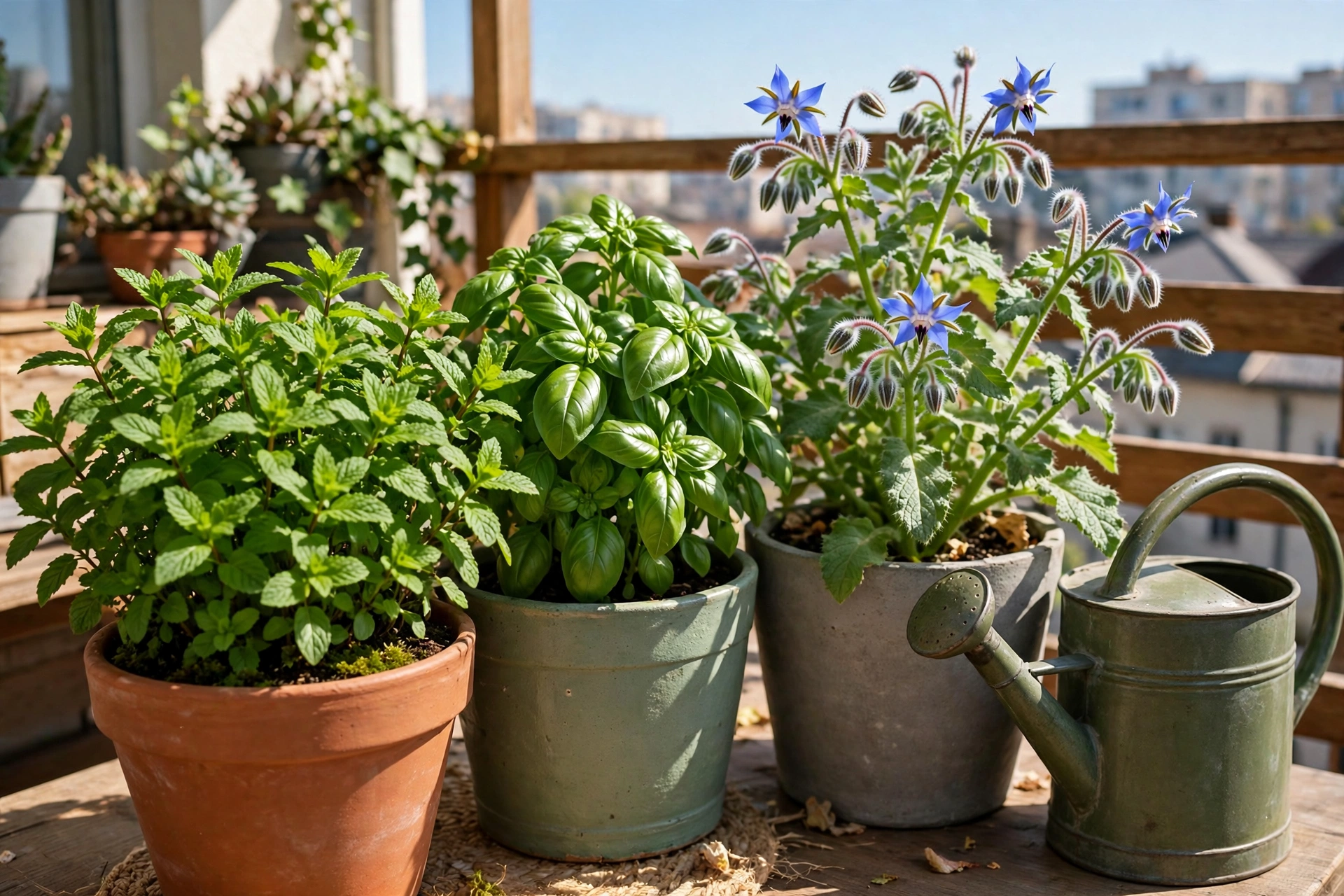
Most people plant mint in the ground, watch it take the whole bed, and still end up buying basil at the store all summer. That one season teaches the whole comparison: mint is the herb you manage, basil is the herb you use, and a drink garden that starts with the wrong one spends June apologizing for it.
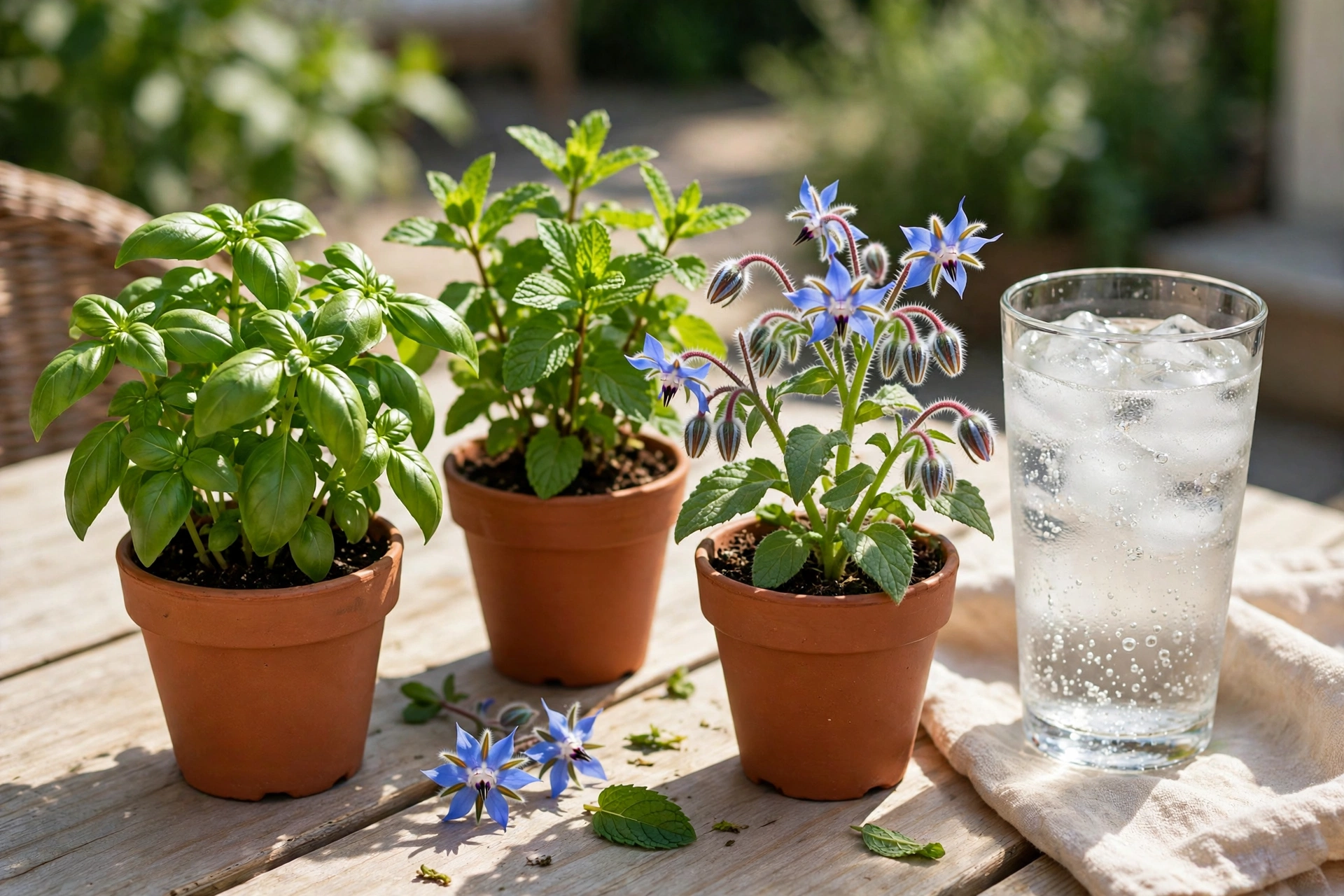
Both belong in a glass — nobody is arguing against the mojito here. The question is which one you grow first, and the honest answer depends on how patient you are and how your household actually drinks. Our roundup of the best herbs to grow for cocktails places both in the wider field, and our container guide covers the pot setup each one needs.
The Flavor Case
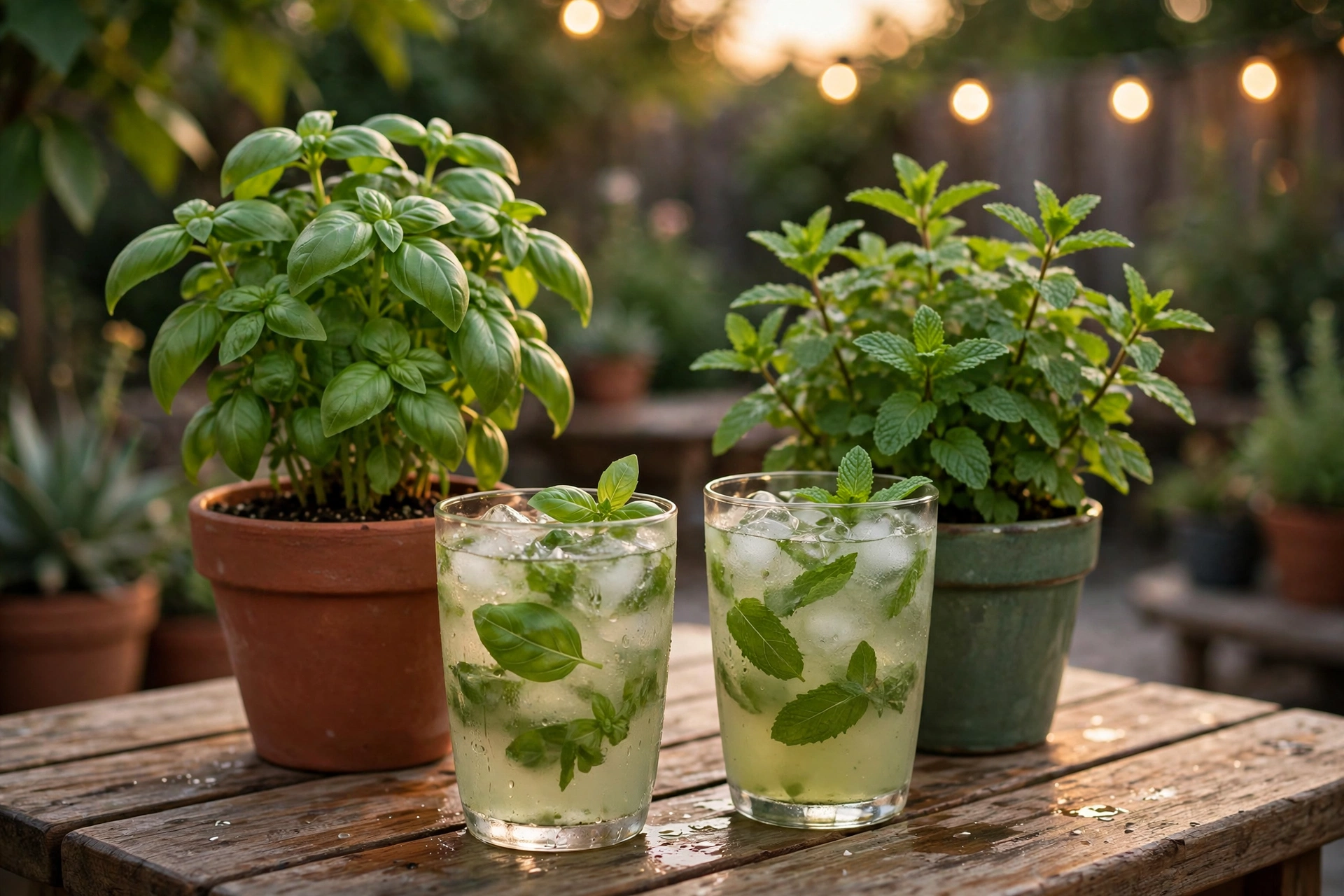
Basil brings range. Genovese basil’s large, dark green leaves carry a sweet, clove-like fragrance that works muddled in a smash, torn into a gin and tonic, or bruised over lemonade, and because the leaves are big, a garnish reads as generous rather than fussy. It is the herb that makes a plain drink taste composed.
Mint brings one note, played loudly. That cool, clean hit is irreplaceable in a mojito or a julep, and Botanical Interests points out that it surprises in savory dishes too — but a glass that does not want mint really does not want it. Basil can sit quietly in the background of a drink; mint is always the headline.
The Growing Case, Where This Is Actually Decided

Here is where the comparison stops being close. Basil seed germinates in 5 to 10 days, starts indoors 4 to 6 weeks before transplanting, and — once nights stay above 50°F — grows fast enough to harvest within weeks, taking up to a third of the plant at a time while it replaces the growth. Sow successions every 3 weeks and the supply never lapses. Its one demand is warmth: basil is very frost sensitive, and a cold night ends the conversation.
Mint runs the opposite schedule. Its seed is slow and finicky to germinate — the recurring theme in gardener feedback on the Common Mint packet, which sits at 3.9 out of 5 from 21 reviews against basil’s 4.5 out of 5 from 72 — and young plants build slowly before they suddenly do not. Once established, mint is a perennial that returns every year and spreads by runners with enough enthusiasm that open ground is a genuine mistake; it belongs in a pot, permanently. You plant mint once and manage it forever. You plant basil every year and never manage it at all.
| Question | Basil (Genovese) | Mint (Common) |
|---|---|---|
| Time to first drink | Weeks — germination 5–10 days | Slow — finicky germination, slow young plants |
| Comes back next year? | No — annual, resow each spring | Yes — perennial, and spreads |
| Where it should live | Pot or bed, 12-inch spacing | Its own pot, never open ground |
| Biggest risk | One cold night — very frost sensitive | Taking over the bed, then the yard |
| Rating | 4.5 / 5 (72 reviews) | 3.9 / 5 (21 reviews) |
Italian Genovese Basil Seeds
Up in 5–10 days and in your glass within weeks — the fastest, friendliest start a drink garden gets.
Common Mint Seeds
The mojito herb — slow to start, then a perennial that returns for years if its pot keeps it honest.
The Middle Path Worth Knowing
If the choice feels like a trap — basil’s annual replanting on one side, mint’s takeover habits on the other — lemon balm is the plant standing between them. It is a mint relative with a lemony flavor that suits the same tall, iced drinks, it is perennial in zones 3 through 7, and while it spreads with some enthusiasm, it behaves noticeably better than true mint and takes happily to a container. Plenty of drink gardens end up using it more than either headliner.
Lemon Balm Seeds
Mint-family brightness with lemon in it — perennial like mint, far better mannered, and made for iced drinks.
The Verdict
Grow the basil first. It will be flavoring drinks while mint seed is still deciding whether to germinate, it asks for nothing but warmth and regular pinching, and its $2.99 to $5.99 packet is the cheapest reliable pleasure in this whole comparison. Then start one pot of mint — in a pot, on a hard surface, with no illusions — and by next summer you will have both: the herb you use every week, and the herb that is always there when a mojito is non-negotiable. Our roundup of the best culinary herbs to grow from seed covers what both plants do once they leave the glass and head for the kitchen.