Landscape & Leisure is reader-supported. When you buy through links on our site, including Botanical Interests seed links, we may earn a commission at no extra cost to you. Prices change, so click through to confirm current pricing.
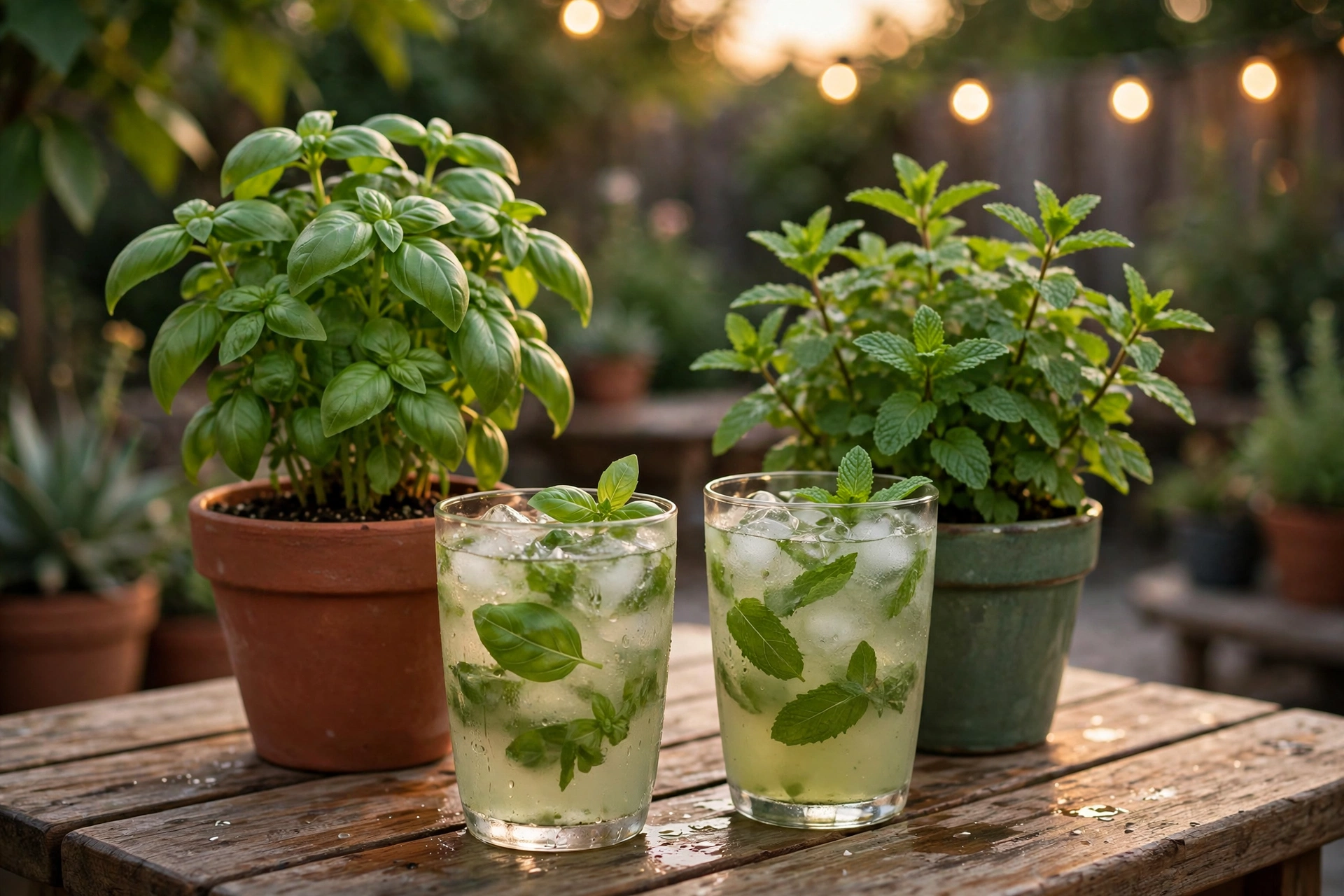
When the evenings finally stay warm enough for drinks outside, the herbs closest to the door are the ones that actually get picked. Nobody crosses a dark yard for a garnish, which is why a cocktail garden belongs in pots on the patio — close to the ice bucket, close to the chairs, and close enough that a second round takes thirty seconds to build.
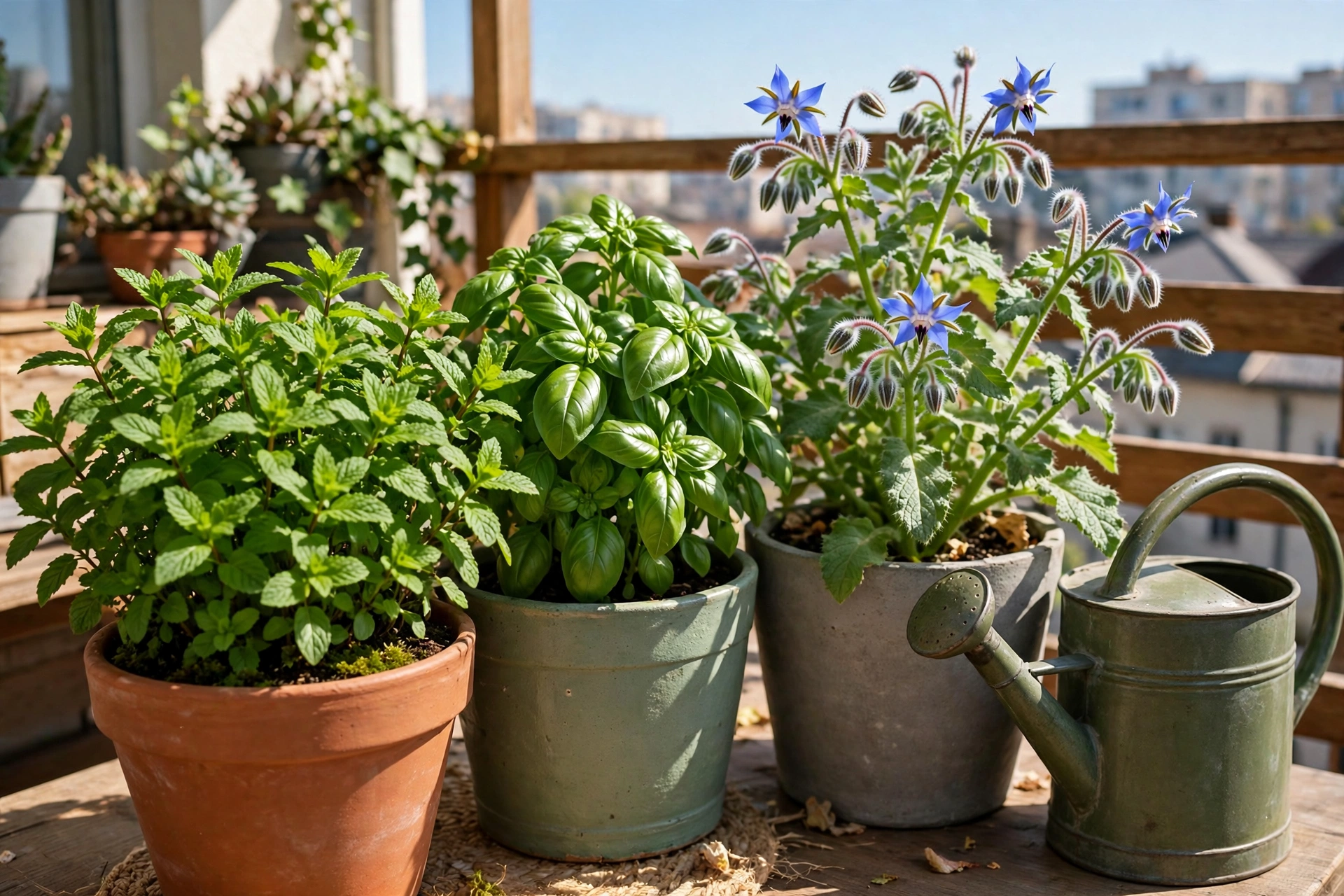
Containers also solve the drink garden’s two troublemakers before they start. Mint stays mint-sized instead of annexing the bed, and tender basil can slide under cover on the one cold night that would otherwise end it. The five herbs in our roundup of the best herbs to grow for cocktails all work in pots, and our basil vs. mint comparison covers the head-to-head in more depth — this guide is about the setup that keeps all of them producing from June to frost.
Why Containers Suit Drink Herbs
A drink herb gets harvested differently from a cooking herb, and the difference matters. You are not cutting a bunch for a sauce; you are snipping a sprig here and a handful of leaves there, often in the middle of making something, which means the plant needs to tolerate frequent small harvests and keep replacing them. Pots near the door make that rhythm easy, and they let you give each herb the one thing it actually wants — room for borage, restraint for mint, warmth for basil — instead of one shared bed where the pushiest plant wins.
There is a timing gift in pots, too. Basil started indoors and potted up can move outside the moment nights stay above 50°F and come back in if a cold snap argues, while perennial lemon balm in a container simply overwinters where it sits in most climates. You are gardening on your schedule rather than the forecast’s.
Give Each Herb the Pot It Wants
Basil wants warmth and company. Genovese basil grows 12 to 24 inches tall and is listed by Botanical Interests as a good container variety, so a generous pot by a sunny wall suits it well. Space plants about 12 inches apart, which in practice means one plant per medium pot or two in a wide one, and plan on succession: the seed packet itself recommends 3 or 4 successive sowings every 3 weeks, so a fresh pot is always coming along as the older one tires.
Mint wants a pot of its own, full stop. This is the rule the whole guide hangs on. Mint spreads by runners with real determination, and in open ground it will be in the lawn, the path, and the neighboring bed within a couple of seasons. In a pot it is a well-behaved perennial garnish. Sow generously rather than nursing individual seeds — mint seed is small and its germination is famously uneven — and once plants establish, expect steady growth that asks mostly for water.
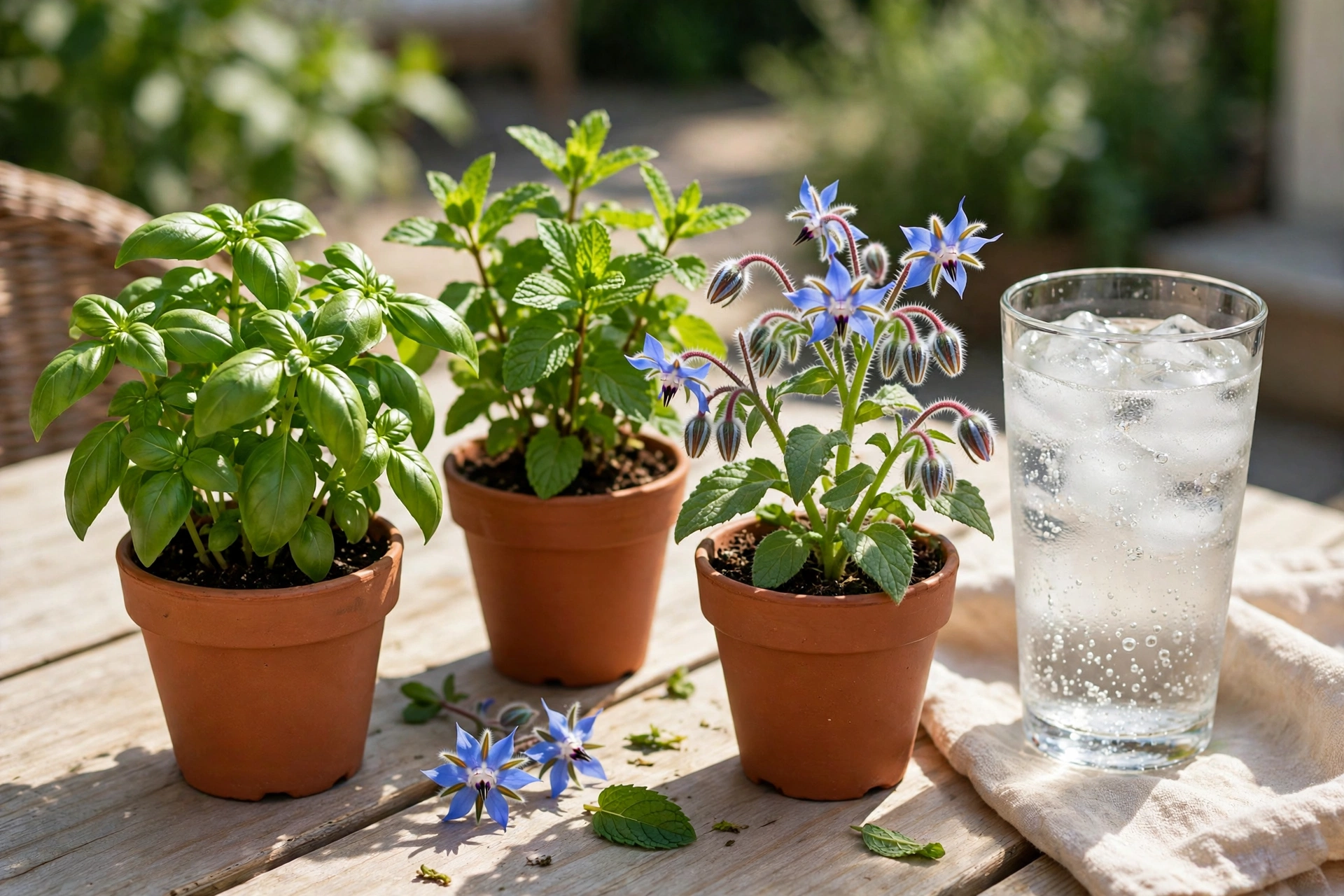
Borage wants room and a light touch. At 2 to 3 feet tall, borage is the biggest plant in this guide, and it wants the largest pot you have. It also dislikes transplanting because of its taproot, so sow seed directly in the container where it will grow, a group of 3 seeds every 12 inches, thinned to the strongest plant. Once it is established it tolerates dry spells gracefully, which makes it the forgiving pot at the far end of the patio.
Timing: Who Starts When
| Herb | Start indoors | Germination | Sowing note |
|---|---|---|---|
| Italian Genovese Basil | 4–6 weeks before transplanting | 5–10 days | ¼ inch deep; out only when nights stay above 50°F |
| Borage | Direct sow preferred | 5–20 days | ¼–½ inch deep; taproot dislikes transplanting |
| Lemon Balm | 6–8 weeks before last frost | 10–15 days | Press seed into the surface; it needs light |
Read the table as a season in miniature. Basil is the sprinter — up in a week, in your glass by early summer — while lemon balm takes a slower, steadier road and then stays for years. Borage sits between them, quick enough from a direct sowing that starting it indoors buys you almost nothing. Our fuller guide to growing basil from seed walks through the basil timing in more detail if this is your first year with it.
Water, Light, and the Pinching Habit
Light first. Every herb in this guide wants full sun to part shade, and a patio pot that catches morning sun and a little afternoon relief will keep leaves tender instead of leathery. Lemon balm tolerates the shadiest corner of the group, which makes it the right tenant for the pot that never quite gets the best spot.
Water in the morning. Container soil dries faster than bed soil, and drink herbs picked at their best are never thirsty ones. Water early so foliage dries before evening, check pots daily in hot spells, and let borage — the drought-tolerant one — go a touch drier between waterings than the basil, which sulks when it wilts.
Pinch like you mean it. Basil flavor is best before the plant flowers, and pinching the growing tips is what delays flowering while pushing the plant to branch into more leaves. Harvest up to a third of the plant at a time and it will keep pace with a summer of drinks; let it flower and the leaves turn shy and bitter by comparison. Lemon balm answers the same treatment — cut it back and it returns with fresh, bright growth, which is also how you keep a perennial pot from going woody and tired.
Italian Genovese Basil Seeds
A good container variety with big, fragrant leaves — start it first and keep a succession pot coming.
Lemon Balm Seeds
A hardy perennial for the shadier pot — lemony leaves for syrups and tall drinks, back again every spring.
Borage Seeds
Sow it straight into its biggest pot and let the blue flowers garnish drinks all summer.
What to Watch Next
The setup is working when harvests stay small and frequent — a sprig snipped most evenings, never a rescue operation on a leggy plant. If basil bolts in a heat wave, sow the next succession pot without mourning the old one; that rotation is the system, not a failure of it. Keep the pots where the drinks are, keep the mint in its own container, and the garden will keep up with the ice bucket all season. When cold nights return, our guide to the best herbs to grow indoors in winter picks the story up at the windowsill.