The clog always happens the same way: the vacuum is singing along, you push into the deep drift under the pine where the needles are longest, and the note drops, the bag goes slack, and you are on your knees pulling a wet rope of needles out of the tube.
Pine needles clog vacuums for mechanical reasons, and every one of them has a counter-move. Work through these in order and the machine that clogged on Saturday will run clean — the picks themselves are compared in our best leaf vacuums for pine needles roundup.
Why pine needles clog when leaves do not
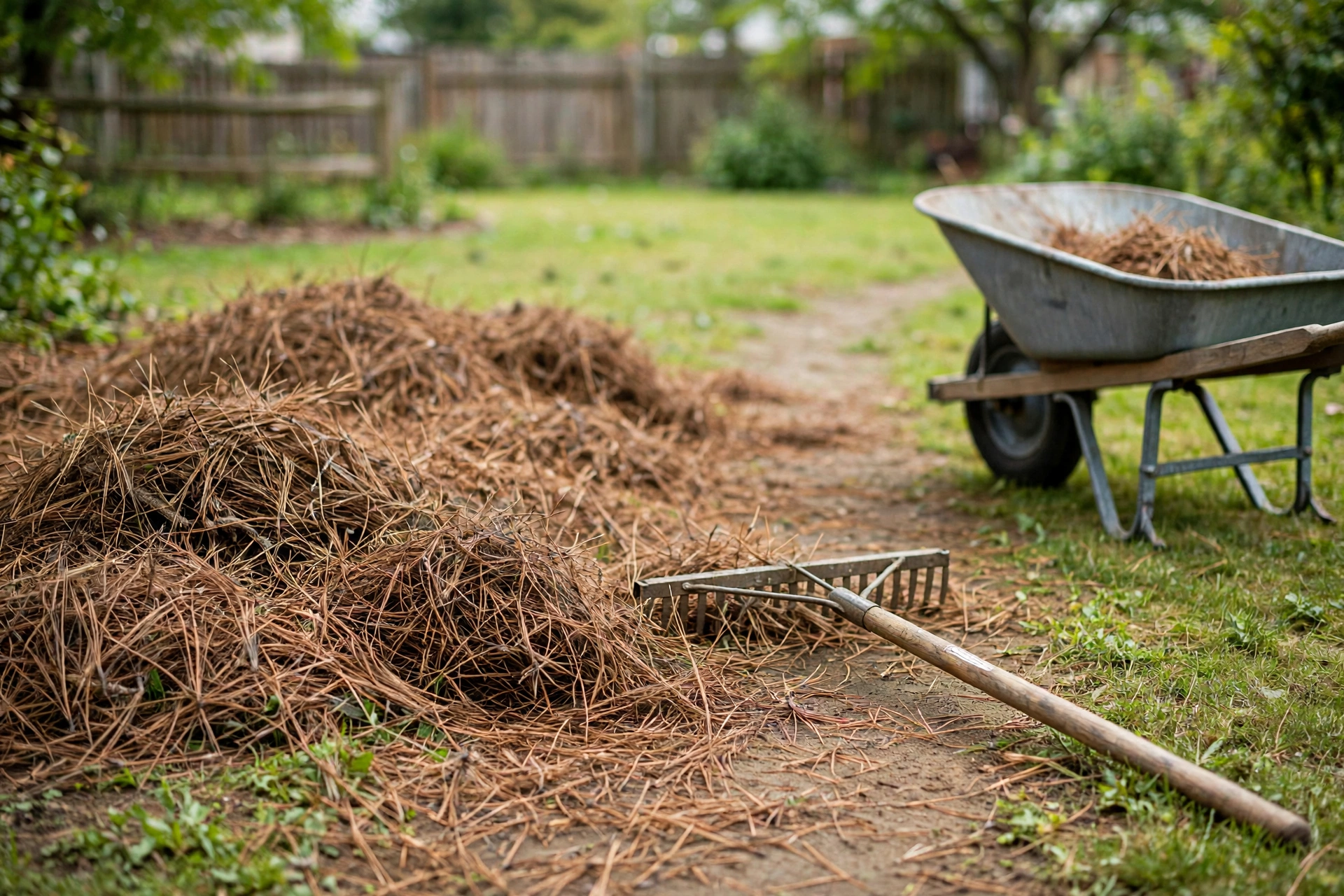
A leaf is a flat sail that folds and shreds. A pine needle is a long, flexible strand, and strands do what strands always do in a spinning machine: they align, they braid, and they wrap. Add moisture and the braid turns to felt, which packs against the impeller and the tube bends instead of passing through. The longest needles are the worst offenders — longleaf pine needles can run past a foot — because a single strand can span the tube and start the plug.
The routine that keeps the tube clear
Vacuum dry, never damp. Wait for a dry afternoon, ideally after a day without rain. Wet needles are the single biggest cause of clogs, and no technique below fixes a load of soaked needles.
Blow the mat loose first. Run the blower across the needle mat before you vacuum, just enough to lift and separate the strands. A loosened mat feeds strand by strand; an intact mat feeds as a sheet, and a sheet is a plug waiting at the first bend.
Take thin passes. Hover the nozzle so it sips at the edge of the drift instead of burying it in the pile. If the motor note drops, back off immediately — that falling note is the sound of a plug forming, and two seconds of patience beats five minutes on your knees.
Empty the bag at half. A bag stuffed full kills airflow, and weak airflow lets needles settle in the tube instead of flying through it. Half-full is the working limit, not a suggestion.
Clear the impeller housing after every session. Open the housing while the machine is unplugged or the battery is out, and pull the wrapped strands off the impeller shaft by hand. The wrap you remove today is the clog that would have stopped you cold next weekend.
The sound of a yard changing
Halfway through a dry pass there is a moment the whole job changes character: the tube stops rattling with whole needles and starts humming with a finer, steadier note, because the mat is gone and the vacuum is sipping the last loose strands straight off the grass. That hum is your signal that the technique is working — chase it, and stop for the day if rain turns the sound back to a rattle and a strain.
When clogging is the machine, not the method
If a vacuum clogs on dry needles in thin passes with a half-empty bag, the impeller is the problem — plastic impellers flex and let strands slip past and wrap, which is why the metal-impeller machines in the roundup mulch needles more reliably. It is also worth knowing when to switch tools entirely: on open lawn with heavy fall, a lawn sweeper beats a vacuum on speed, and the full method comparison lives in the pine needle cleanup guide.
Bottom line
Dry needles, a loosened mat, thin passes, and a half-empty bag — that sequence, in that order, is the whole secret. Do those four things and clogging stops being the machine’s personality and goes back to being what it should be: rare.