The mistake sounds reasonable in the driveway in January: the lawn is dormant, you have time, the thatch is right there — so why not get the dethatching done now and be ahead of spring?
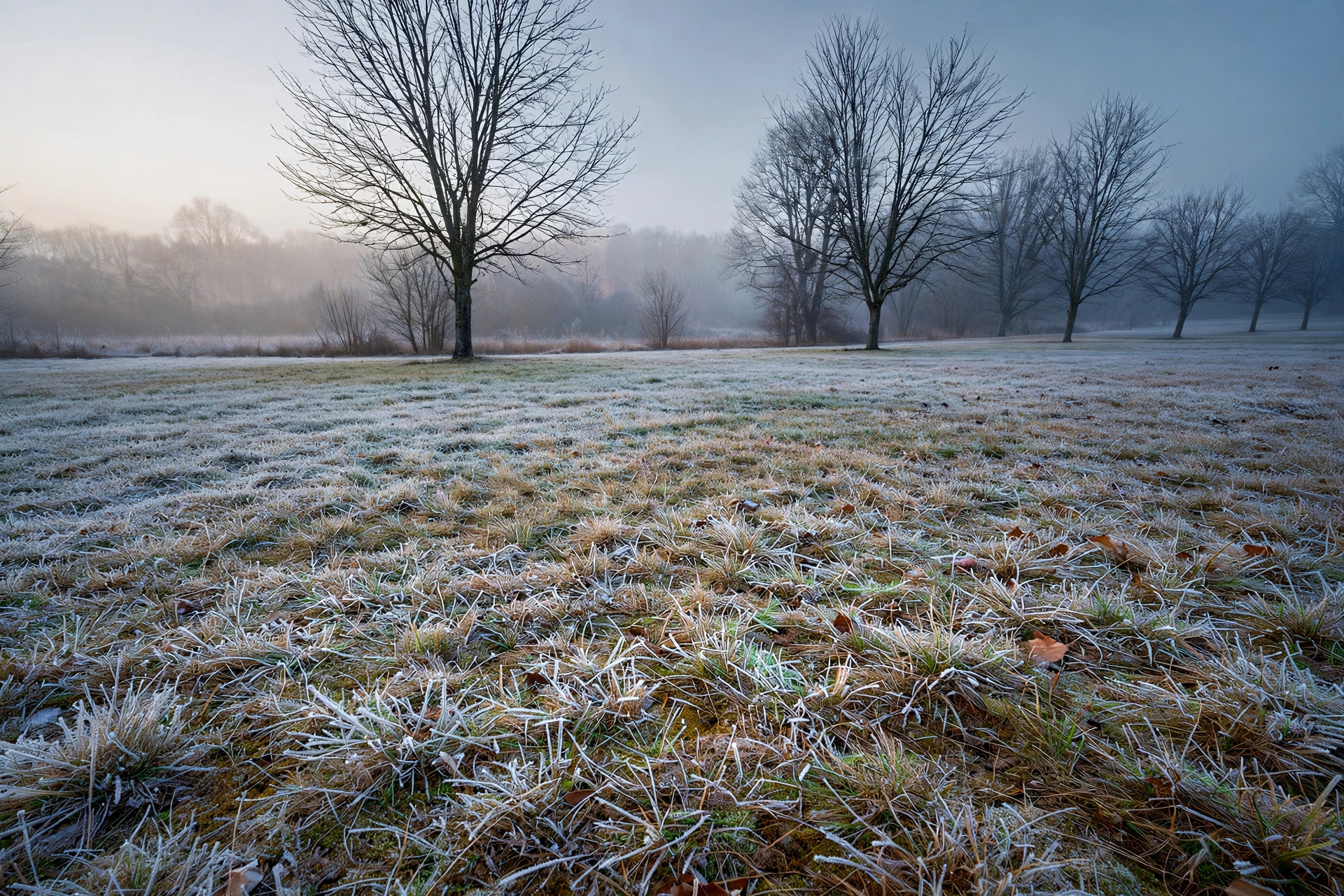
Because dethatching is controlled damage, and damage is only a good idea when the grass can grow back into it. A dethatcher rips and tears the thatch layer out, and it takes living turf with it in the process. In active growth, the lawn repairs that insult in two weeks. In winter dormancy, the repair crew is off until spring, and everything the machine opened up sits exposed to cold, wind, and winter weeds for months.
What winter dethatching actually does to a lawn
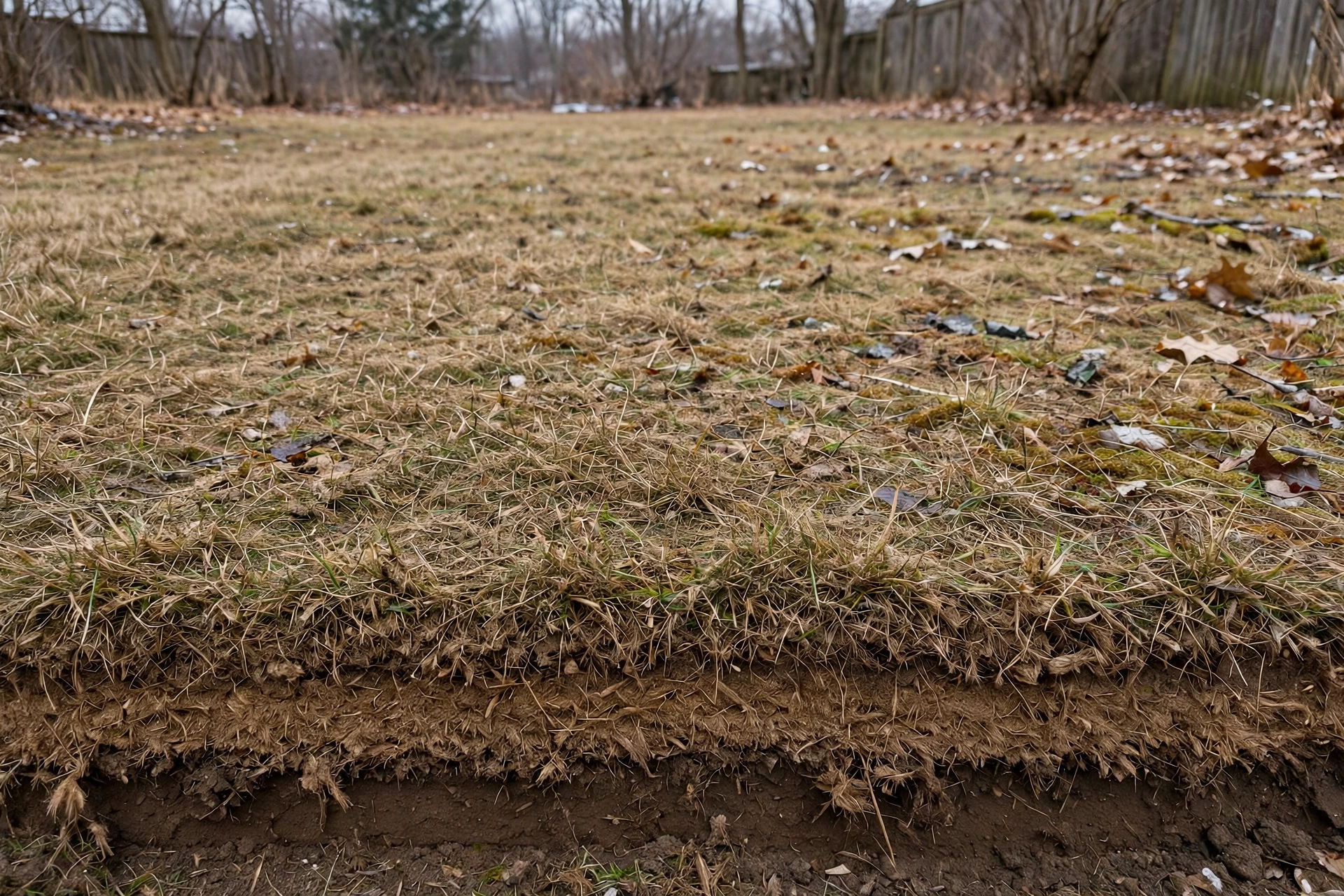
On a cool-season lawn — bluegrass, fescue, ryegrass — winter dethatching tears crowns that cannot regrow until spring, thins the stand right before the hardest weather, and opens bare soil to the winter annual weeds that germinate in every mild spell. The thatch you removed was also insulation; a moderate thatch layer, under about half an inch, is not even a problem worth fixing, and removing it in January trades a cosmetic issue for a recovery problem.
Warm-season lawns get the same verdict for the mirror-image reason. Dormant bermuda and zoysia cannot fill the torn ground until they green up, and scalping down into a dormant warm-season lawn in winter invites the spring weed flush to move into the gaps before the grass wakes up.
The narrow exception
The exception is climate, not enthusiasm: in a genuinely mild-winter region where the grass never fully stops growing — where you are still mowing, however slowly, in January — a light dethatching pass during a mild stretch is ordinary maintenance, because the lawn is in active growth and the rule was never really about the calendar. The rule is about growth. If your lawn is growing, it can recover; if it is dormant, it cannot, and the month on the calendar is just a shorthand for that.
What to do in winter instead
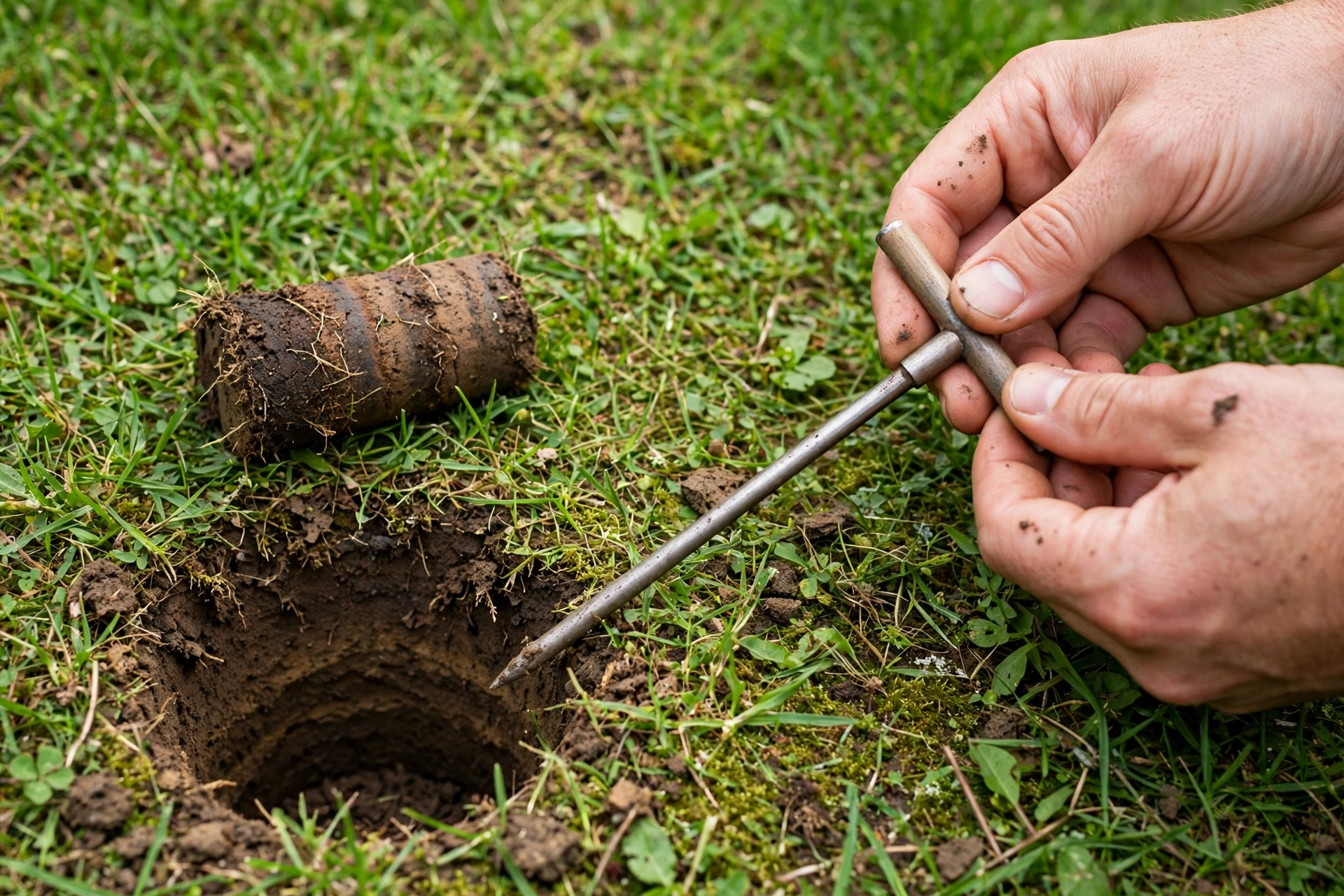
Measure the thatch now. Cut a small plug and measure the brown layer between the blades and the soil. Under half an inch, you do not have a dethatching job at all — you have a spring afternoon back. Over half an inch, you have a real job, booked for the right window.
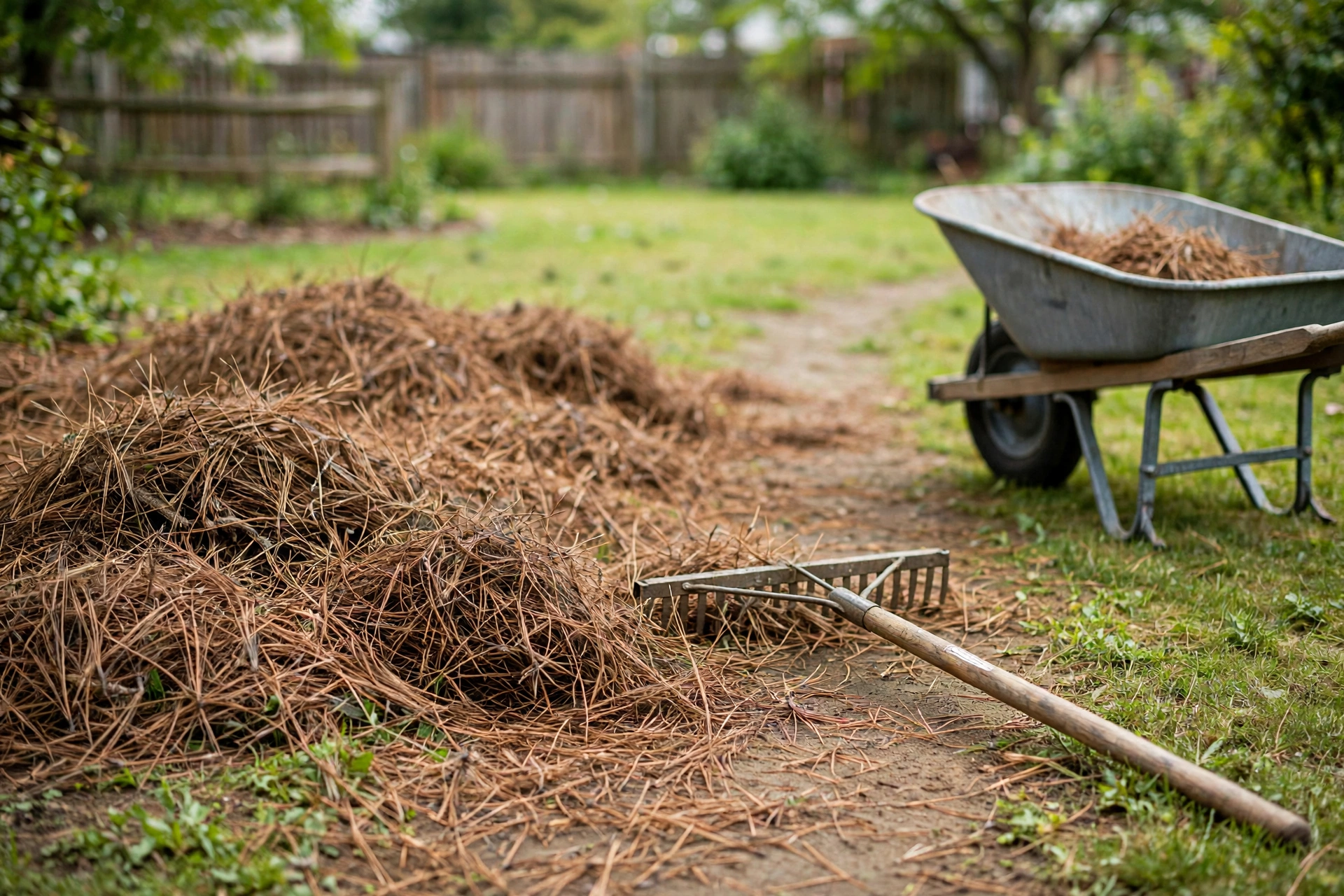
Book the right window. For cool-season lawns, dethatch in early fall — the best recovery window of the year — or in spring once the grass is growing steadily. For warm-season lawns, late spring, after full green-up. The recovery routine afterward is in what to do after dethatching, and if the diagnosis itself is muddy, dethatching, aerating, or both separates the two jobs cleanly.
Service the machine now. Winter is exactly right for the other half of the job: clean the tines, sharpen or replace the worn ones, change the plug, and store the machine ready. There is a bleak comedy in the January garage — the dethatcher serviced, oiled, and eager, pointed at a lawn that wants none of it until September — but that readiness is the correct use of the season. When the window opens, you will be the neighbor who starts on time.
Bottom line
Do not dethatch a dormant lawn. Measure the thatch, service the machine, and put the job on the calendar for the first window when your grass is growing hard enough to heal — early fall for cool-season lawns, late spring for warm-season. The lawn you save will be your own, in April, when the winter-dethatched yards on the street are showing their bare patches.