You open the freezer to good intentions in the shape of a brick: a tub of soup frozen three inches thick in the middle, which will thaw at the edges, sit icy in the center, and reheat in patches no matter how patiently you stir. The soup was fine. The shape was the problem, and shape is the easiest part of freezing to get right.
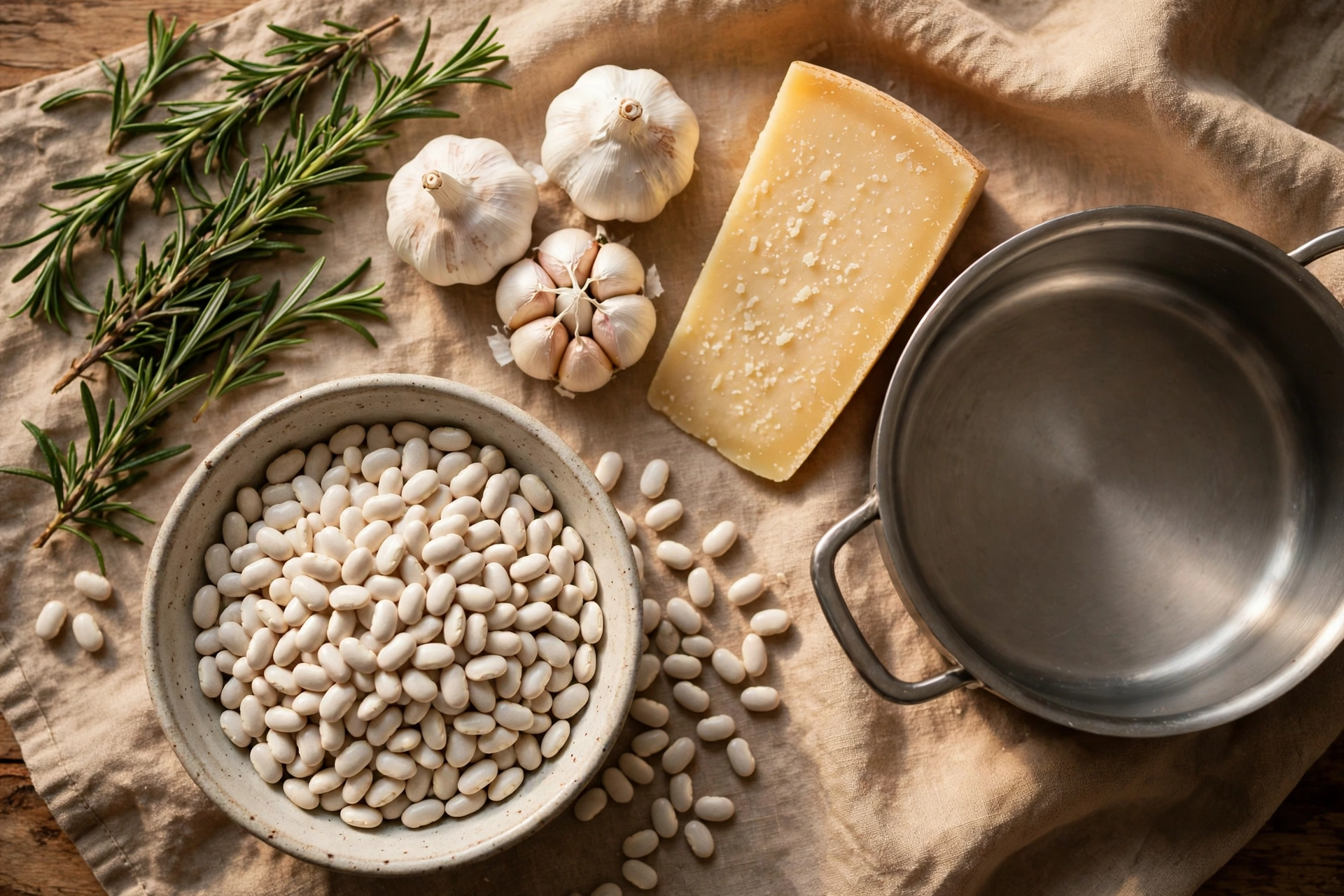
This is the method that makes a frozen soup thaw evenly and reheat like itself, built for the next pot you make — it was written alongside our creamy white bean soup with rosemary and parmesan, which freezes like a dream.
Cool it fast, and cool it safely
Soup goes into the freezer cold, never hot. A hot container warms its neighbors and freezes slowly from the outside in, which is how you get a thick, icy center in the first place. Cool the pot quickly by setting it in a sink of cold water, or divide the soup into shallow containers so it chills faster, and get it refrigerated within 2 hours of cooking. Once it is cold all the way through, it is ready to portion.
Portion flat — this is the whole trick
Choose portions you will actually use. One- to two-cup portions thaw for a lunch; quart portions thaw for a family supper. Freezing in the size you serve means nothing gets thawed twice.
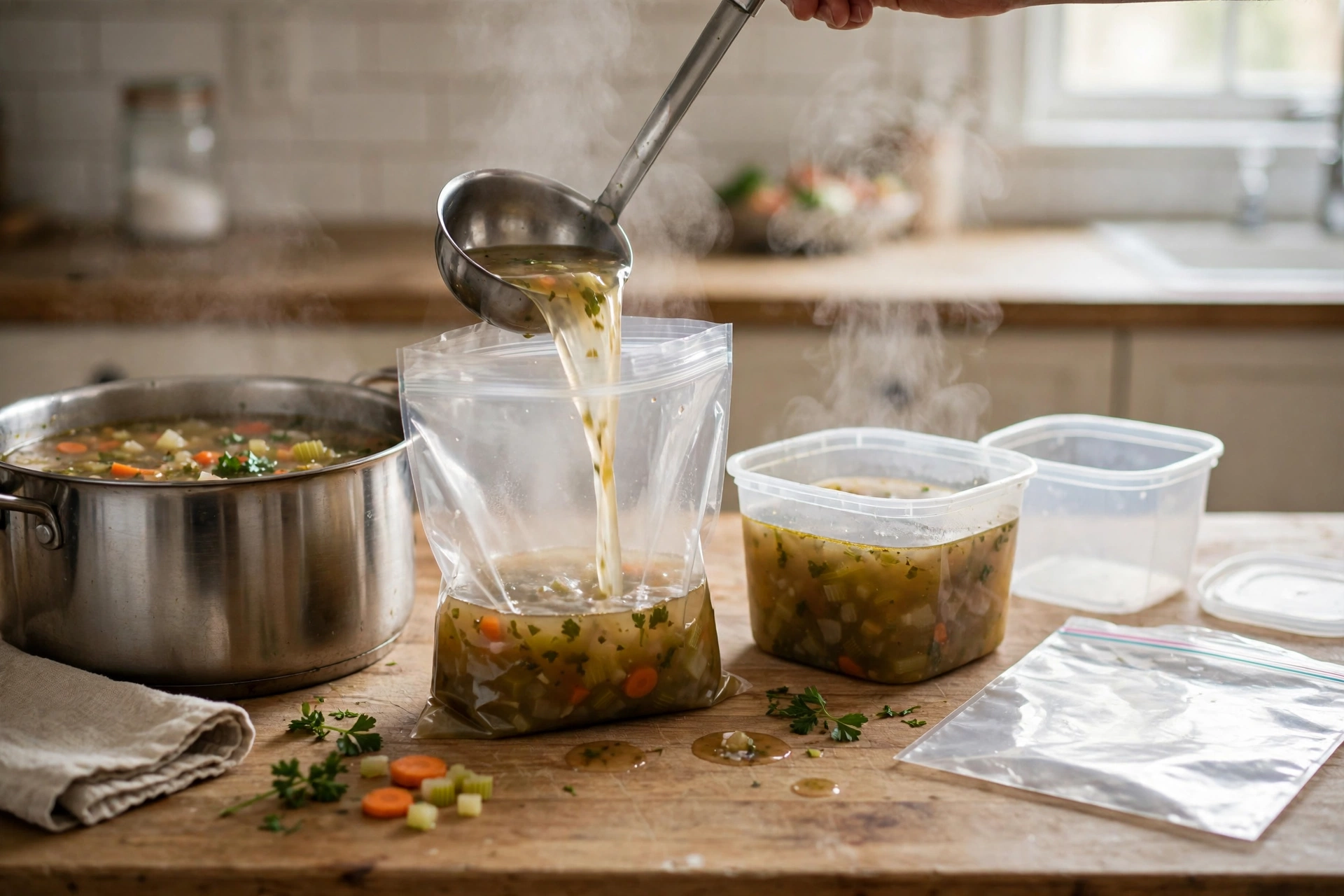
Use freezer bags for the flattest freeze. Ladle the cold soup into a zip-top freezer bag, press out the air, seal, and lay it flat on a sheet pan. A bag frozen flat is about an inch thick everywhere, so it thaws at one even pace instead of edges-first. Once the bags are solid, stack them or file them upright like books.
Leave headspace in rigid containers. Soup expands as it freezes, so leave about 1 inch of space at the top of any tub or jar, or the lid lifts and the seal fails. Straight-sided containers freeze and release most cleanly.
Label before you forget. Name, date, and anything to add at serving — a squeeze of lemon, fresh herbs, a swirl of cream. Future you, standing at the freezer in February, will be grateful for the handwriting.
How long it keeps
Frozen soup holds its best quality for 2 to 3 months at 0°F or below. It remains safe well beyond that, but flavor and texture fade, beans go a little grainy, and herbs darken, so eat the oldest portions first and let the label dates run the order.
A mid-freezer check helps here: bags filed upright in a row, oldest at the front, turn the freezer from an archive into a menu. On a busy night you can see the whole soup drawer at a glance, flat and labeled, and dinner chooses itself.
Thawing, three honest ways
The refrigerator, overnight. The gentlest thaw and the best texture. A flat bag needs roughly 8 to 12 hours; move it at breakfast for supper, or the night before for lunch.
Cold water, for tonight. Set the sealed bag in a bowl of cold water and change the water every 30 minutes. A flat portion thaws in about an hour this way — one more reason the flat freeze wins, since a thick tub takes most of the evening.
Straight into the pot. A frozen flat portion slides out of its bag into a pot over low heat with a splash of water, and melts evenly as you stir now and then. Reheat soup to a gentle simmer and serve it hot through, at 165°F.
What to hold back before freezing
A few ingredients are better added fresh at reheating. Pasta and rice drink up broth and go soft in the freezer, so freeze the soup without them and cook them while it reheats. Dairy can separate, so soups built on beans or broth freeze best as they are, with cream stirred in at the end if the recipe wants it. Delicate herbs lose their brightness; add those fresh too.
Freeze it flat, label it honestly, and thaw it whole. Do that, and the soup you pull out in a month is the soup you were proud of today, ready at one even pace.