This post contains affiliate links. If you buy through them, we may earn a commission at no extra cost to you.
Your kitchen reads 65 degrees, the bowl is on the counter, and the dough just sits there — an hour in, barely changed, while the rest of dinner plans itself around bread that may never rise. A cold kitchen does not ruin yeast dough. It slows it, predictably, and once you know the temperatures involved, you can put the warmth where the dough is instead of heating the whole house for a bowl.
This is the method to reach for any time a recipe says “let rise in a warm spot” and your house declines to provide one. It was written for enriched doughs like our pumpkin dinner rolls with honey butter, but it works for any yeast dough you bake between now and spring.
The temperatures that run the rise
Yeast works fastest in warmth, and dough temperature is the number that matters — not the thermostat across the room. Around 75 to 78°F is the reliable target for most yeast doughs, and enriched doughs, the ones carrying butter, eggs, and sugar, do well a touch warmer, 78 to 82°F. At those temperatures a first rise lands close to the time a recipe states.
Below about 60°F, fermentation nearly stalls. That single fact explains the 65°F kitchen: at 65 degrees the yeast is awake but working slowly, and a rise written for 90 minutes can stretch to double or triple that without anything being wrong with your dough, your yeast, or you. The fix is warmth at the bowl, applied steadily, not a blast of heat.
Start warm before the dough even exists. Mix with liquid at 105 to 110°F, which feels warm to the wrist without stinging, and the dough begins its life a few degrees ahead. Respect the ceiling, though: water over 130°F kills yeast outright, and a dough that never rises at all, in any corner, is usually a dough whose liquid started too hot.
Five warm spots that actually work
The oven, off, with hot water. Set a pan of just-boiled water on the lower rack, put the covered bowl on the rack above it, and close the door. The steam warms the box and keeps the dough’s surface from drying. For a long rise, swap in fresh hot water when the first pan cools.
The oven with only the light on. An oven light gives off gentle, steady heat, and in many ovens it holds the interior right in the proofing range. Check yours before trusting it — some lights run hot enough to overshoot.
The microwave, off, after heating water. Heat a cup of water in the microwave until it steams, then set the bowl inside beside the cup and close the door, microwave off. It is a small, insulated, steamy box that holds warmth well.
The top of the refrigerator. The fridge sheds heat upward as it runs, and the top of it is often the warmest flat surface in the kitchen. It is a slow, mild warmth — good for doughs you are not in a hurry about.
A cooler with a jar of hot water. Set the bowl in a cooler beside a sealed jar of hot water and close the lid. The cooler insulates in both directions, so the warmth stays with the dough instead of drifting into the room.
The one tool that settles arguments
Every warm spot above is a guess until you measure something, and the thing worth measuring is temperature — the liquid before it meets the flour, and the dough itself when a rise seems stalled. A fast instant-read thermometer turns “warm spot” from a hope into a number, and it earns its drawer space here more honestly than it does poking at a roast twice a year.
ThermoPro TP03H Digital Meat Thermometer
Reads in seconds, so checking 105-110°F mixing liquid and dough temperature mid-rise takes no time at all.
Use it at the start, on the liquid, and again if a rise stalls: if the dough itself reads under 70°F, move the bowl to a warmer spot rather than adding time in a cold one. Temperature first, patience second.
Judge the dough, not the clock
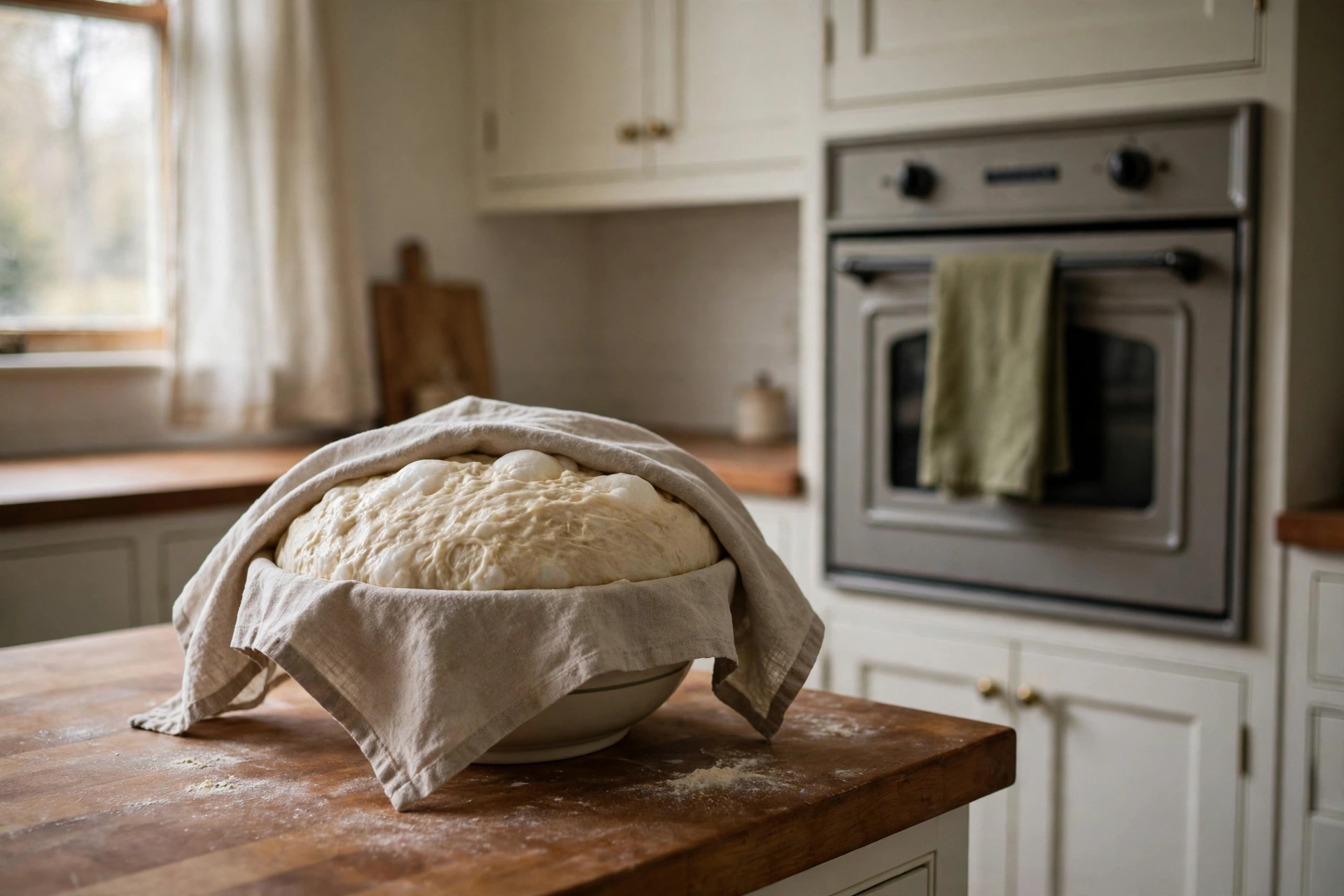
Recipe rise times assume a warm kitchen, so in a cold one the clock is the least reliable tool you own. The dough tells you where it stands, in two ways. The first is volume: a finished first rise has doubled, which is easier to judge if you mark the dough’s starting level on the outside of the bowl with a piece of tape or a dry-erase line.
The second is the poke test, and it settles most arguments. Press a floured finger about 1/2 inch into the dough and watch the dent. If it springs back at once, the dough needs more time; if it holds the dent completely and the dough sighs, it has gone too far; when the first rise is done, the dent springs back slowly and leaves a slight mark behind. Slow spring, slight dent — that is the dough saying it is ready to shape.
Picture it on a real morning: the bowl comes out of the steamy oven box, the cover peels back with a soft sigh of warm, yeasty air, and the surface is domed and smooth as a drum skin. That dome, plus the slow-springing dent, is worth more than any timer — especially when the kitchen window is fogged and the radiator ticks in the next room.
Cold is a tool, too
A slow rise is not only a problem to fix. Cold stretches fermentation out, and a longer, slower ferment builds flavor that a fast, warm rise cannot match, which is why so many good breads are mixed the day before they are baked. If your schedule suits it better than your kitchen does, let the cold work for you on purpose.
Shaped rolls are the easiest place to use it: pan them, cover the pan well, and let them wait in the refrigerator overnight, up to about 24 hours, then bake them the next day, letting the pan warm at room temperature while the oven heats. The rolls come out with a deeper flavor and a morning that starts with the oven instead of the mixing bowl.
Warm the bowl, measure the dough, and trust the poke over the clock. Do that, and a 65-degree kitchen stops being an obstacle and becomes a setting you can use.