Landscape & Leisure is reader-supported. When you buy through links on our site, including Botanical Interests seed links, we may earn a commission at no extra cost to you. Prices change, so click through to confirm current pricing.
Late winter is artichoke season, which surprises people. The buds will not be ready until high summer, but the seed has to start now. A plant that needs 150 to 180 days cannot be an afterthought in May — and I say that as someone who has tried to make it one.
That long runway is the whole decision. If your garden can give one big, silvery plant four feet of room and a season that starts indoors in winter, an artichoke repays you with buds you will never find this fresh at a store. If it cannot, the packet is better left on the rack — and this page will tell you that plainly too.
Our growing artichokes from seed guide walks through the indoor start, the cold treatment, and the harvest. If your beds sit in a cold climate, our annuals vs. perennials comparison settles how to run the plant where you live, and artichokes also earn a place in our best perennial edibles for northern gardens roundup.
One Variety, Chosen Well
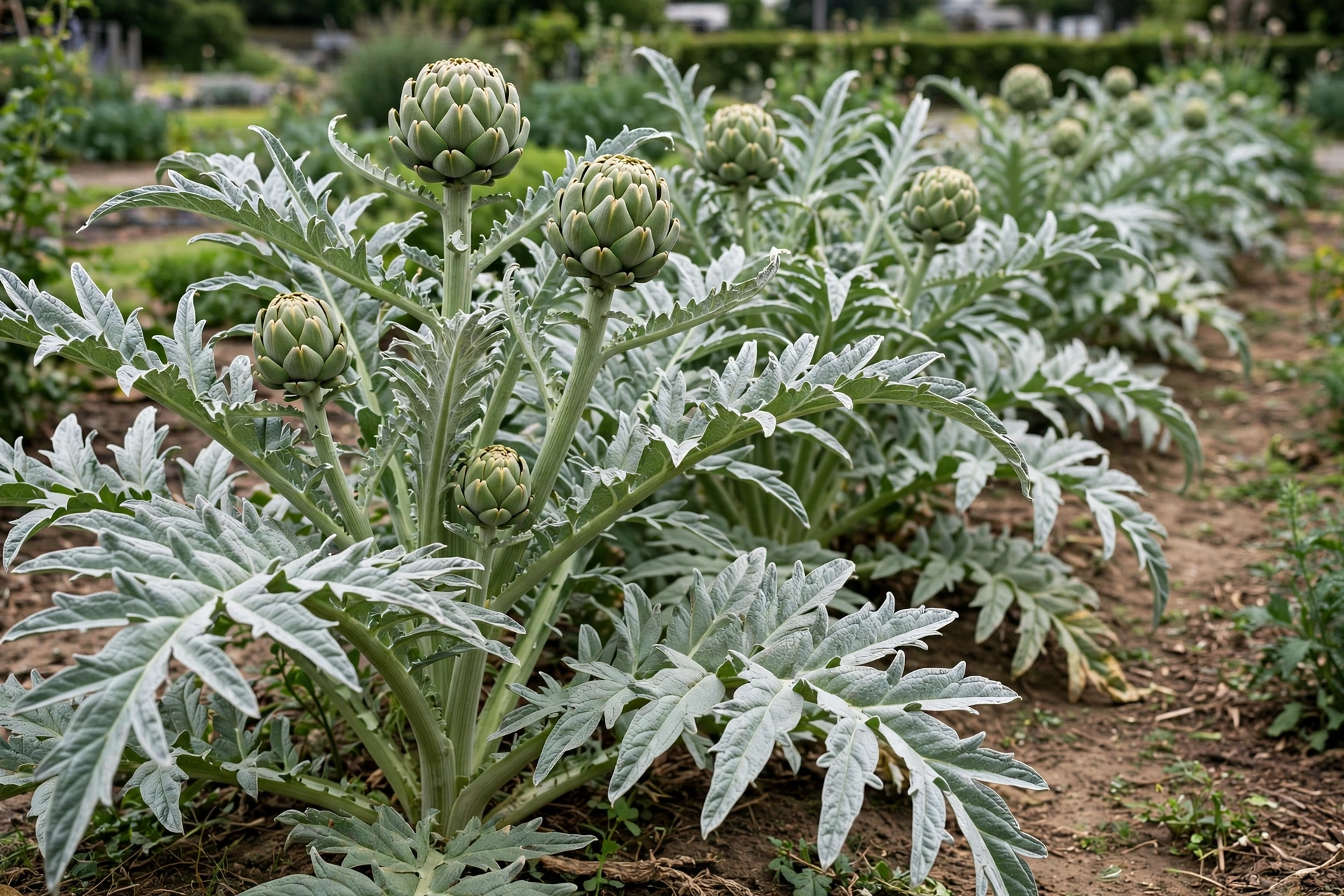
Botanical Interests carries exactly one globe artichoke variety: Green Globe Improved. That is not a limitation to apologize for. It is the standard globe type — an improvement of the 1863 heirloom ‘Green Globe’ with more uniform plant size, reduced spines, and better production.
What varies is not the packet but the plan around it. Grown as a perennial in zones 7–10, this plant settles in and produces for years. Grown as an annual farther north, it needs an early indoor start and a stretch of cool weather as a young seedling, to bud in its first year. The seed is the same. The calendar is what changes.

| Type | Days to maturity | Hardiness | Buds per plant | Sold by Botanical Interests? |
|---|---|---|---|---|
| Green Globe Improved | 150–180 days | Perennial, zones 7–10 | 3–5 in the first year | Yes — the pick below |
| Purple globe types | Varies by variety | Perennial in mild climates | Varies | No |
| Jerusalem artichoke (sunchoke) | Grown for tubers, not buds | Very hardy perennial | None — a different plant | No |
Best Overall: Green Globe Improved Artichoke
Plant this one. The buds are dark green with a slightly purple base, heavy-bearing, and nearly spineless — which matters more than it sounds when you are reaching into a big plant with a knife. Gardeners rate it 4.5 out of 5 from 23 reviews, and the packet is $2.99 for about 18 seeds.
The honest trade-off is space and time. Each plant wants a spot four feet across, with rows six feet apart, and the 150 to 180 days to maturity means the seed starts indoors about 12 weeks before your average last frost. One packet sows up to 18 feet of row, so a single packet covers a small planting generously.
Harvest is the pleasure of the whole enterprise. Cut the central bud first, while it is still tightly closed, with two inches of stem below it. After that, the side shoots produce smaller buds that cook up as a delicacy in their own right. And let one bud go, just once: the plant rewards you with a bright purple thistle flower that stops people on the path.
Pros: the standard globe type, improved for uniform size and fewer spines; 3 to 5 buds per plant in the first year; perennial in zones 7–10; $2.99 packet sows up to 18 feet.
Cons: 150 to 180 days is one of the longest seasons in the vegetable garden; each plant needs four feet of room; in cold climates it will not survive winter outdoors.
Green Globe Improved Artichoke Seeds
The one globe artichoke to grow from seed — heavy buds, few spines, perennial in zones 7–10.
The Setup That Makes It Work: Epic 6-Cell Seed Starting Trays
An artichoke seedling spends about 12 weeks indoors, which is a long tenancy for a paper pot. These trays are built for exactly that kind of stay — sturdy recycled plastic, air-pruning slots, and finger holes for pushing the root ball out clean at transplant time.
Twelve of these 6-cell trays fit one standard 1020 bottom tray, so a flat of artichoke starts sits neatly on one shelf under lights. At $19.99, rated 4.9 out of 5 from 579 reviews, they are the buy-once part of this project.
Pros: holds up through a long indoor start; air-pruning slots keep roots from circling; fits standard 1020 trays.
Cons: more tray than a two-plant planting strictly needs — the extras earn their keep on the rest of the spring bench.
Epic 6-Cell Seed Starting Trays
Sturdy trays that hold a seedling comfortably through a 12-week indoor start.
Worth Adding: Seed Starting Heat Mat
Artichoke seed germinates best in soil at 70° to 80°F, and takes about 14 days to emerge even then. A cool winter windowsill will stretch that wait and thin the stand — a poor start for a plant that needs every week it can get.
This mat raises soil temperature 10 to 20 degrees above the room, fits any 1020 tray, and runs a simple on/off — no thermostat, no timer. It is $29.99, rated 4.7 out of 5 from 50 reviews, and it comes off the bench the moment the seedlings are up.
Pros: holds the 70° to 80°F germination window in a cold room; sized for a standard 1020 tray.
Cons: no thermostat, so check the trays daily in a warm room; only earns its place during germination.
Seed Starting Heat Mat
Steady bottom heat for the 70° to 80°F soil artichoke seed wants to sprout.
For Tight Gardens: Epic Grow Bags, Lined
Four feet of bed is a real ask in a small garden. A 15-gallon lined grow bag gives one artichoke plant its own footprint — on a patio, at the end of a path — and the liner holds moisture through hot weeks while the fabric still air-prunes the roots.
The bags run $29.99 to $42.99 by size and are rated 4.7 out of 5 from 193 reviews. In a cold climate the bag has one more virtue: it can be dragged under cover for the first hard frosts, while you decide whether this plant earns a second year.
Pros: a full-size plant without giving up bed space; liner slows drying in summer heat; movable when frost threatens.
Cons: a bag plant drinks more often than a bed plant; one plant per 15-gallon bag, so a row gets expensive.
Epic Grow Bags – Lined
A 15-gallon home for one big artichoke plant where bed space is spoken for.
What to Skip
Skip anything labeled Jerusalem artichoke if buds are what you want. Despite the name, the sunchoke is a sunflower relative grown for knobby tubers — it will never give you a globe to steam, and Botanical Interests does not sell it as one. The same caution applies in the seed catalog to Sicilian Artichoke garlic, which is a fine garlic and not an artichoke at all.
Skip the packet, too, if your season is short and your springs are busy. A plant that needs a winter start, a cold spell as a seedling, and four feet of ground will punish a late beginning with leaves and no buds. Grow it when you can give it the calendar it asks for, and it is one of the most satisfying plants in the garden.
Bottom Line
Order Green Globe Improved. Start it indoors in late winter, on steady heat, and give each plant its four feet. In zones 7–10 it stays and produces for years; everywhere else, treat it as the grand annual it can be, with the cold treatment our growing guide lays out. One variety, grown on time, beats a shelf of packets started late.