Fifty-eight days. That is the gap between Dickinson, North Dakota, at 129 frost-free days, and Burlington, Iowa, at 187 — two stations in the same four-state region, reading the same NOAA 1991–2020 normals.
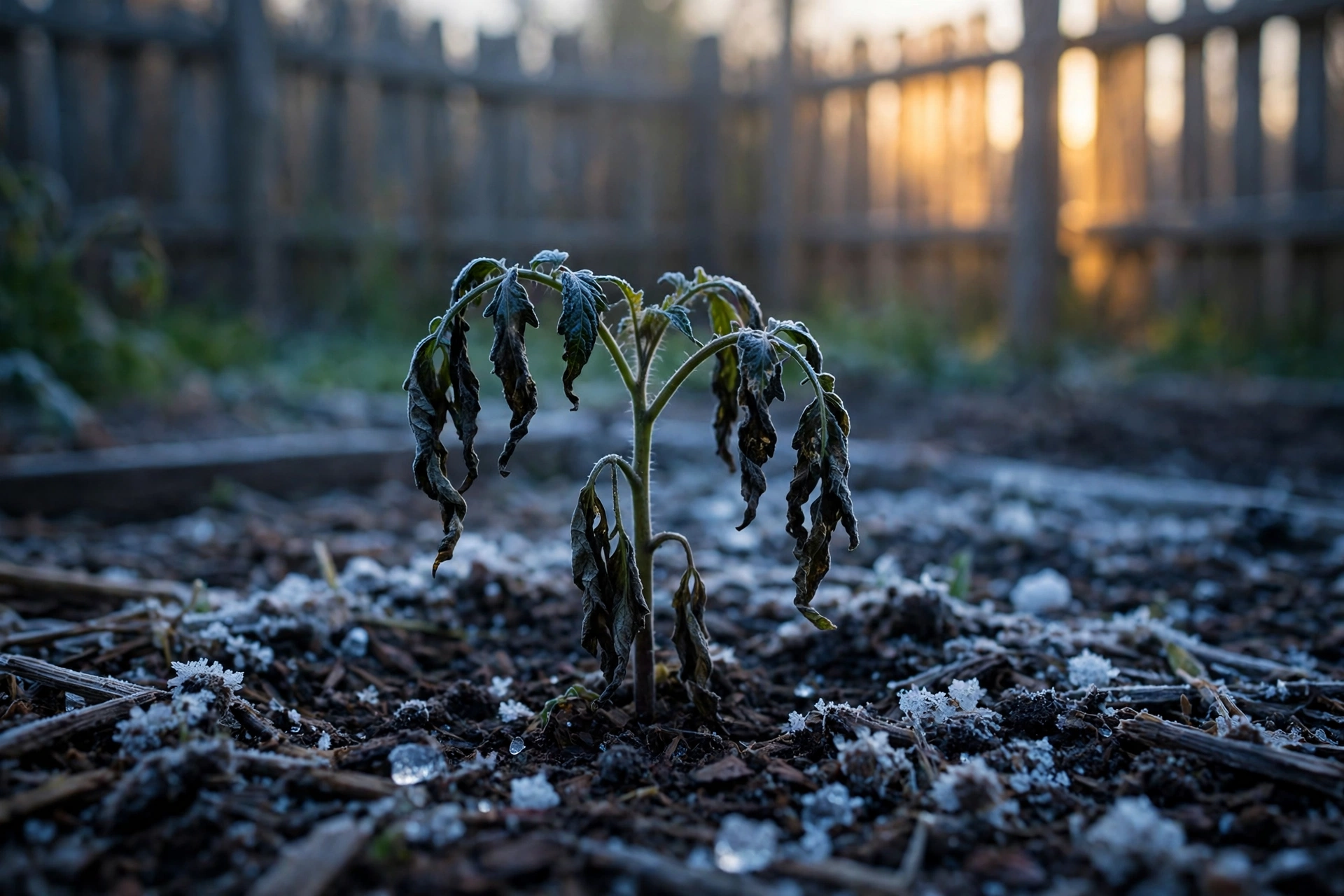
A national planting chart has to pick one date anyway. Follow a date written for Iowa in a North Dakota garden and the first fall frost arrives before the tomatoes finish. Follow a northern date in the South and the lettuce and peas meet June heat they were never timed for.
Each calendar here is built for one state only, from that state’s land-grant Extension schedule, anchored to NOAA frost dates at stations inside the state. Find your state, open its calendar, and plant on dates measured for your ground.
How a state calendar earns its dates
Every date on these calendars is arithmetic from three numbers: the average last spring frost, the average first fall frost, and the days to maturity on the seed packet. Indoor-start dates are counted back from the last frost. Direct-sow dates are counted forward, with soil temperature given the final say.
That average last frost date is a probability, not a promise. NOAA’s 50% figure means frost is as likely as not to come after it in any given year, which is why what an average last frost really means matters before you bet a flat of tomatoes on it.
The counting itself — how a packet’s days-to-maturity figure becomes a sowing date on a calendar — is laid out in how planting calendars work. Four state calendars are live today. New states will be added here as their calendars are published.
South
The South plants twice. Spring comes early enough that tomatoes can be in the ground while the Midwest is still starting seed indoors, and a second, fall season opens in late summer for the cool-season crops that bolted in the June heat.
The timing problem here is heat, not frost. Lettuce, spinach, and peas are scheduled backward from the hot months, and warm-season crops are scheduled against a fall frost that, in the Deep South, may not arrive until November or later.
Alabama, Arkansas, Florida, Georgia, Kentucky, Louisiana, Mississippi, North Carolina, South Carolina, Tennessee, Virginia, West Virginia.
Southwest
Frost sets only part of this calendar. In the desert Southwest, summer heat and water decide as much as winter cold, and elevation splits every state in two — the low desert plants on one schedule, the high country weeks later on another.
Arizona, New Mexico, Oklahoma, Texas.
West
Elevation rewrites the dates inside a single state line. A California garden on the coast and a Colorado garden at altitude can sit six weeks apart in spring, and Montana’s season is shorter than either.
California, Colorado, Montana, Nevada, Utah, Wyoming.
Midwest
This is where the calendars started — and where the case for publishing them state by state, rather than as one regional schedule, is easiest to see. The four live calendars are compared side by side in the Midwest planting calendars hub.
Iowa. One statewide chart from Iowa State Extension, dated for central Iowa and shifted about a week earlier in the south and a week later in the north, with 43 crops and a second season in July. Open the Iowa planting calendar.
Minnesota. Three frost bands, north to south, with planting windows from University of Minnesota Extension for 25 crops. Open the Minnesota planting calendar.
North Dakota. No statewide sowing schedule exists, so this calendar plants by soil temperature instead, with NOAA frost dates as guardrails. Open the North Dakota planting calendar.
South Dakota. One statewide table from SDSU Extension, read against the South Dakota Mesonet’s frost maps so the dates land on your location. Open the South Dakota planting calendar.
Also in this region: Illinois, Indiana, Kansas, Michigan, Missouri, Nebraska, Ohio, Wisconsin.
Northeast
Moderate seasons with sharp local edits. The Great Lakes hold spring back along their shores, the Atlantic softens the coast, and northern New England plants on a schedule closer to Minnesota’s than to New Jersey’s.
Connecticut, Delaware, Maine, Maryland, Massachusetts, New Hampshire, New Jersey, New York, Pennsylvania, Rhode Island, Vermont.
Pacific Northwest
Two climates share each state name here. West of the Cascades, mild winters and cool summers stretch the season for greens and peas. East of the range, high desert cold shortens it again, and the frost dates — not the state line — tell you which garden you have.
Idaho, Oregon, Washington.
Alaska and Hawaii
The two calendars that break the pattern entirely. Alaska plants against daylight as much as temperature, in a short season that runs nearly around the clock in June. Hawaii has no frost dates to anchor to at all — elevation and rainfall do the work that frost does everywhere else.
Alaska, Hawaii.
Start with the state, not the chart. The 58 days between Dickinson and Burlington sit inside one region of one country — a gardener in either place, planting on the other place’s dates, loses most of a season to a number that was never theirs.
Sources
- Frost dates: NOAA National Centers for Environmental Information, U.S. Climate Normals, 1991–2020 — 50%-probability, 32°F freeze dates at stations inside each state, as published on each state calendar.
- Planting schedules: each state’s land-grant Extension service, cited in full on its own calendar — Iowa State Extension (Iowa), University of Minnesota Extension (Minnesota), NDSU Extension (North Dakota), and SDSU Extension (South Dakota) for the four live calendars.
- Hardiness zones: USDA Plant Hardiness Zone Map. Zones measure winter cold for perennials; the frost dates on each calendar decide vegetable timing.