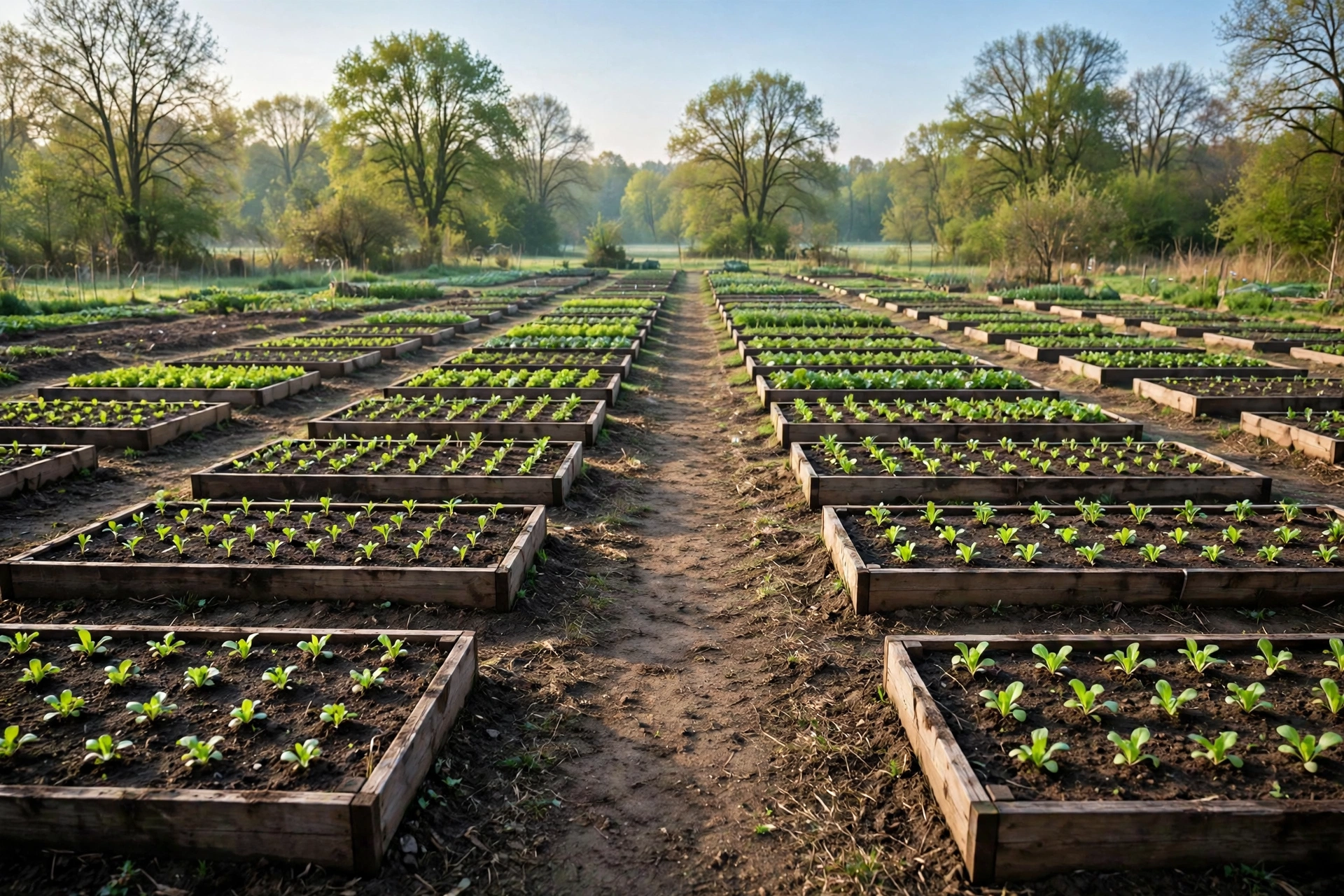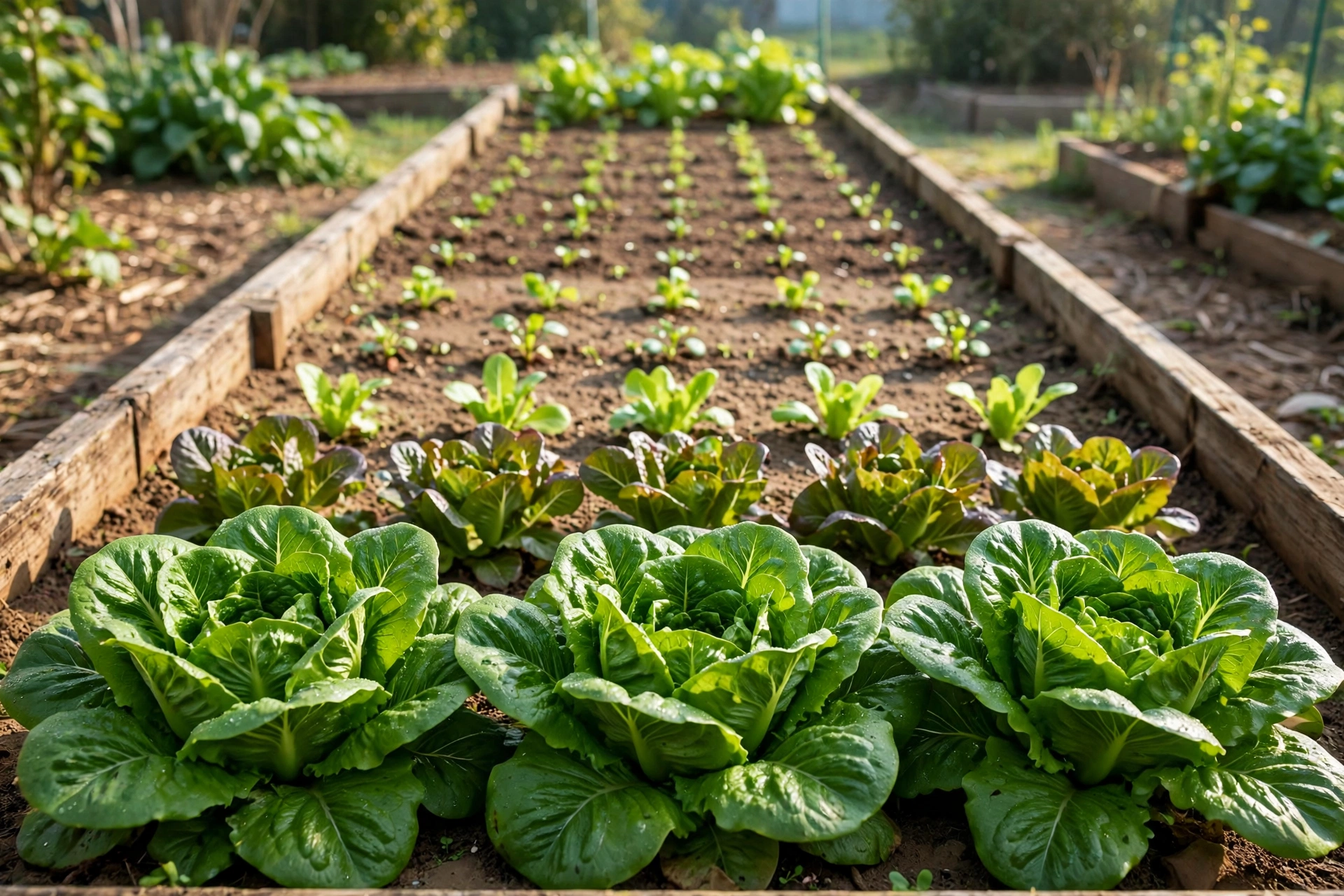
Every lettuce plant in the bed is ready the same week. You eat salad until you’re tired of it. You give heads away to neighbors, who are also tired of it. The rest bolts in the heat. And then, for the rest of the summer, you buy lettuce at the store — from the garden that produced too much of it.
The garden didn’t fail. It produced plenty. It just produced all of it at once. Succession planting is the fix, and it is embarrassingly simple: instead of sowing a crop once, you sow a little of it again and again through its season. Each small planting matures as the previous one finishes. The harvest becomes a stream instead of a flood, and the same bed yields more food you actually eat. It is the single habit that separates gardens that feed people all season from gardens that feed them for three frantic weeks and then quit.
Sow in waves: the interval method
The basic move is to plant a portion of the crop every week or two rather than the whole row at once. Cornell Cooperative Extension gives the working example: plant lettuce every 10 to 14 days into early summer, and when you finish harvesting the first planting, the next one is ready. University of Georgia and University of Missouri Extension both land on the same default. About two weeks is a sound interval for most crops.
Fast crops want shorter intervals. Slow crops want longer ones. The commonly published Extension intervals:
| Crop | Sow again every |
|---|---|
| Radishes | 7 to 10 days |
| Leaf lettuce | 10 to 14 days |
| Spinach (spring and fall) | 7 to 14 days |
| Cilantro | 2 to 3 weeks |
| Bush beans | 10 to 14 days |
| Sweet corn | 10 to 14 days |
| Beets | 2 weeks |
| Carrots | 2 to 3 weeks |
| Cucumbers | 2 to 3 weeks |
| Summer squash | About once a month |
The logic under the numbers is plain: the interval should roughly match how long the crop stays good in the ground. A radish is prime for about a week before it turns woody, so a fresh sowing every week or so keeps prime radishes coming. A zucchini plant produces for weeks, so one new plant a month is plenty. For most households, honestly, it’s generous.
Stagger the varieties instead
There is a second way to spread a harvest that requires no repeat sowing at all: plant varieties of the same crop with different days to maturity, all on the same day. Cornell’s tomato example is the cleanest version. Early Girl at 56 days. Cherokee Purple at 72. Beefsteak at 85. The Early Girls finish as the Cherokee Purples come on, and the Beefsteaks carry the end of the season.
This works best for crops you plant once as transplants — tomatoes, peppers, melons, winter squash. It’s the succession habit for gardeners who know perfectly well they will not remember to sow every two weeks. There is no shame in designing around your own follow-through. There’s shame only in designing against it, every spring, and being surprised.
Let one crop hand the bed to the next
The third form of succession uses different crops in sequence on the same ground. Cool-season crops finish early and leave the bed empty by June. That space can carry a warm-season crop through the summer — and when that fades, cool-season crops come back for fall. Cornell describes the full rotation: spinach and peas replaced by tomatoes and beans, then kale, radishes, and beets returning as the weather cools.
University of Maryland Extension’s example beds run three crops a year through one space. Lettuce in spring, green beans in summer, broccoli for fall in one. Peas, then summer squash, then kale in another. In a small garden, this relay is worth more than any fertilizer decision you will make all year. The bed is never idle. Idle beds are where garden space goes to waste.
Your state planting calendar is built for exactly this: its spring and fall windows for the same crop are the two ends of the relay, with the summer crop in between.
Know when to stop
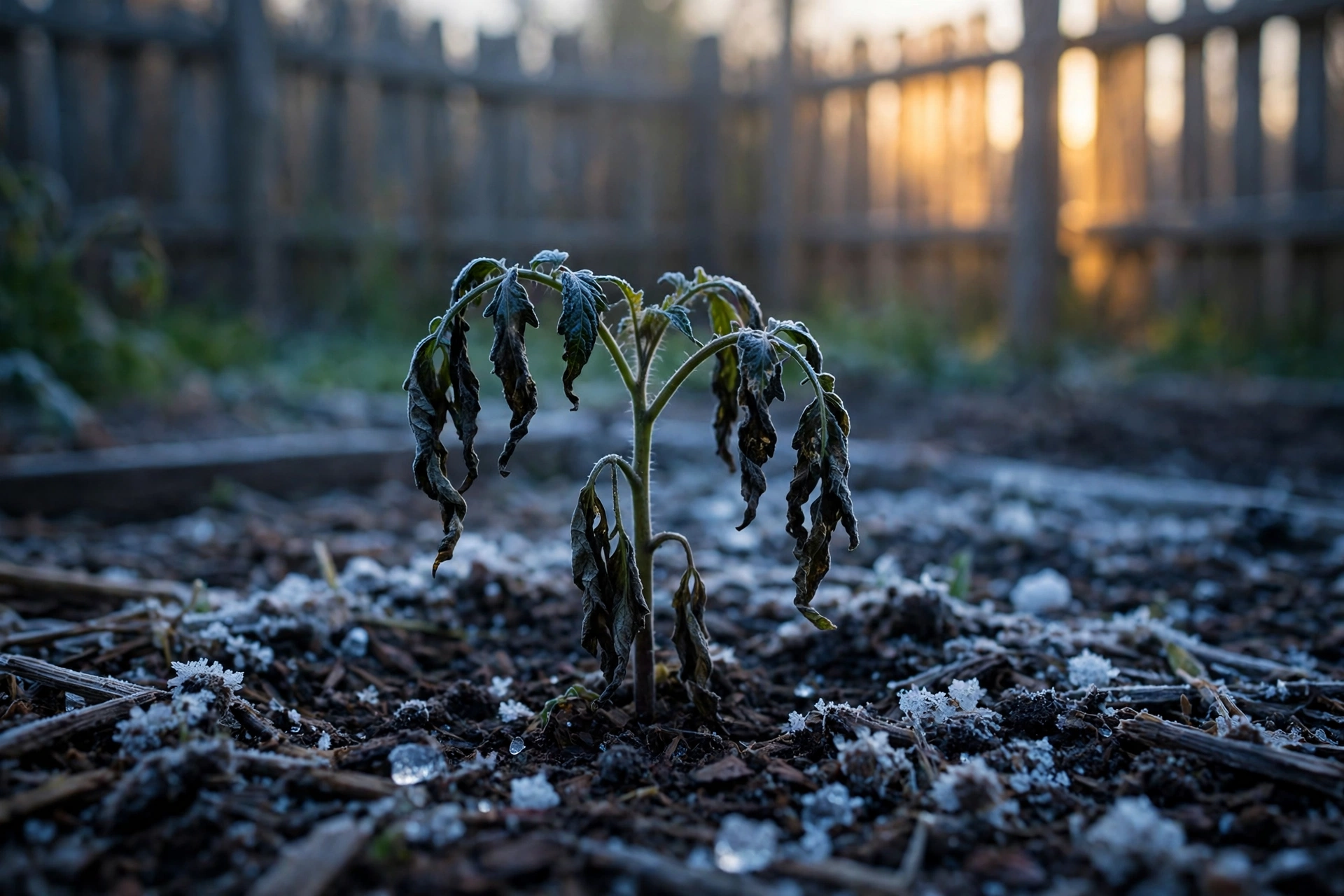
Every succession has a last sowing, and it is set by arithmetic, not enthusiasm. First fall frost minus the crop’s days to maturity, minus a cushion. Cornell Cooperative Extension flags the reason for the cushion: as fall brings shorter and cooler days, plants take longer to mature than the days printed on the packet. A bean that matures in 55 days in June may need 65 in September.
Worked once. With a first frost of October 21 and a 55-day bush bean, the packet math says you could sow until late August. With the fall slowdown priced in, the honest last sowing is mid-August. Sowings after that are not succession planting. They are compost ingredients with extra steps. How planting calendars work walks through the counting in full, and what happens if you plant too late covers the fall end of the same trap.
Keep the waves small, and write them down
The most common succession failure is sowing too much each time. A wave should be roughly what your household eats in the interval before the next wave lands — for lettuce, a few feet of row. Not the whole packet. University of Maryland Extension frames it as dividing the space you want for the crop and planting one portion every two weeks. Small waves forgive mistakes, too: a sowing that fails to germinate costs you a week of harvest, not the crop.
And keep a record. Even a rough one. Cornell’s closing advice is a garden journal or a plain calendar with sowing dates and expected harvests marked, and it is not clerical fussiness — succession planting runs on dates. What went in when. When the next wave is due. Nobody’s memory holds a season of two-week intervals accurately, including yours, including mine. The gardeners who make it work are not more disciplined than you. They just wrote it down.
Sources
- Cornell Cooperative Extension, Orleans County — Succession Planting: Get the Most Out of Your Garden (interval planting, variety staggering, crop relays, slower fall maturity).
- University of Maryland Extension — Vegetable Succession and Companion Planting (portion planting at two-week intervals; three-season bed plans).
- University of Georgia Extension; University of Missouri Extension — succession planting guidance (two-week default interval).
- University of Kentucky Extension — succession planting intervals by crop.
- NOAA National Centers for Environmental Information — U.S. Climate Normals, 1991–2020 (first frost dates used in cutoff arithmetic).