The mistake that ruins phyllo happens before the first sheet is ever brushed with butter: the stack sits uncovered on the counter while the cook does everything else first.
Phyllo dough is rolled so thin that an uncovered sheet starts drying at the edges within minutes, and a dried sheet does not bend, it shatters. Every torn, cracked, frustrating phyllo experience traces back to that exposure, which means the fix is not better hands. It is a better setup. If you are making the cranberry brie bites in phyllo cups or any layered pastry, this is the setup that keeps the sheets workable from the first one to the last.
Start With the Thaw
Frozen phyllo needs patience before it needs anything else. Thaw the sealed package in the refrigerator overnight, then let it sit, still sealed, at room temperature for about 2 hours before you open it. Those are the package directions on standard brands, and they exist because cold sheets crack when unrolled and warm, damp sheets stick together.
Never thaw phyllo in a microwave or under warm water to save time. The edges cook slightly, the middle stays frozen, and the stack comes apart in strips instead of sheets.
The Damp Towel Is the Whole System
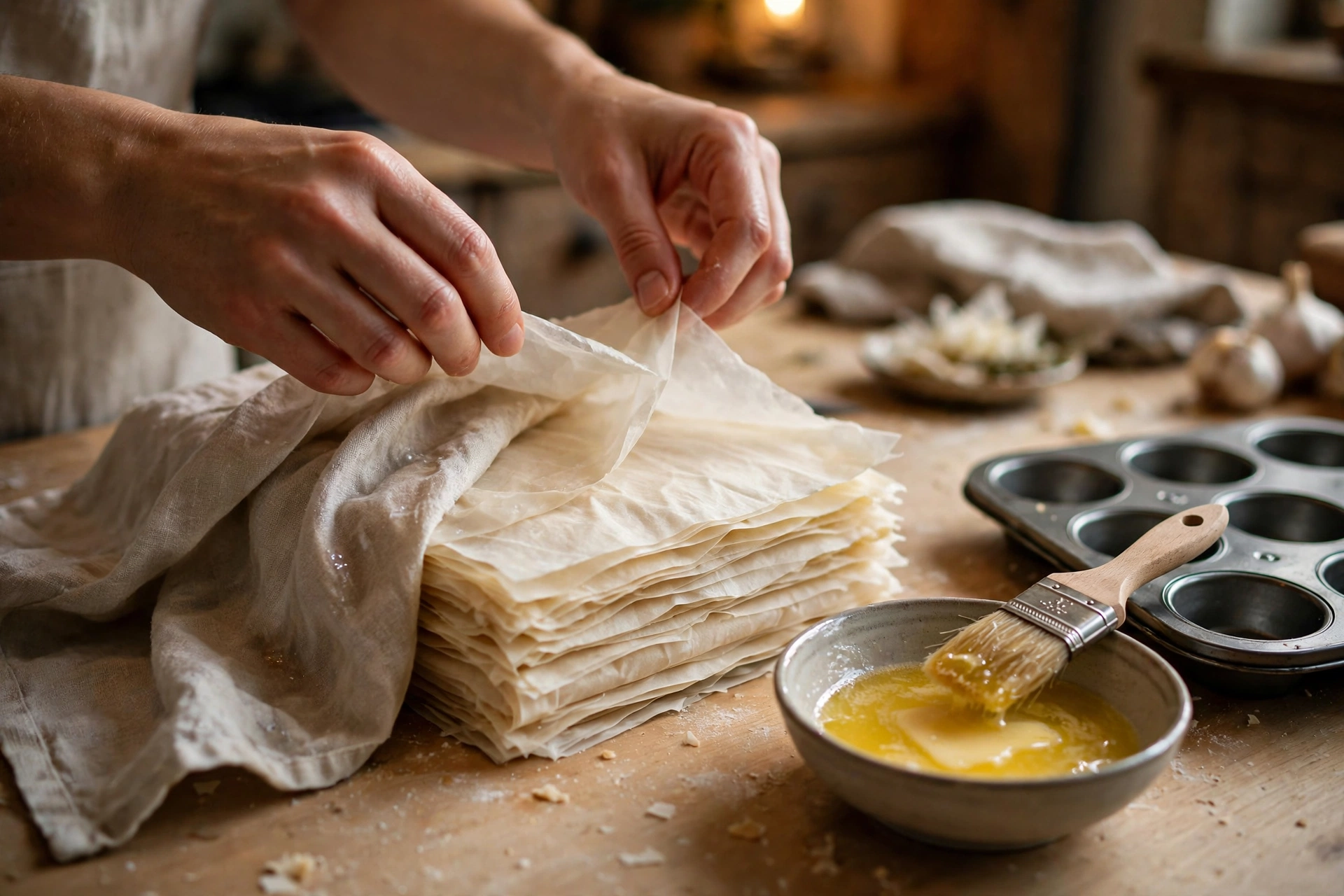
Unroll the stack onto a clean, dry surface and cover it immediately with a sheet of plastic wrap, then a kitchen towel that is damp, not wet. Wring the towel out hard. A dripping towel soaks the top sheets into paste, which is the opposite failure from drying and just as fatal.
Work from under that cover for the entire recipe. Lift the towel, take one sheet, cover the stack again, then brush and fill the sheet you took. The rhythm feels fussy for the first three sheets and automatic by the sixth, and the stack stays supple the whole way through. The brush moving across a covered, orderly counter, with the butter staying warm and the stack staying put, is what phyllo work is supposed to feel like: unhurried, because nothing is drying out while you think.
Butter Is Both Flavor and Glue
Brush each sheet with melted butter, oil, or a mix of the two, covering the whole surface lightly rather than flooding the middle. The fat does three jobs: it flavors the layer, it keeps the layers separate so they bake into distinct crisp sheets, and it seals the sheet’s surface against the air for the minute it sits exposed.
Use a soft pastry brush and a light hand. A stiff brush or a heavy press tears a sheet that a soft brush glides over. If a recipe stacks several sheets, a tear in one layer is covered by the next, so keep going rather than starting the stack over.
When a Sheet Tears Anyway
Patch it. Phyllo is the most forgiving dough in the freezer case once you know that a torn sheet can be mended with a scrap of another sheet brushed with butter, and that a layer with a hole disappears entirely once the layer above it goes on.
What cannot be rescued is a dried-out stack. Sheets that crack into shards when you lift them have lost their moisture for good, and no amount of butter brushed on top puts it back. That is a setup failure, not a dough failure, and it is prevented at the towel stage, not fixed at the tearing stage.
Storing What Is Left
Unused sheets go back in their plastic sleeve, rolled rather than folded, sealed tightly, and into the refrigerator for a few days or the freezer for longer. Label the package with the date you opened it. Refrozen phyllo is more fragile than fresh-thawed, so plan to use a refrozen package for crumbled toppings and rustic, layered dishes rather than anything that needs perfect whole sheets.
The Rule to Keep
Cover the stack, take one sheet, cover it again. Phyllo does not need talent or speed; it needs to never sit in open air. Set up the towel before you melt the butter, and the dough will behave for as long as the recipe asks it to.