Winter leaves a lawn looking decided, and mostly it is lying. The brown, matted, thin-looking turf of late winter is dormant or battered, rarely dead — and the season frame matters because nearly every recovery mistake comes from acting in February on a lawn that needed March patience and April food.
What helps is a sequence, not a product: clear, check, feed lightly, and let growth itself deliver the verdict.
Clear the winter off it
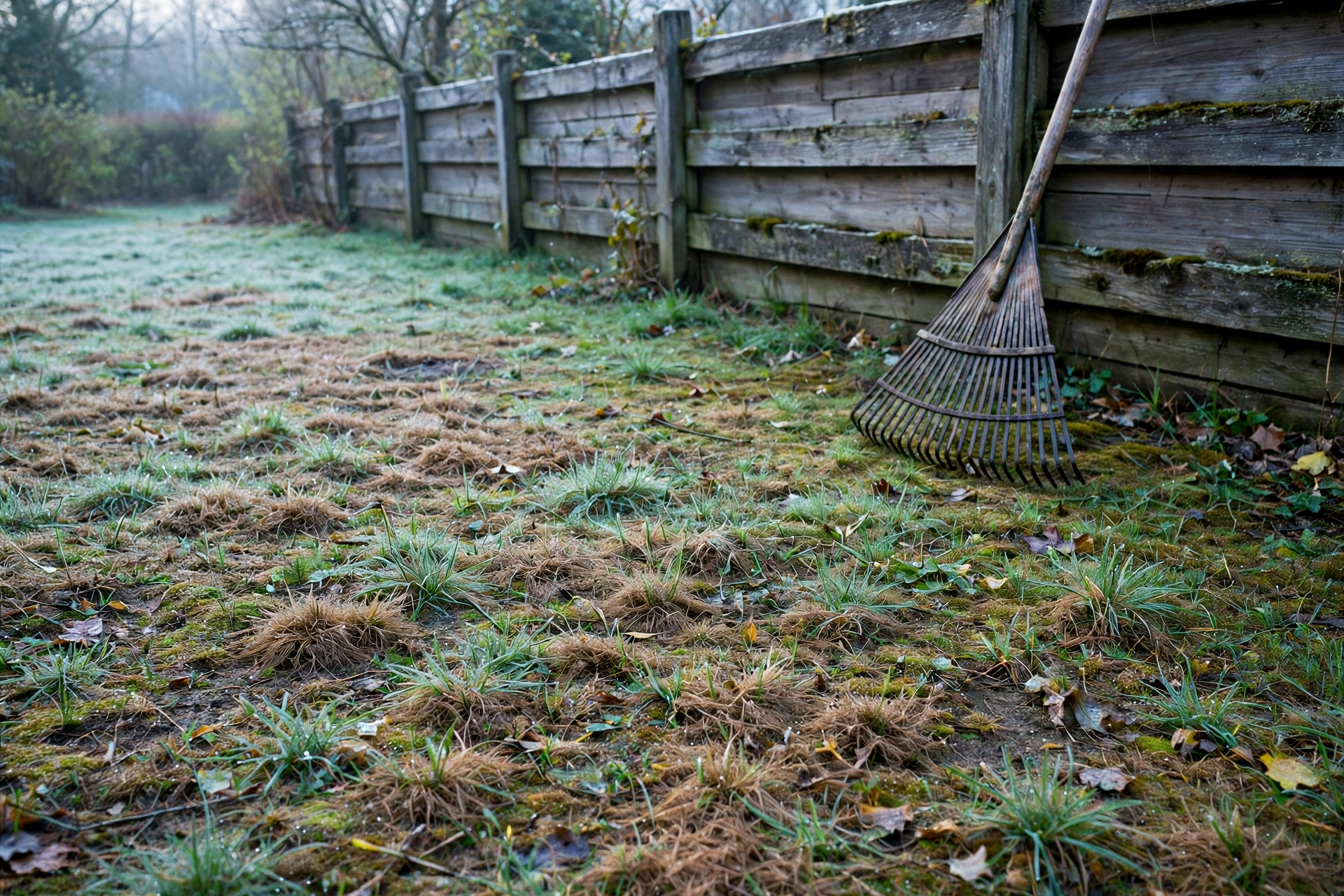
Rake out matted leaves and thatch-like debris once the ground is firm enough to walk without leaving prints. Matted grass under wet leaves is where snow mold shows first — gray or pinkish circles that need air more than they need treatment.
Fluff the matted patches with a leaf rake so the crowns dry. Most snow mold damage grows out in spring without fungicide.
Check before you seed
Scratch the brown patches. Green or pale crowns at the base mean the plant is alive and will green up with warmth; a patch that pulls up like a loose rug, roots gone, is genuinely dead.
Seeding dead patches works once soil warms — for cool-season grass, seed germinates as soil temperatures pass roughly 50 degrees Fahrenheit. Seed spread on cold soil mostly feeds birds and weeds.
Feed and mow by growth, not by date
A light spring feeding once the lawn is actively growing supports recovery; a heavy early dose pushes soft growth and invites disease. The first mow waits until the grass is growing and a cut leaves it at about 3 inches.
There is a particular morning in this stretch when the yard smells like thawed soil and cut stems from last year crunch underfoot — that is the lawn asking for the rake, not the spreader. The spreader’s turn comes weeks later.
Bottom line
Rake it clear, check the crowns before buying seed, and feed only once growth is real. Most winter-battered lawns recover on that alone.