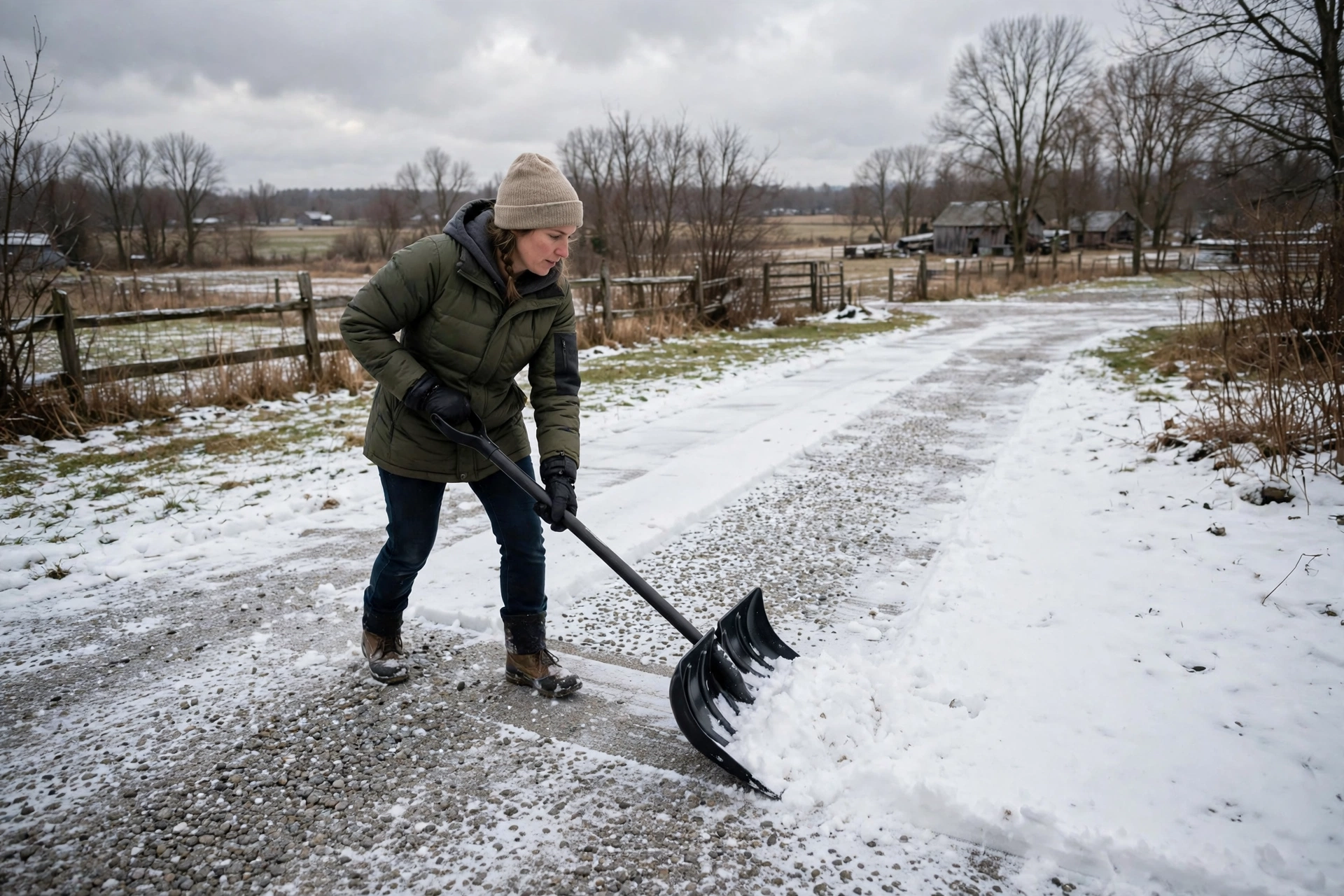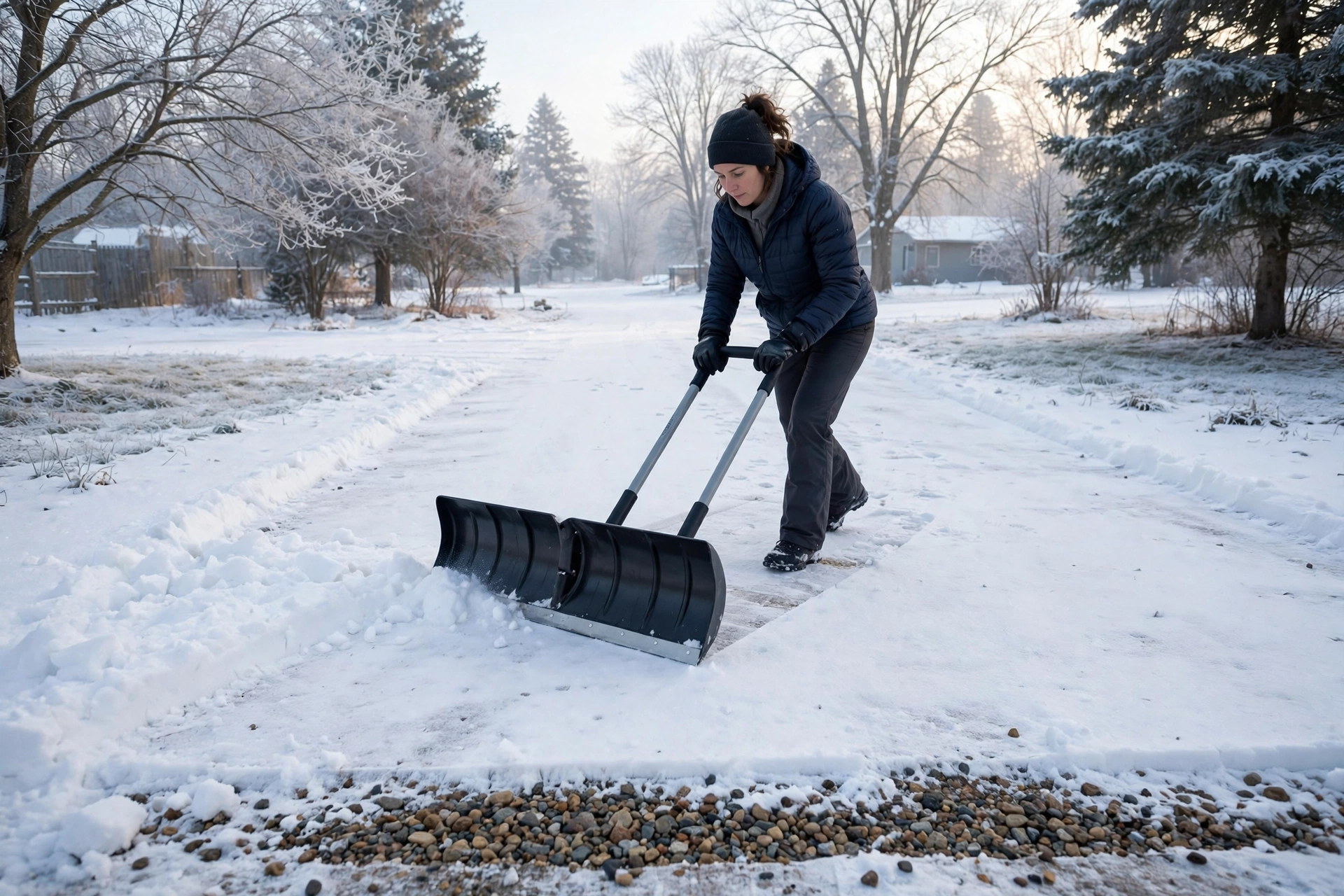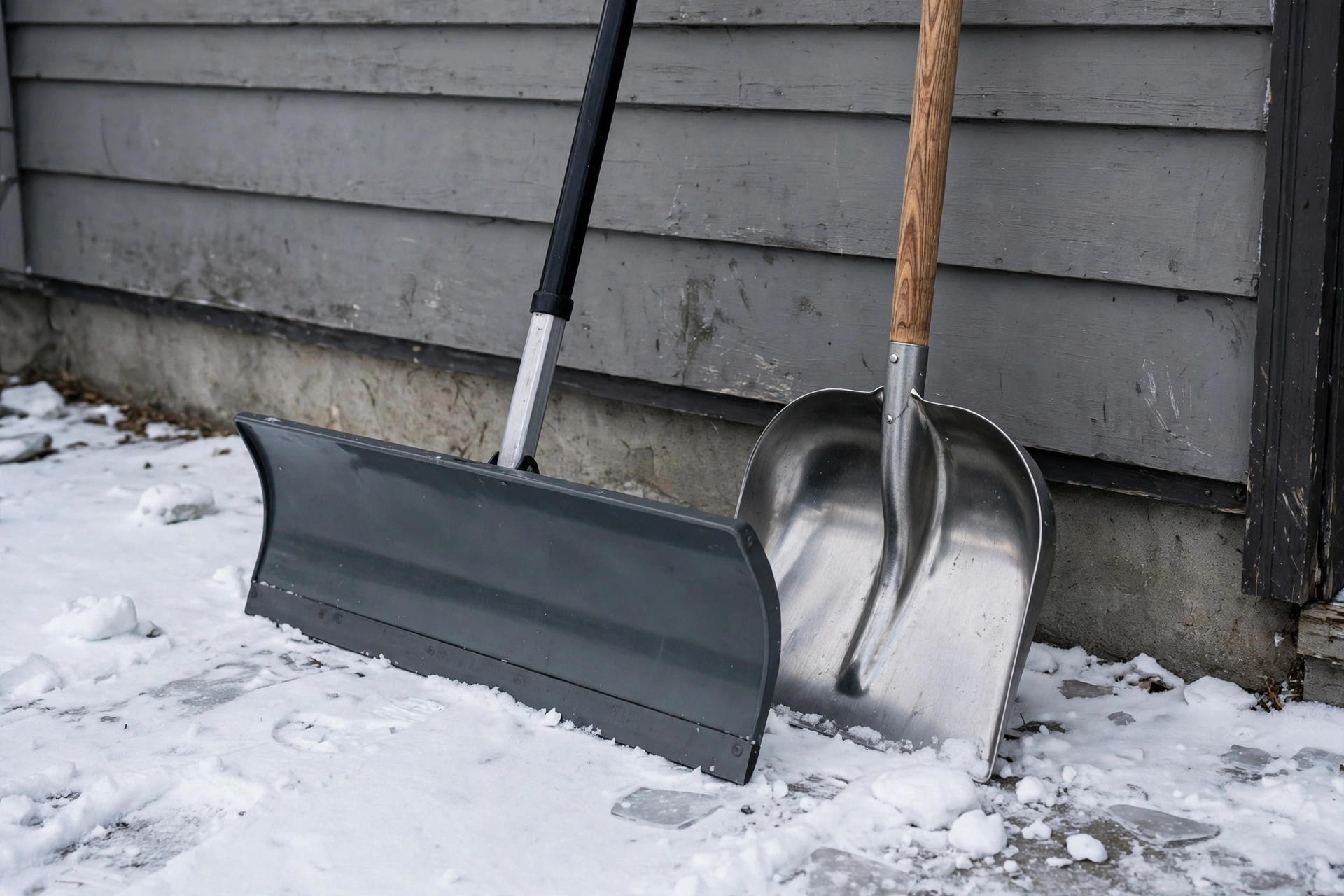
A snow pusher moves snow sideways in a rolling wave and never leaves the ground. A snow shovel scoops, lifts, and throws — and on gravel, every one of those throws carries stone with it.
That contrast decides most gravel driveways before price or brand enters the picture. What remains is matching the tool to the layout you actually have.
What each tool does well
The pusher wins on long, flat runs: wide blade, no lifting, no stone in the load. A 30- to 36-inch pusher clears a double-width gravel drive in a handful of passes.
The shovel wins where snow must go up and over something — steps, a porch, a banked edge, the plow ridge at the road.
Where each one fails
A pusher cannot lift, so a deep, wet drift stops it cold. Forcing it just bends handles and tempers.
A shovel on gravel digs in. Its edge catches stone, its scoop throws the driveway surface, and a season of it leaves ruts and thin spots.
The two-tool answer most gravel homes land on
Most gravel driveways end up with both: a wide poly pusher as the main tool, and one lift shovel for steps and ridges. The pusher does 90 percent of the work.
Blade material matters more than the label on the handle — polyethylene or polycarbonate over gravel, never a bare steel edge. The picks are in Best Snow Shovels for Gravel Driveways, and the technique is in How to Clear a Gravel Driveway Without Throwing Stone.
Bottom line
Buy the pusher first. Buy the shovel second, only for the spots that force you to lift.