The most common mistake with a compacted lawn is reaching for a spike roller or a pair of aerator shoes and calling the job done. Spikes push soil sideways and pack it tighter around each hole, so ground that was already hard ends up harder.
A lawn worn thin along the driveway, the gate, and the path to the shed does not need more fertilizer poured on sealed soil. It needs soil physically removed, in cores, so air and water can reach the roots again — and that only works when timing, moisture, and depth are right.
First, Confirm Compaction Is the Problem
Thin grass alone does not prove compaction: shade, shallow watering, and thatch also thin a lawn, and aerating for the wrong problem wastes a rental.
The screwdriver test. Push a long screwdriver straight into moist soil in several spots, including a high-traffic area and a protected corner near a fence. In loose soil it slides in several inches with steady hand pressure.
If it stops within the first 1 to 2 inches in damp soil, that spot is compacted. Test moist soil only, because parched ground resists a screwdriver whether it is compacted or not.
Water behavior. Water that pools or runs off toward the street after a modest rain points to sealed soil. Healthy soil takes water in; compacted soil sheds it.
Growth pattern. Grass that stays thin along walkways and mower turning points, while growing thicker in low-traffic corners, fits the pattern, because roots in packed soil stay shallow and wilt first in a dry stretch. For a fuller walk-through, see how to tell if your lawn needs aerating before renting anything.
Core, Spike, and Scarifier Are Not the Same Job
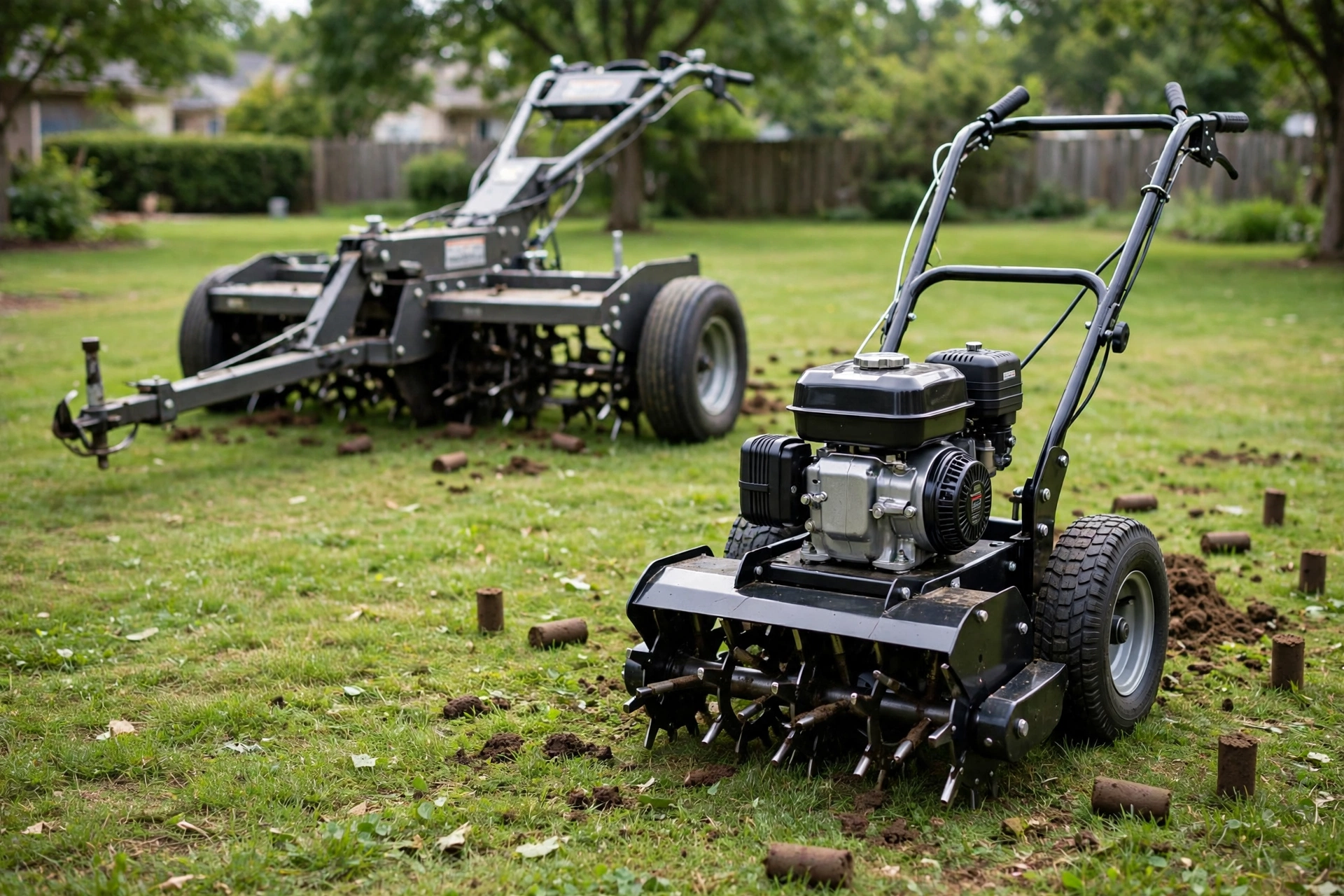
A core aerator uses hollow tines to pull plugs of soil and thatch out of the ground, roughly 3/4 inch across. Removing soil is the whole point, because each hole is open space the surrounding soil can relax into, while a spike tool removes nothing and does not relieve compaction across a lawn.
For the full comparison, dethatcher vs. aerator vs. scarifier lays the three out side by side. For a compacted lawn, the core machine is the tool, every time.
When to Aerate
Aerate when grass is growing actively enough to fill the holes within a few weeks, not when it is dormant or heat-stressed. Cool-season lawns — bluegrass, fescue, and ryegrass — aerate best in fall, with early spring second, and fall pairs naturally with overseeding.
Warm-season lawns — bermuda, zoysia, and St. Augustine — aerate in late spring into early summer, once the grass is fully green and growing. Never core a dormant warm-season lawn heading into winter, and skip aeration during drought or a heat wave even if the calendar looks right.
Prep: Moisture, Mowing, and Marking
Water 1 inch the day before. Run sprinklers or time the job a day after a soaking rain, so the soil is moist through the top 3 to 4 inches — tines pull clean, full-length plugs from moist soil and skate across dry soil.
Moist is not muddy: soggy ground clogs tines and smears hole walls shut, so give a saturated lawn a day to drain. Mow a little shorter than usual and rake up debris, so tines reach soil instead of folding grass into each hole.
Mark what the tines can hit. Flag every sprinkler head, shallow irrigation line, buried cable, and septic component. A tine set to 3 inches will crack a sprinkler head it catches, and that repair costs more than the rental.
How to Core Aerate, Step by Step
1. Set the depth for 2 to 3 inches. Plugs should come up 2 to 3 inches long, about the length of an index finger; plugs shorter than 2 inches mean the soil is too dry or the depth is too shallow, so stop and fix that first.
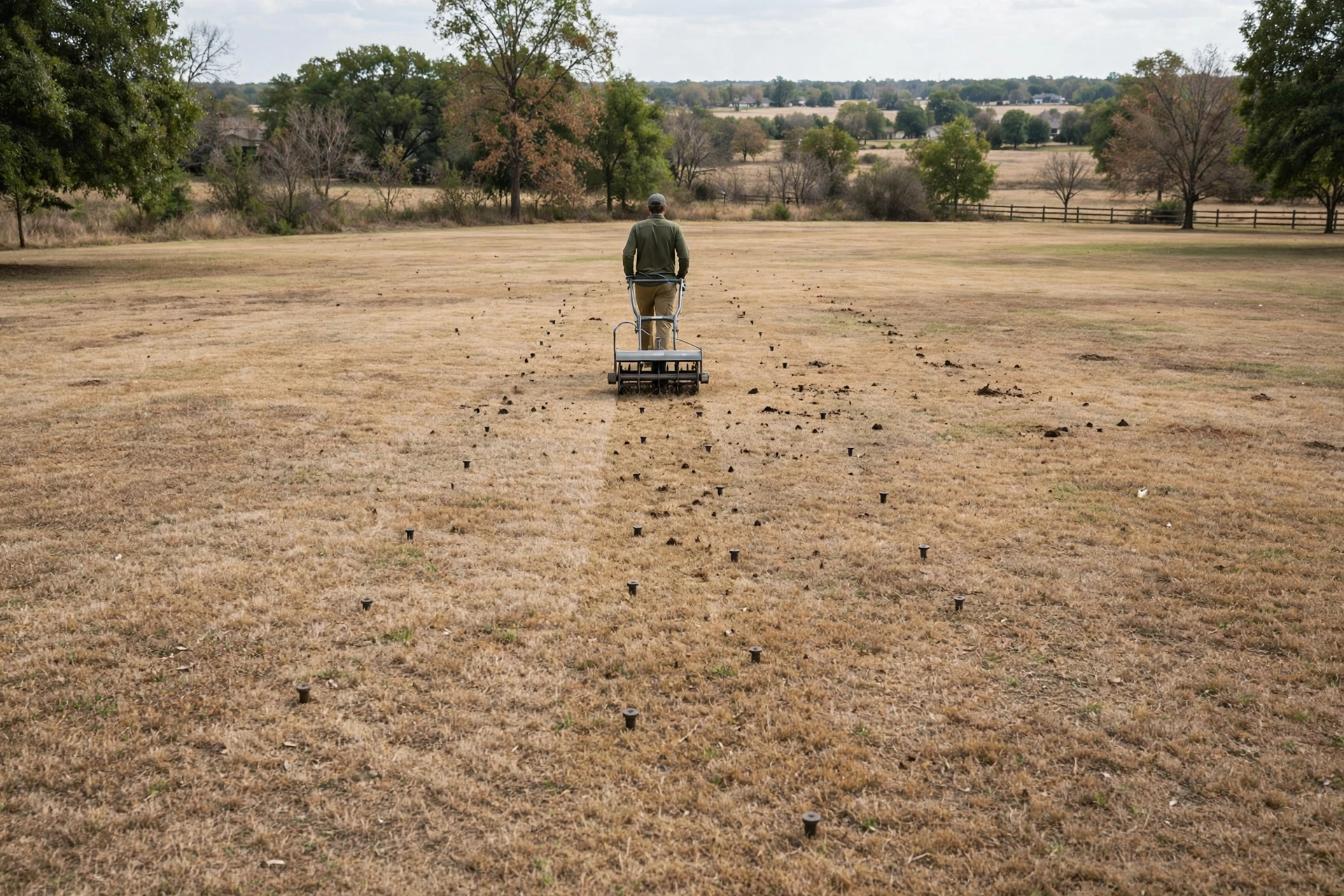
2. Walk steady, straight passes. Run the aerator at a normal mowing pace in straight lines, overlapping slightly at the edges, because rushing lifts tines early and shortens the plugs.
3. Aim for holes 2 to 3 inches apart. That spacing works out to roughly 12 to 20 holes per square foot across the finished lawn. Most walk-behind machines lay holes wider than that in one pass, which is normal and is handled by the second pass below.
University of Nebraska–Lincoln Extension recommends 20 to 40 holes per square foot for aerification. That target is why worn areas get extra passes instead of a single quick lap.
4. Double-pass the badly compacted areas. Run a second pass at right angles to the first over paths, gateways, play spots, and anywhere the screwdriver stopped short. The rest of the lawn usually needs only the single pass.
5. Check plugs as the work goes. Stop every few rows and pick one up: a good plug holds together and measures a full 2 to 3 inches, while a crumbly 1-inch plug is the signal to water more and wait.
Rent or Own?
For most homeowners, renting a walk-behind core aerator for a half or full day is the practical route: the machine is heavy, used once or twice a year, and needs storage the rest of the time. Split a rental with a neighbor and both lawns get done for one fee.
Owning makes sense on large properties, heavy clay, or ground aerated twice a year. Homeowners weighing machines can compare options in the best core aerators for compacted soil — and either way, choose hollow tines, because a cheap spike drum costs less and delivers less.
Leave the Plugs Where They Fall
Leave the cores on the lawn. They look rough for a week or two, then break down and return soil and microbes right back into the holes they came from.
Raking them up removes that soil and adds an hour of work for no gain; a mower pass breaks plugs up faster if the look is a problem. The full reasoning is in whether to pick up aeration plugs or leave them — leave them, unless plugs lie so thick on one patch that they smother the grass, in which case rake only that patch thinner.
After Aerating: Seed, Feed, and Water
Overseed right after aerating on thin lawns, while the holes are open: seed that drops into a core hole gets soil contact instead of sitting on thatch, so spread at the bag’s overseeding rate.
Fertilize after aerating if the lawn is due, at the labeled rate — nutrients now reach the root zone instead of washing off a sealed surface, and aeration is not a reason to double the dose.
Water lightly and often at first. Keep the top inch moist for two weeks with short sessions once or twice a day, then shift to deeper, less frequent watering that wets the top 4 to 6 inches. Stay off the lawn as much as practical for the first week, so fresh holes in soft soil do not compact again.
The Mistakes That Undo the Job
Three errors undo a good pass: aerating dry soil, so plugs come up short; coring dormant or heat-stressed grass, which cannot close the holes; and one fast pass over severe compaction. Match the season to the grass type, not to a free weekend.
Do the test first, water 1 inch the day before, pull full 2- to 3-inch plugs with a second pass on the worst ground, and leave the cores to melt back in. That sequence, in that order, is the fix for a compacted lawn.
Sources
- University of Nebraska–Lincoln Extension, Turfgrass Science Program — “Updated information on lawn aerification”: recommends 20–40 holes per square foot, spring or fall timing for cool-season grasses, and spring to early summer for warm-season grasses. https://turf.unl.edu/news/updated-information-lawn-aerification/