Thanksgiving weekend has a particular kind of light — low, gold, and gone by the time the dishes are done. I do my yard round early on Saturday, while the house is still quiet.
The yard does not need a project this weekend. It needs a short round of checks while the ground and the forecast are still readable, because the next real cold snap will close several of these jobs until spring.
Nothing here takes long. Most of it is looking closely, moving one thing, and writing down what you saw so December does not surprise you.
For Everyone, Wherever You Garden
Saturday morning is the right hour for this round. The frost has lifted, the leaves are dry enough to move, and you can hear which branches creak when the wind picks up.
Clear the thick leaf layer off the lawn
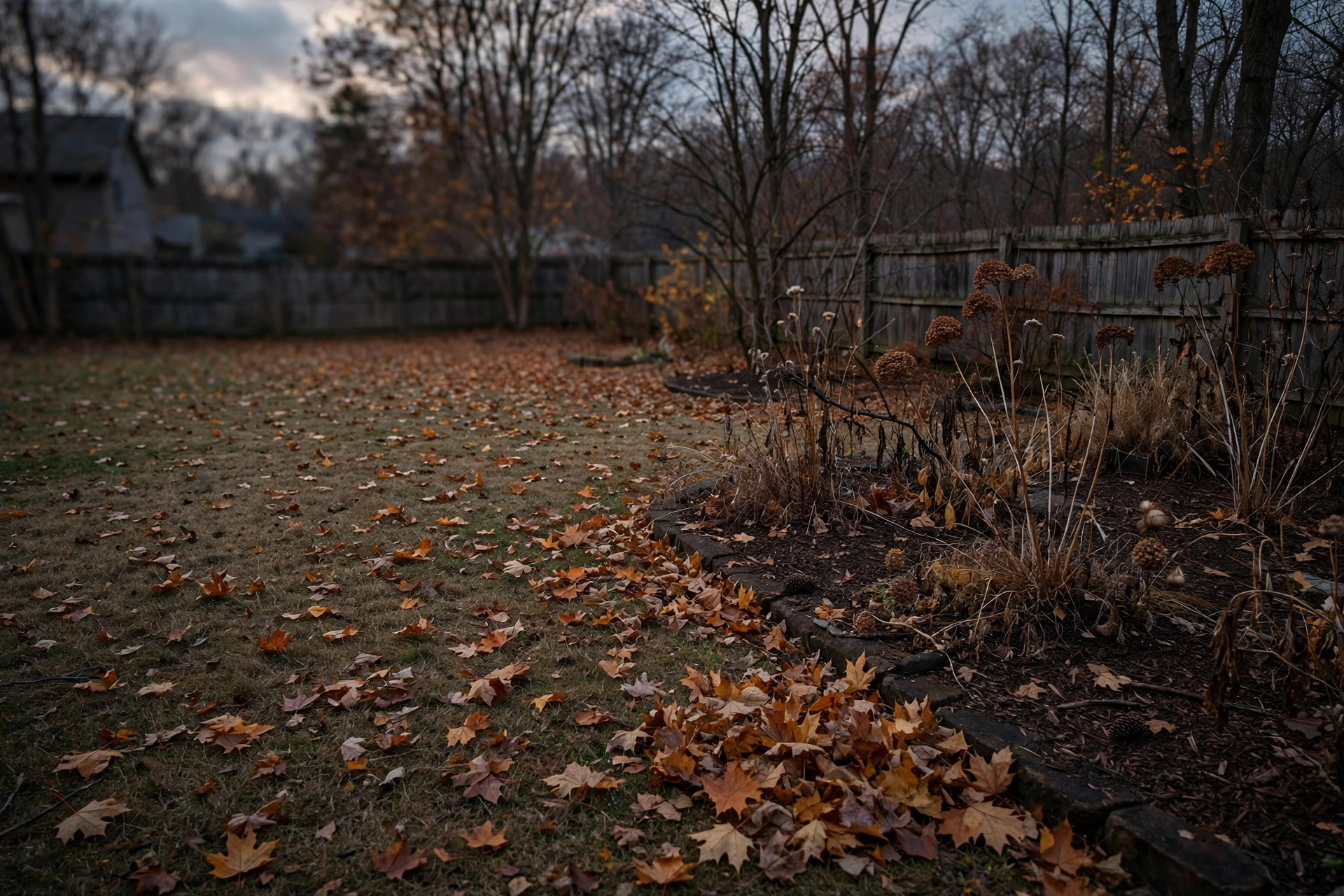
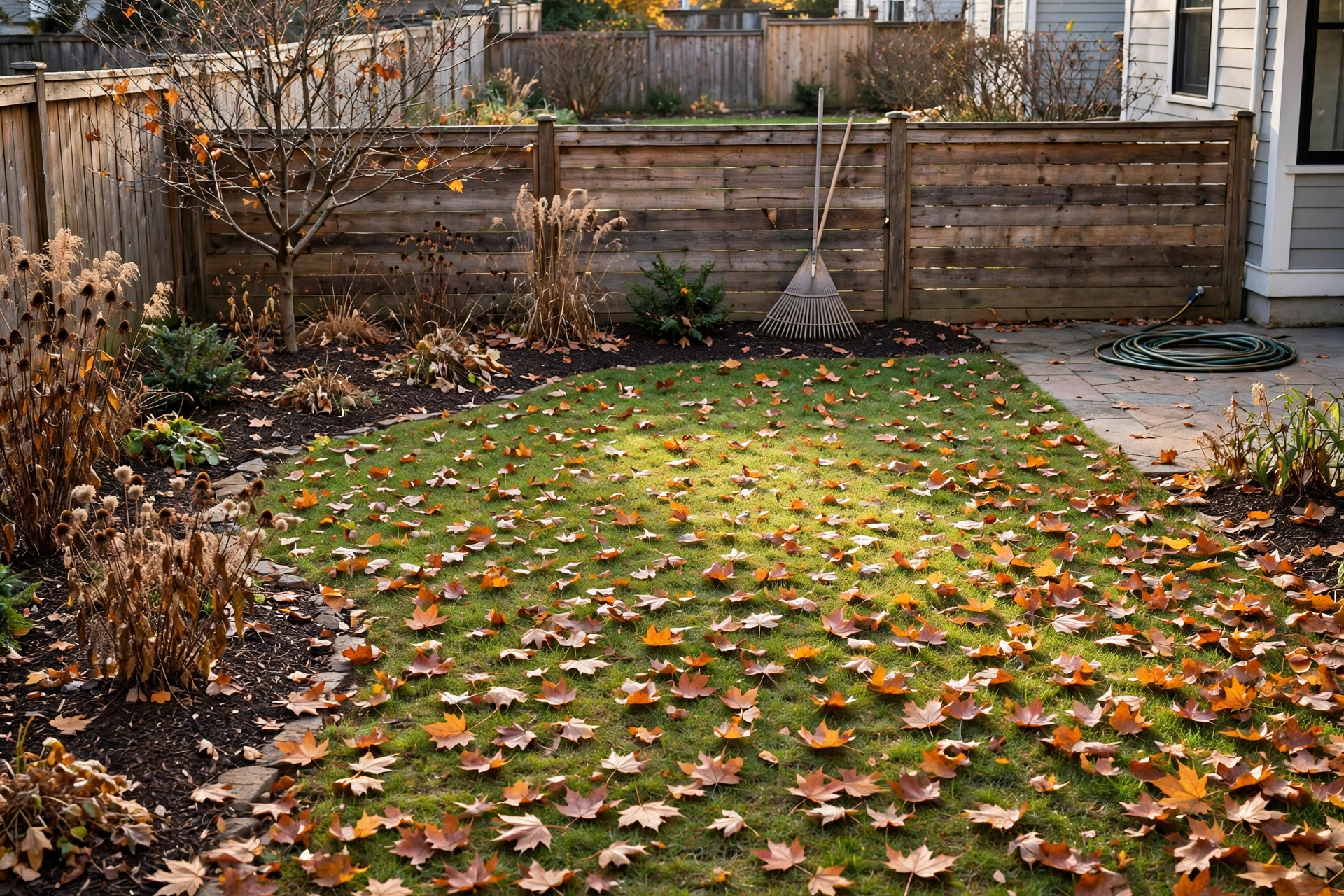
A thin scatter of leaves can stay — run the mower over it and let the pieces fall between the grass blades. A layer thick enough to hide the grass cannot stay, because it mats down wet and smothers the lawn underneath it.
Rake the thick patches into the beds as rough mulch, or bag them for the municipal pile. The test is simple: if you cannot see grass through the leaves, the leaves move.
Check the walkway your guests actually use
Walk the route from the driveway to the door in the dark once this weekend. It gets dark before dinner now, and a burned-out bulb or a heaved paver is easier to fix on Saturday than to apologize for on Sunday.
Reset any outdoor light timers to the earlier sunset while you are out there. The whole job takes five minutes, and the path ends up lit when people arrive instead of after they have already picked their way across it.
Look up at the trees over the roof and driveway
With the leaves down, dead branches are easy to spot — gray, bark peeling, no buds along the twigs. A dead limb over the roof or the driveway is a phone call to an arborist, not a ladder job.
Small dead wood low in a shrub is yours to prune out. Anything you cannot reach from the ground, or anything near a power line, belongs to a professional with the right equipment.
If You Garden Where It Freezes
Drain the hose before the hard freeze does it for you
Disconnect every hose, walk it downhill until it runs empty, and coil it loose under cover. Water left inside expands as it freezes and splits the hose along its length, and the split usually shows up at the first spring watering.
Where your house has an interior shutoff for an outdoor faucet, close it and leave the outside spigot open to drain. Where it does not, a foam faucet cover is a cheap layer of protection for a cold night.
Mulch the beds that have stayed cold
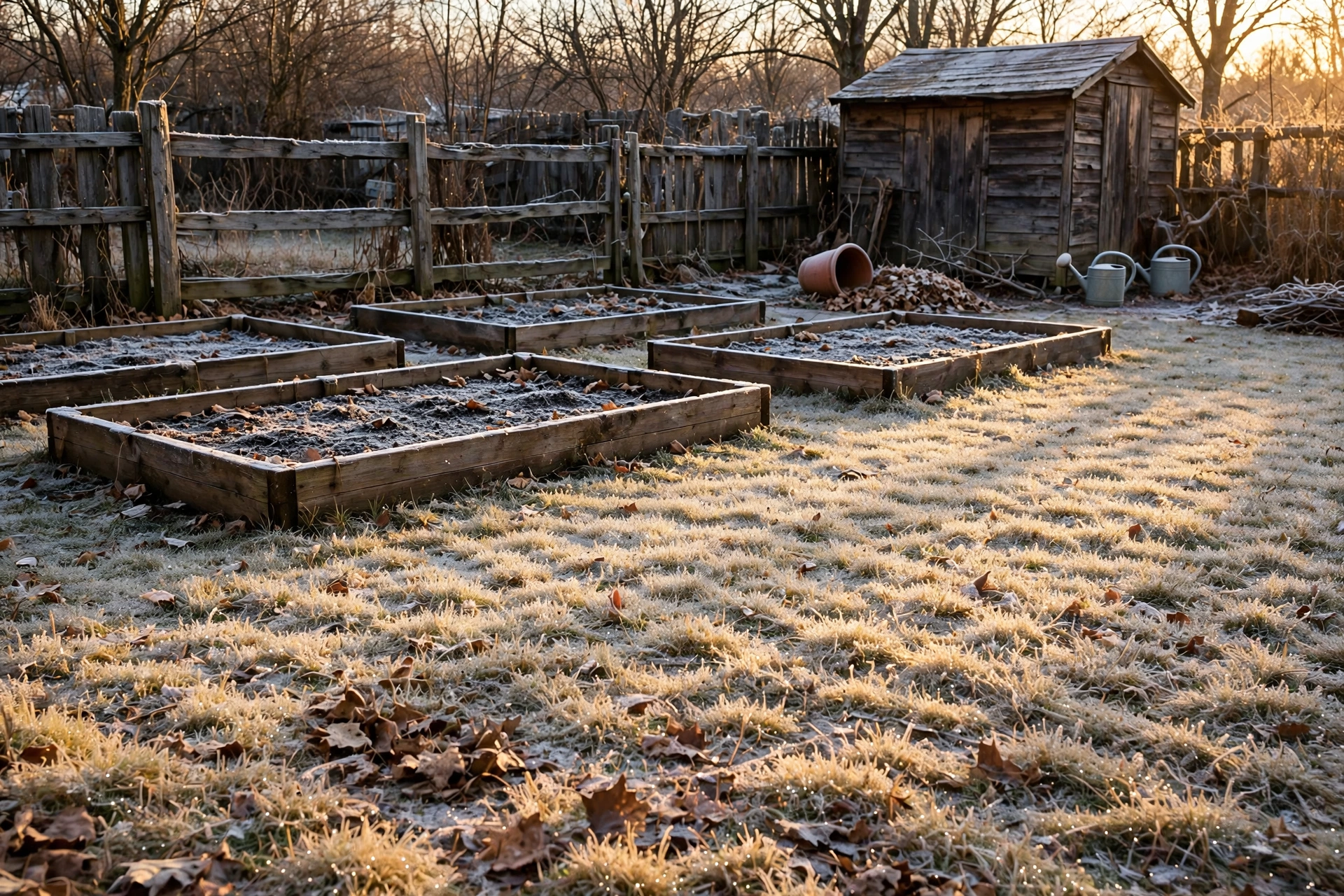
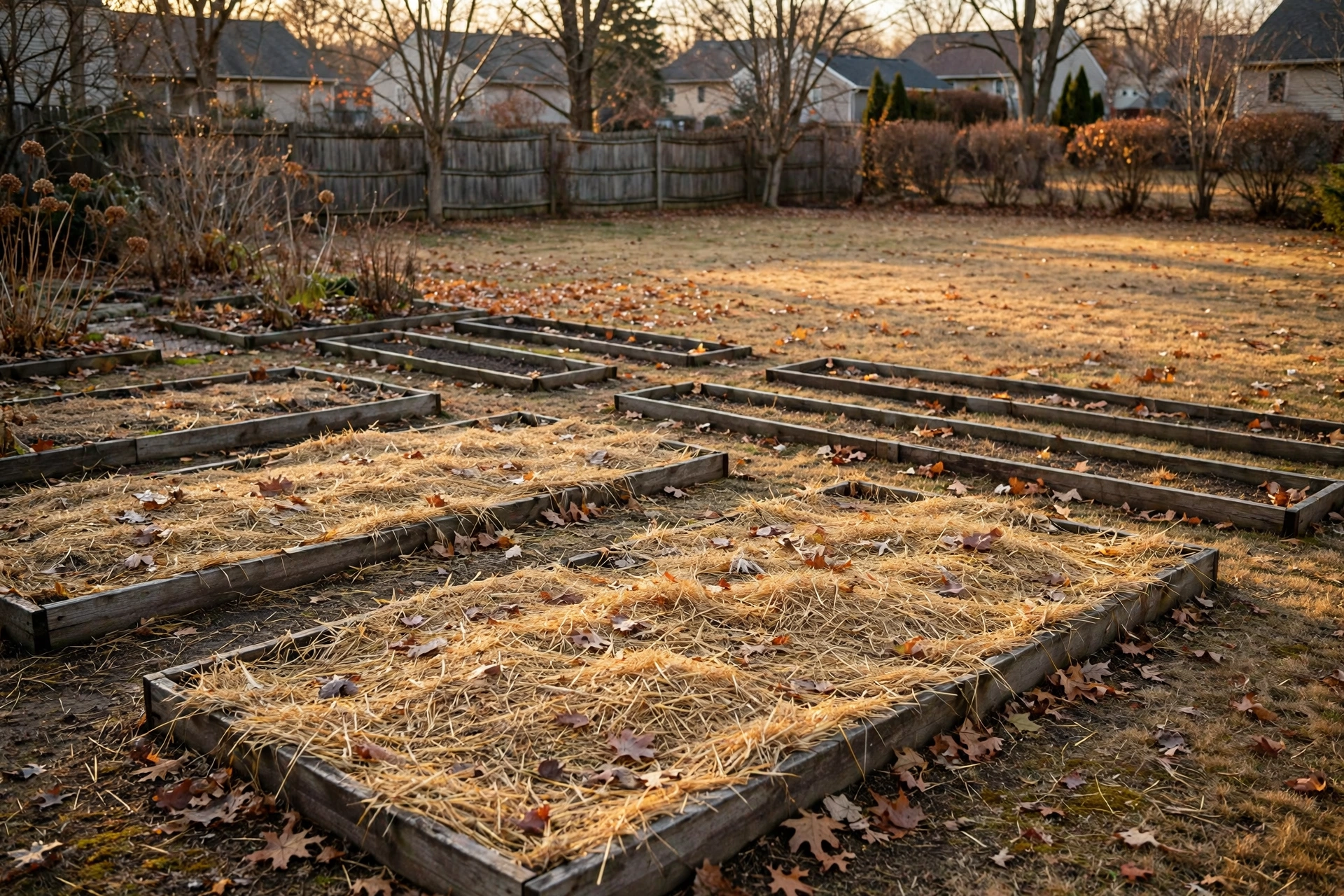
Garlic, strawberries, and perennial crowns get their winter mulch once the soil has chilled and stayed chilled — three to four loose inches of straw or shredded leaves. Mulch laid over warm soil invites mice to nest in it and can coax growth the next freeze will damage.
If your ground is still warm, wait a week and check the soil again before you spread anything.
Bring tender pots into shelter
Unglazed clay pots crack when wet soil inside them freezes and expands. Move pots you want to keep into a garage or shed, emptied or at least tipped so water cannot pool in them.
Perennials in large, sturdy containers can stay outside in most cold climates, pushed together against a sheltered wall where they get less wind.
If You Garden Where It Stays Warm
Water new trees and shrubs if the week was dry
Anything planted this fall is still growing roots, and roots grow in warm soil long after the top of the plant slows down. If your yard has had less than an inch of rain in the past week, water new plantings deeply at the base.
Deep and occasional beats a daily sprinkle. Soak the root zone, then leave it alone until the top two inches of soil are dry again.
Put in one cool-season planting
This is prime setting-out weather in warm climates: pansies and violas for color, or a short row of lettuce and spinach where the soil is workable. Cooler nights suit all of them, and the transplants settle in without heat stress.
Keep the seed packet or plant tag. The days-to-maturity count on it is how you will know whether a second sowing still fits before the season turns.
Keep frost cloth where you can reach it
Warm climates still get the occasional sharp night, and the plants that suffer are the tender ones — citrus in pots, tropical foliage, a late tomato you are nursing along. Know where your frost cloth is before the forecast calls for it.
A cloth draped before sunset and removed in the morning protects better than a scramble in the dark. Plastic sheeting directly on foliage does not — it conducts the cold straight to the leaves it touches.
The One Thing to Do First
If the weekend fills up and only one job survives, make it the leaf pass over the lawn. Hoses, pots, and mulch can each wait a week without real harm, but grass buried under a wet mat loses ground every day it stays covered.
Clear the lawn, look up once at the trees, and then go back inside. The yard is in good shape for December, and the rest of the weekend is yours.