This Weekend in Your Yard: November 28–29, 2026
Thanksgiving weekend arrives with the yard in its plainest clothes: the beds are cut back or honestly shaggy, the lawn has slowed to a standstill in the cold half of the country, and the light is gone before supper. This is the weekend the garden year quietly turns. What you do now is small, unglamorous, and disproportionately kind to April — a drained hose, a mulched crown, a tree watered once before the ground seals. Work the short list for your region in the bright hours, then go back inside.
Every task below is conditional in the way late November always is: where the ground has frozen hard, the digging jobs skip; where the soil still crumbles in your hand, you have more weekend than the calendar suggests.
Northeast
Zones 5–7 are finishing the year with cold fingers. The beds should be clear of spent summer foliage by now; anything still standing with blackened leaves is housing next summer’s disease, so cut it and send it to the municipal pile rather than the home compost.
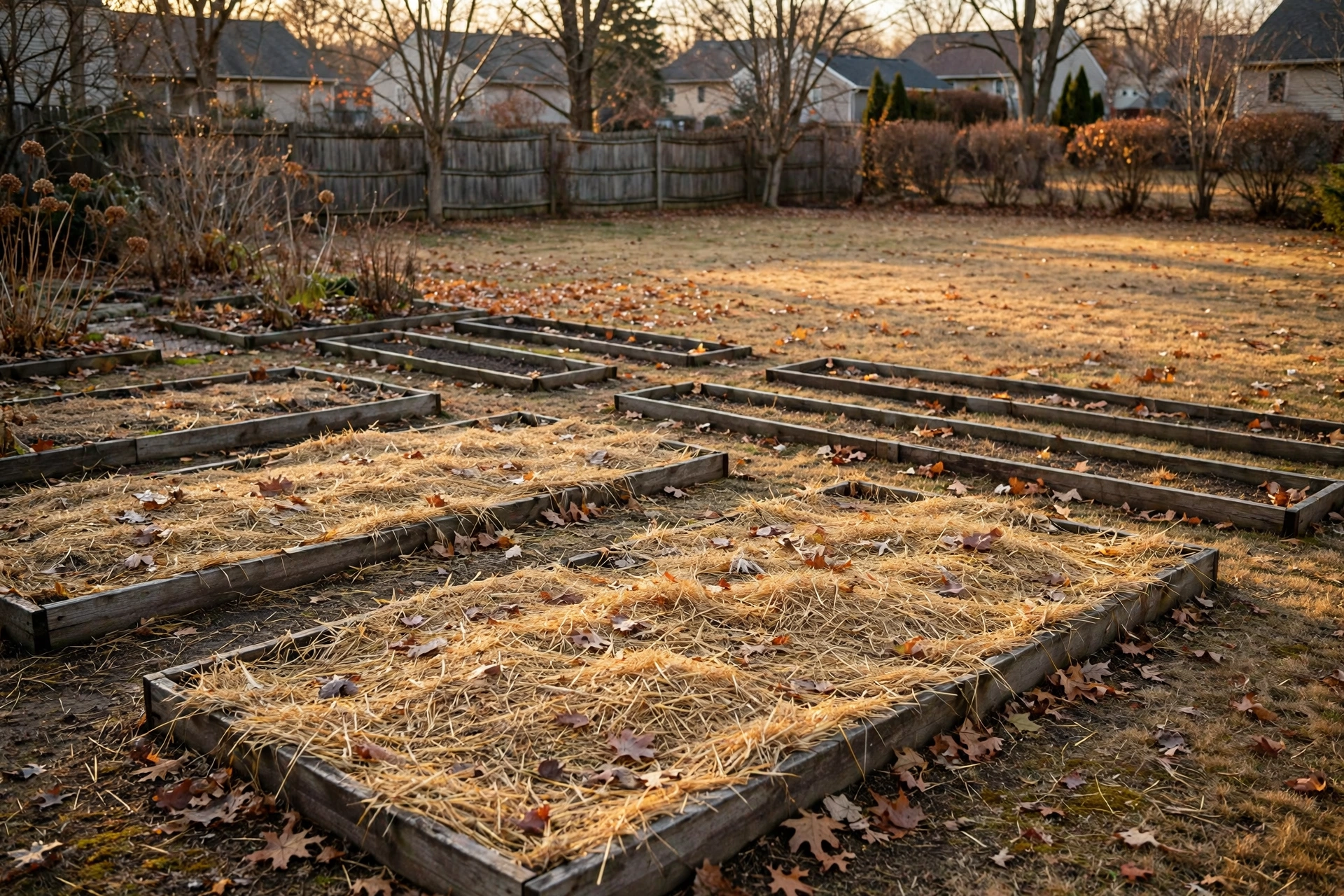
Lay the winter mulch — now that the ground has chilled
Garlic, strawberries, and tender perennials want their blanket only after the soil has chilled and stayed chilled, because mulch over warm ground invites rodents and coaxes growth the next freeze will punish. Four loose inches of straw or shredded leaves is the whole job. If a last row of garlic is still going in, the hardneck and softneck differences decide which type belongs in cold ground.
Drain the last hose and shut the outdoor faucets
Walk every hose downhill until it runs empty, coil it loose, and store it under cover. A charged hose in a hard freeze splits along its length, and the discovery waits until April. Shut each outdoor faucet off from inside where the house allows it, and leave the spigot open to drain.
Southeast
Zones 7–9 are in the gentle half of the year, when the vegetable garden changes casts instead of closing. Kale, collards, carrots, and lettuce are settling in, and the weekend suits slow soil work between holiday meals.
Sow a cover crop on every bed that will sit empty
Crimson clover or annual ryegrass sown this weekend still germinates in soil that holds fall warmth. The roots hold the bed against winter rain, the tops shade out winter weeds, and in spring you turn under fertility instead of buying it in a bag.
Water the fall greens through dry spells
November rain can vanish for two weeks at a stretch. An inch of water a week, in one deep soaking, keeps young greens rooting downward, and a light row cover on frost-threat nights carries tender lettuce through without drama. Knowing which vegetables shrug off a light frost tells you what needs that cover and what can simply be picked.
Midwest
Zones 4–6 have the narrowest margin in the country: soil that digs on Saturday may ring like iron by Monday. Spend the workable hours on the jobs frozen ground cancels outright.
Plant the last bulbs where a spade still goes in
Tulips and daffodils still in their bags are not lost while the soil crumbles. Plant at three times the bulb’s height, water once to settle, and mulch after the ground chills. Bulbs that meet frozen ground are better potted and held in an unheated garage than forced into ice.
Mound the roses and guard the young trees
After a hard freeze strips the leaves, mound eight to ten inches of soil or compost over each hybrid tea rose crown, and wrap young, thin-barked trunks with a light-colored guard. The splitting injury that scars a young maple usually happens on the bright afternoon after the coldest night, not on the night itself.
South Central
Zones 7–8, from Texas to the Gulf, are gardening in the season everyone else is dreaming about. The heat has relented, the soil is kind, and this weekend’s list is planting, not protecting.
Set out onions, garlic, and winter greens
Short-day onion transplants and garlic planted now root through the cool months and size up in spring. Sow spinach, mustard, and lettuce every two weeks for a continuous cutting garden, working compost into the beds while the soil is open and easy.
Plant a tree — this is your season for it
Fall planting gives a tree a whole cool season of root growth before summer asks anything of its leaves. Dig wide rather than deep, set the root flare at grade, water deeply once, and mulch in a broad ring that keeps the mower at a respectful distance.
Mountain West
Zones 4–7 at elevation live with the widest swings in the country — a Saturday in the fifties can hand off to a Monday below zero — so the weekend’s work is water and protection, in that order.
Water trees and shrubs deeply if the fall has been dry
Evergreens lose water through their needles all winter and can only replace it from soil that went into the freeze moist. Give trees and shrubs one long, slow soaking while the ground is still open, especially anything planted this year and anything on a south or west exposure.
Check the mulch line and finish the blowout
Any irrigation line not yet blown out is living on borrowed time at elevation; finish it before the next deep freeze. Then top mulch that has thinned to bare soil back up to three or four inches, pulled a few inches clear of trunks and stems.
Pacific West
Zones 7–9 along the coast are entering the rains that do next summer’s watering in advance, and the weekend’s work follows the rain rather than fighting it.
Sow cover crop and wildflower seed where the rains can raise it
Fall-sown seed germinates in the cool, wet weeks ahead and roots while almost nothing competes with it. Bare soil anywhere in the garden wants the same logic, so winter storms move water through roots instead of carrying topsoil toward the street.
Clear the gutters and settle the patio for the wet months
The first big storms find every neglected gutter, so clear them while the ladder is still a choice. Cushions still outdoors should come in dry — storing them properly now is the difference between a spring patio and a spring shopping trip.
Where this week’s list comes from
This edition was aggregated from a few authoritative seasonal checklists: the University of Minnesota Extension November garden checklist, the Chicago Botanic Garden’s November checklist, Texas A&M AgriLife’s fall vegetable gardening guidance, and Garden Design’s November checklist for the Pacific Northwest. Where a task could not be supported by those sources, it was left out.