This post contains affiliate links. If you buy through them, we may earn a commission at no extra cost to you.
The common mistake with rutabaga is planting it on a turnip schedule. A gardener sows in late summer, checks in six weeks, finds a small root, and concludes the crop failed. Nothing failed. Rutabaga needs 80 to 120 days, roughly three times a salad turnip, and it is built for the other end of the season: cool weather, light frost, and a storage bin.
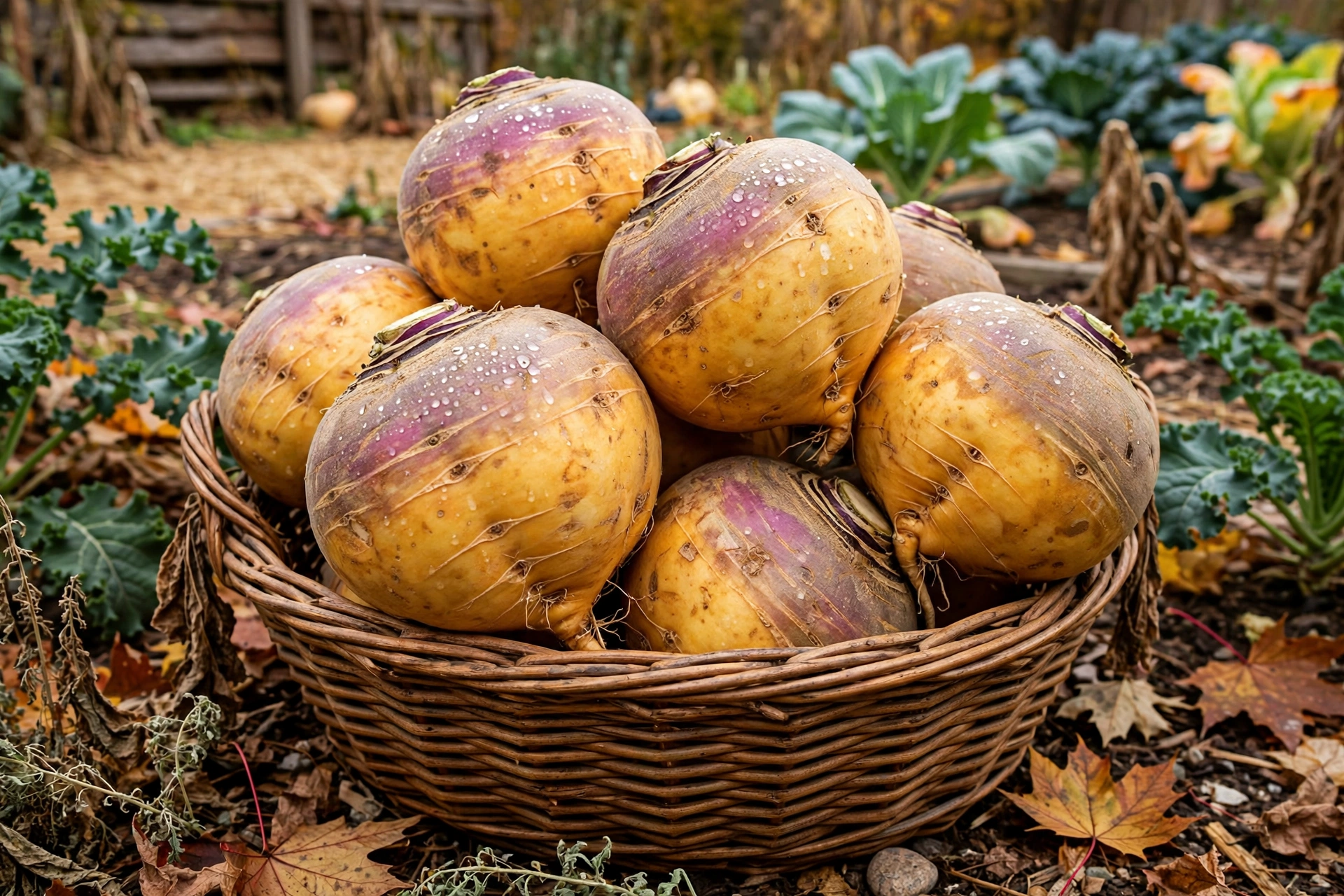
Botanical Interests sells one rutabaga variety, and it is the right one to build a row around. American Purple Top is Brassica napus subsp. rapifera, a biennial grown as an annual root, rated 4.7 out of 5 in 14 reviews. The honest shape of this roundup is one variety, judged properly, plus the harvest gear a storage crop actually needs.
American Purple Top, in full
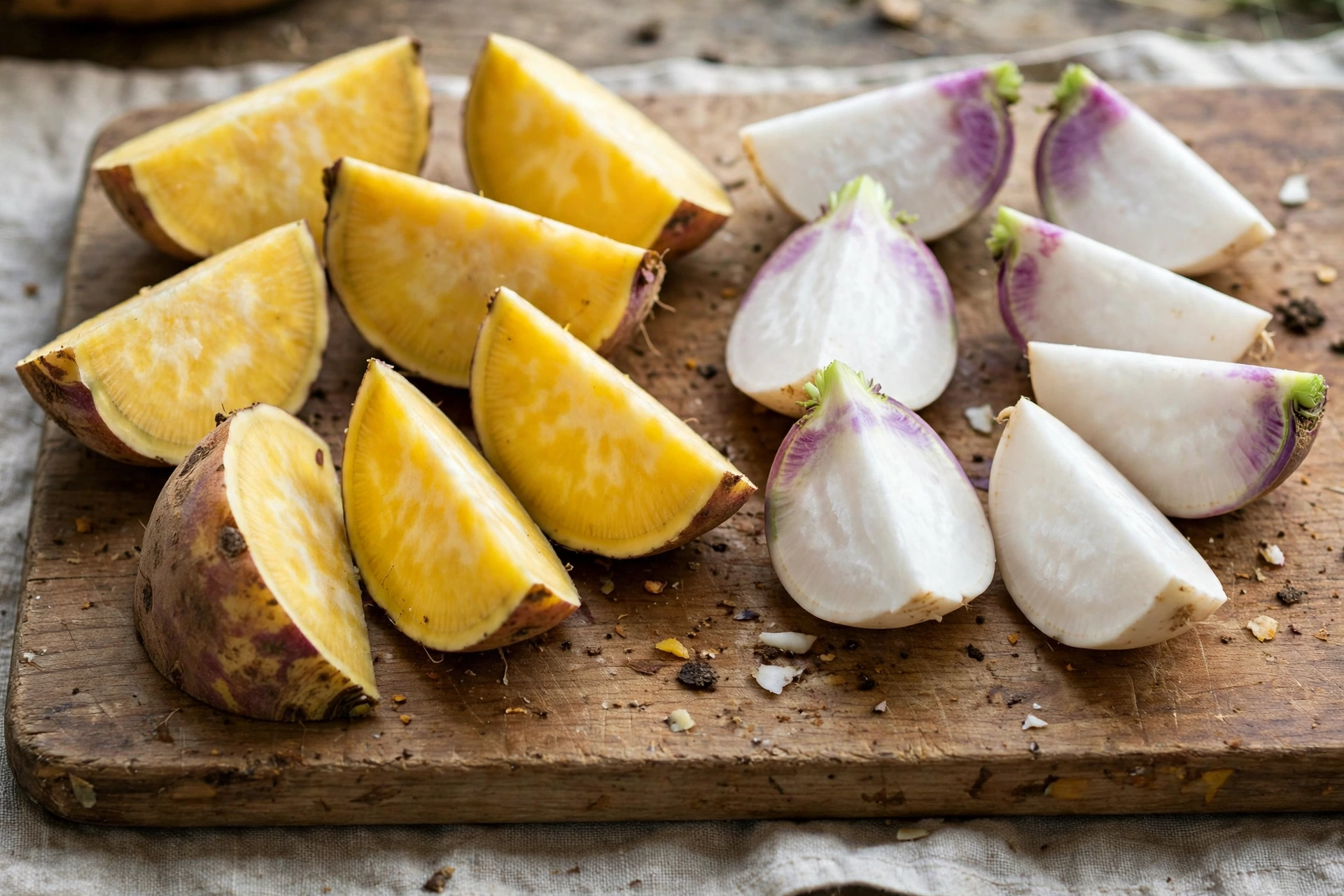
The root is yellowish with purple shoulders, best harvested at 4 to 6 inches across. The packet describes the flavor as sweet and mellow, which matches how rutabaga is used: mashed like potatoes, cut into soups and stews, or baked into casseroles. The tops are edible too, sauteed as greens, as long as no more than about 25 percent of a plant’s leaves come off at a time.
That last detail matters more than it sounds. A root that takes four months to size up is fed by its leaves the whole way, and stripping the tops for greens is how a promising row ends up producing golf balls. I leave the tops alone until harvest and let the root have the plant.
| Variety | Days | Best size | Rating |
|---|---|---|---|
| American Purple Top Rutabaga | 80 to 120 days | 4 to 6 inches | 4.7 out of 5 (14 reviews) |
| Turnip White Lady | 30 to 40 days | 2 inches baby, 4 to 5 inches full | 4.7 out of 5 (21 reviews) |
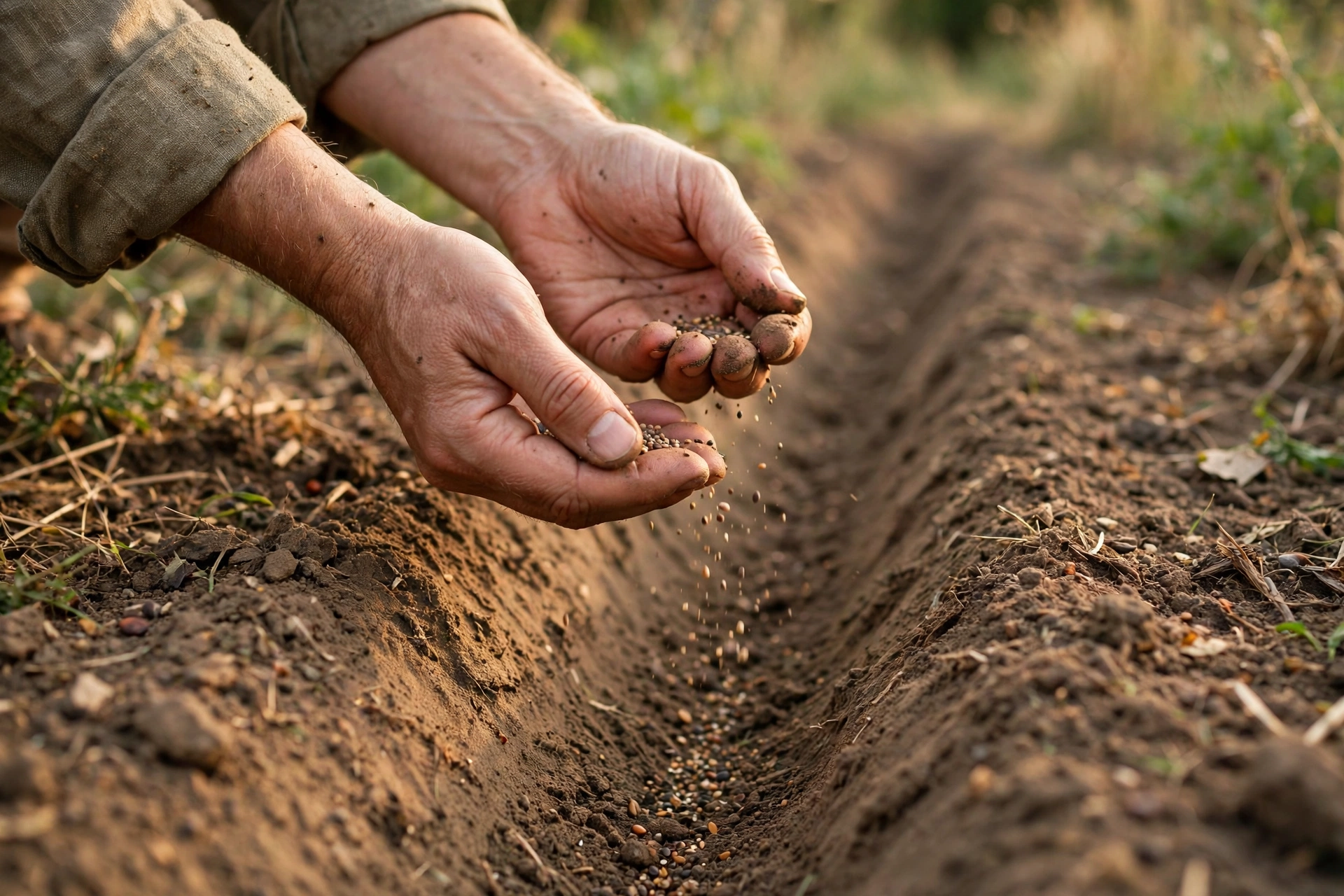
The sowing numbers are plain. Direct sow a group of 3 seeds every 6 inches, 1/4 inch deep, in rows 18 to 24 inches apart, and thin to one plant every 6 inches when the seedlings are 4 inches tall. One packet sows up to 80 feet, germination runs 7 to 14 days, and the soil temperature the packet wants is 60 to 80 degrees Fahrenheit.
The variety I would plant
American Purple Top is the pick, and not by default. A storage root lives or dies on two things, density and keeping quality, and this variety is sold on both: dense golden flesh that holds together in a stew, and roots the packet calls a great storage crop. For the full side-by-side on keeping and flavor, see rutabaga vs turnips on storage and flavor.
The trade-off is time, stated plainly. Eighty days is the fast end, and a late sowing in a short season can run into frozen ground before the roots size up. The packet’s own guardrail is to harvest after a few light frosts but never let the roots freeze. Timing the sowing is the whole job, and growing rutabaga from sowing to harvest works through it.
American Purple Top Rutabaga Seeds
Purple-shouldered storage root, 80 to 120 days, best at 4 to 6 inches, sweet and mellow mashed, stewed, or baked.
The gear a storage crop needs
A rutabaga harvest is heavy, dirty, and worth rinsing before it comes indoors. The Harvest Basket is built for exactly that: pine, birch, and oak with food-grade vinyl-coated wire, so vegetables can be rinsed right in the basket. The small size is 16 by 9 by 5 1/4 inches at 8 quarts; the large is 19 by 11 by 7 inches at 16 quarts, rated 4.9 out of 5 in 50 reviews.
For a single row, the small basket is enough. For the fall pull that fills a storage bin, I would take the large. It is the difference between one trip and three, with muddy roots balanced on an arm.
Harvest Basket
Wood and vinyl-coated wire basket in 8-quart and 16-quart sizes; rinse roots right in the basket before they come inside.
What I would skip
I would skip hunting for a second rutabaga variety to fill out a row. Botanical Interests carries one, it is in stock, and the packet sows 80 feet, which is more rutabaga than most gardens can store. Gardeners who also want a fast root alongside it are better served by the turnips in the turnip varieties roundup than by a second slow one.
Plant American Purple Top on the fall schedule, thin it without mercy, and pull it after the light frosts. That is the whole recommendation.