This post contains affiliate links. If you buy through them, we may earn a commission at no extra cost to you.
A salad turnip and a storage turnip look like cousins on the seed rack, and they do opposite jobs in the kitchen. One is pulled small and eaten raw within the month; the other is left to size up, cooked, and kept. Mixing them up is how a gardener ends up grating a storage root for a salad and wondering why turnips have a reputation.
Botanical Interests sells two turnip varieties, both Brassica rapa. Turnip White Lady is the salad type, ready in 30 to 40 days. Purple Top White Globe is the traditional type, ready in 50 days — and it is out of stock, so the planting decision this season is simpler than the comparison suggests.
The two varieties, side by side
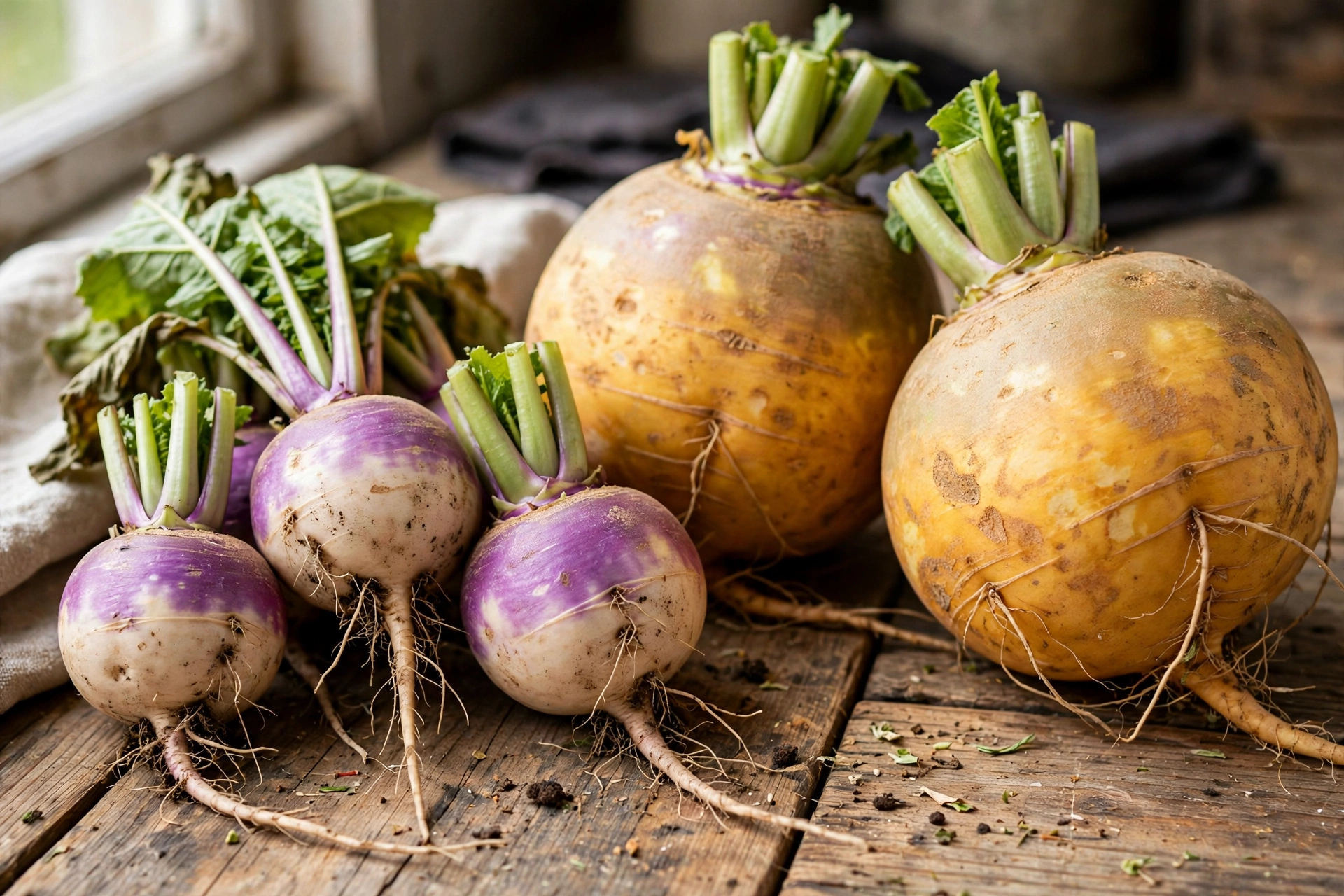
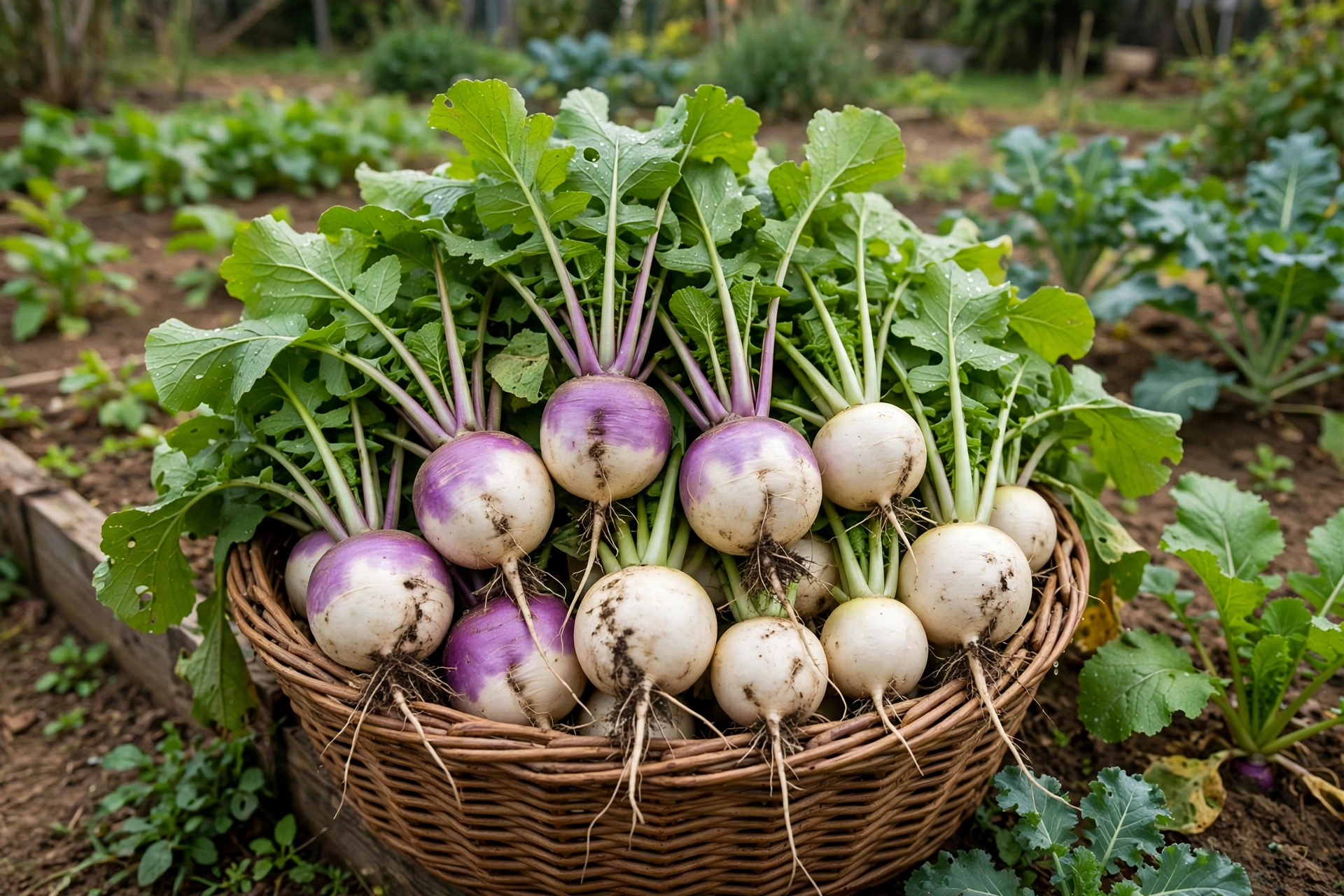
White Lady is a Japanese salad turnip: pure white, mild, and slightly sweet, with smooth roots the packet describes as good raw in salads and on crudité trays, pickled, or cooked, with edible greens as a bonus. Baby roots reach 2 inches in about 30 days, and full-size roots reach 4 to 5 inches in 40 days.
Purple Top White Globe is the older form — globe roots with purple shoulders above the soil line and creamy white below, greens 14 to 22 inches tall. Its packet points it at roasting, mashing, and storage rather than raw eating, and its best eating size is smaller than gardeners expect: most tender at 2 inches, still good at 3.

| Variety | Days | Best size | Rating |
|---|---|---|---|
| Turnip White Lady | 30 to 40 days | 2 inches baby, 4 to 5 inches full | 4.7 out of 5 (21 reviews) |
| Purple Top White Globe | 50 days | 2 inches tender, up to 6 inches for cooking | 4.9 out of 5 (17 reviews) |
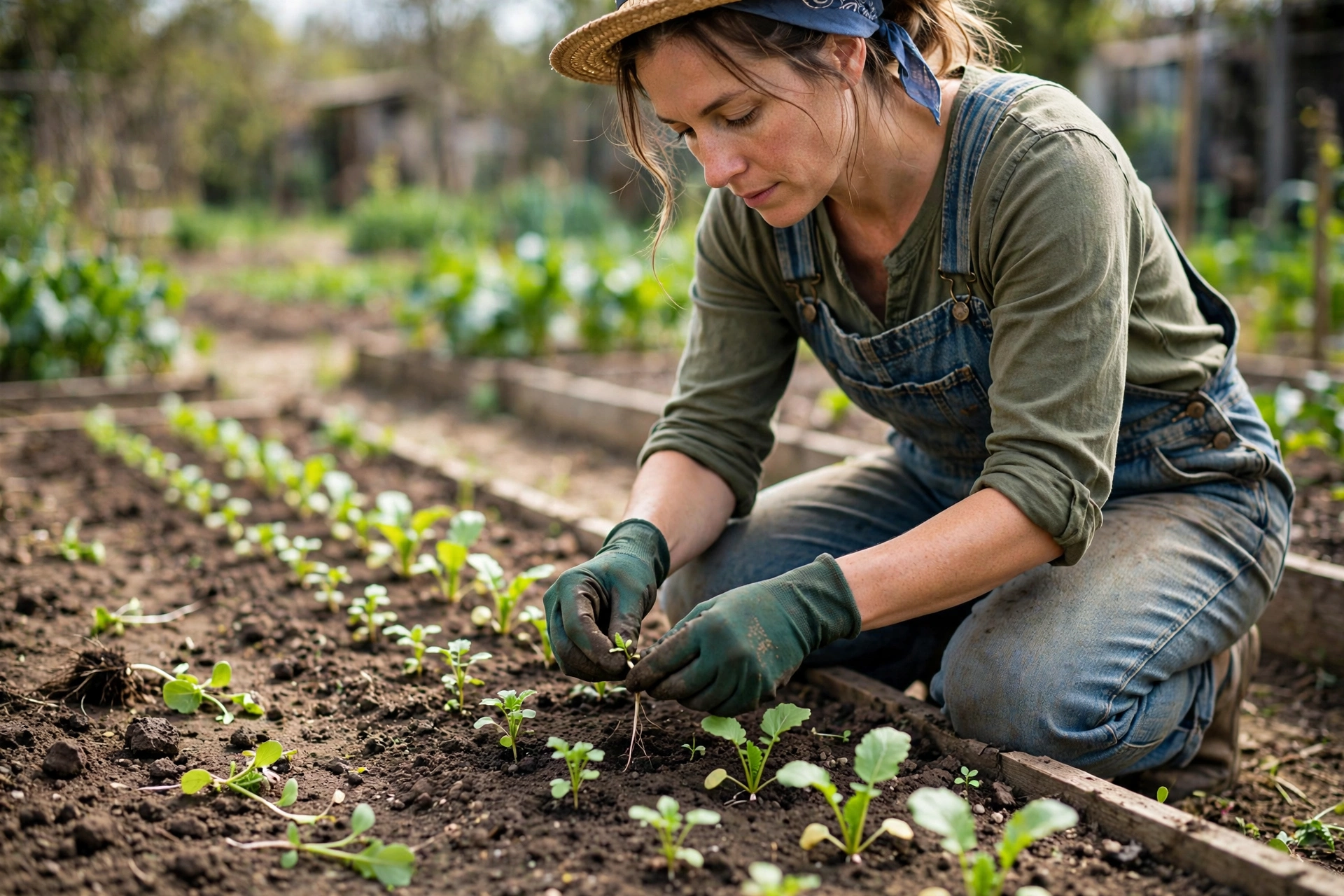
The growing instructions are identical, which is the useful part: direct sow outdoors 2 to 4 weeks before your average last frost, a group of 3 seeds every 4 to 6 inches, 1/4 inch deep, in rows 18 inches apart. Germination runs 5 to 10 days in soil at 50°F, ideally 65 to 80°F, and succession sowings every 2 weeks keep the harvest coming. Starting indoors is not recommended for either — the roots resent disturbance.
White Lady — the turnip I would plant
Speed is the argument. A root that is ready at baby size in 30 days fits between other crops, fills a spring gap before warm-season planting, and comes back around for a fall sowing 8 to 10 weeks before first frost. The mild, slightly sweet flavor is the other half of it: this is the turnip that gets eaten raw, which means it actually gets eaten.
The trade-off is storage ambition. White Lady is at its best pulled young and used fresh, while Purple Top is the one its packet describes as storing particularly well. If the goal is a bin of roots for winter cooking, that difference matters — when the packet is available.
Turnip White Lady Seeds
Japanese salad turnip, baby roots in 30 days and full roots in 40, mild and slightly sweet raw or cooked, greens edible too.
Check Price at Botanical InterestsPurple Top White Globe — the honest skip, for now
On paper this is the stronger packet: 4.9 out of 5 across 17 reviews, the highest rating of the two, a packet that sows up to 124 feet, and the storage habit White Lady does not claim. None of that helps while it is sold out. I am listing it so the comparison is complete, not as a pick — check back for it if a storage turnip is the job, and plant White Lady in the meantime.
Carrying a root harvest in
Turnips come out of the ground dirty, in quantity, all at once when a succession sowing lands together. A harvest basket with an open mesh lets you rinse roots where you picked them instead of carrying soil to the sink, which is why it earns a place in a root-crop roundup even though it is not a seed.
Harvest Basket
Wood and vinyl-coated wire basket for rinsing root harvests in the garden, in 8-quart and 16-quart sizes.
Check Price at Botanical InterestsWhich packet I would plant
White Lady, and not only because it is the one in stock. Thirty days to a baby root you can eat raw is the version of this crop most home gardens will use every week, while the storage turnip is a narrower, later job. The sowing, thinning, and harvest routine for both is in growing turnips, and if the real question is whether this bed should hold turnips at all, turnips vs. rutabaga settles it by days and by storage.