This post contains affiliate links. If you buy through them, we may earn a commission at no extra cost to you.
Late fall is when this comparison stops being academic. The turnips sown in August are finished, eaten fresh the way they should be, and the question left standing is what fills the root bin for winter. Rutabaga was planted for that bin months earlier, in summer, on a count-back from first frost. Two roots, two different calendars, and the season is what separates them.
The numbers frame it cleanly. American Purple Top rutabaga takes 80 to 120 days and is best at 4 to 6 inches. Turnip White Lady takes 30 to 40 days, with baby roots at 2 inches in about 30 days and full roots at 4 to 5 inches in 40. Both are rated 4.7 out of 5 at Botanical Interests, rutabaga in 14 reviews and White Lady in 21.
Flavor, cut open
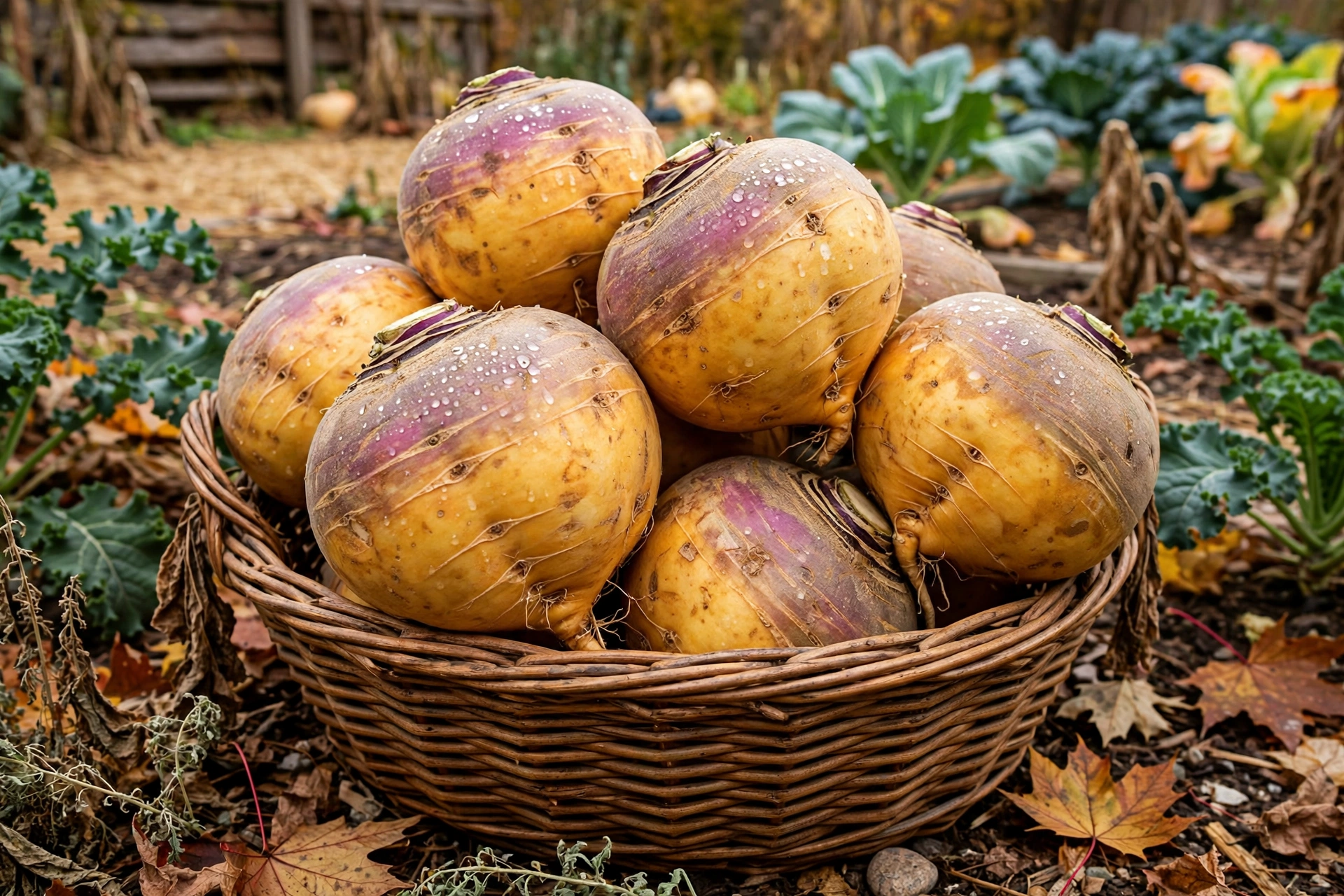
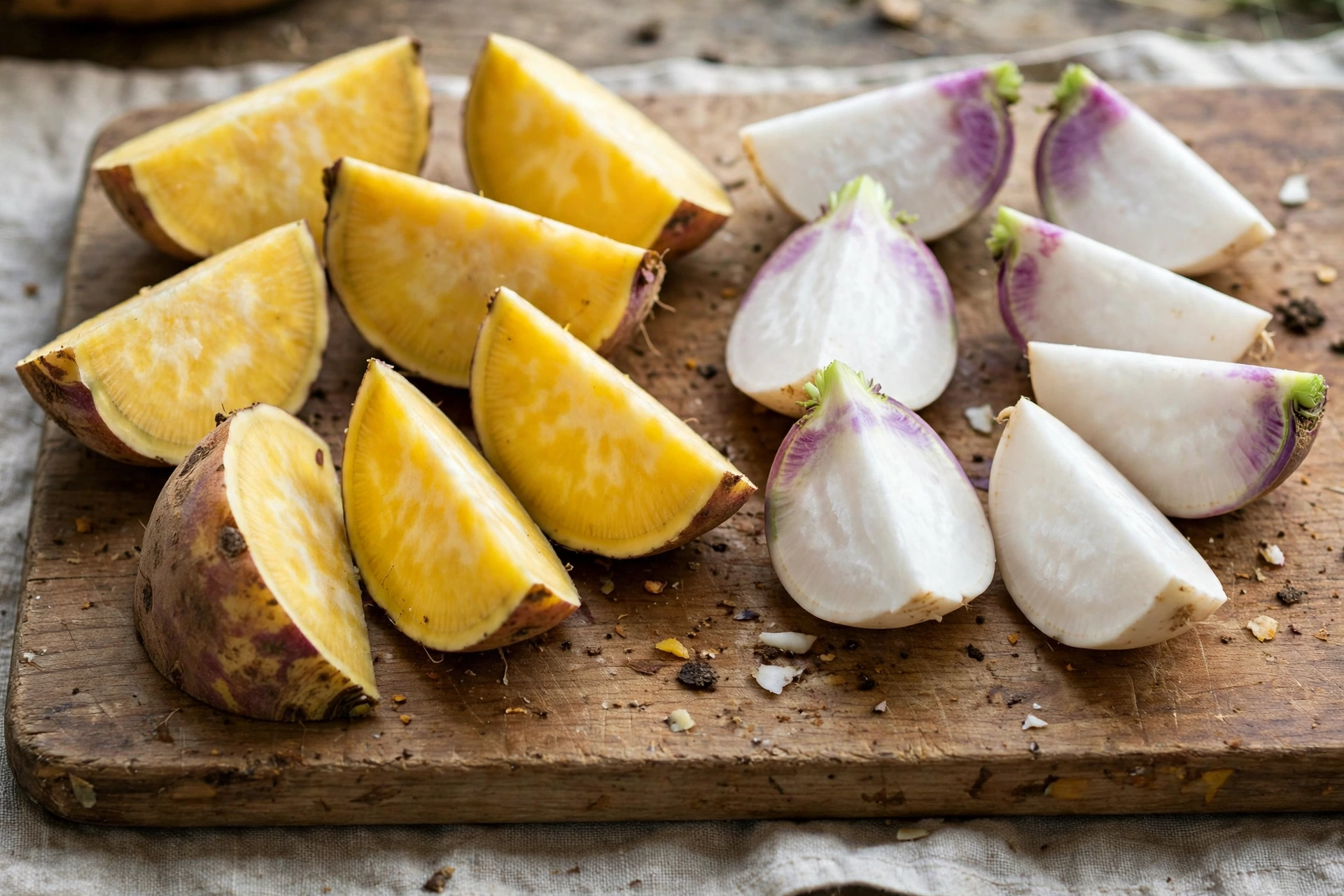
Cut a rutabaga and the flesh is yellowish and dense, with purple shoulders on the skin. Cut a White Lady turnip and the flesh is pure white and smooth. That density is the flavor difference in physical form: rutabaga tastes sweet and mellow and holds its shape through a long stew, while the salad turnip is mild, slightly sweet, and fruity enough to eat raw on a crudite tray.

Neither flavor is the better one in the abstract. Raw eating belongs to the turnip, full stop. A rutabaga pulled young and grated raw is a dense, strong root doing a job it was not bred for, and I would not serve it that way. Cooking reverses the order: mashed, baked into casseroles, or cut into soups and stews, rutabaga carries a longer cook without falling apart.
| Root | Days | Flesh | Best use |
|---|---|---|---|
| American Purple Top Rutabaga | 80 to 120 days | Yellowish, dense | Mashed, stews, storage |
| Turnip White Lady | 30 to 40 days | Pure white, smooth | Raw, pickled, quick cooking |
Storage is the deciding difference
Rutabaga is sold as a storage crop, and that is the plain fact of this comparison. Pulled after a few light frosts, trimmed, and kept cool, the roots hold for winter cooking long after a turnip row is a memory. Turnips store respectably for a root their size, but White Lady is at its best pulled young and used fresh, and holding it for months trades away the mild raw quality that is its whole point.
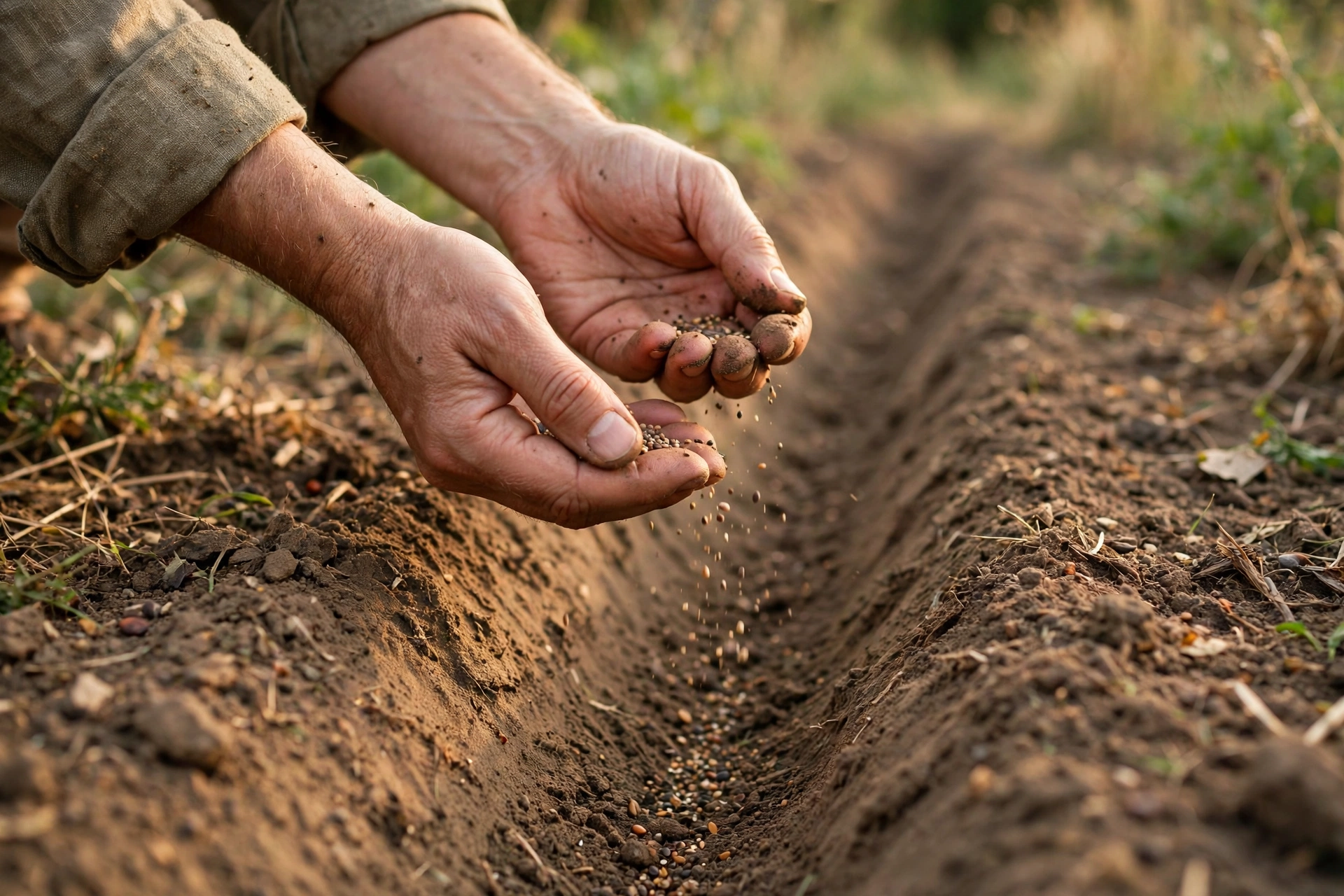
The growing cost runs the other way. A turnip asks for 2 to 4 weeks before last frost or a late-summer succession sowing every 2 weeks, 1/4 inch deep, thinned to one every 4 to 6 inches. A rutabaga asks for a summer commitment, a group of 3 seeds every 6 inches thinned to one, and ground occupied for a third of the year. The full method is in growing rutabaga from sowing to harvest, and the turnip method is in growing turnips from sowing to harvest.
American Purple Top Rutabaga Seeds
Dense golden root, 80 to 120 days, best flavor after light frosts, built to hold in cool storage.
Check Price at Botanical InterestsTurnip White Lady Seeds
Japanese salad turnip, baby roots in 30 days, mild and slightly sweet raw, pickled, or cooked, greens edible too.
Check Price at Botanical InterestsMy planting decision
I plant both, on their own schedules, which is what the varieties in the rutabaga roundup and the turnip roundup are set up for. Turnips fill spring and late summer with fast, fresh roots. Rutabaga takes one summer row and pays it back from the storage bin.
If only one row is available, the deciding question is when the root gets eaten. Eaten within the month, it is a turnip. Eaten in January, it is a rutabaga, pulled after frost and still firm in the bin.