This post contains affiliate links. If you buy through them, we may earn a commission at no extra cost to you.
You sow cilantro in April with salsa in mind, and by the time the tomatoes are thinking about ripening, the plants have shot up thin stems topped with white flowers. The leaves left on them taste sharp and thin.
That sequence is not bad luck. Cilantro is a cool-season annual that flowers when heat and long days tell it to, and the whole growing method for this herb is built around that one fact.
Direct sow it, where it will grow
Botanical Interests marks indoor starting as not recommended for cilantro, because transplant stress can cause bolting. The seed goes straight into the bed or the pot it will finish in.
Sow a group of 3 seeds every 6 inches, 1/2 inch deep, in rows 8 inches apart. The recommended window is 1 to 2 weeks before your average last frost date, when the soil sits between 55 and 68 degrees Fahrenheit, and the seed sprouts in 10 to 15 days.
No thinning is required. A group sowing gives you a small clump at each station, which is how this herb wants to grow anyway.
Succession is the actual system
One sowing of cilantro is a few weeks of leaves. The packet’s own instruction is successive sowings every 3 weeks, continuing until 4 weeks before your average first fall frost.
In mild climates the better season runs the other way: sow in fall for a winter harvest, when cool weather holds the plants in leaf for months instead of weeks. A spring gardener in a hot-summer climate should expect the midsummer sowings to be the shortest-lived and lean on the spring and late-summer rounds.
Keep the seedbed evenly moist while you wait out that 10-to-15-day germination. A crust of dry soil over slow seed is where most failed cilantro plantings actually end.
Long Standing Santo Cilantro/Coriander Seeds
The slow-bolt packet for succession sowing: leafier plants that hold longer before flowering when heat arrives.
Check Price at Botanical InterestsBolting, honestly
Bolting is the plant flowering and setting seed, and for cilantro it is a schedule, not a malfunction. Heat is the loudest trigger, long days push the same direction, and root disturbance at transplant adds stress the plant reads as a reason to hurry.

A slow-bolt variety buys time inside that schedule. It does not cancel it, which is why variety choice and succession sowing have to work together: Santo in the ground every 3 weeks outlasts any single planting of anything.
Afternoon shade in hot climates softens the trigger a little. What does not work is pinching flower stems off a plant that has already committed; the leaves have turned feathery by then, and the flavor has already changed.
Harvesting the leaves
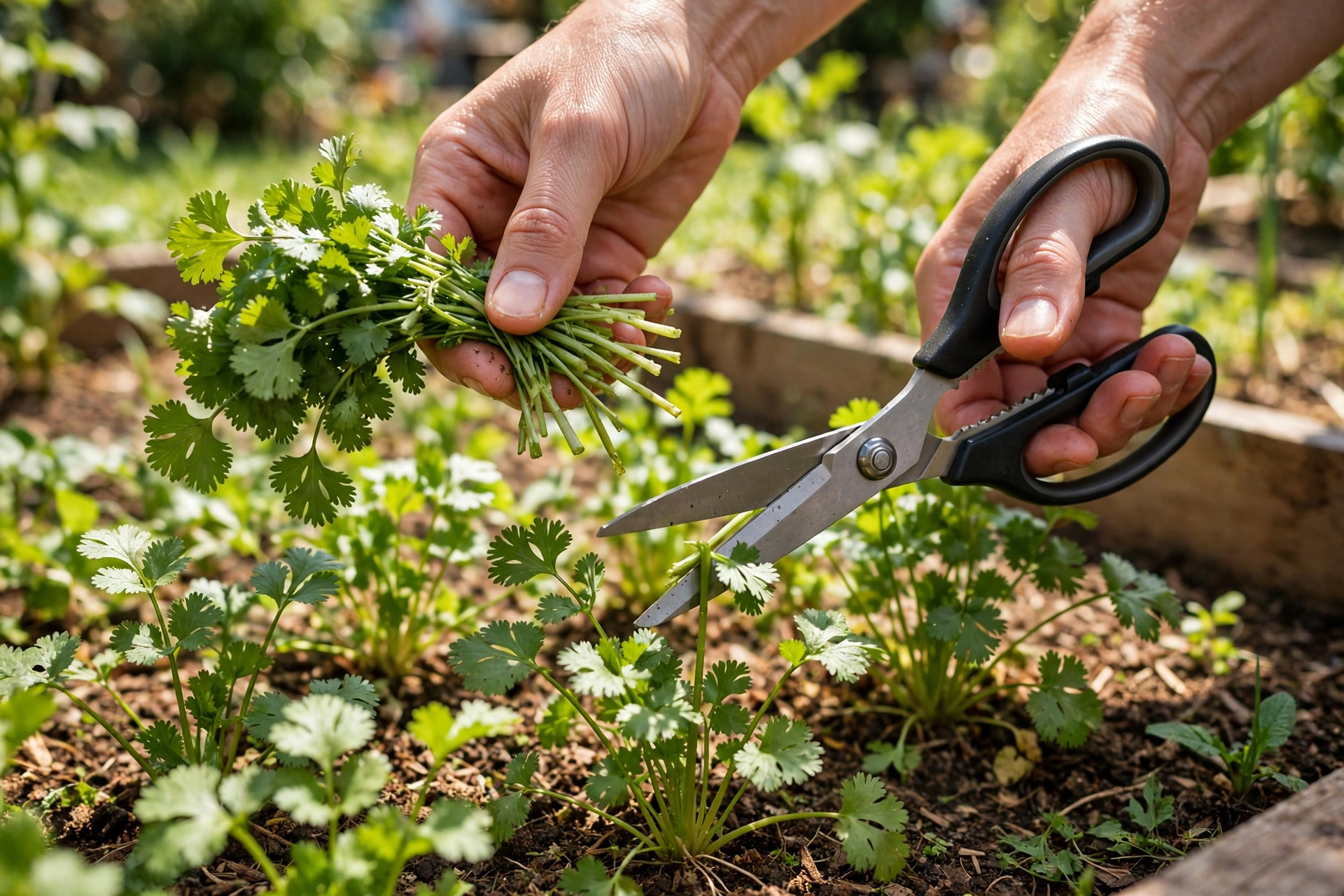
Foliage flavor is best before the leaves turn feathery and the plants begin to flower, so harvest from the outside of the clump and harvest often. Cutting outer leaves keeps the center producing, and a plant picked steadily stays in leaf longer than one left alone until it is big.
The variety ranking behind these picks is in my roundup of the best cilantro varieties to grow from seed, and the bolt-speed question gets its own head-to-head in slow-bolt cilantro vs regular cilantro.
Letting one planting go to seed
Save your last succession sowing for coriander. Let it flower, let the pods form, and cut the stems when the seeds begin to turn brown and the outer coat cracks, before they drop and scatter.
Moroccan is the packet bred for exactly this job, with large green pods you can also pick early and use fresh. One bolted row, treated as a crop instead of a failure, restocks the spice jar for the year.
Moroccan Cilantro/Coriander Seeds
Quick to bolt, large aromatic seed pods, and long clean stems that make the seed harvest easy.
Check Price at Botanical InterestsSow the first round when the soil reaches 55 degrees, write the 3-week resowing dates on the calendar the same day, and the June bolt stops being a surprise. It becomes the seed harvest.