This post contains affiliate links. If you buy through them, we may earn a commission at no extra cost to you.
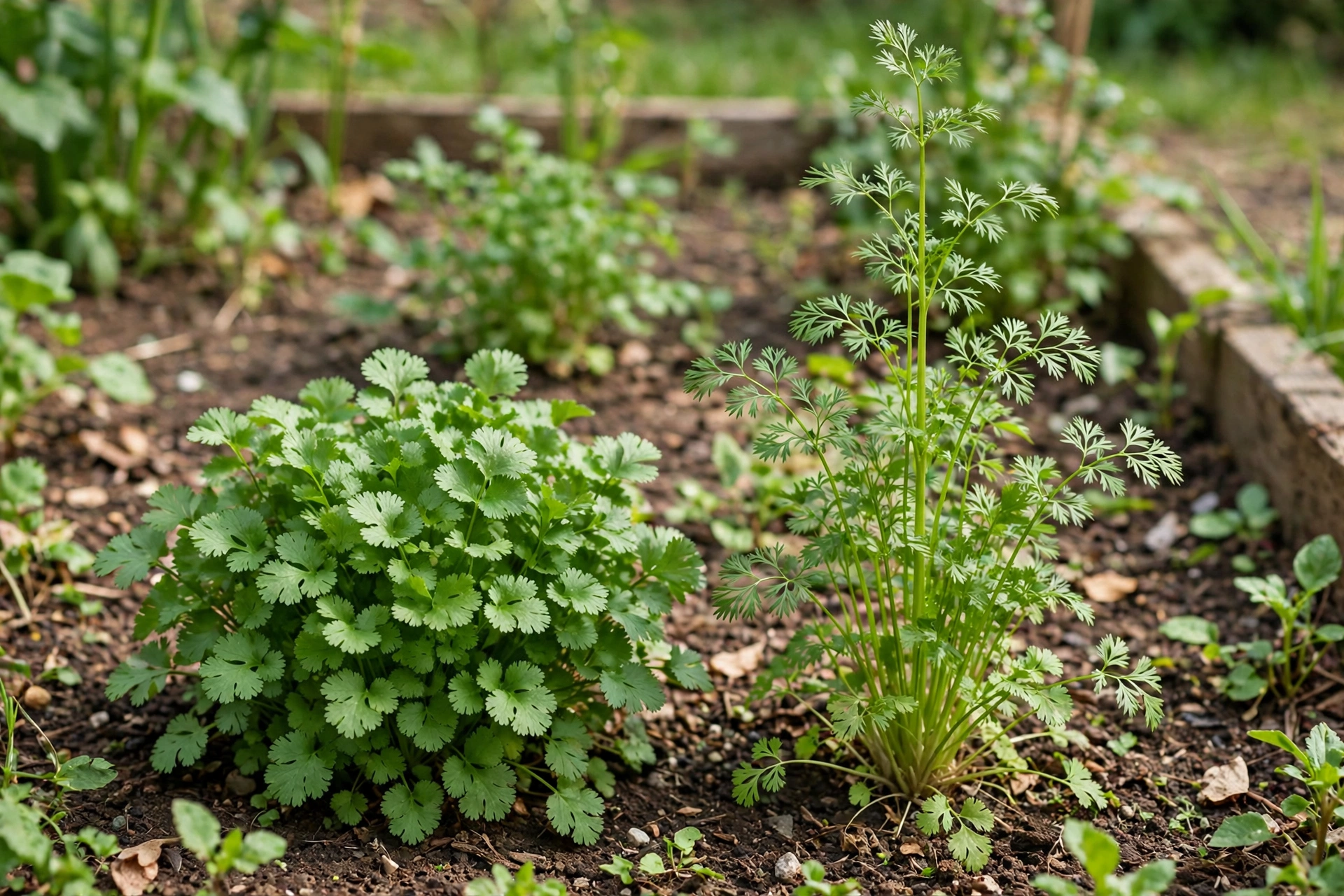
Slow-bolt cilantro and regular cilantro are the same plant, Coriandrum sativum, running on different clocks. One was bred to delay flowering; the other flowers as fast as the season allows, and that single difference decides what ends up in your kitchen.
If you grow cilantro for leaves, the slow-bolt clock wins, and it is not close. If you grow it for coriander seed, the fast clock is the tool, which is why this comparison has two right answers instead of one.
What the clock controls
A cilantro plant makes leaves, then flowers, then seed, in that order, and the leaf stage is the only one that tastes like the herb you planted. Every day of delay before flowering is a day of harvest.
Long Standing Santo was selected for improved leafiness and a slower move to flower when hot weather arrives. Moroccan, the regular-clock packet in this catalog, bolts quickly, and Botanical Interests lists that speed as its virtue: it is ideal for producing an abundance of seed.
Side by side
| Trait | Long Standing Santo (slow-bolt) | Moroccan (regular) |
|---|---|---|
| Bolt speed | Slower to bolt in heat | Quick to bolt |
| Best harvest | Leaves first, seed second | Large seed pods for coriander |
| Packet | About 3 g, roughly 185 seeds | Sows up to 45 feet |
| Rating | Organic heirloom | 4.4 out of 5 in 14 reviews |
Where slow-bolt wins
For salsa, garnishes, and any cooking that calls for fresh leaves across the season, Santo is the planting. Sow it every 3 weeks like any cilantro, and each round simply lasts longer before the leaves turn feathery.
It also covers the seed job adequately if you let the final sowing bolt. The seeds are the same species’ seeds; they are just produced by a plant that was in less of a hurry.
Long Standing Santo Cilantro/Coriander Seeds
Slow to bolt, leafier, organic heirloom: the packet for a leaf harvest that survives into summer.
Check Price at Botanical InterestsWhere regular wins
A dedicated coriander grower wants flowers early and pods in quantity, and Moroccan delivers both, with large green pods that carry a bright, aromatic flavor before they ever dry. Its long, clean stems make cutting the seed harvest straightforward.
The white flowers are edible and draw small beneficial insects while they last, which is a genuine secondary benefit in a vegetable bed. None of that helps a leaf grower, and I would not plant Moroccan in a leaf bed at all.
Moroccan Cilantro/Coriander Seeds
Fast flowering, big aromatic pods, and a 45-foot packet: the packet for a real coriander harvest.
Check Price at Botanical InterestsThe decision
Grow Santo for leaves. Grow Moroccan for seed. Grow both only if you honestly cook with coriander often enough to use a jar of it, because a 45-foot sowing produces a lot of spice.
The full ranking, including the indoor microgreen option, is in my roundup of the best cilantro varieties, and the sowing and succession method both packets share is in my guide to growing cilantro. My own bed gets Santo on the 3-week rotation and one Moroccan row in spring, and the row I used to curse in June is now the one I harvest twice.