This post contains affiliate links. If you buy through them, we may earn a commission at no extra cost to you.
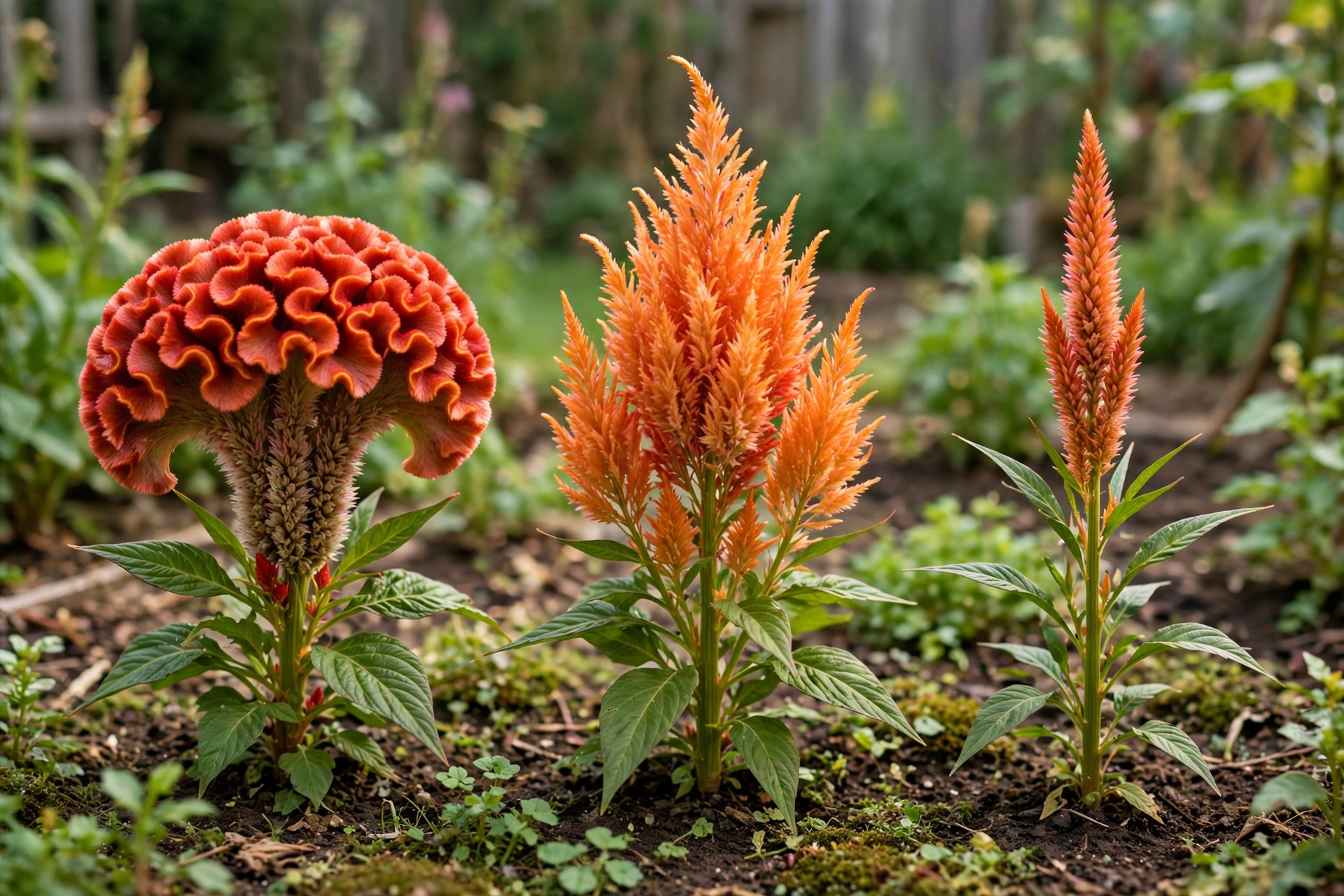
Hold the three flower heads side by side and the names stop being catalog poetry. One is a ruffled fan you could balance a coin on, one is a feather, and one is a wheat spike dyed pink, and each one fails at the other two’s jobs.
That shape is the whole buying decision, because at Botanical Interests each form currently means exactly one in-stock packet. The full ranking sits in the best celosia varieties to grow from seed.
The three forms

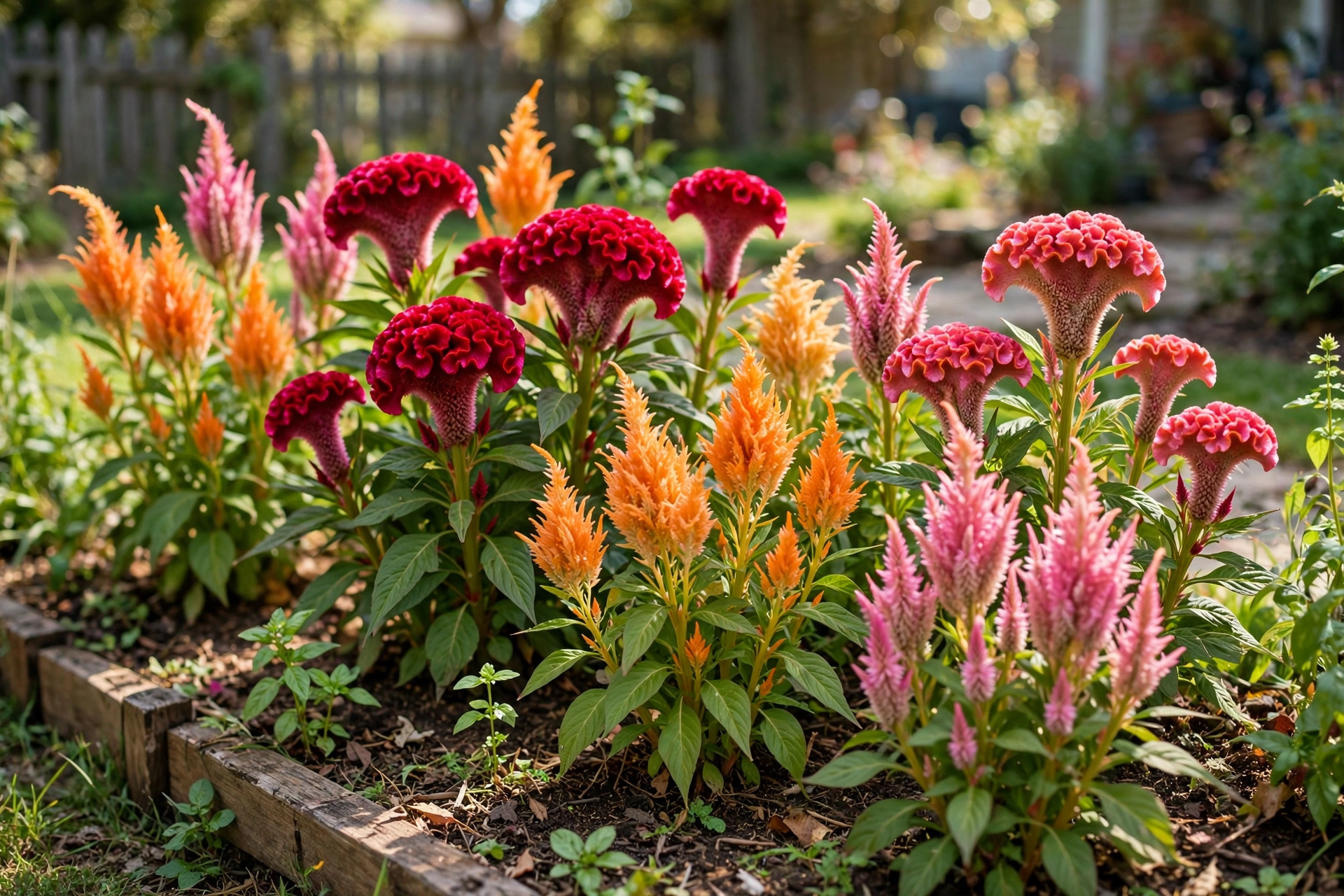
The crested form, Celosia cristata, folds its flowers into a dense fan or globe, the cockscomb of old cottage gardens. The plume form feathers out into soft, upright plumes. The wheat form, Celosia spicata, carries slender spikes that read as grain heads until the color gives them away.
Crested: the focal head
A crested head is a single event on a stem, 2 to 7 inches across in Spring Green, the in-stock crested packet. It anchors a vase the way a dahlia does, one or three heads doing the work of a bunch of smaller flowers.
Its weakness is arithmetic: Spring Green packs about 10 seeds and carries a 3.0 rating in one review, so the crested bed is a small, deliberate planting. The compact red crested packet, Chief Red Flame at 12 to 24 inches, is sold out, which leaves the 40-inch green form as the only crested route today.
Spring Green Celosia Seeds
Lime-green fans and globes, 2 to 7 inches, on 40-inch stems for focal arrangements.
Check Price at Botanical InterestsPlume: the color mass
Plumes are the bed-makers. Pampas Plume runs 2 to 6 inches per plume in golden-yellow to scarlet, on plants over 24 inches, and a row of them reads as one band of color from the street.
It is also the best-rated packet of the three forms at 4.4 in 16 reviews, and it emerges in 7 to 14 days. If only one form gets planted, this is the one I would defend.
Pampas Plume Tall Blend Celosia Seeds
Feathery plumes in gold to scarlet for back-of-bed color, rated 4.4 in 16 reviews.
Check Price at Botanical InterestsWheat: the cutter’s spike
Flamingo’s spikes run 5 to 8 inches, the longest flower structure here, and the narrow shape slips into arrangements without crowding them. Spikes also dry upright and keep their rosy-pink color, so the wheat form keeps working after the fresh season ends.
Its cost is the slow start: 14 to 21 days to emerge, against 7 to 14 for the other two forms. Sow it, mark it, and wait.
Flamingo Celosia Seeds
Rosy-pink wheat spikes, 5 to 8 inches, about 120 seeds a packet for cutting and drying.
Check Price at Botanical InterestsForms, side by side
| Form | Packet | Flower size | Best job | Watch out |
|---|---|---|---|---|
| Crested | Spring Green | 2–7 in fans and globes | Focal heads in a vase | About 10 seeds per packet |
| Plume | Pampas Plume Tall Blend | 2–6 in plumes | Back-of-bed color mass | Blend chooses the colors |
| Wheat | Flamingo | 5–8 in spikes | Cutting and drying | Slowest to emerge, 14–21 days |
Which form to grow
Grow plume for the bed, wheat for the vase and the drying rack, and crested when one strange, sculptural head is the point of the arrangement. Sowing, pinching, and cutting for all three are in growing celosia: sowing, pinching, and cutting, and the same form-by-form thinking runs through zinnias vs cosmos vs marigolds.