Ninety-one days. That is the spread between Charleston International Airport, with 265 frost-free days on the NOAA 1991–2020 normals, and the station at Jocassee, 2,540 feet up in the Blue Ridge foothills, with 174.
A gardener in Charleston sets out cabbage on February 1. A gardener above Lake Jocassee waits until the middle of March for the same plant, and both of them are planting on schedule — because Clemson Extension does not give South Carolina one calendar. It gives the state two, split at the fall line: a Coastal Plain chart and a Piedmont chart, each with its own spring and fall windows for more than 40 vegetables.
Every date here is Clemson’s, read for the region you actually garden in. If you are working through the whole country first, the planting calendars by state index collects every state in one place.
Two regions, drawn at the fall line
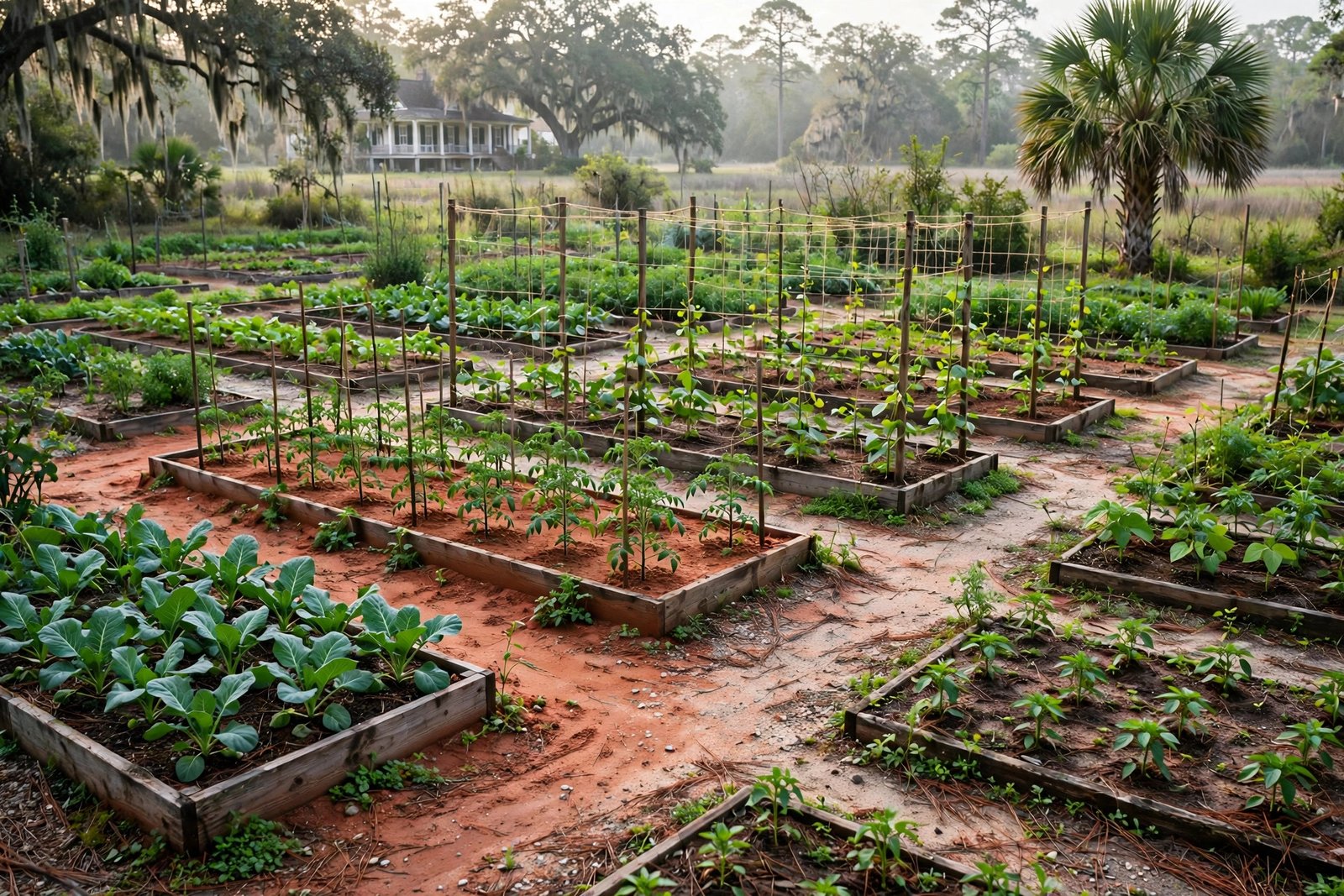
Clemson’s Coastal Plain covers 25 counties, from Beaufort and Charleston up through Columbia, Florence, and Myrtle Beach. The Piedmont covers 21, from Greenville and Spartanburg down through Greenwood and York. Kershaw, Chesterfield, and Marlboro counties appear in both of Clemson’s lists — the fall line runs through them, and gardeners there can read either column and split the difference.
The practical gap between the two charts is two to four weeks in spring. Coastal cabbage goes in February 1 to March 31; Piedmont cabbage waits until March 15. Coastal tomatoes, set out from transplants, run March 1 to April 30, while the Piedmont window does not open until May 1. In fall the direction reverses, and the Piedmont plants its cool-season crops first because its frost arrives first.
Elevation does the rest of the sorting inside the Piedmont itself. Greenville sits at about 960 feet and averages its last frost on March 28. Jocassee, higher and farther into the hills, averages April 26 — nearly a month later, in the same region, on the same chart. Piedmont gardeners in the foothills should read their column late; gardeners around Rock Hill and York can read it closer to Columbia’s dates.
Frost dates at four South Carolina stations
These are NOAA 1991–2020 normals, the dates with a 50% probability of a 32°F frost — the point where frost is as likely to come after the spring date as before it. That coin-flip quality is exactly why what an average last frost really means matters before a flat of peppers rides on it.
| Station | Last spring frost | First fall frost | Frost-free days |
|---|---|---|---|
| Jocassee 8 WNW | Apr 26 | Oct 17 | 174 |
| Greenville | Mar 28 | Nov 7 | 224 |
| Columbia (Univ. of SC) | Mar 16 | Nov 16 | 245 |
| Charleston Intl Airport | Mar 7 | Nov 27 | 265 |
Columbia is the Midlands anchor, and it behaves like one: its March 16 last frost sits between the two charts’ assumptions, closer to the Coastal dates Clemson assigns it. Charleston’s airport station runs three weeks ahead of Columbia in spring and eleven days behind it in fall, which is why the Coastal fall garden can still be setting out lettuce in November.
Spring and fall planting dates: cool-season crops
Clemson’s chart marks some crops with a footnote: broccoli, cabbage, cauliflower, and the other transplant crops are set out as plants, not sown where they will grow. Counting back from a set-out window to an indoor sowing date is the arithmetic in how planting calendars work — a March 1 Coastal broccoli window means seed started indoors in January. A second footnote marks the crops Clemson wants planted in sequence, a little at a time, and those carry a † in the tables.
| Crop | Coastal Spring | Coastal Fall | Piedmont Spring | Piedmont Fall |
|---|---|---|---|---|
| Asparagus | Feb 1 – Mar 15 | — | Mar 1 – Apr 15 | — |
| Beets | Feb 15 – Mar 31 | Aug 15 – Sep 30 | Mar 15 – May 31 | Jul 15 – Aug 31 |
| Broccoli * | Mar 1 – Apr 10 | Sep 1 – Sep 30 | Mar 20 – Apr 30 | Aug 15 – Sep 15 |
| Brussels Sprouts | — | Sep 15 – Oct 15 | — | Aug 15 – Sep 15 |
| Cabbage * | Feb 1 – Mar 31 | Aug 15 – Sep 30 | Mar 15 – Apr 30 | Jul 15 – Aug 31 |
| Carrots | Feb 1 – Mar 15 | Sep 1 – Sep 15 | Feb 15 – Mar 31 | Aug 1 – Sep 15 |
| Cauliflower * | Mar 1 – Apr 10 | Aug 15 – Aug 30 | Mar 20 – Apr 30 | Jul 15 – Aug 31 |
| Collards | Feb 1 – Jun 15 | Aug 1 – Oct 30 | Mar 15 – Jun 30 | Aug 1 – Sep 30 |
| Garlic | — | Oct 1 – Nov 30 | — | Aug 15 – Oct 15 |
| Kale | Feb 1 – Jun 15 | Aug 1 – Oct 30 | Mar 15 – Jun 30 | Aug 1 – Sep 30 |
| Leeks | Feb 1 – Jun 15 | — | Mar 15 – Jun 30 | — |
| Lettuce † | Feb 1 – Apr 15 | Sep 5 – Nov 1 | Mar 1 – May 15 | — |
| Mustard † | Feb 1 – Jun 15 | Aug 1 – Oct 15 | Mar 15 – Jul 30 | Aug 1 – Sep 15 |
| Onion, sets | Feb 1 – Mar 15 | Sep 15 – Nov 15 | Feb 15 – Mar 30 | Sep 15 – Oct 15 |
| Onion, plants | — | Oct 1 – Nov 15 | — | Sep 15 – Oct 15 |
| Peas, Garden | Feb 1 – Mar 15 | Aug 15 – Nov 30 | Mar 1 – Apr 5 | Aug 15 – Oct 30 |
| Potatoes, Irish | Feb 1 – Mar 31 | — | Mar 15 – Apr 30 | — |
| Radish † | Feb 1 – Jun 15 | Aug 1 – Sep 30 | Mar 15 – Jun 30 | Aug 1 – Sep 15 |
| Rutabaga | Feb 1 – Mar 31 | Aug 15 – Oct 15 | Mar 15 – Apr 30 | Jul 15 – Sep 30 |
| Spinach † | Feb 1 – Apr 1 | Aug 15 – Oct 15 | Mar 15 – Apr 15 | Aug 1 – Sep 30 |
| Turnips † | Feb 1 – Apr 1 | Aug 1 – Sep 30 | Mar 15 – Apr 30 | Aug 1 – Sep 15 |
* From transplants. † Clemson marks these for sequential planting — sow a short row every week or two inside the window instead of the whole packet at once. The wave-by-wave method is laid out in our succession planting guide. A dash means Clemson does not recommend that planting in that region.
Spring and fall planting dates: warm-season crops
The warm-season table is where the two regions stop behaving like neighbors. The Coastal Plain gets a genuine fall season for tomatoes, peppers, eggplant, and cucumbers — a second planting timed to fruit as the heat breaks. The Piedmont gets fall windows for beans, squash, and cucumbers only, because a tomato set out in Greenville in July runs out of frost-free days before it runs out of flowers.
| Crop | Coastal Spring | Coastal Fall | Piedmont Spring | Piedmont Fall |
|---|---|---|---|---|
| Beans, Snap | Apr 1 – Jun 1 | Aug 1 – Sep 1 | Apr 15 – Jul 1 | Jul 20 – Aug 1 |
| Beans, Lima | Apr 15 – Jun 1 | Jul 15 – Aug 1 | May 1 – Jun 15 | Jul 1 – Jul 15 |
| Cantaloupe | Mar 15 – May 15 | Jul 1 – Jul 30 | Apr 15 – Jun 5 | — |
| Cucumber | Mar 15 – May 15 | Aug 1 – Aug 30 | Apr 15 – Jun 5 | Aug 1 – Sep 30 |
| Eggplant * | Apr 1 – Apr 30 | Aug 1 – Aug 31 | May 1 – Jun 30 | — |
| Honeydew | Mar 15 – May 15 | Jul 1 – Jul 30 | Apr 15 – Jun 5 | — |
| Okra | May 1 – Jun 30 | — | May 15 – Jul 15 | — |
| Peanuts | Apr 1 – May 31 | — | May 1 – Jun 30 | — |
| Peas, Southern | Apr 1 – Jun 15 | Jul 15 – Aug 1 | Apr 15 – Jul 15 | — |
| Pepper * | Apr 1 – May 15 | Jul 10 – Aug 10 | May 1 – Jun 30 | — |
| Potatoes, Sweet * | Apr 15 – Jun 15 | — | May 1 – Jun 15 | — |
| Pumpkins | — | Jun 1 – Jun 30 | — | Jun 15 – Jul 15 |
| Squash, Summer | Mar 15 – Jul 31 | Aug 1 – Aug 31 | Apr 15 – Jul 31 | Jul 15 – Aug 15 |
| Squash, Winter | Mar 20 – May 1 | Aug 1 – Aug 31 | Apr 15 – Jun 15 | — |
| Sweet Corn † | Mar 1 – Apr 15 | — | Mar 30 – May 31 | — |
| Tomato * | Mar 1 – Apr 30 | Jul 1 – Jul 31 | May 1 – Jun 30 | — |
| Watermelon * | Apr 1 – Apr 30 | — | Apr 15 – Jun 15 | — |
Okra is the last warm-season crop in and the clearest tell that the soil, not the air, is running the schedule. Coastal okra waits until May 1 and Piedmont okra until May 15, weeks after beans and squash are already up, because okra seed sits in cool soil and rots instead of sprouting. Across the state line, the Georgia planting calendar runs the same two-season pattern on its own Extension dates.
What to plant, month by month
January
Clemson’s planning advice starts here: draw the garden, order seed, and start the first transplants indoors. Broccoli, cabbage, and cauliflower bound for March set-out windows on the coast need January starts under lights. Nothing on either chart goes in the ground this month.
February
The Coastal spring opens all at once on February 1 — asparagus, cabbage, carrots, collards, kale, leeks, lettuce, mustard, garden peas, Irish potatoes, onion sets, radish, rutabaga, spinach, and turnips all start. Beets follow on February 15. The Piedmont opens more quietly, with carrots and onion sets from February 15.
March
The Piedmont cool-season chart fills in: lettuce and garden peas from March 1, beets, cabbage, collards, kale, Irish potatoes, and spinach from March 15, broccoli and cauliflower from March 20, sweet corn from March 30. On the coast, tomato transplants and sweet corn start March 1, and cucumbers, melons, and summer squash join on March 15.
April
Beans open the warm season on the coast April 1, with eggplant, peanuts, southern peas, peppers, and watermelon the same day. The Piedmont gets its beans, cucumbers, melons, and squash from April 15, once Greenville’s average last frost is past.
May
Okra goes in — May 1 on the coast, May 15 in the Piedmont. The Piedmont also opens its tomato, pepper, eggplant, and lima bean windows on May 1, all of them timed to soil that has finally warmed in the foothills.
June
Spring windows start closing, and the one summer specialty opens: pumpkins, planted June 1 to 30 on the coast and from June 15 in the Piedmont, sized to ripen for October rather than August. Sweet potatoes finish June 15 in both regions.
July
The fall garden starts on the coast while the spring garden is still producing. Fall tomatoes run July 1 to 31, fall peppers July 10 to August 10, and melons get a short July window. The Piedmont plants fall cabbage, cauliflower, beets, and rutabaga from July 15, and fall snap beans from July 20.
August
The busiest fall month in both regions. Collards, kale, cucumbers, and turnips open August 1 nearly statewide; the Piedmont adds broccoli, Brussels sprouts, and garlic from August 15. Coastal eggplant and winter squash take their fall windows this month, and fall garden peas open August 15 in both regions.
September
Coastal broccoli plants September 1 to 30 and Brussels sprouts from September 15 — a fall-only crop on the coast, with no spring window at all. Coastal carrots take a tight September 1 to 15 fall window, lettuce returns September 5, and onion sets go in from September 15 in both regions.
October
Garlic month on the coast, where the window runs October 1 to November 30; onion plants go in the same day. Collards and kale keep planting through October 30 on the coast, and the Piedmont’s garlic window closes October 15.
November
The Coastal chart’s last calls: lettuce until November 1, onion sets and plants until November 15, garlic and fall garden peas until November 30. In the Piedmont the garden is down to harvest — collards, kale, and Brussels sprouts sweetening through the first frosts.
December
Neither chart plants anything in December. The coastal garlic is in the ground, the collards are holding in the field, and the work is the January work arriving early: a soil test, a drawn plan, and a seed order placed before the good varieties sell out.
The fall garden: a second season, not a leftover
South Carolina’s fall windows are not the spring chart read backward. Fall planting happens into hot soil and shortening days, so crops germinate fast and then slow down as the light fades — which is why Clemson closes most fall windows well before the first frost date on the station table. A Coastal tomato set out July 31 has roughly 17 weeks before Charleston’s November 27 average frost; the same plant in the Piedmont would get about 14 weeks before Greenville’s November 7 frost, minus the weeks lost to cooler nights, and Clemson does not offer the window.
The fall-only crops deserve their own planning. Brussels sprouts are planned in summer for a fall payoff — they need the long, cooling run from an August or September planting to mature into frost, which improves them. Garlic is the same shape: planted in fall, harvested the following summer, and the Piedmont’s earlier window (from August 15) against the coast’s October start is the one place the Piedmont plants a fall crop a full six weeks before the coast does.
What fall planting punishes is lateness. A spring crop planted two weeks late loses two weeks of harvest; a fall crop planted two weeks late can lose the whole planting, because the days it needed no longer exist. The mechanics are in what happens if you plant too late — in South Carolina’s fall, the deadline is daylight as much as frost.
Sources
Clemson Cooperative Extension, Home & Garden Information Center, “Planning a Garden” (HGIC), including Table 1, Planting Chart — Dates to Plant in South Carolina, and Table 2, days to harvest: https://hgic.clemson.edu/factsheet/planning-a-garden/ — fetched in full November 27, 2026. All planting dates on this page are Clemson’s Coastal Plain and Piedmont windows, transcribed from that chart.
NOAA National Centers for Environmental Information, U.S. Climate Normals 1991–2020, freeze/frost probability tables (50% probability, 32°F) for Jocassee 8 WNW, Greenville, Columbia University of SC, and Charleston International Airport stations: https://www.ncei.noaa.gov/access/us-climate-normals — frost dates and frost-free day counts.
USDA Agricultural Research Service, Plant Hardiness Zone Map (2023): https://planthardiness.ars.usda.gov/ — South Carolina spans several hardiness zones from the mountains to the coast; zones measure winter cold for perennials, and the frost dates above decide annual vegetable timing.