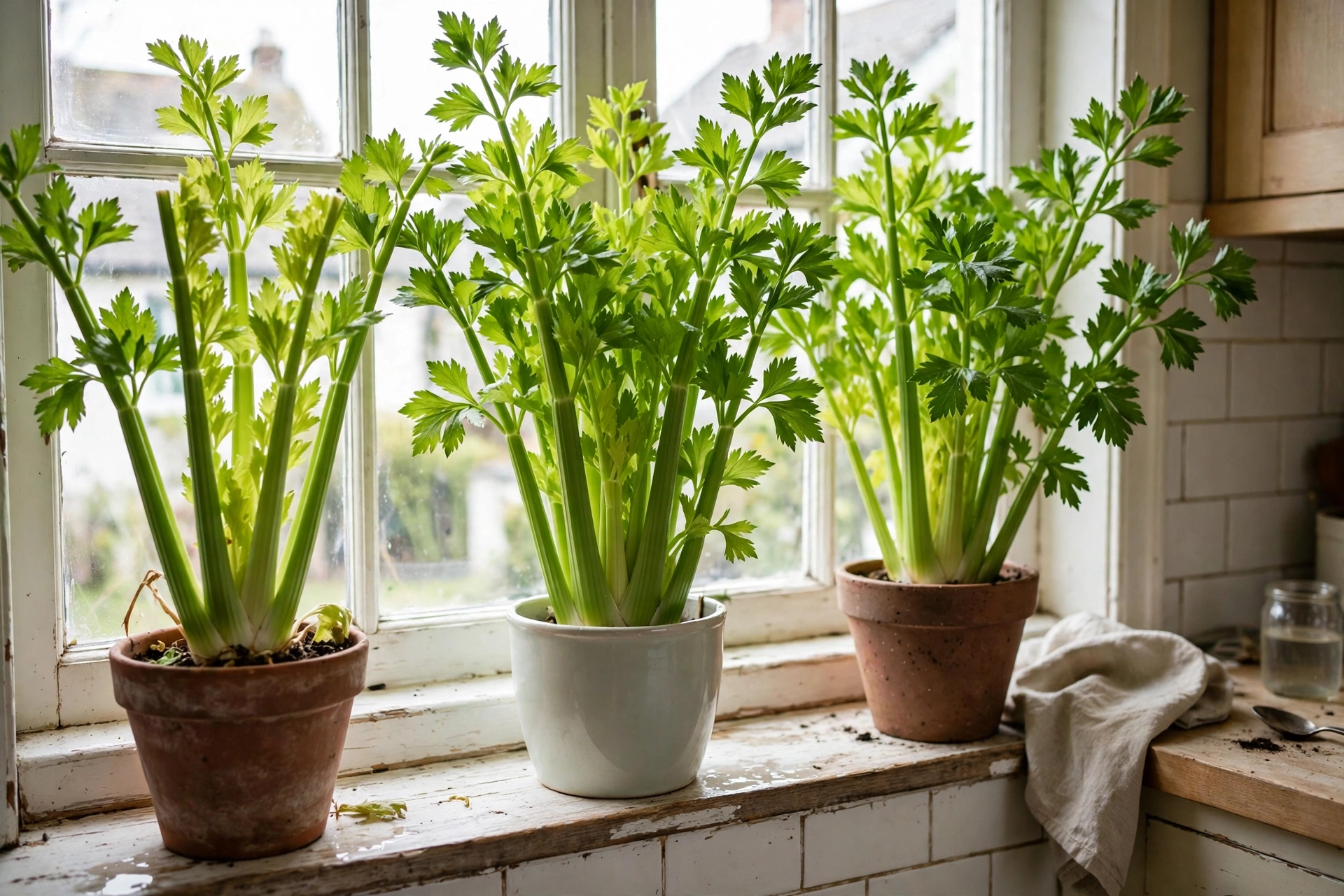
A pale green stalk, cut flat at the base, standing in a jar of water on the windowsill. Give it a week and the center pushes up new growth, bright and tightly furled, proof that celery wants to grow indoors if its few non-negotiables are met.
Celery indoor care comes down to three of them. Light, steady water, and a cool room matter more than any fertilizer or gadget, and a plant shorted on any one of the three will tell you about it in the stalks.
Celery is a marsh plant by ancestry. That single fact explains the watering, the rich soil, and the dislike of heat that run through every section below.
Celery indoor care at a glance
| Need | Target | If it is short |
|---|---|---|
| Light | Brightest window, or 12–16 hours under a grow light | Thin, leggy stalks that lean |
| Water | Soil evenly moist at all times, never dried out | Stringy, bitter, hollow stalks |
| Temperature | Cool room, 60–70°F | Bitterness and early bolting in heat |
| Container | At least 8 inches deep, with drainage | Stunted crowns in shallow, soggy pots |
Light: the brightest spot you have
Celery grown indoors needs the brightest window in the house, ideally one that gets direct sun for much of the day. A dim corner produces a plant that survives without ever becoming crisp stalks worth cutting.
Under a grow light, run 12 to 16 hours a day and keep the light a few inches above the leaves. Raise it as the plant grows, because leaves touching the fixture scorch while leaves a foot below it stretch.
Rotate the pot a quarter turn every few days. Celery leans hard toward window light, and a regular turn keeps the crown growing upright instead of listing toward the glass.
Container and soil: shallow roots, deep thirst
Celery roots stay shallow, spreading near the surface rather than diving. A pot at least 8 inches deep still earns its keep, because that soil volume holds the steady moisture the roots demand.
Drainage holes are required. Celery wants wet soil, not a swamp, and a pot that cannot drain will rot the crown while the surface still looks fine.
Use a rich potting mix and firm it gently around the plant so the crown sits at soil level. Burying the crown invites rot. Leaving it perched high lets the shallow roots dry between waterings.
One plant per pot of about 8 inches across is a fair spacing. Crowded celery competes for water first, and water is the resource this plant cannot share gracefully.
Water: consistent moisture is the whole game
Check the soil daily with a fingertip. When the top half inch feels barely damp, water thoroughly until it runs from the drainage holes, then empty the saucer so the pot never stands in water.
Dry spells do lasting damage here. A celery plant that wilts from thirst may recover its leaves, but the stalks it was forming turn stringy and can go hollow, and no later watering reverses that texture.
Self-watering pots suit celery well for exactly this reason. A reservoir smooths out the gaps between waterings, which matters more than the total amount poured on any single day.
Temperature: keep the room cool
Celery grows best between 60 and 70°F, cooler than most rooms where people spend the evening. A bright spare room, a cool sunroom, or a window away from heating vents fits it better than the warm kitchen counter.
Heat pushes two failures. Warm rooms turn stalks bitter, and sustained heat can trigger bolting, where the plant abandons stalk production and runs to seed.
Winter windowsills need one check. Glass radiates cold on hard nights, so pull the pot a few inches into the room when temperatures drop sharply, and push it back to the light in the morning.
Feeding a hungry plant
Celery feeds heavily for a plant its size. A balanced liquid fertilizer at half strength every two weeks through active growth keeps the stalks thick and the leaves a healthy green.
Pale leaves on a well-watered plant usually mean food before they mean light. Feed once, wait a week, and read the new growth rather than the old leaves, which will not re-green.
Stop feeding a plant you are about to harvest heavily. The last two weeks before a big cut are for water and light, so the stalks you take taste clean.
Common problems and fixes
Leggy, pale stalks mean light, almost every time. Move the plant to a brighter window or under a light for longer hours, and accept that stretched stalks stay stretched; the fix shows in the new growth.
Aphids gather in the crown and along young stalks. A firm spray of water in the sink knocks most of them off, and a second pass three days later catches the ones that hatched in between.
Leaf spot shows as small brown marks that spread in damp, still air. Space the pots so air moves between them, water the soil rather than the leaves, and remove spotted leaves at the base so the plant puts energy into clean growth.
Bitter stalks point back to heat or thirst. Move the pot somewhere cooler, steady the watering, and judge the next stalks rather than the ones already cut.
Harvest by the outer stalks
Cut outer stalks first, one or two at a time, once they reach a usable size. The center keeps growing, and a plant harvested this way produces for weeks instead of ending in a single bunch.
Twist or cut each stalk cleanly at the base. Snapping stalks halfway tears tissue the plant then has to heal, and ragged wounds in a damp crown invite rot.
Frequent small harvests beat rare big ones indoors. A windowsill plant will not match a garden row, and taking stalks as they size up keeps the plant in balance with its pot.
Starting from a grocery-store base
The base-in-water trick from the opening works as a starter. Set the cut base in shallow water in bright light, change the water every couple of days, and new leaves will push from the center within a week.
Move it to soil once roots show. A base left in water indefinitely produces leaves, not stalks, because water alone carries no food for real growth.
Seed is the slower, fuller route, and variety choice shapes flavor and stalk size. The guide to the best celery varieties to grow from seed covers which types suit containers and short seasons.
However a plant starts, celery indoor care rewards the steady hand. Bright light, a cool room, and soil that never dries out will carry a pot from a jar on the sill to stalks worth snapping into soup.