Disclosure: This post contains affiliate links. If you buy through them, Landscape & Leisure may earn a commission at no extra cost to you.
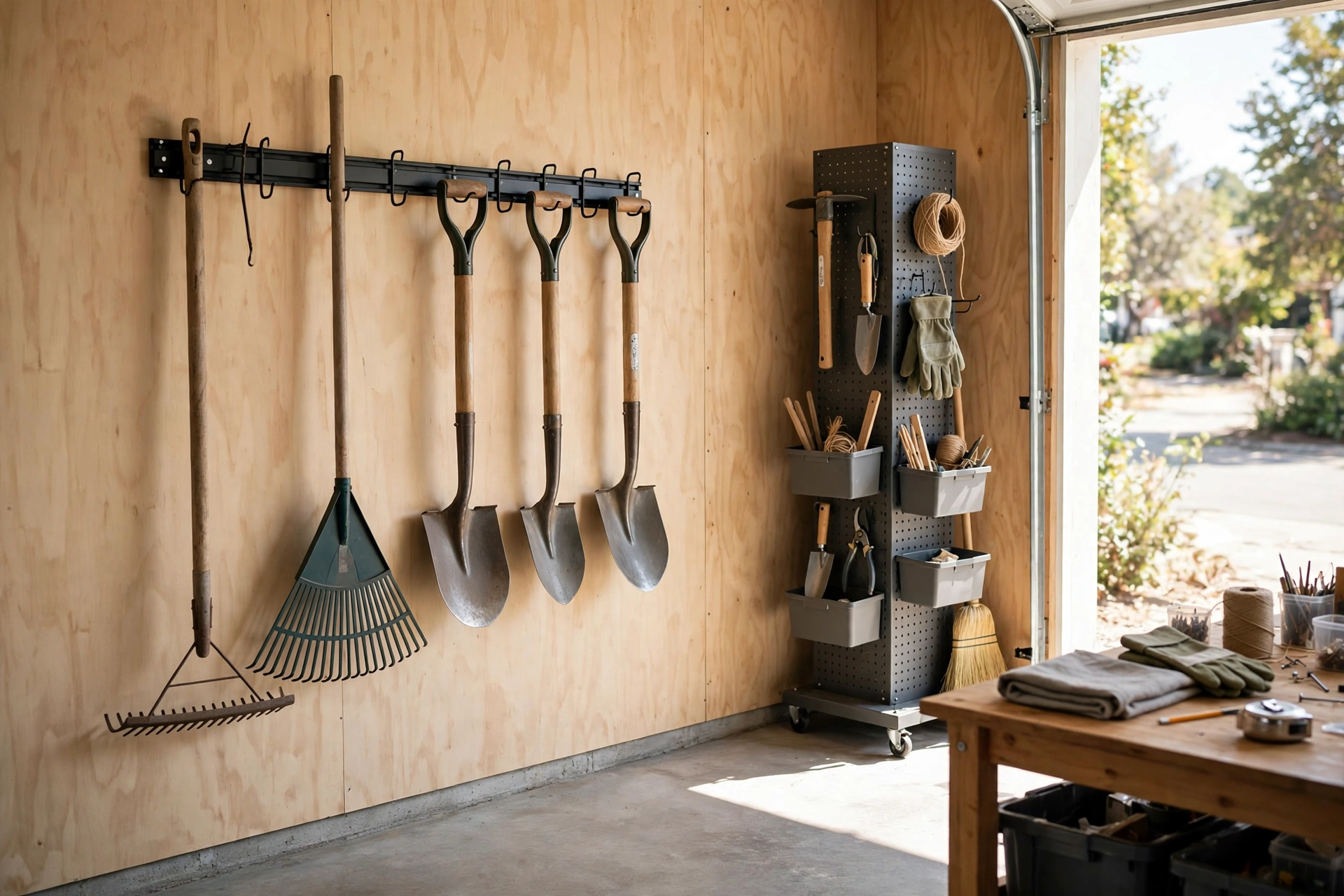
A wall-mounted organizer holds tools flat against a surface you already own, using no floor at all. A freestanding organizer holds tools upright in a footprint you have to give up, and in exchange it asks nothing of your walls.
That single exchange decides most purchases. Everything else — capacity, cost, how fast you can grab a shovel — follows from whether your walls can take screws and whether your floor can spare the space.
The mistake that starts this decision wrong
Most homeowners buy the organizer that fits the tools and never measure the wall or the floor it has to live on. Then the rack arrives, the studs land in the wrong places or the tower blocks the mower’s path, and the tools go back to leaning in the corner they started in.
Measure two things before you buy anything. Find your stud spacing, which is 16 inches on center in most framed garages, and pace off the floor area a tower would occupy, including the swing room to pull a 5-foot handle upward out of it.
What wall-mounted does better
Wall storage wins on space, and it is not close. A rail run holds a dozen long-handled tools in the depth of one tool head, because the handles hang parallel to the wall instead of radiating out of a base.
It also wins on visibility. Every tool hangs in a single row at eye level, so a missing spade shows as an empty hook the moment you walk in, rather than as a gap you notice three tools into a search through a crowded tower.
Capacity per dollar favors the wall as well. The best garden tool organizers for garages and sheds roundup leads with a rail kit carrying five 48-inch rails and 15 hooks, and adding storage later means clipping on another hook rather than buying a second unit.
Rubbermaid FastTrack 20-Piece Garage Storage Kit
Five 48-inch rails with 15 movable hooks, rated to a 500 lb maximum recommendation, for walls that can take stud screws.
What wall-mounted demands from you
The wall has to be real. Rails and racks get their ratings from lag screws or screws driven into studs, and the same rack hung on drywall anchors alone will creep, tilt, and eventually pull out under a load of wet tools.
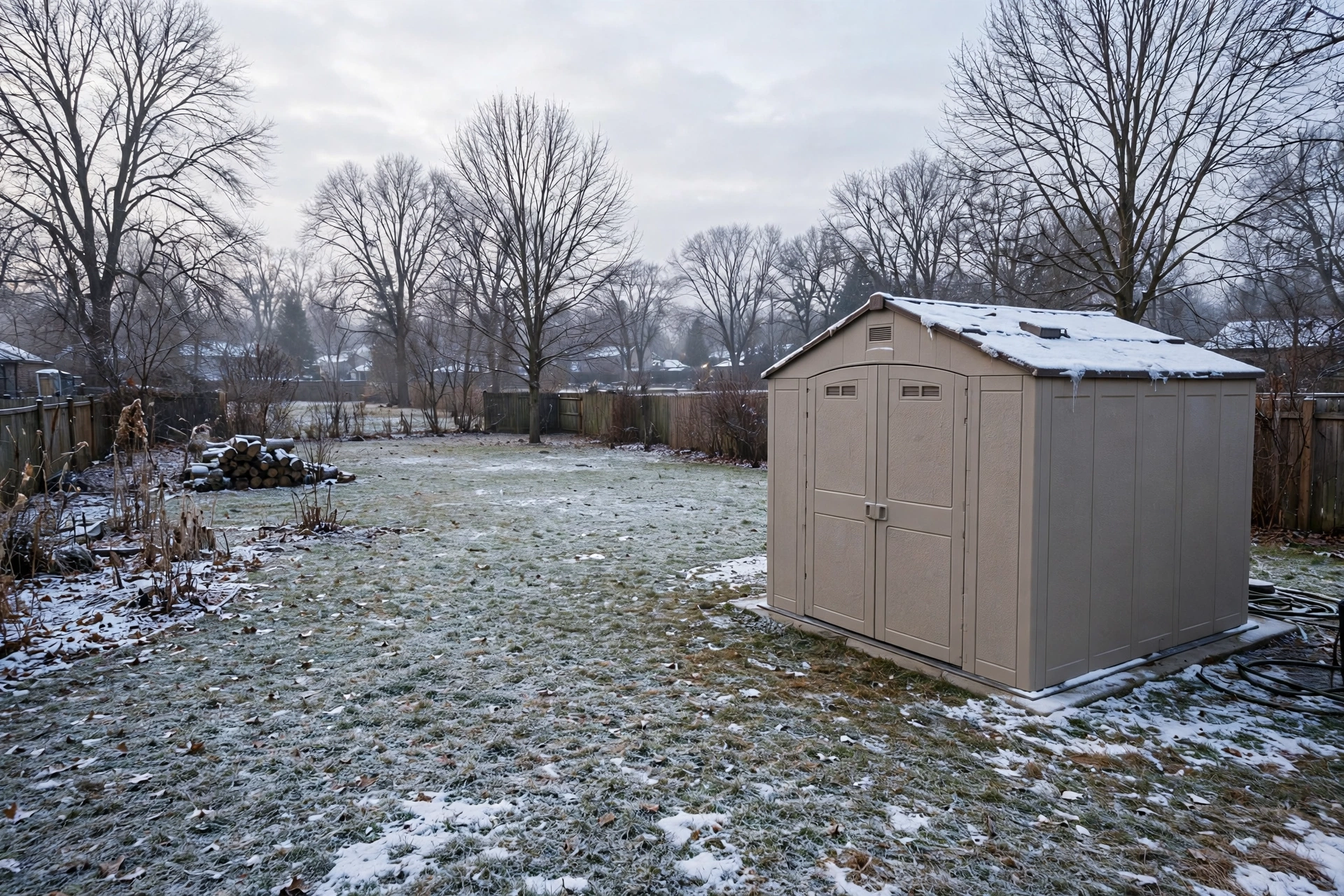
Renters face the harder version of this problem, because a rail run leaves a line of screw holes that a deposit may not forgive. Resin shed walls rule wall mounting out entirely for most racks, since thin panels flex under a loaded hook — a limit that also shapes the picks in best resin shed accessories and organizers.
Placement is permanent-ish, too. You can slide hooks along a rail, but the rail itself stays where the studs allowed it, so a badly chosen wall stays badly chosen until you patch and re-drill.
What freestanding does better
A freestanding tower needs no tools beyond its own assembly and no permission from a landlord. It can also move, which sounds minor until the day you want the tools beside the garden gate instead of across the garage.
The Rubbermaid Tool Tower organizes up to 40 long-handled tools and rolls on wheels, so one unit can serve a shed in summer and a garage corner in winter. No wall system here can follow the work that way.
Rubbermaid Garage Tool Tower Rack
Wheeled tower for up to 40 long-handled tools, with no drilling, no studs, and no holes to patch when you move it.
What freestanding costs you
Floor space is the obvious price, and in a small shed it is the whole argument. A tower’s footprint plus the clearance to lift tools out of it can consume the same ground a mower needs, which is why how to organize long-handled tools in a small shed leans on walls and door backs first.
Access slows down as a tower fills. Tools hang on a wall in one layer, but they stand in a tower in several, so the middle tools come out last and go back reluctantly — and a tool that is annoying to put away is a tool that ends up leaning again.
Stability deserves a check before you load one. A tower full of top-heavy tools on an uneven shed floor can rock when you pull a handle at an angle, so level ground or a corner placement is part of the real install cost.
Side by side
| Factor | Wall-mounted | Freestanding |
|---|---|---|
| Floor space used | None; tools hang within a few inches of the wall | A fixed footprint plus lift-out clearance |
| Wall requirement | Screws into studs at 16 or 24 inches on center | None; works against resin or finished walls |
| Renters | Screw holes to patch at move-out | No holes, moves with you |
| Capacity growth | Add hooks or another rail run | Fixed slots; a second tower is the upgrade |
| Access | Single row, everything visible at once | Layered; middle tools take longer to reach |
| Cost shape | Rails cost more up front, hooks are cheap to add | One purchase covers the whole unit |
The recommendation
Mount on the wall if you own the building and the wall is framed, because the space saving compounds every single day and the system grows by the hook. Buy the tower if you rent, if your shed walls are resin, or if the tools need to move between buildings across the year — and accept the floor space as the price of keeping your walls and your deposit intact.