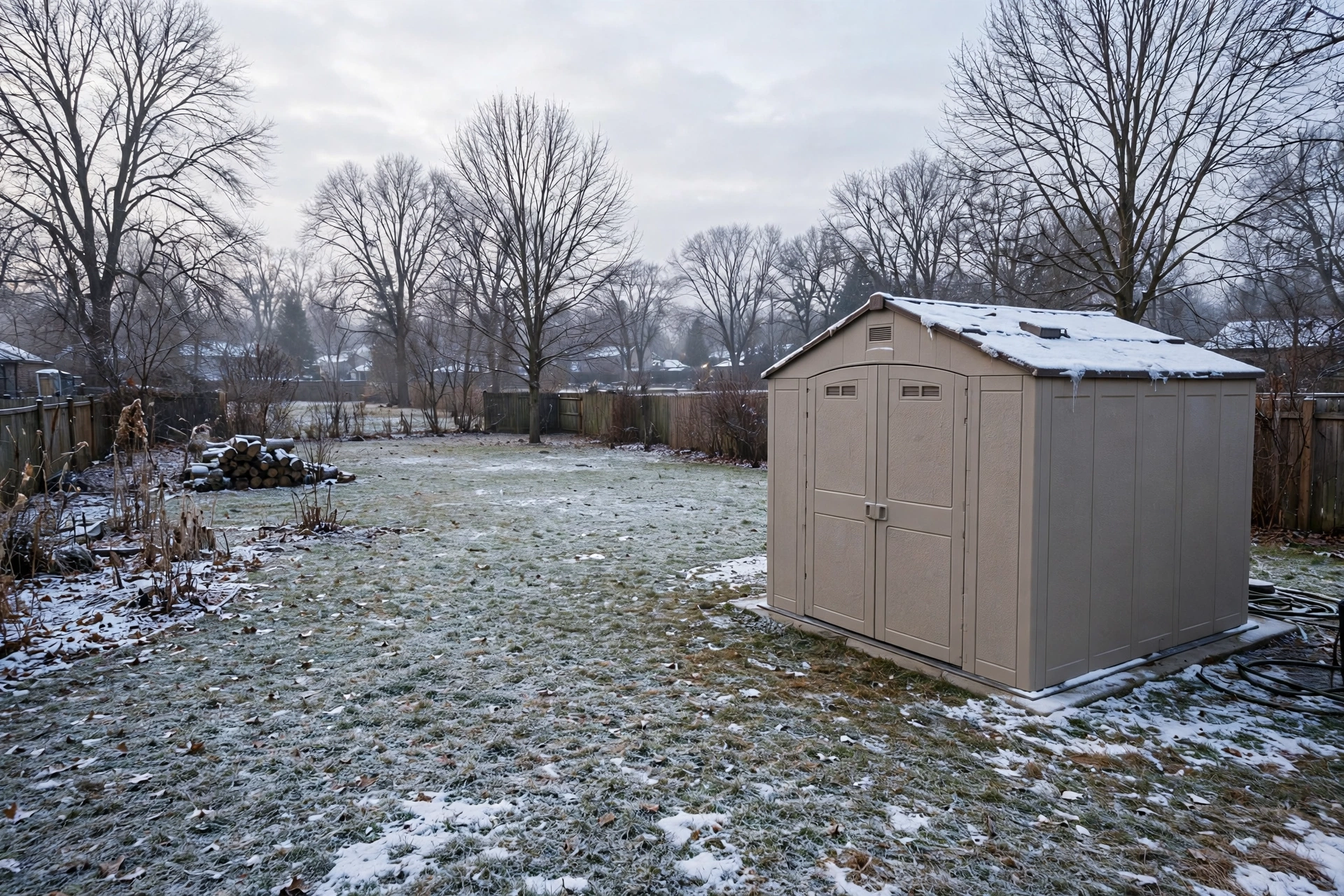
Late fall is when a resin shed’s year gets decided. The first wet snow of the season weighs far more than the dry powder that follows it, the panels are at their stiffest in the cold, and a door that froze shut in December tends to get forced — which is how latches and hinges actually break.
None of this asks for much time. An hour in November, spent on the roof load, the doors, and the anchors, covers the failures that winter genuinely causes, and it beats meeting them one at a time in January.
Snow load: the number is smaller than people assume
Resin shed roofs are rated in pounds per square foot, and the ratings are modest. Lifetime rates its 8-foot sheds at 23 pounds per square foot of snow load, and its optional steel snow load kit, which reinforces each roof truss, raises that to 30. Keter rates its Factor 8×6 at 15 pounds per square foot.
Depth is a poor guide to weight, because snow is not one material. FEMA’s snow load guide puts fresh snow anywhere from 3 to 21 pounds per square foot for each foot of depth, depending on how wet it is. A foot of light powder can sit comfortably under a 15 psf rating while eight inches of wet snow, the kind that falls just above freezing, presses close to it.
Lifetime’s own manual for its 15×8 shed skips the arithmetic and gives a depth rule instead: if more than six inches of snow accumulate on the roof, remove it. Read that as the manufacturer telling you the working limit in the units you can actually see from the yard.
| What is on the roof | Rough weight | What to do |
|---|---|---|
| Up to 6 in. dry, light snow | Well under 10 psf | Leave it; it sheds or melts on its own |
| More than 6 in. of any snow | Rising toward rated limits | Clear it, per Lifetime’s manual rule |
| Wet snow, or snow with an ice layer | Can pass 15 psf in under 9 in. | Clear it the same day, in layers |
| Drift piled against one slope | Concentrated, uneven load | Clear the drift first, even if the rest is thin |
If your winters routinely deliver wet snow and your shed is a model with a published kit — Lifetime sells them for its 8-foot and 11-foot sheds — fitting the kit in fall is a permanent fix for a recurring worry. Which models take one is a fair question to settle while comparing resin storage sheds in the first place.
Clearing the roof without damaging it
Use a roof rake from the ground, pulling snow down the slope in shallow passes. Work from the eaves upward in sections, and never stand on the roof: resin panels in cold weather are at their most brittle, and a boot concentrates your weight on one panel instead of spreading it.
Leave the last inch. Scraping down to bare plastic with a metal edge gouges panels and can crack a cold one, and that final layer melts off on the first sunny afternoon anyway. For the same reason, never chip at an ice layer bonded to the roof — clear the loose snow above it and let a thaw take the rest.
Clear drifting first where wind piles snow against one slope or into the valley by a fence. An uneven load bends a roof truss harder than a deeper, even one, and it is the failure pattern behind most midwinter roof sags.
Cold changes how the plastic behaves
Polyethylene and polypropylene both stiffen as the temperature drops, and impact resistance falls with it. A panel that would flex away from a dropped tool in July can crack from the same knock in January, so winter is the wrong season for dragging heavy equipment against the walls or leaning ladders on the shed.
Cold is also one of the slow variables in how long a resin shed lasts: panels that take impacts while brittle accumulate the small cracks that show up as leaks two springs later. Keep the traffic path inside the shed clear so nothing has to be forced past a frozen wall.
Doors and latches need ten minutes in fall
Clear the threshold and the door swing of gravel and soil before the ground freezes, because meltwater that pools at the base of the doors refreezes overnight and seals them shut. A door forced against that ice is how handles snap and hinges bend.
Work a silicone lubricant into the latch and hinge pins while the weather is still mild, and check that the doors close square. A door that already drags in October will not close at all once frost heaves the base a fraction, and a shed standing open to driven snow undoes every dry-storage fix in keeping a resin shed dry.
If a door does freeze shut, melt the threshold ice with warm water and patience. Pry bars and shoulder weight trade a stuck door for a broken one.
Anchor before the storm season, not after
Winter wind arrives with the same storms that bring the snow, and a light resin shed on an exposed site needs its anchors checked while the ground is still workable. Confirm each anchor is tight, replace any strap that has frayed or rusted, and make sure the shed has not shifted on its base since spring.
The method matters more than the hardware count, so follow how to anchor a resin storage shed against wind for the anchor type your base calls for. Sheds sited against a fence or tree line get meaningful shelter; a shed standing alone in an open yard gets the full force of every gust, which is worth weighing when you decide what size shed to place where.
Do the November hour: rake plan settled, threshold cleared, latch oiled, anchors checked. Then winter becomes the season you watch from the window — snow sliding off a roof you already know can carry what is left.